Omnichannel Marketing Strategy for eCommerce: 11 Tactics

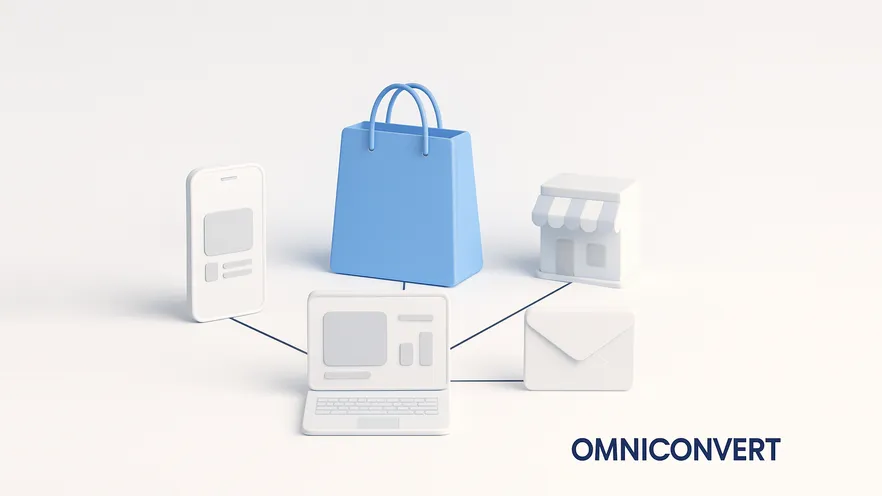
- Connect your channels around one customer profile, so each channel knows what the customer did in the others.
- Segment customers by value with RFM and customer lifetime value, then use the same segments in ads, email and on-site.
- Map the customer journey across channels and remove the gaps where shoppers drop out.
- Make the website and checkout fast on mobile first, because most shoppers browse and buy on their phones.
- Build social ad audiences from your best customers and exclude people who already bought.
- Give one person ownership of the omnichannel strategy, so every department works toward the same customer goals.
- Measure customers, not channels: compare repeat purchase rate and CLV, and A/B test changes before you scale them.
An omnichannel marketing strategy for eCommerce connects every channel your customers use, so they meet one brand with one memory instead of a set of separate shops. Customers used to know what they wanted and where to buy it. Today they move between channels before they buy: they see a social ad, read reviews on their phone, open an email on a laptop and finish the order in an app. There is a rapid change in consumer behavior, and stores must respond to it.
A customer-centric omnichannel strategy is how you improve the customer experience with your brand. In this article, I share eleven omnichannel marketing strategies that position your store in front of the right customers and grow sales over time. The shared customer data behind them can come from Omniconvert Commander (formerly Nexus), the AI eCommerce growth engine.
What is an omnichannel marketing strategy for eCommerce?
Omnichannel marketing gives customers an integrated shopping experience across channels. Whether a customer buys on a phone or a desktop, from a social shop or in a physical store, they get the same products, prices, offers and service. More important, the brand remembers them. A product they viewed in the app shows up in the next email. A discount they used once is not offered again to a loyal customer who would buy anyway.
The payoff is in customer behavior. Shoppers who use several channels are common, and they tend to be worth more. In a study of 46,000 customers of a large US retailer, 7% shopped only online, 20% only in stores, and 73% used multiple channels. The multichannel shoppers spent an average of 4% more per store visit and 10% more online than single-channel shoppers [Harvard Business Review, 2017].
The strategies below help you improve customer retention, average order value and engagement. They stay on marketing tactics. For the service and experience side, such as returns, support and store pickup, read our guide to omnichannel customer experience.
Omnichannel vs multichannel marketing: what is the difference?
Most eCommerce brands are already multichannel. They have a website, an email list, a social account and an ad budget. The difference is whether those channels share what they know about the customer.
| Dimension | Multichannel marketing | Omnichannel marketing |
|---|---|---|
| Focus | The channel: be present everywhere | The customer: be consistent everywhere |
| Customer data | Separate lists per channel | One shared profile and segments |
| Messages and offers | Planned per channel, can conflict | Coordinated by customer segment and stage |
| Team ownership | Each channel owner has its own goals | One owner of the customer goals across channels |
| Success metric | Conversions and ROAS per channel | Repeat purchase rate and customer lifetime value |
A simple test shows which one you run. A customer buys a jacket from your email. The next day, does your Meta ad still show them the same jacket with a discount? If yes, your channels work in parallel, not together. The eleven tactics below are grouped by job: customer data and the journey, your website and app, social media, and the team, tools and testing that hold everything together.
Omnichannel marketing strategies for customer data and the journey
1. Segment your target customers
Customer segmentation lets you create tailored messages and campaigns for each group of shoppers, and relevant messages increase the chances of conversion. In an omnichannel strategy, segmentation does a second job: it gives every channel the same list of who is who. When your ads, emails and website use the same segments, they stop contradicting each other.
Use customer data analysis tools to collect information about how your customers buy. With the right information, you can write better content for each group: welcome emails for new leads, more accurate ad targeting, and on-site offers that match the visitor. There are different ways to segment your customers, and each one suggests a different marketing tactic:
- Demographics: find which groups are most likely to buy your products, and adjust creative and channels for them.
- Geo-location: if many customers live outside your main market, consider subsidized delivery or local messaging.
- Customer loyalty: separate loyal customers from one-time buyers, and plan how to raise loyalty in each group.
- Interests: group customers by the categories and content they engage with.
- Purchase history and value: group customers by when they last bought, how often and how much, which is what RFM analysis does.
Value is the most useful dimension for marketing spend. An RFM segmentation shows which customers are your best, which are at risk, and which have lapsed. Combine it with customer lifetime value and you know how much each segment is worth reaching, in every channel.
2. Map the customer journey across channels
Map your customer journey across platforms as you build your eCommerce omnichannel marketing campaign. At the start of the journey, you introduce your brand and make prospects interested in your products. Interested prospects become buyers. After the first purchase, the journey continues with retention, so customers come back and recommend your brand to others.
For each stage, list the channels the customer uses and what you want them to do next. Then look for gaps that stop shoppers from moving forward. For example, if a visitor opts in to a discount lead magnet, do not send them through a long signup process. If you send an email with product recommendations, include the discount code there, and if the customer does not buy, follow up with a targeted ad that shows the same products.
A journey map helps you focus on customers who have already shown interest in your brand. Every channel should lead to the next one and move the customer one step closer to a purchase, or to the next purchase.
3. Protect your customers' data and privacy
Many customers hesitate to shop online because they worry about their digital footprint. Online stores ask for full names, addresses, card details and contact information, and if that data falls into the wrong hands, it can harm your customers. An omnichannel strategy depends on customers sharing data with you, so trust is part of the strategy, not a side task.
When customers share personal information, they expect you to use it carefully and only to their benefit, such as more relevant recommendations. Show them that your site is secure with HTTPS, and explain in plain words what you collect and why. Here are some practical tips:
- Secure your database and CRM: limit access to the people who need it.
- Update your security software: install updates to your platform, plugins and security tools on time.
- Use proven security tools: keep malicious web attacks away from checkout and accounts.
- Avoid public networks: do not manage store or customer data over public Wi-Fi.
- Use a Web Application Firewall (WAF): it blocks common attacks on customer data, and you can mention it to build trust.
- Respect consent: only send emails, SMS and ads to people who agreed to receive them.
Omnichannel marketing strategies for your website and app
4. Make your website mobile-friendly
You cannot offer a consistent omnichannel experience if your website fails on a phone. Make sure your website is mobile-friendly, because most people browse and shop on their smartphones. At least 79% of smartphone users have made a purchase online with their mobile device in the last six months [OuterBox, 2025].
Your website should offer the same shopping experience on every device. When the mobile site is fast and easy to use, customers can browse, sign up for your newsletter and buy without friction. Our mobile CRO guide covers the details. Start with these best practices:
- Improve product pages: make them clear and convincing on a small screen.
- Optimize titles and descriptions: write them for mobile search results.
- Personalize recommendations: base them on shopping behavior and browsing history.
- Fix usability errors: remove the common problems that raise the bounce rate.
5. Optimize the purchase experience
The purchase experience is where every channel's work pays off or is lost. A smooth purchase reduces last-minute hassle and increases the chance of conversion, whether the customer arrived from an ad, an email or a search. Here are some tips to make the purchase experience easier and more engaging:
- Use high-quality images: show the product from several angles on the product page.
- Write accurate product descriptions: complete and true to the label.
- Show your return and refund policy: near the add-to-cart button and in checkout.
- Add trust seals: show that card payments are secure.
- Keep the experience consistent: the same offers, prices and cart on every device.
- Personalize the experience: use what you know about the customer to move them through the sales funnel.
Consistency matters most when a customer switches device mid-purchase. If a shopper adds items to the cart on the phone, the cart should be there when they sign in on a laptop, and a reminder email should link straight to it.
6. Launch a mobile app for your eCommerce store
Shoppers differ, and the different types of online shoppers use different channels. For frequent buyers, a mobile app can be the most convenient channel of all. When customers install your app, they are more likely to visit often, because buying takes fewer steps.
An app also gives you channels a website does not have, such as push notifications, in-app messages and app-only offers. Use them with care. A push notification about a product the customer viewed yesterday is useful; a daily discount alert teaches customers to wait for discounts. An app is a real investment, so build one only when you have enough repeat customers to use it. For most smaller stores, a fast mobile website comes first.
Omnichannel marketing strategies for social media
7. Boost customer engagement on social media
Social networks increase your visibility and brand awareness when you use them well. As your reach grows, customers learn more about your business and brand. Start with complete, consistent profiles on the platforms your customers use, such as Instagram, Facebook and TikTok.
When customers interact with you on social networks, you also get feedback and information you can use to improve the business. Answer comments and messages quickly, and in the same voice your support team uses by email. Every reply gives customers a new view of your business. When you build a relationship with customers, they are more likely to stay loyal for a long time.
8. Use social media ads
Social media ads are a key part of an eCommerce omnichannel marketing strategy. Create unique content for each platform, and test your ad creative so you know which version works. Meta Ads is one of the most useful platforms; our guide to Facebook ads for eCommerce covers the setup.
Use custom audiences to narrow your targeting to ideal customers, and use retargeting to reach shoppers who already showed interest in your products. The omnichannel step is to connect those audiences to your customer data. Build lookalike audiences from your highest-value customers instead of all past buyers, and exclude customers who have just bought, so you stop paying to show them the product they already own. Omniconvert Commander pushes RFM segments directly to Meta Ads, Google Ads and Klaviyo, so ads and emails use the same segments without manual exports.
Do not forget the landing page. When a customer clicks your ad, the page should match the ad's message and offer, and feel personal to them. Use the information you collect from all your channels to personalize their experience.
Omniconvert Commander sends the same RFM segments to Meta Ads, Google Ads and Klaviyo, so your ads and emails target, exclude and personalize from one customer view.
See how Omniconvert Commander works →Omnichannel marketing strategies for your team, tools and testing
9. Engage your whole organization in the strategy
A good eCommerce omnichannel marketing campaign takes time, and it needs input from every department: marketing, eCommerce, customer service, logistics and, for brands with stores, retail. Work closely with each team to make sure the strategy runs smoothly.
Choose the right person to act as your omnichannel marketing coordinator. The coordinator makes sure each team stays focused on the strategy's ultimate goal, and owns the shared customer metrics instead of one channel's numbers. When one person leads, the whole company works toward a common goal: to improve customer retention and acquisition. Our guide to customer acquisition strategy shows how the acquisition side fits in.
One failure mode is common in growing stores. The email team, the paid social agency and the on-site team each run their own promotions, each measured on its own channel's conversions. A loyal customer then gets a 20% email code, a 15% retargeting ad and a first-order pop-up in the same week. Each team reports a good result, but the store gives away margin to customers who would have bought anyway, and teaches them to wait for the next discount. Shared segments and one owner of the promotion calendar stop this.
10. Invest in a marketing stack
A successful omnichannel campaign needs a marketing stack that runs your campaigns, tracks them, and shows you whether each strategy brings results. You need online tools and, for brands with physical presence, offline ones. Here is a checklist:
- Offline displays: posters and in-store displays that match your online campaigns.
- Analytics software: to capture customer information and track your campaigns.
- Landing pages: pages built to convert visitors from each campaign into customers.
- A customer value optimization tool: to get the most from customer segmentation and create experiences based on behavior and value.
- Email and SMS software: to send personalized content to each segment.
The tools matter less than the connections between them. If each tool keeps its own customer list, you are back to multichannel marketing. Choose tools that read from, and write back to, one customer profile.
11. Measure customers across channels and test before you scale
Channel reports each claim credit for the same sale, so they cannot tell you whether your omnichannel strategy works. Measure the customer instead. Compare repeat purchase rate, retention and customer lifetime value for customers who use several channels with those who use one. Track acquisition cohorts by their second order, not only their first.
Then test the changes you make. A new checkout, a new landing page or a new on-site offer can lift one channel and hurt another. An A/B test with Omniconvert Explore shows the real effect before you roll a change out to all traffic. Some programs that run tests in a structured way see clear gains. AliveCor used Omniconvert to run a structured A/B testing program and achieved a 21 percent lift in conversion rate, a 5 percent lift in revenue per visitor, and 94 percent statistical relevance across their experiments [Omniconvert, AliveCor case study].
Some campaigns deserve to run all year. Once a cross-channel sequence proves itself in tests, turn it into one of your evergreen campaigns, so it keeps working while you test the next idea.
Omnichannel marketing examples from retail and eCommerce
The best-known examples come from large retailers with stores, but the principle works for online-only stores too.
| Example | Channels connected | What the customer gets |
|---|---|---|
| Sephora Beauty Insider | Website, app and stores | One loyalty account that records purchases and points from every channel |
| Starbucks Rewards | App, stores and payment | Order and pay ahead in the app, earn rewards in the same account |
| Cart recovery sequence | Website, email and paid social | An email and an ad for the same cart, both stopped once the order is placed |
| Win-back by segment | Email, SMS and Meta Ads | Lapsed high-value customers see one coordinated offer, not three separate ones |
| VIP early access | Email, app and website | Top customers get early access to a launch in every channel at the same time |
The large-retailer examples need big budgets. The last three do not. A store with a few thousand customers can run them with one segmentation, an email platform and an ad account, as long as all three use the same customer segments.
The best omnichannel marketing gives customers one consistent brand, online and offline, and helps you build loyalty over time. Use these eleven strategies to put your eCommerce store in front of the right customers and grow sales over time.
Omnichannel marketing strategy FAQs
An omnichannel marketing strategy is a plan that connects every channel a customer uses, such as your website, mobile app, email, SMS, social media, ads and physical stores, so the customer gets one consistent experience. Each channel knows what the customer did in the others, so messages, offers and recommendations follow the customer instead of starting again at every touchpoint.
Multichannel marketing uses several channels that each work on their own, with separate data, goals and messages. Omnichannel marketing uses the same channels but connects them around one customer profile, so each channel reacts to what the customer did in the others. Multichannel is about being present everywhere; omnichannel is about being consistent everywhere.
The main channels are your website, mobile app, email and SMS, paid social, paid search and shopping ads, organic social media, customer service and, for brands with stores, the physical shop. Most eCommerce brands start by connecting the website, email and paid social around one customer profile, then add the other channels.
Sephora's Beauty Insider program records purchases from the website, the app and the stores in one account. Starbucks Rewards lets customers order and pay ahead in the app and earn rewards in the same account. In smaller eCommerce stores, a common example is a cart-abandonment email followed by a retargeting ad that shows the same product, then suppressing both once the customer buys.
Measure the customer, not only the channel. Track repeat purchase rate, customer lifetime value and retention for customers who use several channels compared with those who use one. Use A/B tests to check whether a change in one channel improves conversion, and compare acquisition cohorts by the second order, not the first.
Omniconvert Commander calculates customer lifetime value and True Profit per order and per customer, and groups customers into RFM segments. It pushes those segments directly to Meta Ads, Google Ads and Klaviyo, so your ads and emails use the same customer segments. Every channel then targets, excludes and personalizes from one shared view of customer value.
You do not need all eleven tactics on day one. Start with the foundation: one view of who your customers are and what each one is worth. Then connect the two or three channels that carry most of your revenue, usually the website, email and paid social, so they use the same segments and stop sending conflicting messages.
Add channels only when the existing ones work together, and judge every change by what happens to customers over time, not by one channel's report. See how Omniconvert Commander gives every channel the same customer segments.
Give every channel the same customer view
Omniconvert Commander calculates customer lifetime value and True Profit per customer, builds RFM segments, and pushes them to Meta Ads, Google Ads and Klaviyo, so your ads and emails target the same customers.