Micro Conversions: What They Are and How to Track Them

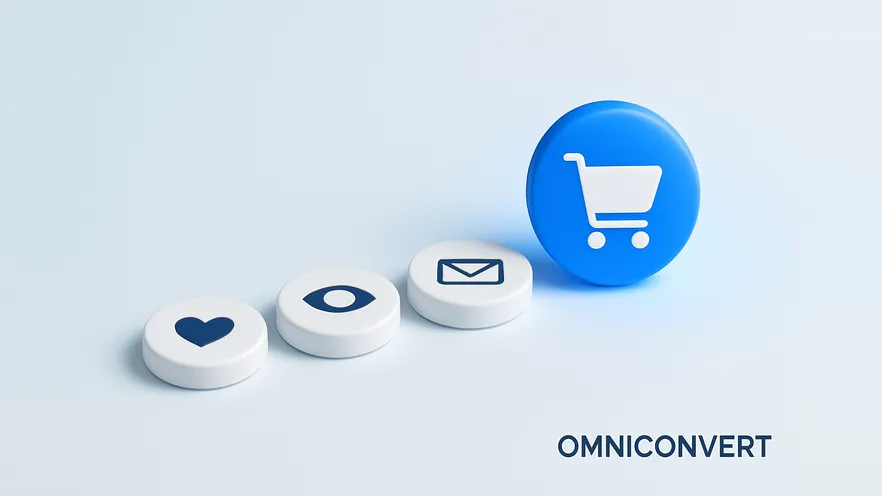
- A micro conversion is a small action that leads toward the main goal of a site, such as a filter use or an add to cart; a macro conversion is the main goal itself, such as a completed order.
- Micro conversions happen more often than purchases, so they show the effect of small changes that a purchase rate is too slow or too noisy to show.
- In Google Analytics 4, micro conversions are tracked as events and marked as key events. Key events replaced the goals of Universal Analytics.
- The micro conversions worth tracking are the ones that separate buyers from non-buyers on the main path to purchase, not every click on the site.
- A lift in a micro conversion is not a lift in revenue. Measure the macro conversion as a secondary goal in every test.
Micro conversions are the small actions visitors take before the main goal of a website. In eCommerce, the main goal is a sale, which is the macro conversion. Micro conversions are the steps that lead to it: using search or a filter, opening a product page, adding an item to the cart, joining an email list.
Most visitors do not buy on their first visit. Micro conversions show how far they got and where they stopped. Conversion rate optimization (CRO) specialists analyze them to find weak points in the sales or marketing funnel, such as the pages where people leave before they reach checkout. When you improve those steps, more visitors move through the whole funnel, and overall conversions increase.
What are micro conversions?
Common micro conversions on an online store include:
- Using the search bar or a search filter
- Looking at a specific product page
- Searching and comparing product prices
- Adding an item to the cart or a wishlist
- Starting checkout
- Visiting a landing page
- Joining an email list or subscribing to a newsletter
- Downloading a file, such as a size guide or catalog
- Engaging in social actions, such as a like or a share
Micro conversions also help you understand your audience. To see who micro-converts, you have to segment the traffic and identify the main buyer personas. When you analyze customer behavior and group visitors into segments, you can address each buyer persona with content that fits what it needs.
A micro conversion such as an email sign-up is also the first step toward a macro conversion. It builds a database of people who are interested in your business. Once your list is large enough, introduce subscribers into a sales funnel and test which subject lines and offers convert them best.
Micro conversions vs macro conversions
| Aspect | Micro conversion | Macro conversion |
|---|---|---|
| Definition | A step toward the main goal | The main goal of the site |
| eCommerce examples | Filter use, product view, add to cart, newsletter sign-up, begin checkout | Completed purchase; on some sites, a subscription or a submitted lead form |
| Frequency | Happens often, many times per visitor | Happens rarely, at most a few times per customer |
| Link to revenue | Indirect: signals intent | Direct: produces revenue or a lead |
| What it tells you | Where visitors stall and which step to fix | Whether the business outcome changed |
| Role in an A/B test | Primary goal for a test on one step; reaches significance faster | Secondary goal or guardrail that confirms the change pays |
One site's micro conversion can be another site's macro conversion. For a publisher, a newsletter sign-up can be the main goal. For an online store, it is a step toward a sale. Define both levels for your own business model before you set up tracking.
Micro conversions and the sales funnel
Nielsen Norman Group makes this point in its article on macro vs micro conversions (Tim Neusesser, updated 2024). Macro conversion rates can be slow to change, which makes it hard to judge incremental improvements to a product. Micro conversions let you measure the success of those improvements at a finer level.
Take a closer look at your store funnel. You will see several micro steps that people take before they open a product page and add an item to the cart. If you put all your effort into sales alone, you miss what happens at each of those steps.
The idea is not new. In 2001, Bryan Eisenberg wrote about micro-actions: "Conversion rates suffer when sites fail to drive customer micro-actions and maintain momentum through the sales path. Once the path is defined and each of the micro-actions described, you can work on optimizing the most effective call to action for each step."
For a deeper look at how to measure each step, see our guides to conversion funnel analysis and to using click-through rate to measure funnel conversion.
Which micro conversions should you track?
-
Define the macro conversionFor most stores it is a completed order. For a subscription business it can be the first paid subscription. Everything else is measured against it.
-
Map the main path to itList the steps a typical buyer takes: landing page, category or search page, filter, product page, cart, checkout. Each step is a candidate micro conversion.
-
Compare buyers with non-buyersFor each candidate action, compare the purchase rate of visitors who completed it with visitors who did not. The actions with the largest difference are the strongest signals of intent.
-
Find the step with the largest dropMeasure the share of visitors who move from each step to the next. The step that loses the most people is where optimization gives the biggest return.
For the wider set of numbers that sit around micro conversions, such as revenue per visitor and abandonment rate, see CRO metrics: the 10 categories that matter.
2 ways to drive micro conversions
1) Design a high-converting funnel
Your marketing or sales funnel should serve your ideal customers at every stage. At the top of the funnel (TOFU), a lot of people enter, for example when they fill out your sign-up form. Most of them are not ready to buy yet.
You may get some sales from them now and then, but you will make more money if you educate, entertain and inspire these people to move toward the bottom of the funnel (BOFU).
The hard truth is that when ideal customers visit your website for the first time, no matter how well targeted they are, most of them will not buy. If we push fresh visitors to buy at once, they ignore us. The better question is what the visitors who did not buy did before they left.
Here is a hypothetical example. Say 100 visitors arrive and 2 of them buy. Of the 98 who leave, suppose 40 leave from the landing page, 30 from a category page and 20 from the cart. Those exits are not the same problem. Visitors who leave from the landing page may not have found what they came for. Visitors who leave from the cart were close to a purchase and stopped for a specific reason. Find out why each group is not converting, for example with on-site surveys, before you change anything.
At the landing page stage, a request to add a product to the cart might make these visitors leave, because they are not ready to buy. Even though a sale is what you care about in the end, asking first-time visitors to buy right away is not smart. Ask for the next small step instead.
2) Target small wins
Think of a row of dominoes, where a small piece knocks over a larger one, which knocks over a larger one again. That is what micro conversions are about. Concentrate on small wins and stay consistent.
When you get traffic, push it to your category and search pages. Encourage visitors to use filters so that they reach relevant product pages. Then persuade them to add items to the cart and complete the order. At each stage, give visitors real value: buying guides, blog posts, videos, podcasts and product reviews.
Digital marketers such as Eben Pagan, Ryan Deiss, Pat Flynn and Yaro Starak have built their funnels on this idea of small, valuable steps before the sale. It works for eCommerce and physical products as it does for software: consumers like to take small steps that build confidence in a brand before they buy.
A micro conversion funnel for an online store usually works like this:
-
Visitor to subscriberThe first micro conversions are a product page visit and a subscription to your list.
-
Subscriber to shopperOnce they subscribe, engage them by email and help them think like shoppers.
-
Shopper to cartBring these shoppers back to product pages and get them to add items to the cart.
-
Cart to buyer, and buyer to repeat buyerNudge them to finish the order. Because they are already on your list, you can keep educating and inspiring them to come back and buy again.
-
Repeat buyer to fanIt does not stop there. Repeat buyers who become fans tell other people about your shop, and word-of-mouth referrals increase brand awareness and sales.
Top brands such as Apple and Amazon do not only go after quick sales. Their funnels are designed to turn a shopper into a fan. When the iPhone 6 came out, it was my spouse who told me about it, not Apple.
How to track micro conversions
If older guides tell you to set up micro conversions as "goals", they describe Universal Analytics. In GA4, Google calls these actions key events, and it now uses the word "conversion" only for Google Ads measurement (see conversions vs key events).
-
Collect the action as an eventGA4 collects some events automatically. Recommended ecommerce events such as view_item, add_to_cart and begin_checkout are sent when your store or tag setup sends ecommerce data. Custom actions, such as a filter use or a size guide download, need a custom event.
-
Mark it as a key eventIn GA4, go to Admin, then Events, find the event and click the star icon next to it. For an event that does not exist yet, create it and turn on "Mark as key event". Standard properties allow up to 30 key events.
-
Build a funnel reportPut your micro conversions in order in a funnel exploration to see the share of visitors who continue from each step to the next.
-
Add behavior and feedback dataHeatmaps and session recordings show what visitors do on the step that leaks. On-site surveys show why.
-
Test a fix with the micro conversion as the goalRun an A/B test with the micro conversion as the primary goal and purchases or revenue as a secondary goal, so you can see whether the step improved and whether sales followed.
Tools commonly used for this work include Google Analytics 4, Kissmetrics and Mixpanel for event analytics, Hotjar for heatmaps and recordings, and Omniconvert Explore for A/B testing, personalization and on-site surveys. In Explore, a micro conversion can be the goal of an experiment, which turns a funnel observation into a tested decision.
Micro conversion case study: filter users at TinaR
On an eCommerce website, people who use the search tool qualify as micro-converters: they have shown interest in a category of your store. When we investigated this segment for Omniconvert clients, visitors who used the search filter converted at a much higher rate than visitors who did not.
TinaR, one of the biggest fashion retailers in Romania, built a personalization experiment on this idea. Visitors who had not used the size filter saw an exit-intent popup that showed the available sizes. The goal was to help them find a product in their size and to increase sales in specific categories, such as dresses and sandals. The experiment increased the conversion rate for the targeted visitors.
The lesson applies beyond fashion. Find the micro conversion that predicts a sale on your store, then design an experience that helps more visitors complete it.
Why tracking micro conversions matters
The main advantages of tracking micro conversions are:
-
A complete view of successes and weak pointsYou see which steps perform well and which need work, not only the final sales number.
-
A better understanding of how customers use the siteEach tracked action adds detail to how visitors browse, compare and decide, which makes optimization more precise.
-
Leads you can recognize and addressVisitors who complete key micro conversions are moving toward a purchase. You can tailor your messages to them.
-
Bottlenecks found earlyA drop at one step shows a problem in the funnel that you can fix before it costs more sales.
-
A measure of interest in each offerClicks, sign-ups and adds to cart show which offers attract attention, even when purchases take longer to arrive.
One caution: micro conversions are signals, not the goal. A popup that doubles email sign-ups but distracts shoppers from checkout can reduce sales. Always read a micro conversion next to the macro conversion it is meant to support.
Optimizing for micro actions also strengthens your brand, because each small, useful step increases the trust customers have in you. For another perspective on this topic, see this article on micro-conversions in eCommerce.
Frequently Asked Questions
A micro conversion is a small action a visitor takes on the way to the main goal of a website. In eCommerce the main goal is a purchase, so micro conversions include using search or filters, viewing a product page, adding an item to the cart, joining an email list or starting checkout. Each one moves the visitor one step closer to buying.
A macro conversion is the primary goal of the site and brings revenue or a lead directly, such as a completed order. A micro conversion is a smaller action that usually comes before it, such as an add to cart or a newsletter sign-up. Macro conversions measure the result. Micro conversions measure progress toward it and show where the path breaks.
Common eCommerce micro conversions are using the search bar or a filter, viewing a product page, viewing product images or size guides, adding to a wishlist, adding to the cart, starting checkout, subscribing to a newsletter, creating an account, downloading a file and sharing a product on social media.
In GA4, every tracked action is an event. Make sure the action is collected as an event, then go to Admin, open Events and mark it as a key event with the star icon. Key events replaced the goals of Universal Analytics. Many eCommerce actions, such as add_to_cart and begin_checkout, are already standard GA4 events when your store sends ecommerce data.
Track the micro conversions that sit on the main path to purchase and that separate buyers from non-buyers. Compare the conversion rate of visitors who complete an action with those who do not. Actions that strongly predict a sale, such as filter use or add to cart, deserve attention. Actions that do not, such as a social share on a low-intent page, are context rather than targets.
There is no universal benchmark. Micro conversion rates depend on the industry, the audience, the traffic source and how each store defines the action. The most useful comparison is your own store over time, and each step against the step before it. Use a baseline from at least one full business cycle before you judge a change.
Yes. A micro conversion is often the best primary goal for a test on one step, such as a product page change measured by add-to-cart rate. It reaches significance faster than purchases because it happens more often. Always add revenue or purchases as a secondary goal, so a variation that increases clicks but reduces sales does not look like a win.
The common mistakes are tracking too many actions, optimizing an action that does not lead to sales, and reading a micro conversion lift as a revenue lift. Pick a small set of actions tied to the purchase path, check the effect on the macro conversion, and use A/B tests rather than before-and-after comparisons to prove cause.
If visitors do not feel confident enough to use your filters, open a product page or join your list, the problem is rarely the product. It is how well each page moves people to the next small step. Asking a first-time visitor to buy at once ignores how people decide. Asking them to take one small, useful action, then the next, builds the trust that a purchase needs, and it is the same trust that brings a buyer back. Pick the three or four micro conversions on your main purchase path, find the one with the largest drop, and test a fix for that step while you watch the effect on sales.
Turn micro conversions into test goals
Omniconvert Explore runs A/B tests, personalization and on-site surveys with any micro or macro conversion as a goal, so you see where a step improved and whether sales followed. More than 70,000 experiments across 7,000+ websites and 15+ industries, with a 23.2% average conversion uplift.