Fashion & Apparel Ads, October 2026: 49.1% Argue Identity and 64.3% Carry No Offer. Is Your Account in Both Lanes?

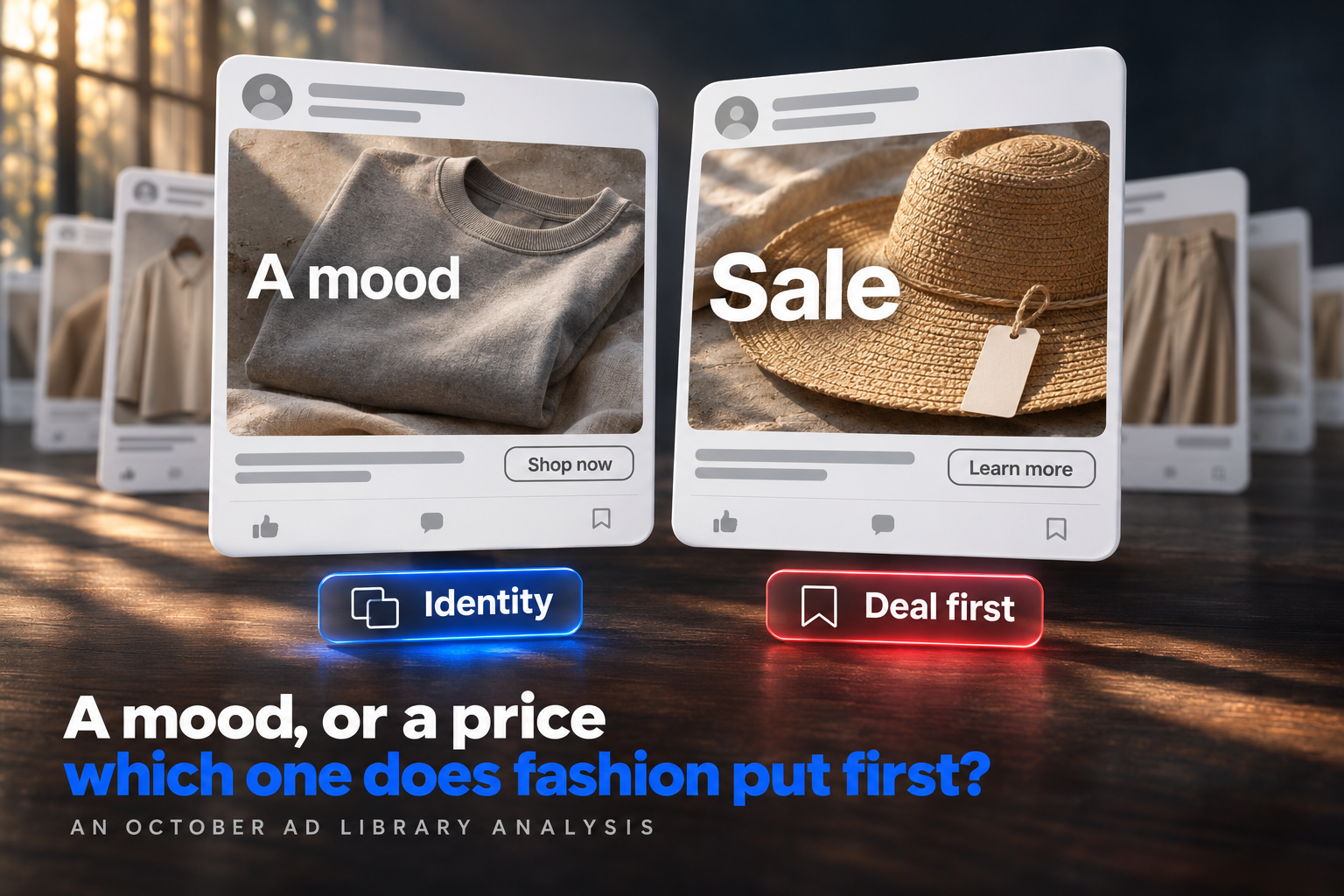
Scope: Fashion & Apparel ads across every country the eCommerceBenchmark Ad Library tracks. 10,196 ads active in October 2026 from 171 brands. No split by country or sub-category.
Open your closet. Now open your ad account.
Nearly half of fashion's ads in October were not selling a jacket. They were selling a version of you. Identity was the argument behind 49.1% of the vertical's ads. It ran on 151 of the vertical's 171 brands [eCommerceBenchmark Ad Library, 2026].
Most of the month's fashion ads named no deal either. 64.3% of the month's fashion ads carried no offer at all. Discount took 16%.
That is 10,196 ads, sorted four ways: what the ad argues, how it is staged, how it opens, and what it offers. Here is the mix, with the lines brands published themselves, so you can hold your own month against it.
- Your brand film is the house style, not a point of difference. Nearly half the category makes the same argument about who the shopper is. An identity ad is the price of entry, not your edge.
- The offer box is where fashion is thin. Most of the month's ads never mention a deal. A clear price or shipping line is something most of the ads around it do not carry.
- Two staging choices sit at the top together. Montage and cinematic b-roll are close. Between them they stage close to a third of the month's ads, so the ad beside yours may well be staged the same way.
Here is what the category argues, how it stages that, and what it puts on the tag.
Nearly half of fashion's October ads argue identity
A selling angle is defined as the argument an ad makes for buying: who the product says you are, or which problem it fixes. Identity was that argument in 49.1% of October's Fashion & Apparel ads. The next angle down, solution-aware, reached 10.3% of ads, across 97 brands [eCommerceBenchmark Ad Library, 2026].

Share of October 2026 Fashion & Apparel ads by selling angle, the four values the data ranks. Source: eCommerceBenchmark Ad Library, 2026.
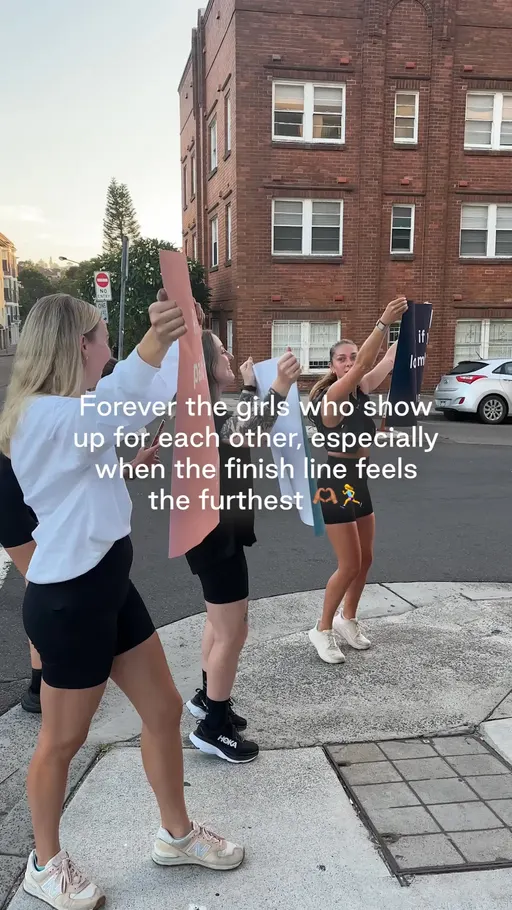
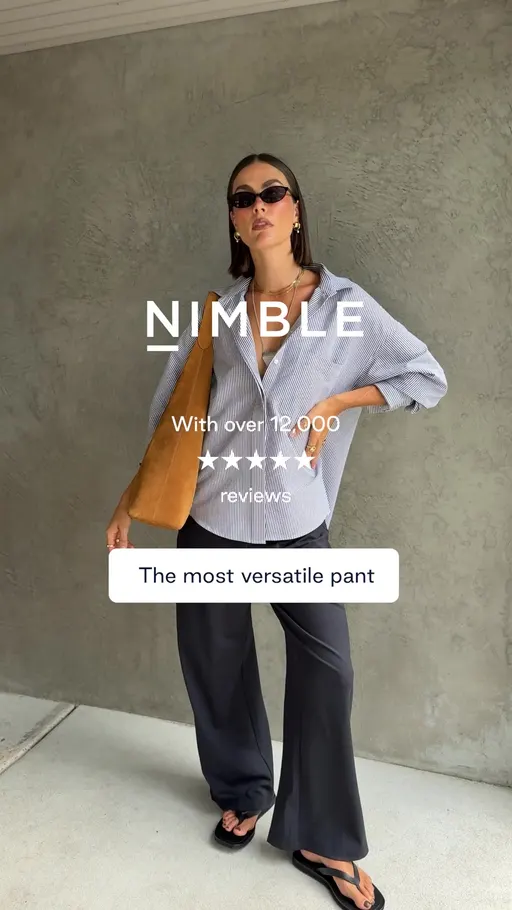
Four ads show what that sounds like. nimbleactivewear.com opens on "Forever the girls who show up for each other, especially when the finish line feels the furthest", under the headline "Activewear made for you". That ad has been on air 218 days. A long run only means the ad stayed live, not that it sold anything.
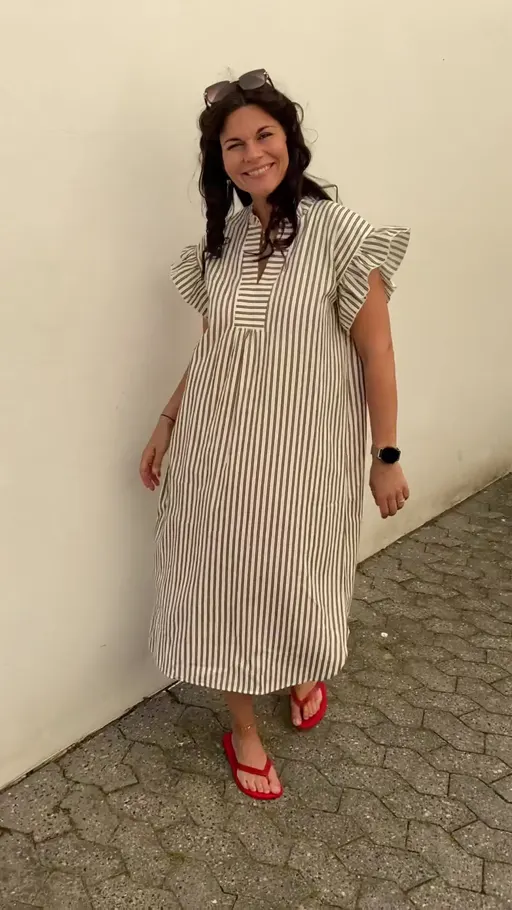
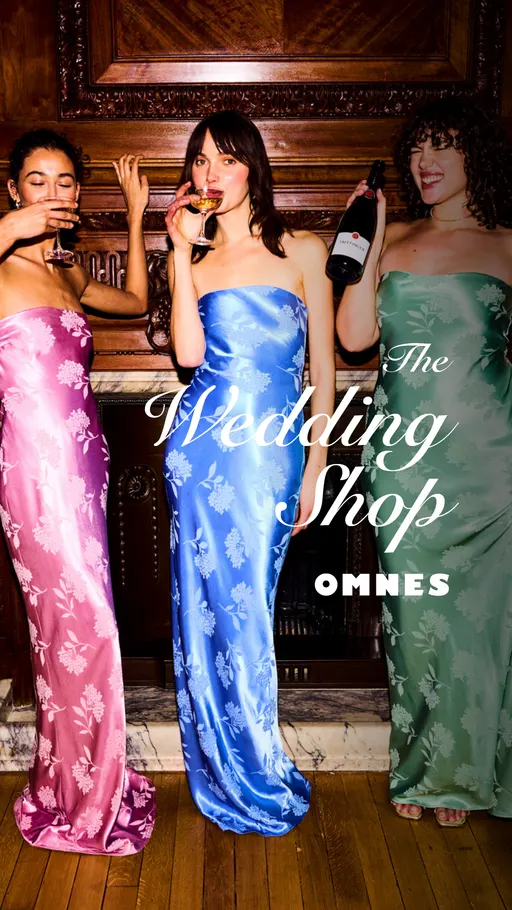
fashionbystrand.com opens "SKØN KJOLE SAY INA COPENHAGEN" (lovely dress, Say Ina Copenhagen; translation). ryderwear.com opens "A year of consistency now checking in". omnes.com opens on just three words: "The Wedding Shop".
None of those four lines names a problem. None names a price. Two of them speak to who the buyer is, and the other two simply name the dress or the shop.
So the argument is crowded. What about the way the ads are built?
Montage is the most crowded concept at 16.8%
A creative concept is defined as how an ad is staged on screen, such as quick cuts of several looks, or a banner built around the deal. Montage was the staging behind 16.8% of the month's ads, on 102 brands. Cinematic b-roll sits close behind at 15.1%, and product demo close-up ran 4.6% [eCommerceBenchmark Ad Library, 2026]. Compare these with each other only, because concept shares rest on fewer ads than the angle or offer splits.
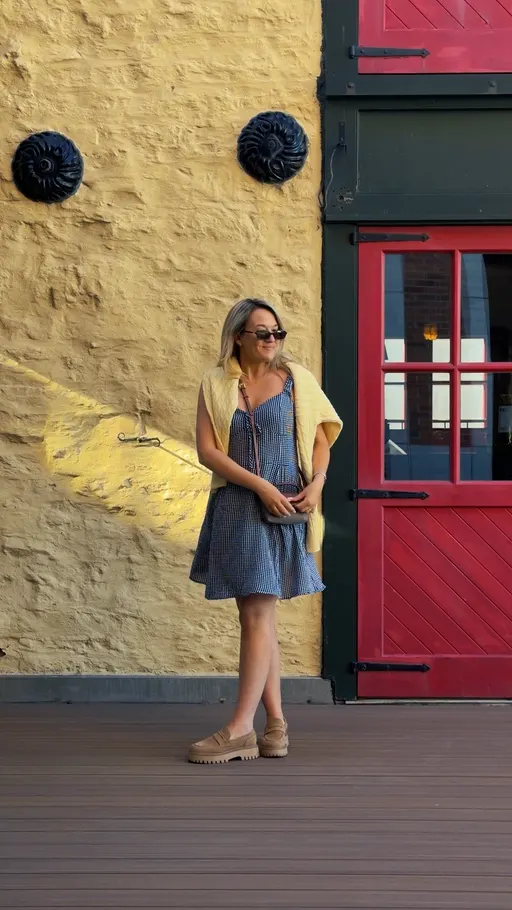
Share of October 2026 Fashion & Apparel ads by creative concept, the four values the data ranks. Source: eCommerceBenchmark Ad Library, 2026.
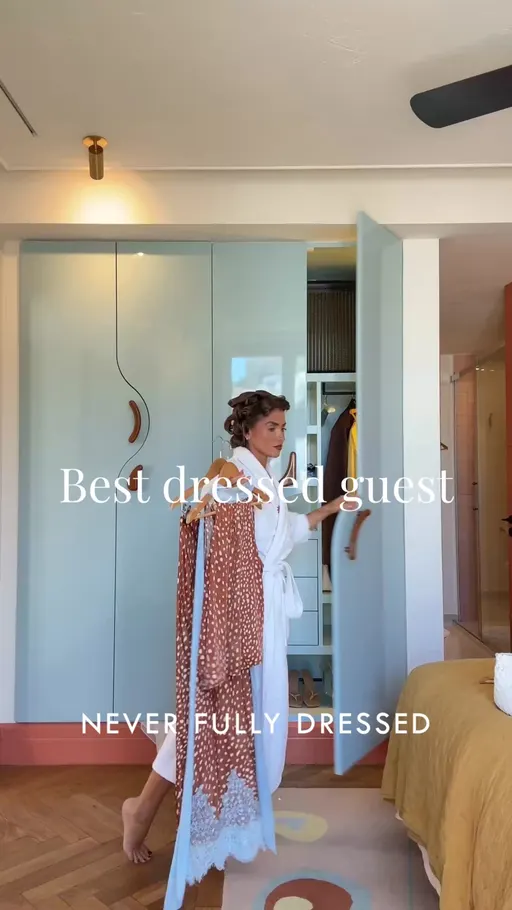
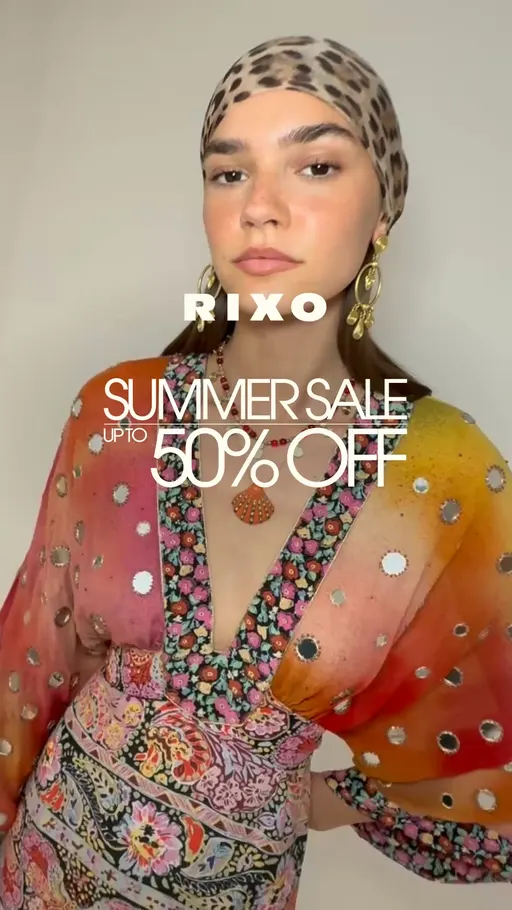
aubainerie.com opens "Ta robe, ton moment." (your dress, your moment; translation). nimbleactivewear.com opens "How it feels to own pants that look tailored but are actually activewear". neverfullydressed.com opens "Best dressed guest". rixo.co.uk opens "Up to 50% off", a deal carried by a run of looks rather than by the layout.
Two of those four lines could sit over almost any garment.
So where does the deal live in this category? Mostly nowhere.
When fashion leads with a deal, the deal is the layout
Most of the vertical skipped the offer line. 64.3% of October's ads carried no offer, and 161 brands ran at least one such ad. Discount took 16% and free shipping 5.1%. The staging that puts the deal in the frame, offer-first banner, ran 4% of ads [eCommerceBenchmark Ad Library, 2026].
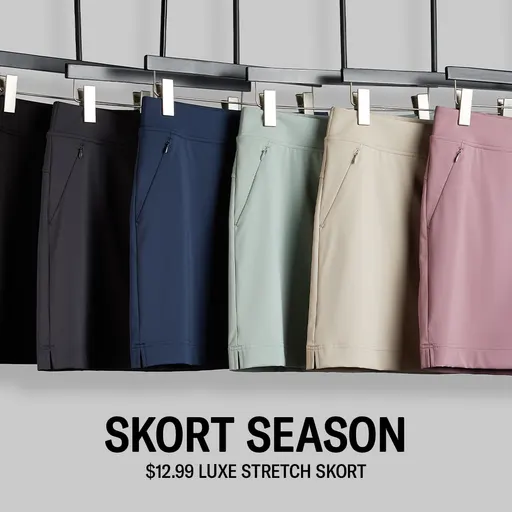
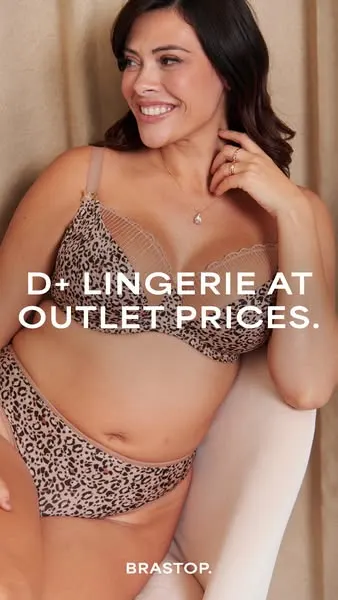
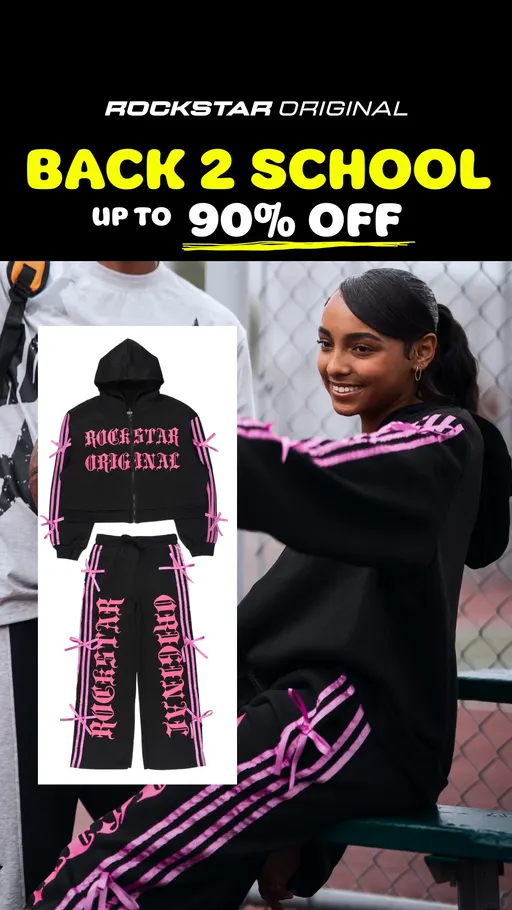
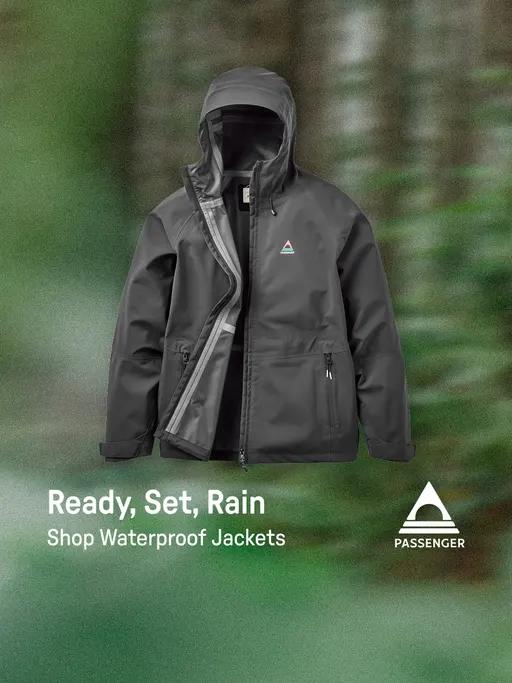
32degrees.com opens "$12.99 Skort Sale". brastop.com opens "D+ lingerie at outlet prices.", with "FREE 90 day returns." as the headline beside it. rockstaroriginal.com opens "Back to School, Back to Drip". passenger-clothing.com opens "Ready, Set, Rain..."
Three fashion tests for next month's batch
- One ad that names a problem. Run a solution-aware ad against your best identity control. Solution-aware took 10.3% of the vertical's ads, a thinner lane than the one you are in.
- A price in the first frame. Build one offer-first banner where the terms are the layout, not the caption. Only 4% of October's fashion ads were staged that way.
- A single shot against your montage. Hold one product in one shot instead of a run of looks. Montage staged 16.8% of ads, about one in six and the most of any concept, so a single shot steps out of the most-used staging.
The eCommerceBenchmark Ad Library sorts your ads into the same hooks, angles, concepts and offers used in this report and shows your mix next to the market, so you can see which shapes you have never shipped.
Audit my creatives, freeBefore you pick one, look at how big each lane really is. Here are all four layers on one page.
The four layers, side by side
In the angle and offer layers, one value runs well ahead of the rest. In the hook and concept layers, the top two sit closer together. Read each row against the other values in its own layer, never against a row from another: these are four separate splits of the same month.
| Layer | Most-run value | Share of October ads | Next value down |
|---|---|---|---|
| Opening hook | Curiosity gap | 17.4% [eCommerceBenchmark Ad Library, 2026] | Visual reveal, 13% [eCommerceBenchmark Ad Library, 2026] |
| Selling angle | Identity | 49.1% [eCommerceBenchmark Ad Library, 2026] | Solution-aware, 10.3% [eCommerceBenchmark Ad Library, 2026] |
| Creative concept | Montage | 16.8% [eCommerceBenchmark Ad Library, 2026] | Cinematic b-roll, 15.1% [eCommerceBenchmark Ad Library, 2026] |
| Offer | No offer | 64.3% [eCommerceBenchmark Ad Library, 2026] | Discount, 16% [eCommerceBenchmark Ad Library, 2026] |
One honest warning. Within this same read, identity and montage both took a larger share than in September. Past months get re-read as more ads are labelled, so a small move between months is softer than a gap between two rows in the same month. Take October's shares as the state of play and the moves as a hint at best.
The mistake: running a whole account in the identity lane
The practice is briefing every ad in the set as a statement about the shopper. No problem named. No price shown. Just a mood, a face and a logo.
Here is what it looks like from the outside. Your ad set opens on five versions of the same feeling, and none of them names a problem or a deal. And 151 brands in the vertical ran at least one identity ad in the same month [eCommerceBenchmark Ad Library, 2026], so most of your neighbours used that feeling at least once too. Crowding is not proof that the lane works. It only proves the lane is loud.
Your test card
Here is the price-in-the-first-frame test from the box, written the way a media buyer would set it up. Fill in your own numbers before you launch.
| Hypothesis | An offer-first banner, with the terms in the first frame, run against my identity control on an even budget split, will match or beat the control's cost per purchase. |
| Change only this | The first frame: the deal and its terms replace the brand line as the opening visual. |
| Keep the same | Audience, placement, budget, landing page, product and the identity control running alongside it. |
| Funnel stage | Say first whether this ad is for prospecting (cold) or retargeting (warm). A deal in the first line is often right for warm audiences and wrong for cold ones, so test it where the ad will really run. |
| Setup | One control and one variant, same audience, same placement, even budget split. Do not edit either ad while the test runs. |
| How long and how much | Until each version has about 50 purchases, or two full weeks, whichever comes later. This is general testing practice (Meta's own learning-phase guideline is about 50 results per ad set per week), not a library finding. |
| Success metric | Cost per purchase, not clicks. |
| Stop rule | Pause a variant that has spent about 3 times your target cost per purchase with no purchase. If it is close, keep it running. |
| What counts as a win | The variant beats the control on the metric by an amount you would act on, and still does in a second week. |
Key takeaways
- Identity argued 49.1% of October's Fashion & Apparel ads. It ran on 151 of the vertical's 171 brands [eCommerceBenchmark Ad Library, 2026], so treat it as the category default, not your edge.
- Solution-aware, the second angle, reached 10.3% of ads. Naming a problem is the thinner lane.
- 64.3% of the month's ads carried no offer, and 161 brands ran at least one such ad.
- Discount held 16% of ads and free shipping 5.1%, so price talk is the minority report in this vertical.
- Montage staged 16.8% of ads on 102 brands, with cinematic b-roll close behind at 15.1%. Compare concepts only with each other.
- Offer-first banner, where the deal is the layout, ran 4% of ads: the smallest of the four concepts shown here, and the clearest empty box.
- Read October's shares as the state of play, not the month-over-month moves. Past months get re-read as more ads are labelled, so a small move is softer ground than a gap between two values in the same month.
Questions
Sort your last month of fashion ads into the same four boxes this piece used: what each ad argues, how it is staged, how it opens, and what it offers. Nearly half the category argues identity, and most of it never names a deal. If your own offer box is empty too, that is the box to brief one ad into before the next budget cycle. Not because a deal ad wins. Because most of the ads around it name no deal.