Montage Was September 2026's Fastest-Rising Ad Concept. Here's Why You Shouldn't Rebuild Your Month Around It


Scope: all industries and every country the eCommerceBenchmark Ad Library tracks. 68,341 ads active in September 2026, compared with August 2026. Concept shares only, with no country or industry split.
Every month, one ad concept climbs faster than the rest. Every month, somebody re-briefs their whole plan around it.
Please don't be somebody.
In September 2026, that concept was Montage. Across 68,341 ads, no concept gained more share than this one. And yet it still holds less than one ad in a hundred. Let's see why that matters.
- The fastest riser of the month is a tiny lane. Its whole month fits in 634 ads from 173 brands. Big percentage jumps on small numbers are easy to over-read.
- It's cheap to test. Hardly anyone is there, so you're not entering a crowd. That also means there's no proof yet.
- The big lane didn't move. Your close-up control still holds the biggest share, so you have something steady to measure a new shape against.
First, what Montage actually is.
Montage rose from 0.6% to 0.9% of all ads
Montage is defined as a concept that cuts between several short moments in one ad, instead of holding a single scene. It carried 0.9% of all ads in September 2026, up from 0.6% in August. That's a gain of 0.3 points.
That's our figure for the month, and the rise is the whole story. Nothing else about the row is big. It tells you more brands put a cut-run ad in rotation than did in August. It does not tell you what any of those ads sold.
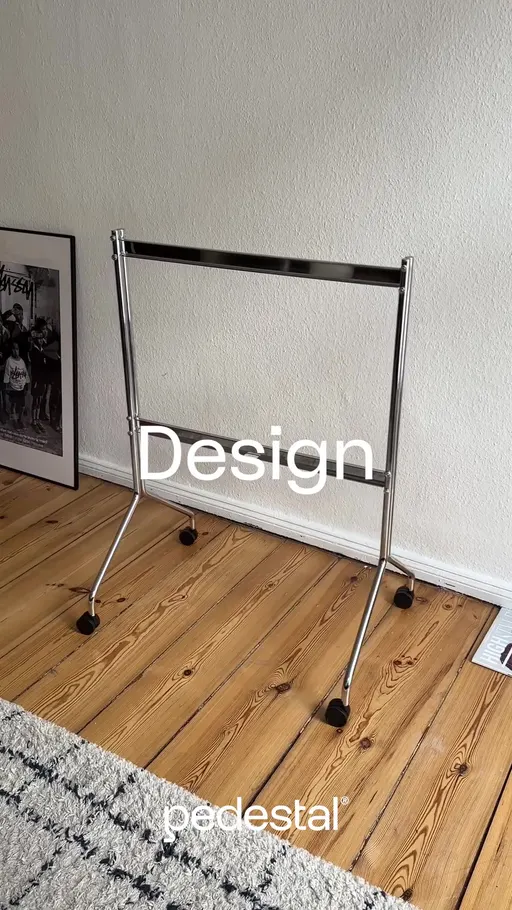


The longest run we can show under this concept is 218 days, from pedestal.com. Its opening line is one word: “Frihet”, which means “freedom”. Days on air say how long a brand kept an ad live, never what it sold.
Two more Montage ads sit in the same sample. hawkersco.com opens on a name and a drop, and has been on air 136 days. designbysi.dk opens on a point of view that puts you inside the brand's own community, at 103 days. Each of the three does its work in a few words, and then stops.
Now, was Montage the only one to move that much? Not quite.
Cinematic B-roll made the same move from a bigger base
Cinematic B-roll went from 4.6% to 4.9% of all ads, the same 0.3-point gain Montage made. Behind that share sit 3,326 ads from 744 brands.


So the month has two concepts tied on the size of the move, and nothing close on the size of the lane. 744 brands is a wide base. 173 is not. If you only have room to believe one of the two moves, believe this one, and keep the comparison inside the concept group, because concept shares rest on fewer ads than the other groups.
Two of its ads are in our named sample. properpasty.co.uk has been on air 269 days. budo-fight.com has been on air 267 days (that's time on air, not sales).
Enough reading. What do you actually do with this?
Three tests worth running
- One Montage cell against your control. Run a single cut-run ad for your current best seller against your existing control for a full month. Montage is 0.9% of all ads, so you're not entering a crowd.
- A three-word opener in front of it. Test a short naming line against a full sentence inside the same concept. The Montage ads named here open that way, and one has been on air 136 days.
- Nothing out of the big lane. Keep close-up product staging funded while you test. Product Demo Close-Up held 9.1% of all ads in both months, and 1,067 brands run it.
Skip the spreadsheet
The eCommerceBenchmark Ad Library sorts your ads into the same hooks, angles, concepts and offers used in this report and shows your mix next to the market, so you can see which shapes you have never shipped.
Audit my creatives, freeOne more look at just how small this lane is next to the others.
The lane is still small: 634 ads, 173 brands
A concept share is defined as the portion of all ads active in the month that carry that one concept. Here is how big each lane is.
Share of all ads by concept, September 2026. Rows under 300 ads are left out, including Problem agitation, Listicle and POV. Source: eCommerceBenchmark Ad Library, 2026.
Montage's 173 brands sit against 1,067 brands for Product Demo Close-Up, the largest concept. And here is what moved, side by side.
Change in share of all ads, September vs August 2026, in percentage points. Source: eCommerceBenchmark Ad Library, 2026.
Read those together and September looks calm, not new. The biggest concept didn't move at all. The row that moved most still fits inside 634 ads.
Last cycle's riser is a useful check. Offer-first banner added 0.2 points, from 0.9% to 1.1%, on 737 ads from 212 brands. It rose, and it's still a small row this month. Customer Testimonial Reel added 0.1 points to reach 1%, on 675 ads from 305 brands. A 0.3-point gain doesn't move Montage out of that group, and it doesn't put it anywhere near the top of the table.
So the verdict is a test, not a copy. Copy belongs to rows that hold share across both months. Watching belongs to rows too thin to brief from. Montage sits between the two: big enough to put one cell behind, small enough that one month of it proves nothing.
Finally, the mistake that gets made when a riser shows up.
Chasing the monthly riser and losing your control
The common move is to read the fastest riser as a mandate and re-brief the whole month around it. It's tempting to move the whole budget before it's been tested. A 0.3-point gain inside a 0.9% lane can't carry that weight.
When a field does it together, a lane of 173 brands fills up inside a month, and nobody is left with a stable baseline to read the next move against. Keep the control funded and give the riser one cell.
Your test card
Here is the first test from this article, set up the way a media buyer would run it. Fill in the blanks with your own numbers, and write them down before you launch.
| Hypothesis | One Montage cut-run ad will land within my control's cost per purchase, so it is worth a second test. |
| Change only this | The concept only: cut several short looks at the same best seller into one ad. |
| Keep the same | Product, offer, audience, placement and budget split. Keep the close-up control funded. |
| Funnel stage | Say first whether this ad is for prospecting (cold) or retargeting (warm). A deal in the first line is often right for warm audiences and wrong for cold ones, so test it where the ad will really run. |
| Setup | One control and one variant, same audience, same placement, even budget split. Do not edit either ad while the test runs. |
| How long and how much | Until each version has about 50 purchases, or two full weeks, whichever comes later. This is general testing practice (Meta's own learning-phase guideline is about 50 results per ad set per week), not a library finding. |
| Success metric | Cost per purchase, not clicks. |
| Stop rule | Pause a variant that has spent about 3 times your target cost per purchase with no purchase. If it is close, keep it running. |
| What counts as a win | The variant beats the control on the metric by an amount you would act on, and still does in a second week. |
Key takeaways
- Montage climbed from 0.6% of all ads in August 2026 to 0.9% in September, a gain of 0.3 points [eCommerceBenchmark Ad Library, 2026].
- Cinematic B-roll matched that gain, moving 4.6% to 4.9% on 3,326 ads from 744 brands.
- Montage's lane is 634 ads from 173 brands, against 1,067 brands for Product Demo Close-Up, which held 9.1% in both months.
- Offer-first banner, last cycle's riser, added 0.2 points to reach 1.1% on 737 ads.
- The longest-running Montage ad we can show, from pedestal.com, has been on air 218 days. That is time on air, not sales.
- Give the riser one test cell and keep your control funded.
Questions
Sort your last month of ads into four boxes: Product Demo Close-Up, Cinematic B-roll, Offer-first banner and Montage. The first box is where most of the market still sits, at 9.1% of all ads in both August and September. The last box is the one that moved, 0.6% to 0.9%. If your Montage box is empty, that is one test cell for this month, not a new quarter. If your close-up box is empty, that is the bigger gap, and it is the one to fill first. Then check the row again next month, before any real budget follows it.