Hall of Fame, October 2026: Three Ads Ran Over a Year, and Not One Names a Price or a Date. Spot the Trick?

Scope: all industries and all countries the eCommerceBenchmark Ad Library tracks, 184,481 Meta ads ranked by days on air. The pool covers 2,573 brands. This cut has no per-industry and no per-country split.
Pull up the ad in your account that has run longest. Now read only its first line.
Got it? Good. Hold that thought, because we are about to show you three lines that have been on air for more than a year. Welcome to the Hall of Fame.
The longest-running cut of the eCommerceBenchmark Ad Library holds 25,228 Meta ads from 1,571 brands, counted at the October 2026 pull [eCommerceBenchmark Ad Library, 2026]. Three of them can be shown whole here. Each one has been on air well past a year.
One rule before we start. Days on air tell us how long a brand kept paying to show an ad. This file holds no sales or profit data. So a long run never means an ad sold. It only means somebody kept it live.
- The oldest lines in this gallery have nothing in them that can go out of date. No price, no date, no count.
- Ads that carry a price or a date get swapped when the price or the date changes. That is our reasoning, not something we measured.
- You can check your own oldest ad in one minute. Read its first line and mark what can expire.
Below: the three cards, grouped by what their first words do, and the one thing to copy from the way they are built. First, the two that talk about news.
News and First Word, With No Date Attached
Days on air is defined as how long a brand kept one ad live, counted up to the October 2026 pull. Two of the three gallery lines point at something new or something coming. Neither one pins it to a day.

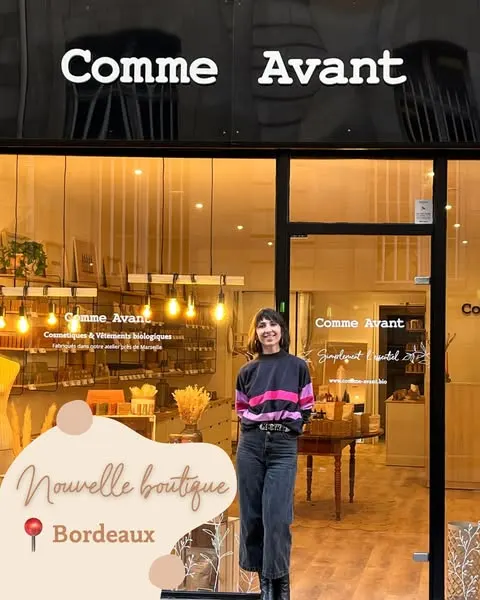
Kick Game opens with "FIND OUT FIRST". That ad has been on air 427 days. Comme Avant opens with "Grande nouvelle : notre boutique Comme Avant ouvre enfin à Bordeaux !". In English: big news, our Comme Avant shop is finally opening in Bordeaux. That one has been on air 451 days [eCommerceBenchmark Ad Library, 2026], the longest run in the gallery we can show.
Read the two openers side by side. One says you will know before other people do. The other says news has arrived. Neither names a launch day, a deadline, a price or a count.
The second one is the sneakier case. A shop opening happens once. Yet the words carry no date, so the line does not get old along with the event it talks about. The thing you are asked to find out, and the news itself, sit outside the opening words.
So that is news. What happens when an ad just says it is good, and stops there?
A Quality Stated Flat, With No Number to Check
The third gallery line states a quality and stops. Ethical Nutrition opens with "Great products, outstanding service...", an ad on air 443 days [eCommerceBenchmark Ad Library, 2026].

Count what is in it: four words, two claims, no figure. There is no rank inside the line, no star count, no "since" year and no price. There is nothing a reader could check against a calendar.
That is what all three cards share, read only from their own words. The opening holds the promise or the quality. Every part that can change sits somewhere else in the ad.
Days on air for the three gallery lines, counted up to the October 2026 pull. This is time live, not sales. Source: eCommerceBenchmark Ad Library, 2026.
Ready to turn this into something you can run? Here are three tests.
What to test
- A first line with nothing dated in it. Rewrite your longest-serving ad's opener so no price, date or stock word appears, and run it against the current control. 1,571 brands hold at least one ad in this longevity cut.
- Three words, then stop. Test a bare promise of first word, in the shape of Kick Game's line that has been on air 427 days, against your usual multi-clause opener.
- A flat quality claim with no figure. Open on the quality and leave the proof to the headline, the way a line on air 443 days does, against your spec-led opener.
Where does your account sit?
The eCommerceBenchmark Ad Library sorts your ads into the same hooks, angles, concepts and offers used in this report and shows your mix next to the market, so you can see which shapes you have never shipped.
Audit my creatives, freeBefore you feel too small next to a Hall of Fame, a fair question: how rare is it to be in the pool at all?
How Many Brands Hold a Place in the Longevity Pool
The longevity cut is defined as every tracked Meta ad in the library ranked by how long it has been on air, longest first. Of the 2,573 brands in scope, 1,571 hold at least one ad in that cut [eCommerceBenchmark Ad Library, 2026]. A place in the pool is common, not rare.
Brands in the longevity pool, all industries and countries tracked, October 2026 pull. Source: eCommerceBenchmark Ad Library, 2026.
| What is counted | Count |
|---|---|
| Meta ads in scope, ranked by days on air | 184,481 |
| Ads in the longest-running cut | 25,228 |
| Brands in scope | 2,573 |
| Brands with at least one ad in the cut | 1,571 |
Read the pool as a ranking by time, not a shortlist of good ads. An ad launched last month cannot be in it at all. Three named cards out of a pool this size is a gallery, not a census. The pool almost certainly holds dated and price-led openers that ran just as long. Nothing here is claimed beyond the words on these three cards.
One last thing. Why do so many teams end up with lines that expire?
The Mistake: Putting the Part That Expires in the First Line
Most briefs hang the opening line on the part of the ad that changes: the price, the launch date, the words back in stock. That ties the whole creative to a short window.
The line then gets replaced on a calendar, not on a decision. The only thing the team builds is a queue of replacements. And when a whole category briefs that way, every ad in it goes stale in the same week. Nothing in the account is old enough to compare a new line against.
Your test card
Here is the first test from this article, set up the way a media buyer would run it. Fill in the blanks with your own numbers, and write them down before you launch.
| Hypothesis | A first line with no price, date or stock word will perform as well as my dated line, with less rework. |
| Change only this | The first line only: nothing that can go out of date. |
| Keep the same | Picture, body, button, audience and placement. |
| Funnel stage | Say first whether this ad is for prospecting (cold) or retargeting (warm). A deal in the first line is often right for warm audiences and wrong for cold ones, so test it where the ad will really run. |
| Setup | One control and one variant, same audience, same placement, even budget split. Do not edit either ad while the test runs. |
| How long and how much | Until each version has about 50 purchases, or two full weeks, whichever comes later. This is general testing practice (Meta's own learning-phase guideline is about 50 results per ad set per week), not a library finding. |
| Success metric | Cost per purchase, not clicks. |
| Stop rule | Pause a variant that has spent about 3 times your target cost per purchase with no purchase. If it is close, keep it running. |
| What counts as a win | The variant beats the control on the metric by an amount you would act on, and still does in a second week. |
Key takeaways
- 451 days on air for Comme Avant's shop-opening line [eCommerceBenchmark Ad Library, 2026], the longest run in the gallery we can show, and its words name no date.
- 443 days on air for Ethical Nutrition's "Great products, outstanding service...": a quality stated flat, with no figure in the line.
- 427 days on air for Kick Game's "FIND OUT FIRST": three words, a promise of first word, no price.
- 25,228 Meta ads sit in the longest-running cut; read it as a ranking by time, so ads launched recently are not in it.
- 1,571 of the brands in scope hold at least one ad in that cut, so a place in the pool is common, not rare.
Questions
Sort your last month of ads by days on air and read only the first line of the oldest one. Then mark every part of it that can expire: a price, a launch date, a stock word, a count. The three gallery lines past a year hold none of those, and the longest of them has been on air 451 days. If your oldest opener holds one, that is the line to rewrite before the next budget cycle, and the detail that changes can move into the headline where it belongs.