Bold Claim Opened 19.1% of Health & Wellness Ads in September 2026. Is Your First Line in That Lane?

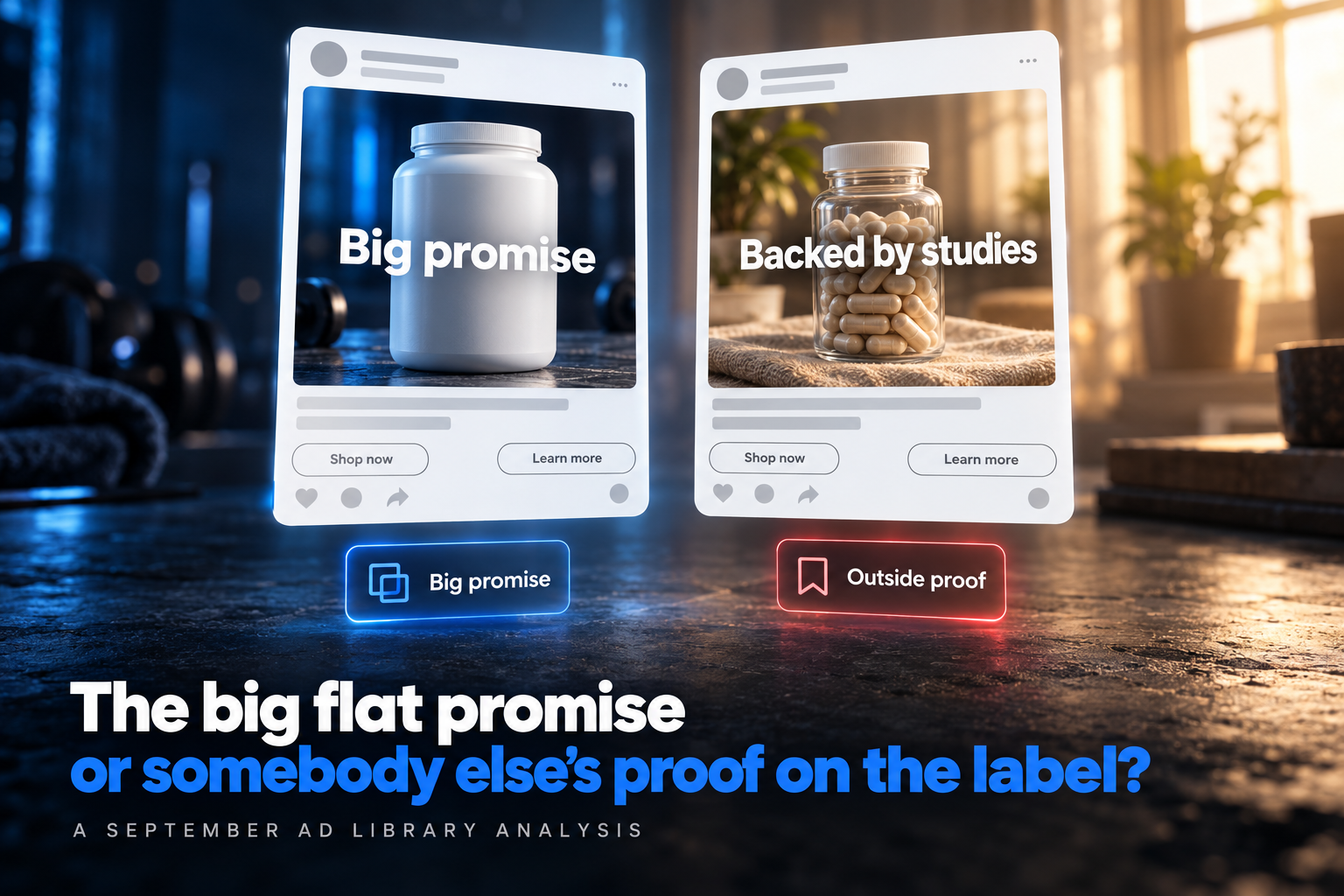
Scope: Health & Wellness ads across every country the eCommerceBenchmark Ad Library tracks, 2,965 ads active in September 2026 from 122 brands, set against August 2026. No split by country or by product type.
Scroll a wellness feed for ten seconds. Count the promises.
You will hit one fast. The plain promise is the most crowded opening in this category. Bold claim opened 19.1% of Health & Wellness ads in September 2026, which is 566 ads run by 70 of the 122 brands in scope [eCommerceBenchmark Ad Library, 2026].
That puts it 7.7 points clear of the next hook, authority, at 11.4%. It also made the biggest hook move of the month, up from 17.7% in August.
Here is the lane, the gap, the ads in their own words, and what to do with your own first line.
- The crowded lane is also the moving lane. Bold claim did not hold flat between August and September 2026. It grew. If you retired your plain promise for being obvious, the rest of the category did not follow you out the door.
- Seventy brands is a benchmark, not a trend. When 70 of 122 brands open this way, a claim-free first line is the odd one out in your category. Your ad then has to earn the stop some other way.
- Share is presence, not proof. These numbers show what brands ran, not what sold. Use them to pick what you test next month, never as evidence that a line already works.
Bold Claim Opens 19.1% of September's Health & Wellness Ads, on 70 of 122 Brands
A bold claim hook is defined as an opening line that states a large promise about the product straight out, with no setup and no hedge. It opened 19.1% of the vertical's ads in September 2026, on 566 ads from 70 of the 122 brands in scope [eCommerceBenchmark Ad Library, 2026].
Those shares count every ad running in the month, not only the ones launched in it. No other hook in these numbers comes near that reach.
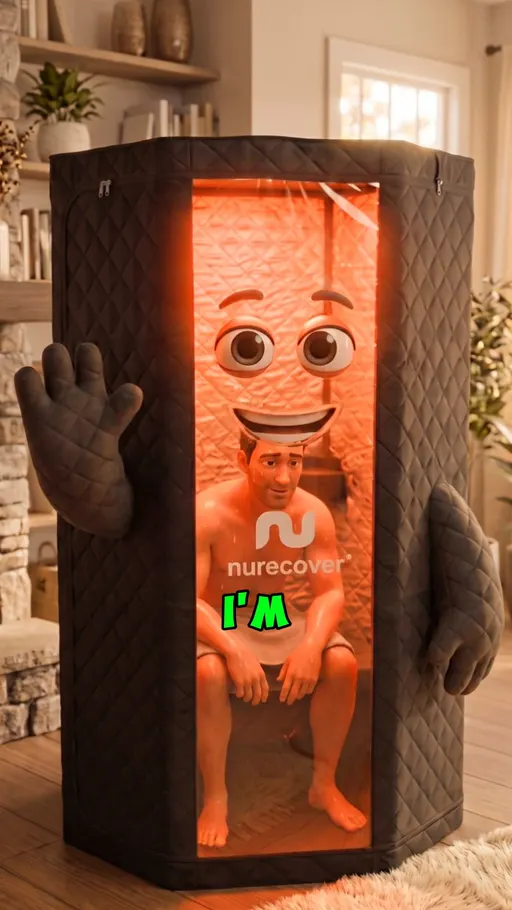
Look at what the lines do. canadianprotein.com opens on "Bake Better. Fuel Harder. 🍞". biome.com.au opens on "The petroleum-free glow-up you deserve". nutritionwarehouse.com.au keeps it to three words, "Clean protein boost". nurecover.com goes long and strange: "I'm the Nurecover sauna and I burn 623 calories while you sit inside me doing absolutely nothing". And laurelbox.com opens on "Flowers die in a week. Grief lasts a lifetime.".
Five different brands, one sentence shape. Each names a result or a difference before it names the thing in the box. None of them warms up first.
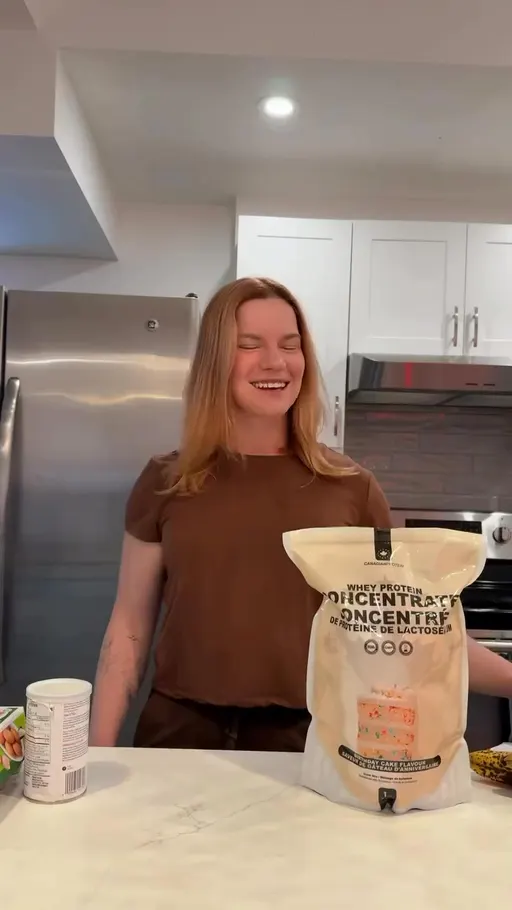
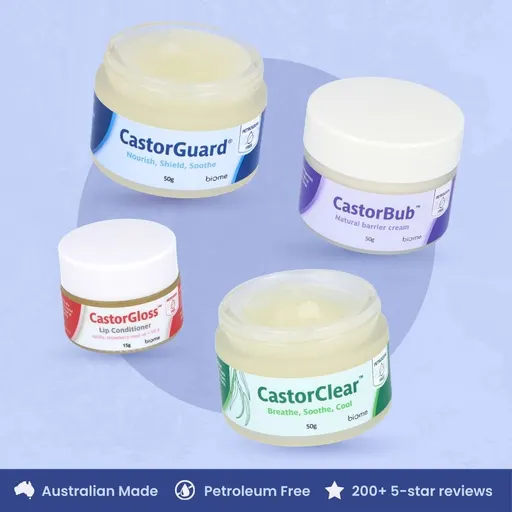
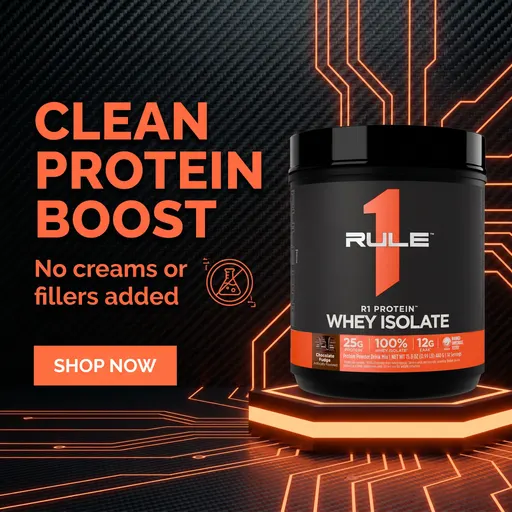

One honest warning. The shares here count all 2,965 Health & Wellness ads active in September 2026. The named lines come from a separate Meta sample filed under the same hook, 189 ads deep, run by 26 brands. Read the lines as examples and the shares as the count, and never add the two together.
So what does the second lane sound like? It hands the believing to somebody else.
Authority Sits 7.7 Points Back at 11.4%
An authority hook is defined as an opening line that leads with outside proof, such as a rank, a study, or a count of users. It was the vertical's second most run opening at 11.4% of September's ads [eCommerceBenchmark Ad Library, 2026].
That is 337 ads in the month. Across the month, 49 brands ran at least one, which leaves the claim lane 7.7 points and 229 ads ahead: 566 claim ads against 337 proof ads.
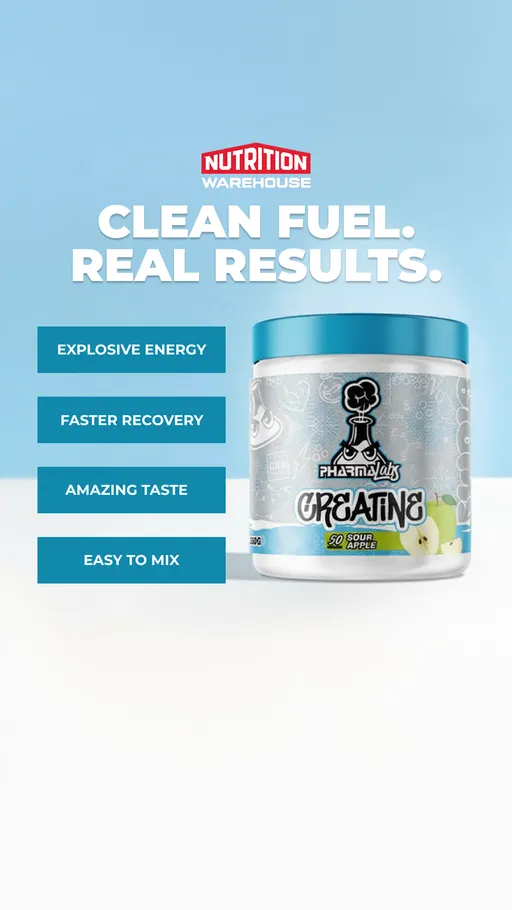
The lines sound nothing like the promise lane. nutritionwarehouse.com.au opens on "Creatine Backed by Science". milky-mama.com leads with a crowd, "300,000+ Moms Trust Milky Mama". happyhealthyyou.com.au puts a count inside the question, "Why 31,518+ women recommend this menopause supplement". pandatea.fr opens on its own sales rank, "N°1 des ventes Panda Tea" (Panda Tea's number one seller, translated from French, and the rank is the brand's own words).
A lab, a crowd, a shelf rank. Each one asks you to trust a third party before it asks you to want anything.



One of these two lanes moved more than anything else on the ladder. It was not the proof lane.
The Biggest Hook Move of the Month: 17.7% to 19.1%
Bold claim held 17.7% of Health & Wellness ads in August 2026. In September it reached 19.1% [eCommerceBenchmark Ad Library, 2026], a climb of 1.4 points, and nothing else in these numbers moved that far.
| What moved | Before → after | Change |
|---|---|---|
| Bold claim hook | 17.7% → 19.1% | ▲ 1.4 pt · +8% |
| Direct question hook | 7.8% → 8.2% | ▲ 0.4 pt · +5% |
| Relatability hook | 10.7% → 11% | ▲ 0.3 pt · +3% |
| Authority hook | 12.1% → 11.4% | ▼ 0.7 pt · -6% |
| Curiosity gap hook | 9% → 8.3% | ▼ 0.7 pt · -8% |
The rest shuffled. Authority went from 12.1% of ads to 11.4%. Curiosity gap went from 9% to 8.3%. Relatability edged up to 11%, and direct question to 8.2%. A fall there is a fall in share and nothing more: nothing in this data records a brand taking an ad down.
That gives you three openers worth running next week.
Three opener tests for a health account
- A claim-first opener. Your single biggest product promise as the first three words, against your current control. Bold claim already opens 19.1% of this vertical's ads.
- Proof as the first line instead. Move your rank, study or user count into the opener and run it beside the claim version. Authority opens 11.4% of ads, on 49 brands.
- One promise per ad, not three. Split a stacked opener into two ads that each promise one thing. The claim lane carries 566 ads in the month, so one sharp promise is your way out of sounding like the rest.
The eCommerceBenchmark Ad Library sorts your ads into the same hooks, angles, concepts and offers used in this report and shows your mix next to the market, so you can see which shapes you have never shipped.
Audit my creatives, freeBefore you pick one, look at how big each of these lanes actually is.
The Hook Ladder Behind the Answer
Five hooks carry a September share here, from bold claim at the top down to direct question at 8.2%. Relatability is the third lane at 11% of ads [eCommerceBenchmark Ad Library, 2026].
| Hook | Share of September ads | Ads | Brands |
|---|---|---|---|
| Bold claim | 19.1% | 566 | 70 |
| Authority | 11.4% | 337 | 49 |
| Relatability | 11% | 327 | 31 |
| Curiosity gap | 8.3% | not given | not given |
| Direct question | 8.2% | not given | not given |
It ran on 327 ads, from 31 brands, the narrowest brand base of the three leaders. Below it sit curiosity gap at 8.3% and direct question, and the facts give ad and brand counts for the top three hooks only.
The mistake: writing the biggest promise and stopping there
Here is the practice: treating the claim lane as a format instead of a sentence. Open loud, stay general, let the product name carry the rest. Feel better than ever. Your best skin yet. The upgrade you deserve. A line like that could sit on any tub, jar or patch in the aisle.
Now put 70 brands in one category doing it in the same month [eCommerceBenchmark Ad Library, 2026]. A shopper meets the same shape of sentence over and over, and reads past all of them, yours included. The lane is not the problem. A promise nobody can check is.
Your test card
Here is the first test from the box, written the way a media buyer would set it up. Fill in your own numbers, and write them down before you launch.
| Hypothesis | A claim-first opener, with my biggest product promise in the first three words, will hold my cost per purchase against my current control without taking budget from it. |
| Change only this | The first line of the ad copy, rewritten so the promise lands before the product name. |
| Keep the same | Creative, headline, offer, audience, placements, landing page and budget. |
| Funnel stage | Say first whether this ad is for prospecting (cold) or retargeting (warm). A deal in the first line is often right for warm audiences and wrong for cold ones, so test it where the ad will really run. |
| Setup | One control and one variant, same audience, same placement, even budget split. Do not edit either ad while the test runs. |
| How long and how much | Until each version has about 50 purchases, or two full weeks, whichever comes later. This is general testing practice (Meta's own learning-phase guideline is about 50 results per ad set per week), not a library finding. |
| Success metric | Cost per purchase, not clicks. |
| Stop rule | Pause a variant that has spent about 3 times your target cost per purchase with no purchase. If it is close, keep it running. |
| What counts as a win | The variant beats the control on the metric by an amount you would act on, and still does in a second week. |
Key takeaways
- Bold claim opened 19.1% of Health & Wellness ads in September 2026 [eCommerceBenchmark Ad Library, 2026], the most run opening hook in the vertical.
- The lane carried 566 ads in the month, more ads than any other hook on the ladder.
- 70 of the 122 brands in scope ran at least one claim-first opener, which makes a promise-free first line the exception here.
- Authority came second at 11.4% of ads, on 337 ads from 49 brands.
- Authority's share fell from 12.1% in August to 11.4% in September.
- Curiosity gap slipped from 9% to 8.3% of ads, while direct question edged up to 8.2%.
- The named example lines come from a narrower pool of 26 brands, so read the lines as examples and the shares as the count.
Questions
Pull your last month of ads and sort the first lines into four piles: a flat promise, outside proof, a story that sounds like your customer, and a question. In this category the promise pile is the one the most brands crowd, at 19.1% of September's ads, and it is the pile that grew. If your promise pile is empty, that is the test to write before your next budget cycle. If it is full of lines that could sit on any tub, jar or patch in the aisle, that is the same test with more work in it: name the one result your product delivers, put it in the first three words, and make it specific enough that a stranger could check it.