Market Segmentation: Types, Benefits and How It Grows Profit

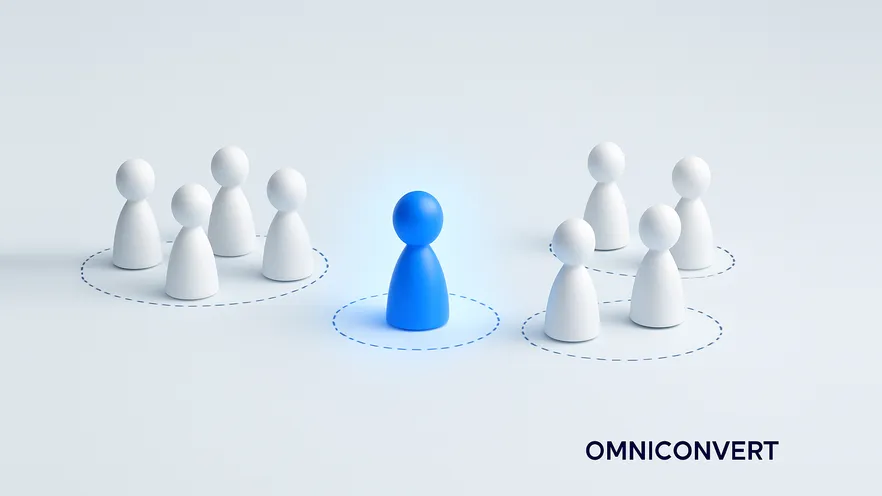
- Market segmentation divides a market, including prospects, into groups with shared characteristics or behaviors so you can tailor products and marketing to each one.
- The four core types are demographic, geographic, psychographic and behavioral. Occasion-based, benefit-based and customer-status segmentation extend the list to seven.
- Segmentation affects profit through three metrics: lower customer acquisition cost, higher retention and higher customer lifetime value.
- Over-segmentation creates groups too small to reach efficiently; under-segmentation creates groups too broad to resonate with anyone. Both waste budget.
- A market segmentation strategy runs in five steps: set objectives, find possible segments, analyze and eliminate, choose the metrics, then use and monitor the segments.
Market segmentation is the process of dividing a market of current and potential customers into smaller groups that share characteristics, needs or behaviors, and then tailoring your products and marketing to each group. It is how you move from one message for everyone to messages that resonate with a specific audience, and it shows up in your profit through lower acquisition cost, better retention and higher customer lifetime value.
As a marketer, do you ever feel like you're throwing spaghetti at a wall, hoping it sticks? (yet it never does?) It's not a pleasant feeling. It erodes your confidence, feeds the impostor syndrome, and doesn't help you make an impact on your company's revenue.
If that describes your situation, it's time to get strategic with market segmentation, a crucial component of any successful marketing strategy. However, it's not all sunshine and rainbows: segmentation comes with traps that can leave you back at square one. This article covers the types of market segmentation, their benefits, the errors to avoid, and a step-by-step strategy to segment your target audience.
What is market segmentation?
With market segmentation, you create segments whose members share similarities, then target them with specific, curated marketing to persuade them to become your customers, or to stay with you longer.
When done right, market segmentation is a way to differentiate yourself from similar competitors. You become a better marketer and serve your customers better by creating tailored messaging and products for specific target audiences.
Market segmentation vs. customer segmentation
The two terms are often used interchangeably, but they operate at different scopes. Market segmentation looks at the whole market, including people who have never bought from you, and decides who to target, what to build and how to position it. Customer segmentation looks at the customers you already have, usually through first-party purchase data, and decides how to retain, personalize and grow them. If you want the models behind that second job, read our guide to customer segmentation models.
How does market segmentation work?
To understand market segmentation better, imagine you're throwing a dinner party for your family, friends and work colleagues.
You want everyone to have a great time, yet you know your guests have different tastes, preferences and ideas of a "good time." Some like pizza, others are vegans, some love dancing, others are metalheads, and introverts and extroverts alike will be under the same roof. Some guests want to party hard; others want a long conversation.
So, to make sure you don't lose your friends to an awkward dinner party, you split the guests into groups and think about what each group might want. You order pizza but provide vegan options, set up a dancing area, and prepare a cozy spot on the balcony for midnight conversations.
Now everyone can enjoy themselves, even though your guests are diverse, and you get the award for host of the year. (Maybe your friends will even help with the cleanup.)
In the same way, market segmentation helps you adapt your products and marketing messages to different groups in your target market based on their specific preferences, challenges and desires. You move away from one-size-fits-all campaigns toward customized ones that resonate with each group and ultimately drive more sales.
Why does market segmentation matter for profit?
Instead of casting a net and hoping to catch as many customers as possible (and usually failing), you go after specific groups of consumers who share similar needs, desires or characteristics. That lets you tailor your marketing and products to what those people want. The result is better marketing effectiveness, more sales and higher customer loyalty.
Segmentation also surfaces niche opportunities you may have overlooked. Once you see a group whose needs nobody is meeting, you can upgrade your product assortment or service bundles for it, win market share and serve more diverse customers.
Last but not least, segmentation lets you build products and services designed specifically for customers' needs. You earn customers' hearts by proving you understand and care about their preferences, which gives them no rational reason to churn.
All of this lands in three numbers you already track:
| Profit lever | What segmentation changes | How to read it |
|---|---|---|
| Customer acquisition cost (CAC) | Ads and offers reach the groups most likely to buy, with a message written for them | CAC falling per segment while volume holds means targeting is working |
| Retention | Each segment gets a customer journey, recommendations and emails that fit its needs | Compare repeat purchase rate by segment; a flat line across all of them means the segments are not different enough |
| Customer lifetime value (CLV) | Budget and product development go to the most profitable segments first | CLV-to-CAC per segment shows where each marketing dollar returns the most |
| Market share | Niche segments with unmet needs become visible and addressable | New revenue from segments you did not serve before is the clearest sign |
What are the types of market segmentation?
How many types you use depends on how granular you want to go, how many variables you track, and how you plan to apply the segments. These are the ones most businesses use.
Demographic segmentation
Creating segments from demographic data is the most straightforward of all market segmentation approaches. You only need high-level customer data, such as age, gender, income, education, occupation and family size.
Demographic segmentation works best when your products are designed for a specific age group or gender, or when your prices sit above a threshold that not every income bracket can afford.
Geographic segmentation
Geographic segmentation groups people by where they live or shop: country, region, city, urban or rural area, and climate. It is the natural choice when demand changes with location, such as winter clothing, local delivery options, regional pricing, or language and currency on your store.
Psychographic segmentation
Psychographic segments go deeper, grouping consumers by their values, lifestyle, opinions and hobbies. To get this data, you need surveys, interviews and even focus groups.
Use psychographic segmentation when your assortment appeals to people with a particular lifestyle or personality. For example, you would only sell snowboard equipment to people who love winter sports. It is also instrumental in writing messages built on your audience's interests. For the frameworks and data collection methods, see what psychographics are.
Behavioral segmentation
Behavioral segmentation is based on what people do: purchasing habits, brand loyalty, product usage and so on. It helps you understand why customers buy your products, how they use them, and whether the products work for them. It is also the type your own order data supports best, which is why RFM segmentation (recency, frequency, monetary value) is the most common behavioral model in eCommerce.
Extended types: occasion, benefit and customer status
Three more types are usually treated as subtypes of behavioral segmentation:
- Occasion-based (seasonal) segmentation groups consumers by how they behave at specific times of the year. When behavior changes around seasons, events or holidays such as Halloween, you can plan to maximize sales in those peak periods.
- Benefit-based segmentation groups people by the main benefit they want from the product, for example price, durability or convenience.
- Customer status segmentation groups people by their relationship with you: first-time buyers, frequent buyers, lapsed customers.
| Type | Typical variables | Where the data comes from | Best used when |
|---|---|---|---|
| Demographic | Age, gender, income, education, occupation, family size | Checkout and account data, ad platform audiences | Products are built for an age group, gender or income bracket |
| Geographic | Country, region, city, urban or rural, climate | Shipping addresses, analytics location data | Demand, delivery or pricing changes with location |
| Psychographic | Values, lifestyle, interests, opinions, personality | Surveys, interviews, focus groups, reviews | The product fits a lifestyle, or messaging must speak to motivations |
| Behavioral | Purchase frequency, recency, spend, usage, loyalty, occasions | Order history, on-site behavior, email engagement | You want retention, repeat purchases and CLV to grow |
You can build more accurate segments by combining these types, then develop granular marketing strategies for each segment.
What are the benefits of market segmentation?
Just as a chef can't cook a great meal while catering to every taste at once, an eCommerce professional can't find a place in the market while trying to attract everyone. By segmenting, and even eliminating certain customer groups from your audiences, you get the following benefits.
More appealing products and services
During segmentation research, you find the consumer clusters among your existing and potential customers with the highest profitability potential. Finding the people who benefit most from your products lets you tailor your assortment to serve them better.
Customer insight then guides your product processes, which results in products that deliver the value you promise, help consumers achieve their goals, and are easier to promote.
Bonus: if you follow up orders with a customer satisfaction survey, you get continuous insight into what to tweak for a better experience and higher product quality.
Better marketing results
Dividing new and recurring customers into well-defined subgroups is only possible with thorough market research. As tiresome as research can seem, it yields insights that inform all your marketing.
Online marketing is so noisy that our brains learn to tune out ads. Only the words, images and promises that truly move something inside us catch our eye and persuade us to place an order. Research and segmentation let you create ads that stir something in your audience's minds (and hearts).
The same goes for retention campaigns. Curated product recommendations and email campaigns designed for individual segments increase the likelihood of your customers buying again.
More profitable businesses
It's no secret that profit in retail and eCommerce comes from customer retention. Acquisition is expensive and often not sustainable on its own. Retention happens when satisfaction is high and people see no reason to leave you. Market segmentation supports retention in two ways:
- It helps you find the most attractive and profitable segments.
- It lets you find the right customer journey for each segment.
One-size-fits-all approaches stay generic. Curated approaches meet the needs of your specific customers, which translates into more relevant experiences that keep customers engaged and coming back for repeat purchases.
See which customer segments bring the most lifetime value, and which are drifting away.
Learn more about Customer Intelligence in Nexus →What are the most common market segmentation errors?
Segmentation can influence all things marketing, but the process has limits. Be mindful of these errors, because they lead to wasted campaigns, misaligned product development and lost revenue.
1. Over-segmentation
This happens when businesses go overboard with segmentation variables and create too many subgroups. The result is small, fragmented segments that are hard to reach and communicate with effectively. Over time, that translates into marketing inefficiency and lost revenue.
2. Under-segmentation
At the other end of the spectrum, under-segmentation clusters customers into groups that are too general and contain customers who are too different from each other.
An example is dividing your target market by gender alone, which gives you two large groups. You need other variables (age, income, location, values, lifestyle) to get specific enough. Otherwise your approach stays too general, like trying to hit several targets with the same arrow, and doesn't resonate with any group.
3. Incomplete research
Marketers must challenge their assumptions and stereotypes about the customer base, and qualitative plus quantitative data is the only way to do so. When research is incomplete, you lack the insight to build campaigns that make prospective customers want to buy.
4. Lack of clarity about customer segments
Even after segmenting, it's a mistake to assume all customers in a segment are the same. Customers within a segment can have diverse needs and preferences. Look at your customer data and understand the particularities of each group. When one segment clearly holds several different behaviors, micro-segmentation can help.
5. Varying segmentation criteria
This happens when you segment the same customers with different criteria for different campaigns. For example, you launch a sporting apparel campaign using psychographic segmentation, then segment the same people geographically for the next one. The second campaign takes a very different approach, which can confuse customers and create marketing inefficiency.
6. Being oblivious to market trends
When you miss industry changes, you fail to adapt your segments to the changing needs and preferences of customers. For example, if you ignore the trend toward self-pickup lockers, you can lose customers who don't want to wait around for a delivery. The result is churn, even if you did everything else right.
How do you build a market segmentation strategy?
There's no universal best segmentation strategy, but there are reliable steps to take you through the process. It starts with asking the right questions, then doing qualitative and quantitative research to answer them.
-
Set your objectivesDecide what you want to achieve with segmentation. What's the goal: lower CAC, higher retention, a new product line? What are you looking for in your segments? Do you already have an idea about which segments to target?
-
Find possible segmentsIf you've never segmented before, start by listing every segment that might be interested in your product, and allocate resources for the research. Look at the segments your competitors target and all public information about your market. Identify your data sources too: the data you have, the data you need, and your options for collecting it.
-
Analyze the available segmentsWith a ballpark view of your possible segments, run a segmentation analysis and eliminate the segments that won't serve you. Ask: Why pick one segment over another? How does each segment compare with our ideal customer profile? Are there long-term consequences if we ignore a specific segment? A segment worth keeping is large enough to be profitable, clearly different from the others, reachable through your channels, and measurable.
-
Orchestrate your strategyIn step three you eliminated the segments that don't fit and now know your target segments. Decide the metrics you'll use to measure each segment's effectiveness, such as CAC, conversion rate, repeat purchase rate and CLV.
-
Use your segmentsPrepare your marketing strategy, adapt it to each segment, then launch it. Monitor results against the KPIs from step four and adjust when necessary. Test the messages you write for each segment with A/B tests before you roll them out fully.
What is an example of market segmentation?
Let's look at a fictional situation where market segmentation is warranted and see how you would apply it.
Suppose you're a retailer selling beauty products. You want a marketing strategy that attracts your target audience more effectively, so you decide to segment your market.
- Demographic segmentation: You segment by age, gender and location. Your primary audience is women aged 18 to 35 who live in urban areas and have a middle to high income.
- Psychographic segmentation: You survey this audience about lifestyle and interests. They are interested in travel and cultural activities and value quality and durability.
- Behavioral segmentation: You use consumer behavior to segment your audience. These customers order every two months, are loyal to ethical brands that don't test on animals, and are willing to pay more for vegan products.
Based on that segmentation, you build a marketing strategy for the primary audience:
| Segmentation layer | What you found | What you do with it |
|---|---|---|
| Demographic | Urban women, 18 to 35, middle to high income | Ads with elegant young women photographed at glamorous travel destinations, positioning the products as part of their style |
| Psychographic | Value quality and durability, love travel and culture | Copy that leads with product quality; influencers wearing the products at well-known landmarks |
| Behavioral | Reorder every two months, loyal to ethical brands, pay more for vegan | Vegan product bundles, a loyalty program for repeat customers, and cruelty-free messaging that justifies the price |
It's a fictional (and maybe simplistic) example, but it shows how segmentation turns into campaigns that resonate with your primary audience.
Segmenting your existing customers with Nexus by Omniconvert
Demographic and psychographic research tells you who to go after. Once people buy, their behavior tells you far more: how recently they ordered, how often, and how much they spend. That is where segmentation connects most directly to profit, because it shows which customers carry your revenue and which ones are about to leave.
Nexus by Omniconvert scores every customer on recency, frequency and monetary value, calculates Customer Lifetime Value, and turns the result into segments you can act on. Nexus pushes those segments directly to Meta Ads, Google Ads and Klaviyo, so the same segments drive your acquisition lookalikes, retention emails and win-back campaigns, with consistent criteria across all of them. That solves error number five above by design.
For the psychographic layer, run on-site and post-purchase surveys with Omniconvert Explore, then test the segment-specific messages you write before rolling them out. When you're ready to act on the segments, a customer retention strategy is the natural next step.
Frequently Asked Questions about Market Segmentation
Market segmentation is the process of dividing a market of current and potential customers into smaller groups that share similar characteristics, needs or behaviors, and then tailoring products, messages and offers to each group. It replaces one-size-fits-all marketing with campaigns built for a specific audience.
The four types of market segmentation are demographic (age, gender, income, education, occupation), geographic (country, region, city, climate), psychographic (values, lifestyle, interests, personality) and behavioral (purchase habits, product usage, loyalty, buying occasions).
If you want to go more granular, the list extends to seven: demographic, geographic, psychographic, behavioral, occasion-based (holidays, seasons, life events), benefit-based (the main benefit the customer wants from the product) and customer status (first-time buyers, repeat buyers, lapsed customers). The last three are usually treated as subtypes of behavioral segmentation.
The three most commonly used types are demographic, psychographic and behavioral. Demographic segmentation uses basic facts such as age, gender and income. Psychographic segmentation uses attitudes, values and lifestyle. Behavioral segmentation uses what customers actually do: product usage, buying patterns and loyalty.
Market segmentation divides the whole market, including people who have never bought from you, and informs who to target, which products to build and how to position them. Customer segmentation divides the customers you already have, usually using first-party purchase data, and informs retention, personalization and lifetime value work. The second is a narrower application of the first.
Market segmentation improves profit in three ways. It lowers acquisition cost, because relevant messages reach people more likely to buy. It improves retention, because each segment gets products and journeys that fit its needs. And it raises customer lifetime value, because it points investment at the most profitable segments instead of spreading it across everyone.
The most common mistakes are over-segmentation (too many tiny groups to reach efficiently), under-segmentation (groups too broad to mean anything), incomplete research, assuming everyone in a segment is identical, using inconsistent criteria for the same customers across campaigns, and ignoring market trends that change what segments want.
A beauty retailer finds its core audience is urban women aged 18 to 35 with middle to high income (demographic), who value quality and enjoy travel (psychographic), and who reorder every two months and pay more for vegan, cruelty-free products (behavioral). It then runs travel-themed ads, leads its copy with product quality, and builds vegan bundles and a loyalty program for repeat buyers.
Start with the data you already have. Your order history is a behavioral segmentation waiting to happen: who buys often, who bought once, who spends the most and who has gone quiet. Layer on the demographic and geographic facts you already collect at checkout, then run a short survey to add the psychographic why. Keep the number of segments small enough that you can build a real campaign for each one, keep the criteria the same across campaigns, and measure every segment against CAC, retention and CLV. By understanding what each group actually needs, you stop throwing spaghetti at the wall and start writing messages people answer. Good luck and happy segmenting!
Turn your customer data into segments you can act on
Nexus by Omniconvert groups your customers by RFM and Customer Lifetime Value and pushes those segments directly to Meta Ads, Google Ads and Klaviyo, so every campaign reaches the right group. Built on 13 years of customer data across 7,000+ websites and 15+ industries.