Home > Net Promoter Score Sc​​ale Definition

Net Promoter Score Sc​​ale Definition

Oana Predoiu Oana Predoiu

Article last updated:


Article first published:

Discover the meaning of “good” and ”bad” Net Promoter Scores, the idea behind the NPS scale, and compelling use cases of the NPS.

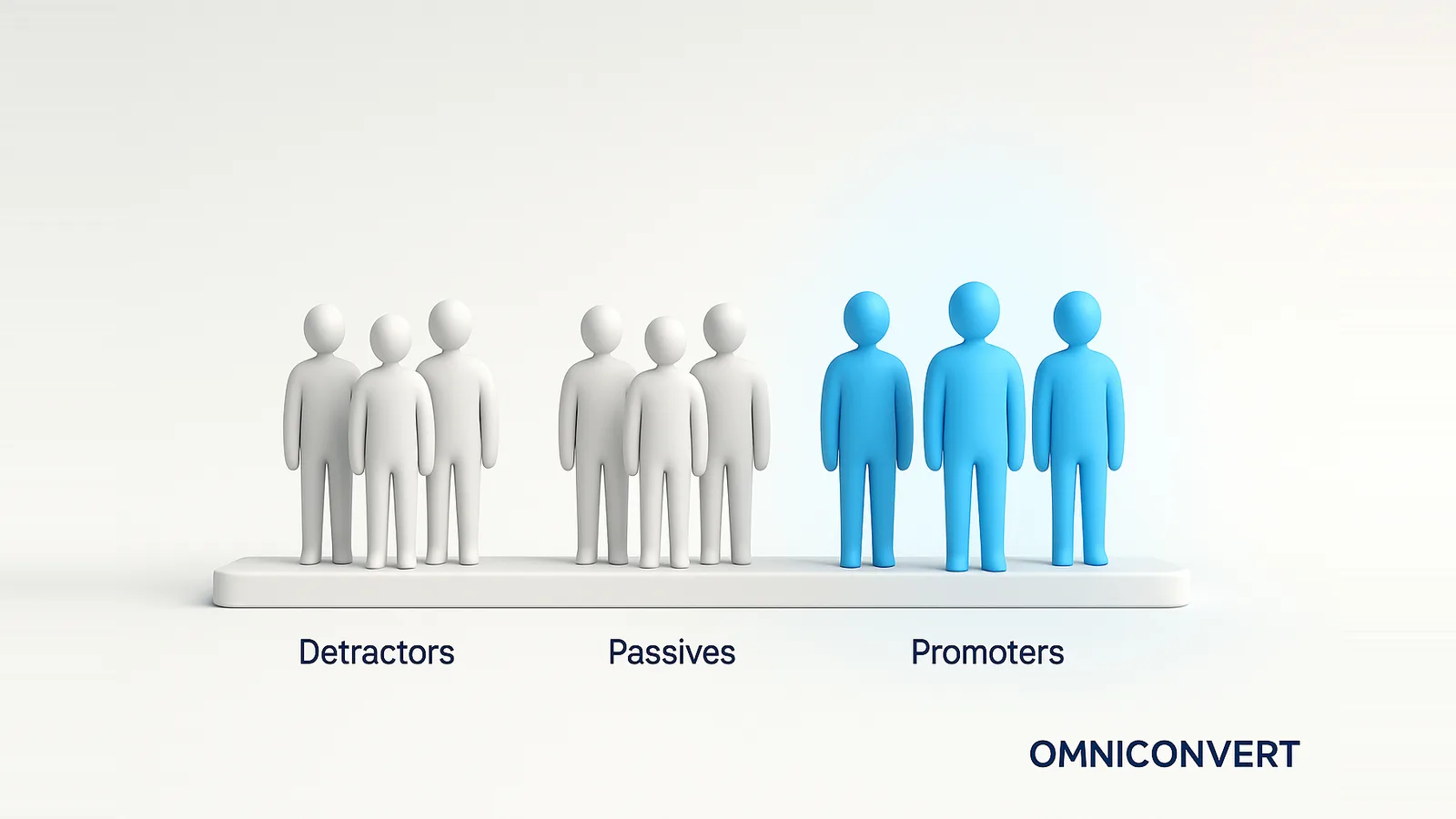
Net Promoter Score Scale describes the standardized loyalty metric that measures customer advocacy using a structured 0 to 10 rating system. Net Promoter Score Scale explains how respondents are grouped into promoters (9 to 10), passives (7 to 8), and detractors (0 to 6) according to recommendation likelihood. Organizations distribute the survey after key interactions (purchase completion, technical support resolution, subscription renewal) to assess relationship strength. The framework generates a consolidated result ranging from -100 to 100, representing advocacy balance. The Net Promoter Score definition centers on simplicity, enabling benchmarking across 100+ industries.

Net Promoter Score Scale Definition outlines the formula used to calculate the nps score by subtracting the percentage of detractors from the percentage of promoters. The method relies on a single recommendation question that defines the structure of NPS measurement. The resulting Net Promoter Score functions as a performance indicator for retention forecasting, referral tracking, and churn reduction analysis. Consistent monitoring strengthens comparative evaluation across quarterly and annual reporting cycles.

What Is a Net Promoter Score (NPS) Scale?

Net Promoter Score (NPS) Scale is a loyalty measurement framework that evaluates the likelihood of customers recommending a brand to others. The scale ranges from 0 to 10, producing a structured numerical indicator of sentiment and advocacy. Respondents selecting (9 to 10) classify as promoters, (7 to 8) classify as passives, and (0 to 6) classify as detractors. The scoring formula subtracts the percentage of detractors from the percentage of promoters, generating a result from -100 and 100. Simplicity drives high response rates because the survey relies on a single standardized question. Organizations across sectors (software, retail, healthcare) apply the scale for competitive benchmarking and quarterly performance tracking.

Why Net Promoter Score (NPS) Scale important? Net Promoter Score (NPS) Scale is important because the metric links advocacy levels to retention, referral growth, and lifetime value expansion. Leadership teams track score fluctuations to predict churn risk and identify service gaps before revenue impact occurs.

Image

Why Do Businesses Use Net Promoter Score (NPS) to Measure Customer Loyalty?

Businesses use Net Promoter Score (NPS) to measure customer loyalty because the metric quantifies recommendation likelihood through a standardized 0 to 10 rating question. The business advantage is that the score can be operationalized into repeatable workflows instead of being treated as a passive dashboard metric. Many organizations use NPS as a trigger for follow-up actions, including detractor recovery outreach, passive conversion programs, and promoter referral activation. Teams also compute separate NPS values by touchpoint, including onboarding, support resolution, renewals, and major product updates, to isolate where sentiment shifts occur. The ability to connect score movement to operational events strengthens accountability and makes prioritization more evidence-driven. NPS therefore functions as a governance metric that supports cross-team alignment, consistent reporting, and measurable customer experience management.

Is Net Promoter Score (NPS) Only Relevant for Customer Retention?

No, Net Promoter Score is not only relevant for customer retention because the insights support acquisition and referral strategies. Loyalty impacts brand performance by turning satisfied users into an unpaid sales force. Promoters have a referral rate 2 to 5 times higher than neutral customers. Acquisition costs decrease when a portion of new business comes through existing customer recommendations. Insights from detractors highlight systemic issues that prevent potential customers from completing a purchase. Marketing teams use promoter feedback to create testimonials and case studies. The score provides a view of brand health beyond simple churn metrics. Strategic focus on loyalty improvements attracts high-value prospects who prioritize quality over price. The metric serves as a signal for market viability and the effectiveness of current sales messaging. Brand performance stays linked to the collective voice of the current user base. Consistent advocacy builds a protective barrier against competitor encroachment.

How Does the Net Promoter Score (NPS) Scale Work?

The Net Promoter Score (NPS) scale works by asking customers to rate recommendation likelihood on a numeric scale from 0 to 10. The Net Promoter Score scale categorizes each response into 3 predefined groups based on score selection thresholds. Ratings from 0 to 6 classify respondents as Detractors, ratings from 7 to 8 classify respondents as Passives, and ratings from 9 to 10 classify respondents as Promoters. The segmentation translates subjective sentiment into structured loyalty tiers that reflect dissatisfaction, neutrality, or advocacy strength. The survey commonly includes one follow-up open-ended question to capture the qualitative context behind the numeric selection.

The aggregation process converts each category into percentage values based on total responses collected. The calculation subtracts the percentage of Detractors from the percentage of Promoters, excluding Passives from the formula. A dataset of 800 responses containing 400 Promoters, 240 Passives, and 160 Detractors produces an NPS of 30 (50% minus 20%). The resulting score ranges from −100 to +100, creating a standardized benchmark for loyalty comparison across industries. The structured scoring logic explains how the 0 to 10 nps score system translates individual ratings into an advocacy benchmark that is trackable over time.

What Are the Differences Between Detractors and Promoters?

The differences between detractors and promoters are listed below.

  • Promoters: Promoters are respondents who select scores of 9 or 10 on the Net Promoter Score scale. Promoters demonstrate strong satisfaction, high repurchase intent, and active recommendation behavior across peer networks. Organizations with Promoter ratios above 60% report referral-driven acquisition increases ranging from 10% to 25% within competitive sectors.
  • Passives: Customers in the category give scores of 7 or 8, showing the customers are satisfied but lack emotional ties to the company. Passives are susceptible to competitive offers because the loyalty stays neutral rather than positive. These individuals rarely provide referrals or negative feedback.
  • Detractors: Detractors are respondents who select scores from 0 to 6 on the 0 to 10 Net Promoter Score scale. Detractors express dissatisfaction, low loyalty intent, and reduced likelihood of repeat purchase or referral activity. High concentrations of Detractors increase churn probability by 15% to 40%, depending on industry conditions.

Is the 0–10 Scale Universal Across Companies?

Yes, the 0 to 10 scale is universal across companies because the Net Promoter Score framework applies identical scoring thresholds across industries and regions. The main reason for the universal format is governance and comparability, not identical customer psychology across markets. Organizations adopt the same scale so dashboards, score thresholds, and executive reports can be reused without recalibration across departments, brands, and regions. The universal structure also reduces internal disagreement because teams do not need to redefine what qualifies as a positive or negative rating each quarter. Global companies benefit because the numeric framework stays stable even when the survey wording is translated into multiple languages. The scale therefore functions as a shared measurement language that supports benchmarking, longitudinal trend tracking, and consistent performance reporting.

How to Calculate Net Promoter Score (NPS)

Net Promoter Score (NPS) is calculated by subtracting the percentage of detractors from the percentage of promoters after collecting responses to a 0 to 10 recommendation question. The calculation converts raw survey counts into category percentages, then applies a single subtraction to isolate advocacy balance. Promoters are counted positively because ratings of 9 to 10 represent active recommendation intent, which correlates with higher retention and referral likelihood. Detractors are subtracted because ratings of 0 to 6 represent dissatisfaction and reduced loyalty behavior that increases churn risk. Passives are excluded because the formula measures strong advocacy versus strong dissatisfaction rather than neutrality. The resulting score reflects loyalty strength by showing whether promoter concentration outweighs detractor concentration within the surveyed population.

What Is the Step by Step Formula for Net Promoter Score (NPS) Calculation?

The step-by-step formula for Net Promoter Score is listed below.

  1. Collect Valid Responses. Gather answers to the standardized 0 to 10 recommendation question through email surveys, transactional prompts, or in-app feedback forms. Record the total number of completed responses to establish the calculation base.
  2. Segment Respondents. Classify ratings into 3 predefined groups: Detractors (0 to 6), Passives (7 to 8), and Promoters (9 to 10). Count the number of responses within each category to determine the distribution.
  3. Convert to Percentages. Divide each category count by the total response count and multiply by 100. A dataset of 400 responses containing 220 Promoters and 80 Detractors produces 55% and 20%, respectively.
  4. Apply the Formula. Subtract the Detractor percentage from the Promoter percentage. The final score equals 35 (55% minus 20%), falling within the −100 to +100 Net Promoter Score range.

Can Net Promoter Score (NPS) Ever Be Negative?

Yes, Net Promoter Score (NPS) metrics can be negative when the percentage of Detractors exceeds the percentage of Promoters within collected survey responses. The calculation subtracts the Detractor percentage from the Promoter percentage, producing results within the range of −100 to +100. A dataset containing 30% Promoters and 50% Detractors generates a score of −20. Negative values indicate that dissatisfaction outweighs advocacy across the respondent base. Scores below 0 correlate with retention declines of 5% to 15% across quarterly tracking periods. Elevated Detractor concentration signals churn exposure and service quality gaps requiring corrective action.

Leadership teams interpret negative results as early warning indicators of loyalty instability. Root cause analysis of qualitative feedback reveals recurring issues related to pricing clarity, onboarding friction, and support responsiveness. Structured recovery initiatives convert 10% to 25% of dissatisfied respondents into neutral or positive categories across follow-up cycles. Score monitoring alongside retention metrics strengthens diagnostic precision within Customer Satisfaction (CSAT) frameworks.

What Is the Net Promoter Score (NPS) Score Range?

The Net Promoter Score (NPS) score range is from −100 to +100 based on the difference of Promoter and Detractor percentages. The lowest possible score of −100 occurs when 100% of respondents are classified as Detractors. The highest possible score of +100 occurs when 100% of respondents are classified as Promoters. Passives do not directly affect the final value because the formula excludes their percentage from subtraction.

A neutral balance of equal Promoters and Detractors produces a score of 0, indicating parity of advocacy and dissatisfaction. Scores above 0 reflect positive sentiment dominance, while scores above 50 indicate strong loyalty performance in competitive industries. Sector benchmarks vary (SaaS 30 to 40, ecommerce 20 to 35, banking 10 to 25), enabling performance comparison within defined market categories.

How Are Net Promoter Score (NPS) Scores Graded by Performance Level?

The net promoter score (NPS) Scores by performance are graded by the list below.

  • Poor Performance: Scores below 0 indicate Detractors exceed Promoters, signaling dissatisfaction risk and elevated churn probability. Companies within the range experience retention declines of 5% to 15% across quarterly cycles. Immediate corrective initiatives target service quality, onboarding gaps, and pricing concerns.
  • Average Performance: Scores from 0 to 30 reflect moderate loyalty with balanced sentiment distribution. Organizations in the range maintain stable retention yet face limited referral momentum. Improvement efforts focus on converting Passives into Promoters through targeted experience adjustments.
  • Strong Performance: Scores from 30 to 50 demonstrate healthy advocacy levels and competitive positioning within most industries. Promoter ratios exceed 50% in the bracket.
  • Excellent Performance: Scores above 50 indicate high brand advocacy and sustained referral growth. Industry leaders achieving 60 to 80 reports accelerated expansion and lower acquisition costs.

Is a Score Above 50 Always Considered Excellent?

Yes, a score above 50 generally indicates excellent loyalty and a strong market position. Benchmarks vary by industry context, as a 50 in telecommunications might be exceptional while average in retail. Relative comparison remains essential for an understanding of the competitive landscape. Top-tier companies maintain scores in the 60 to 80 range through service excellence. A high score suggests that the majority of customers are enthusiastic advocates for the brand. High loyalty correlates with lower price sensitivity and increased customer lifetime value. Organizations analyze the qualitative feedback from passives and detractors to maintain the score. A 50 serves as a threshold for venture capital firms when evaluating the health of a startup. Excellent scores reflect a culture focused on the needs of the audience. The score remains a reliable predictor of success in business environments.

How to Interpret the Net Promoter Score

Net Promoter Score interpretation depends on the numeric position within the −100 to +100 range and the distribution of Promoters and Detractors. Scores below 0 indicate dissatisfaction outweighs advocacy, signaling elevated churn risk and retention instability. Scores from 0 to 30 reflect moderate loyalty with limited referral acceleration. Scores of 30 to 50 demonstrate a healthy advocacy presence within competitive markets. Scores above 50 indicate strong brand endorsement and sustained customer enthusiasm.

Context determines meaning because industry medians differ (SaaS 30 to 40, ecommerce 20 to 35, financial services 10 to 25). A 40 may signal leadership in one sector yet shows average performance in another. Trend analysis across quarterly periods provides deeper insight than single survey snapshots. A consistent increase of 5 to 10 points over 2 consecutive cycles reflects improving customer sentiment and operational alignment.

Image

Like what you're reading?

Join the informed eCommerce crowd!

Stay connected to what’s hot in eCommerce. We will never bug you with irrelevant info.

What Do High and Low Scores Indicate About Customer Satisfaction?

High scores reflect strong satisfaction and a deep emotional connection throughout the customer and the brand. Low scores signal dissatisfaction risks and negative word-of-mouth in the marketplace. Sentiment impacts retention potential because promoters are less likely to switch to a competitor. A high score indicates that the organization is delivering value across multiple touchpoints. Low scores suggest friction points in the user journey (complicated checkout, poor support). Customer satisfaction acts as the foundation for the advocacy captured by the metric. High-scoring brands enjoy a positive effect where customers overlook minor issues. Low-scoring brands face scrutiny and lose customers at the first sign of a better offer. Understanding the sentiment allows leadership to address pain points before they lead to churn. Satisfaction levels translate directly into the numerical ratings provided by the audience. Strong satisfaction remains the primary driver of high performance on the scale.

Does a High Net Promoter Score (NPS) Guarantee Customer Loyalty?

No, a high Net Promoter Score (NPS) does not guarantee customer loyalty because the metric measures the likelihood of recommendation rather than confirmed future behavior. Scores above 50 indicate strong advocacy intent and positive brand perception, yet external factors influence retention outcomes. Pricing changes, competitive offers, service disruptions, and market conditions affect purchase decisions even among Promoters. Behavioral shifts may occur despite prior satisfaction ratings.

Organizations reporting high scores of 55 to 70 monitor churn metrics, renewal rates, and repeat purchase frequency to validate loyalty strength. A Promoter ratio above 60% reduces churn probability by 5% to 15%, yet does not eliminate defection risk entirely. The metric predicts sentiment trends rather than contractual certainty. Long-term loyalty assessment requires combining NPS data with behavioral analytics and revenue tracking performance indicators.

What Is a Good Net Promoter Score?

A good Net Promoter Score is a positive score that exceeds industry averages and reflects a higher percentage of Promoters than Detractors. Scores above 0 indicate more customers recommend the brand than criticize it. Scores of 30 to 50 shows strong performance across competitive sectors. Organizations within the range maintain Promoter ratios above 50% and Detractor levels below 20%.

Industry benchmarks define what qualifies as good because sector standards vary (SaaS 30 to 40, ecommerce 20 to 35, banking 10 to 25). A score of 40 shows leadership in financial services, yet appear average in subscription-driven software markets. Longitudinal improvement strengthens interpretation because consistent growth of 5 to 10 points across annual cycles signals rising satisfaction. Evaluation depends on benchmark comparison, competitive positioning, and trend direction rather than a single static value.

How Does a Good Net Promoter Score (NPS) Vary Across Industries and Markets?

A good Net Promoter Score varies by sector because customer expectations, purchase frequency, switching costs, and competitive density differ across markets. Subscription-based SaaS companies report industry averages 30 to 40, making scores above 45 strong within that category. Ecommerce brands operate within median ranges of 20 to 35 due to price sensitivity and higher transactional churn exposure. Financial services institutions record averages 10 to 25 as regulatory complexity and trust barriers influence rating behavior.

Market maturity further shapes interpretation because emerging sectors experience volatility shifts of 10 to 20 points year over year. Luxury brands achieve scores above 60 through premium service positioning and high engagement depth. Commodity-driven industries rarely exceed 25 due to limited differentiation.

Is a Good Net Promoter Score (NPS) the Same for SaaS and Ecommerce?

No, a good Net Promoter Score (NPS) is not the same for SaaS and ecommerce because customer relationships, purchase models, and engagement cycles differ across the two sectors. SaaS companies operate on subscription models with recurring billing, onboarding processes, and long-term feature adoption cycles. Average SaaS scores range from 30 to 40, making values above 45 strong within that category.

Ecommerce brands rely on transactional purchases with shorter decision windows and higher price comparison behavior. Average ecommerce scores fall 20 to 35 due to competitive pricing pressure and lower switching costs. A score of 40 may signal leadership in ecommerce yet shows average performance in SaaS. Sector-specific expectations shape evaluation standards. Benchmark comparison within the relevant industry ensures accurate interpretation of loyalty strength and competitive positioning.

What Is a Bad Net Promoter Score?

A bad Net Promoter Score is a negative score or a low positive score that indicates Detractors approach or exceed Promoters within survey results. Scores below 0 reflect dissatisfaction, dominance and elevated churn probability across customer segments. Organizations operating within negative ranges experience retention declines of 5% to 15% during quarterly evaluation periods.

Low positive scores from 0 to 10 signal weak advocacy and limited referral momentum. Promoter ratios below 30% combined with Detractor levels above 25% indicate structural experience gaps across onboarding, service quality, or product performance. Competitive sectors with median scores above 30 classify values under 15 as underperforming. Persistent low scores highlight dissatisfaction themes that require corrective initiatives across pricing clarity, support responsiveness, and user journey design elements.

How Can a Low Net Promoter Score (NPS) Impact Business Decisions?

A low Net Promoter Score (NPS) impacts business decisions by signaling dissatisfaction trends that require operational adjustment. Scores below 0 indicate Detractors exceed Promoters, raising churn probability and revenue instability risk. Leadership teams prioritize corrective initiatives when retention declines of 5% to 15% align with negative score patterns. Resource allocation shifts toward service improvement, onboarding redesign, and pricing evaluation when Detractor ratios exceed 30%.

Low positive scores of 0 to 20 influence strategic planning by limiting expansion forecasts and referral-based acquisition projections. Marketing budgets adjust when advocacy momentum remains weak and organic growth slows by 10% to 20%. Product development roadmaps incorporate recurring complaint themes identified in qualitative feedback. Executive performance metrics integrate NPS targets to track loyalty stabilization. Score interpretation drives investment decisions, customer experience initiatives, and long-term competitive positioning strategies.

Does a BadNet Promoter Score (NPS) Always Mean Losing Customers?

No, a bad Net Promoter Score (NPS) does not always mean losing customers because dissatisfaction signals highlight risk rather than guaranteed churn. Scores below 0 indicate Detractors exceed Promoters, yet recovery initiatives influence retention outcomes. Organizations identifying service gaps early reduce churn impact by 5% to 12% after targeted corrective actions. Customer feedback reveals solvable issues related to onboarding delays, pricing transparency, or support response times.

Low scores of 0 and 15 is weak advocacy rather than immediate defection. Proactive outreach to dissatisfied respondents improves renewal likelihood and converts 10% to 25% of Detractors into Passives or Promoters within follow-up cycles. Retention outcomes depend on response speed, communication clarity, and service improvement execution. Negative sentiment signals vulnerability, yet structured engagement strategies stabilize loyalty performance over time.

What Is a Net Promoter Score (NPS) Survey?

A Net Promoter Score (NPS) survey is a standardized feedback tool that measures customer recommendation likelihood using a single 0 to 10 rating question. The survey asks respondents how likely a recommendation of a company, product, or service is to occur to a friend or colleague. The numeric structure enables classification into 3 groups (Detractors 0 to 6, Passives 7 to 8, Promoters 9 to 10). The simplicity of one core question increases response rates ranging from 30% to 60% across email and in app distribution channels.

Organizations deploy the survey after key interaction points including purchases, support cases, onboarding completion, or subscription renewals. A follow-up open-ended question captures qualitative insight explaining the numeric selection. The structured format enables consistent benchmarking across industries and markets. The resulting score reflects loyalty sentiment within a measurable −100 to +100 range framework.

How Do You Ask the Right Net Promoter Score (NPS) Question to Customers?

The right Net Promoter Score (NPS) question uses clear, neutral wording that asks respondents to rate recommendation likelihood on a 0 to 10 scale. The standard structure states, “How likely is it that a recommendation of our company, product, or service occurs to a friend or colleague?” The wording avoids leading phrases, emotional bias, or promotional language that influence scoring behavior. Consistency in phrasing ensures comparability across survey cycles and industry benchmarks.

Timing affects response accuracy because surveys distributed immediately after key interactions (purchase completion, onboarding milestone, support resolution) capture fresher sentiment data. Delayed distribution beyond 30 days reduces recall precision and lowers response rates by 5% to 12%. A follow-up open-ended question gathers context explaining the numeric selection. Structured clarity, consistent timing, and neutral phrasing strengthen reliability and benchmarking validity across measurement periods.

Is There a Standard Net Promoter Score (NPS) Question Wording?

Yes, there is a standard Net Promoter Score (NPS) question wording because consistency ensures comparability across industries and time periods. The accepted format asks, “How likely is it that a recommendation of our company, product, or service occurs to a friend or colleague?” The response scale ranges from 0 to 10, where 0 shows no likelihood and 10 shows extreme likelihood. The fixed wording reduces measurement bias and preserves benchmarking integrity across SaaS, ecommerce, and financial services sectors.

Uniform phrasing enables reliable comparison of score shifts of 5 to 15 points across quarterly cycles. Standardization strengthens cross-industry databases that aggregate millions of responses under an identical survey structure.

How Can Businesses Use Net Promoter Score (NPS) Scores?

Businesses use Net Promoter Score by translating loyalty data into prioritized operational improvements and revenue protection strategies. Net Promoter Score (NPS) scores guide decision making through respondent classification into promoters (9 to 10), passives (7 to 8), and detractors (0 to 6) across the (-100 to 100) scoring range. Score distribution highlights friction points related to service delivery speed, onboarding clarity, pricing transparency, or support resolution time. Leadership teams reallocate budgets when detractor levels exceed 20 percent, triggering structured corrective programs. Targeted improvements reduce churn probability and stabilize recurring revenue streams across subscription and transactional models.

Segmentation analysis isolates satisfaction gaps across acquisition channels, device categories, geographic regions, and lifecycle stages. Quarterly trend tracking evaluates whether operational changes increase promoter ratios by 5% to 15% or compress detractor concentration.

How DoesNet Promoter Score (NPS) Help Improve Customer Experience and Loyalty?

Net Promoter Score (NPS) helps improve customer experience and loyalty by identifying satisfaction gaps and advocacy strengths across structured customer segments. The classification into Detractors, Passives, and Promoters reveals where friction occurs within onboarding, service delivery, or product usability stages. Organizations detecting Detractor ratios above 30% initiate corrective programs targeting response time reduction, pricing transparency, and feature reliability improvements.

Qualitative comments attached to numeric ratings highlight recurring complaint themes that guide operational adjustments. Targeted interventions convert 10% to 25% of dissatisfied respondents into neutral or positive segments across follow-up cycles. Promoter feedback identifies strengths worth reinforcing through loyalty programs and referral campaigns. Score tracking across 2 to 4 quarterly intervals measures sentiment progression and validates improvement impact. Structured feedback loops therefore strengthen retention stability, enhance service quality alignment, and increase long-term advocacy performance within measurable loyalty frameworks.

Can Acting on Net Promoter Score (NPS) Feedback Directly Increase Revenue?

Yes, acting on Net Promoter Score (NPS) feedback can directly increase revenue because targeted improvements strengthen retention and referral performance. Organizations converting 15% to 25% of Detractors into Passives or Promoters observe measurable renewal rate growth of 5% to 12%. Reduced churn stabilizes recurring revenue streams across subscription driven sectors. Promoters generate referral acquisition increases of 10% to 30%, lowering paid advertising dependency.

Corrective actions based on recurring complaint themes (slow support response, onboarding friction, unclear pricing) improve customer lifetime value metrics. Companies integrating structured follow-up outreach after negative feedback recover at-risk accounts within 30-day recovery cycles. Revenue growth links directly to sentiment improvement when operational changes address dissatisfaction drivers. Feedback execution translates loyalty insight into measurable financial performance expansion.

How DoesNet Promoter Score (NPS) Support Conversion Rate Optimization (CRO)?

Net Promoter Score (NPS) supports Conversion Rate Optimization (CRO) by identifying sentiment-driven friction points across digital customer journeys. Low NPS results correlate with checkout abandonment increases ranging from 8% to 20% across ecommerce funnels. Qualitative responses expose messaging confusion, trust deficits, navigation friction, and unclear value propositions affecting purchase completion rates. The scoring structure segments respondents into promoters, passives, and detractors, enabling experience gap analysis aligned with funnel stages.

Segmentation analysis reveals satisfaction variance across traffic sources, device categories, geographic markets, and onboarding steps. Organizations aligning landing page messaging and interface refinement with promoter insights record conversion lifts from 5% to 15% during structured A B testing cycles. Trend comparison across quarterly benchmarks validates whether optimization initiatives improve perceived experience quality metrics within Conversion Rate Optimization (CRO). Integration of sentiment indicators with behavioral analytics strengthens prioritization accuracy during testing roadmaps.

How Can Net Promoter Score (NPS) Insights Improve A/B Testing and UX Decisions?

Net Promoter Score insights improve A/B testing and User Experience (UX) decisions by attaching sentiment validation to quantitative conversion metrics. Conversion lift metrics alone fail to measure satisfaction quality or long-term retention impact. Variant A, generating a 12% conversion increase, produces weaker loyalty outcomes if detractor ratios rise by 8%. Sentiment comparison across experimental groups verifies whether performance gains align with positive experience perception.

Qualitative responses linked to rating categories reveal friction drivers (navigation clarity, pricing transparency, onboarding structure) influencing behavioral outcomes. UX teams trigger redesign evaluation when scores decline below 20 during controlled deployment phases. Integration of sentiment signals with click-through rate and task completion data strengthens decision confidence during rollout of User Experience (UX) Improvements. Performance tracking across 2 to 3 structured testing cycles confirms whether interface adjustments restore advocacy levels and sustain measurable experience gains.

Can Net Promoter Score (NPS) Metrics Be Used to Optimize Landing Pages?

Yes, net promoter score (NPS) metrics can be used to optimize landing pages. NPS feedback collected after early funnel actions, including signup completion, demo request submission, or checkout initiation, reveals whether visitors trust the offer and understand the value proposition. Teams can segment responses by landing page variant, traffic source, device type, and audience cohort to identify where detractor concentration is highest. Low scores often align with unclear messaging, pricing ambiguity, missing credibility signals, slow load performance, and navigation friction that increases abandonment. Qualitative comments provide direct explanations for the numeric ratings, allowing prioritization of A/B tests focused on headline clarity, social proof placement, pricing presentation, and simplified page structure. The approach strengthens diagnostic precision within Customer Satisfaction (CSAT) frameworks.

How Does Net Promoter Score (NPS) Compare to Other Customer Metrics?

Net Promoter Score (NPS) compares to other customer metrics by measuring long-term advocacy intent rather than immediate satisfaction or effort reduction. NPS focuses on recommendation likelihood using a 0 to 10 scale and produces a score ranging from −100 to +100. Customer Satisfaction (CSAT) measures short-term satisfaction with a specific interaction, using a 1 to 5 scale. Customer Effort Score (CES) evaluates perceived difficulty of completing a task, rated from 1 to 7.

NPS predicts loyalty and referral behavior, while CSAT reflects transactional sentiment at a single touchpoint. CES identifies friction within service or onboarding processes. Organizations combining all 3 metrics detect retention risk patterns 10% to 20% earlier than relying on one metric alone. Each measurement serves a distinct purpose within structured customer experience evaluation frameworks.

When Should Businesses Use Net Promoter Score (NPS) Instead of CSAT or CES?

Businesses use Net Promoter Score (NPS) instead of CSAT or CES when the objective focuses on long-term loyalty tracking rather than single interaction feedback. NPS suits quarterly or annual measurement cycles that evaluate overall brand perception. Companies monitoring subscription renewal probability or referral growth rely on NPS to detect advocacy momentum across customer segments.

CSAT fits post-interaction scenarios (support ticket resolution, purchase confirmation) where immediate satisfaction evaluation matters. CES applies when diagnosing usability friction during onboarding or service processes. Organizations prioritizing long-term retention trends over isolated touchpoint performance select NPS as the primary metric. Structured alignment of objective and metric selection ensures accurate loyalty forecasting and strategic planning decisions.

Can Net Promoter Score (NPS) Fully Replace Other Customer Experience Metrics?

No, Net Promoter Score (NPS) cannot fully replace other customer experience metrics because it measures recommendation intent rather than detailed diagnostic insight. NPS identifies loyalty strength through a 0 to 10 scale, yet it does not isolate specific service breakdowns or usability friction sources. Customer Satisfaction scores capture transactional sentiment immediately after interactions. Customer Effort Score evaluates perceived difficulty within onboarding or support processes.

Organizations relying exclusively on NPS risk are overlooking operational issues that reduce satisfaction despite stable loyalty intent. Combining NPS with CSAT and CES reveals dissatisfaction drivers 10% to 20% earlier than single metric tracking. Metric triangulation strengthens retention forecasting accuracy and corrective prioritization. Structured integration of multiple indicators produces a more comprehensive customer experience evaluation framework.

What Are the Limitations of Net Promoter Score?

Net Promoter Score limitations are limited diagnostic depth and potential cultural scoring bias across regions. The single-question structure captures overall sentiment yet does not explain precise dissatisfaction triggers without follow-up feedback. Score interpretation varies across markets where rating behavior differs by cultural norms.

Response distribution skew may occur when neutral respondents cluster within the Passive category, reducing sensitivity to moderate dissatisfaction trends. Small sample sizes below 200 responses increase volatility and distort percentage calculations by 5% to 15%. Competitive benchmarking may mislead interpretation when industry medians differ significantly across sectors. NPS functions as a directional loyalty indicator rather than a standalone experience analysis instrument.

Why Should Net Promoter Score (NPS) Be Used With Other Qualitative Feedback?

Net Promoter Score (NPS) should be used with other qualitative feedback because numeric ratings alone do not explain the underlying motivations behind customer sentiment. The 0 to 10 scale identifies advocacy strength, yet it does not reveal precise dissatisfaction triggers without contextual comments. Open-ended responses expose recurring issues related to onboarding friction, pricing transparency, feature gaps, or support responsiveness.

Organizations analyzing qualitative themes alongside numeric distribution detect root causes 10% to 25% faster than relying on score movement alone. Comment clustering highlights patterns that guide product roadmap adjustments and service redesign initiatives. Leadership teams prioritize corrective actions when dissatisfaction themes appear across 20% or more of negative responses. Integration of quantitative scoring with detailed narrative feedback strengthens interpretation accuracy and reduces misaligned improvement efforts across operational units.

Can Net Promoter Score (NPS) Mislead Businesses If Used Alone?

Yes, Net Promoter Score (NPS) can mislead businesses if used alone because isolated numeric values oversimplify customer experience complexity. A stable score of 35 may mask dissatisfaction within specific customer segments when Promoter growth offsets Detractor increases. Leadership overlook churn risk within high-value accounts without segmentation analysis.

Small sample sizes below 150 responses amplify volatility and create misleading fluctuations of 5 to 12 points. Cultural scoring tendencies across regions distort interpretation when respondents systematically avoid extreme ratings. External market events, pricing changes, or competitor actions influence recommendation likelihood independently of service quality. Balanced evaluation combining NPS with retention metrics, qualitative insights, and behavioral analytics prevents misinterpretation and strengthens strategic decision accuracy.

What Can You Do with Your NPS Score?

A Net Promoter Score enables organizations to convert loyalty measurement into operational and financial action. Organizations segment respondents into promoters, passives, and detractors using rating brackets of (9 to 10), (7 to 8), and (0 to 6). Management benchmarks performance against sector medians (telecommunications (10 to 30), retail (30 to 50) to determine competitive standing. Service teams analyze recurring complaint clusters (slow response time, billing confusion, and onboarding delays to reduce churn exposure.

Revenue leaders correlate score movement with retention increases of (5 to 15) percent and referral expansion from 10 to 30 percent. Product managers prioritize roadmap adjustments based on promoter feedback frequency and detractor severity themes. Customer success teams deploy structured recovery outreach when scores decline below 20 during quarterly tracking cycles. Strategic execution transforms survey data into measurable performance gains driven by Net Promoter Score.

Oana Predoiu

Oana Predoiu

I'm a seasoned content and copywriter with a passion for turning ideas into captivating narratives. I like writing about how data can influence customer experience, A/B testing, user testing, CRO, sales, and many more. I also enjoy researching the qualitative side of things, seeing how people's behaviour is influenced by tech advancements and how we, as marketers, can enrich people's lives through our products.        

Not using Omniconvert Explore yet?

Run FREE A/B tests on 50,000 website visitors →