Convert Followers Into Customers: 20 Ways That Work (2026)

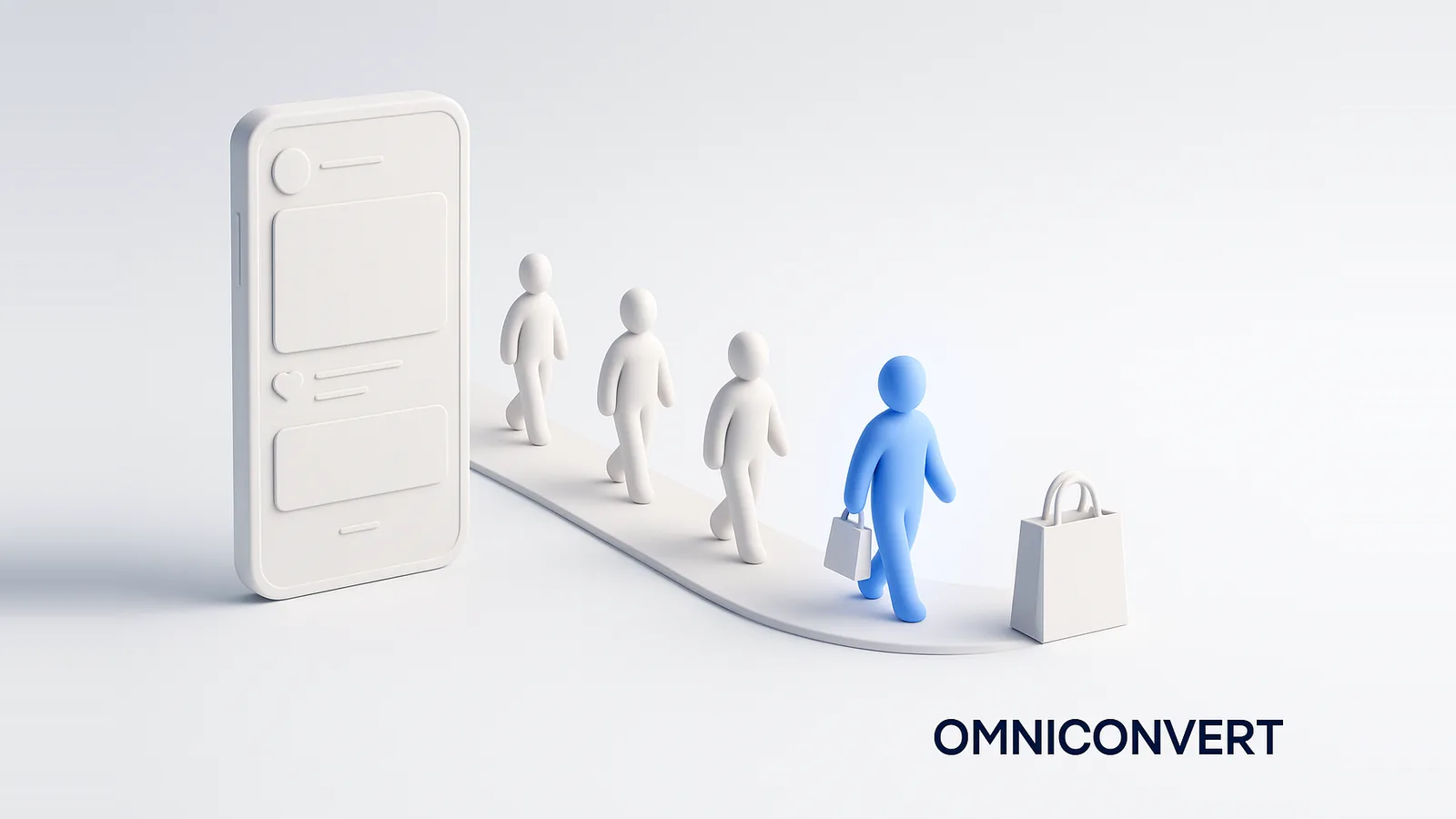
- A follower signals interest, not intent; converting them means moving people from attention to a purchase with trust, a clear reason to act, and a frictionless path.
- The 20 tactics span audience and content, social proof (UGC, influencers, testimonials), offers (contests, gated content, urgency), and on-site experience (landing pages, mobile).
- The tactics that touch your own site, landing pages, CTAs, urgency, testimonials, and mobile, can be A/B tested directly with Omniconvert Explore.
- Measure the funnel, not the follower count: social conversion rate, click-through, landing page conversion, and the lifetime value of social-acquired customers.
- What converts one audience can fail for another, so test each tactic rather than assuming a best-practice list applies to you.
Converting followers into customers means turning passive social media attention into paying buyers, by building trust, giving people a clear reason to act, and removing friction on the path from a social post to checkout. A follower signals interest, not intent, so conversion is the work in between. Omniconvert has measured what moves that conversion across the CROBenchmark dataset of 7,000+ websites in 15+ industries, against 248+ audit criteria, drawing on 13 years in eCommerce conversion rate optimization [CROBenchmark Report 2026, Omniconvert].
Omniconvert Explore is the conversion rate optimization platform that lets you A/B test the landing pages, calls to action, and offers your followers land on, so you keep what actually converts. This guide covers why followers stall, twenty ways to convert them, how to test each tactic, and how to measure the results. Every section answers the question directly, then goes deeper.
Why don't followers convert on their own?
It is easy to treat a follower count as a business asset, but a follow is one of the lowest-commitment actions online. It says someone liked a post enough to want more, not that they are ready to spend money. The gap between those two states is where conversion happens, and it is almost always wider than it looks.
It helps to think of the follow as the top of a small funnel rather than the finish line. A follower has to keep seeing you (attention), come to trust you (consideration), be given a reason and a way to act (intent), and then complete a purchase without friction (conversion). Each tactic in this guide targets one of those stages, which is why a scattergun approach rarely works: posting more content lifts attention but does nothing for a checkout that breaks on mobile, and a great offer is wasted on an audience that does not yet trust you. The skill is matching the tactic to the stage where your funnel actually leaks.
Followers stall for predictable reasons: the content is engaging but never asks for anything, or it asks too often and feels like spam; the link sends them to a generic homepage instead of an offer that matches the post; there is no trusted proof that other people buy; or the experience falls apart on the phone where most of them are scrolling. The twenty tactics below close those specific gaps, and the later sections show how to test and measure which ones work for your audience.
What are 20 ways to convert followers into customers?
You do not need all twenty at once. Start with the handful that fit your audience and your funnel, prove they convert, then layer in more.
-
1. Understand your target audienceBuild a clear buyer persona: demographics, interests, and pain points. Everything else, content, offers, channels, works better when it is aimed at a specific person rather than everyone.
-
2. Start a dialogue with your audienceReply, ask questions, and invite opinions instead of broadcasting. Two-way interaction builds the relationship and trust that make a later offer land rather than feel like an interruption.
-
3. Be creative, not mundaneVary your formats with video, reels, infographics, and short stories so the feed stays fresh. Repetitive, samey content trains followers to scroll past, which no offer can overcome.
-
4. Build rapport with niche influencersPartner with creators your audience already trusts through sponsored content, affiliates, or ambassadorships. Their endorsement is social proof that moves followers from curiosity to consideration.
-
5. Tell stories, not just copyShare behind-the-scenes moments and the real story of your brand. Stories create an emotional connection that facts alone do not, and they get shared, extending your reach.
-
6. Leverage user-generated contentReshare customer photos, reviews, and posts through hashtag campaigns. Real customers are more persuasive than brand-made content, earning higher engagement at lower cost.
-
7. Run contests and giveawaysHost simple competitions with a clear entry mechanic and call to action. They spread awareness, grow your email list, and turn passive followers into subscribers, then buyers.
-
8. Invest in targeted paid social adsUse the advanced targeting on Facebook, Instagram, LinkedIn, and TikTok to reach the right segment affordably. Paid reach amplifies the organic tactics that already convert.
-
9. Match content to the awareness stageOffer the right lead magnet for each stage, an explainer for the curious, a comparison or demo for the ready. Generic content for everyone converts no one well.
-
10. Use social media analyticsTrack what resonates, post timing, formats, and sentiment, with your platform analytics. Data shows which content earns clicks and sales, not just likes, so you double down on what works.
-
11. Use gated contentPut high-value resources like guides or webinars behind a short form. It captures contact details from genuinely interested followers and starts a nurture relationship.
-
12. Try social sweepstakesRun a low-friction entry that collects an email and consent. Sweepstakes grow your database, encourage referrals, and build a pool of leads you can convert over time.
-
13. Apply the 80/20 ruleSpend about 80 percent of your content informing and entertaining, and 20 percent promoting. Lead with value so the occasional promotion is welcomed rather than resented.
-
14. Share customer testimonialsPut reviews and testimonials where followers see them. Proof that real people buy and love your product reduces hesitation and drives clicks and conversions.
-
15. Offer time-sensitive dealsUse limited offers and exclusive discounts to create urgency. A clear deadline gives an interested follower a reason to act now instead of later, which usually means never.
-
16. Organize polls and focus groupsRun polls and surveys to learn what your audience wants. Beyond engagement, the answers tell you which products, messages, and offers will actually convert.
-
17. Design dedicated landing pagesSend social traffic to a focused landing page that matches the post, not your homepage. A relevant page with one clear action converts far better than a general entry point.
-
18. Blend offline and onlinePromote in-store events, pop-ups, and local offers on social, and bring social-only perks in store. Connecting the two worlds reinforces the relationship across touchpoints.
-
20. Optimize for mobileMost followers tap through on a phone, so make pages and checkout fast and effortless on mobile. Any friction here quietly cancels out every tactic above it.
How do you test what actually converts followers?
A list of twenty tactics is a list of twenty hypotheses. Some will move the needle for your audience and some will not, and the only way to know is to test rather than assume. The tactics that play out on your own site are the ones you can test with real rigor, and the table maps each to what to put under test.
| Tactic | What to A/B test | With Omniconvert Explore |
|---|---|---|
| Dedicated landing pages | Layout, headline, and message match to the post | A/B test page variants on social traffic |
| Calls to action | Wording, color, and placement of the CTA | Test CTA variants and measure clicks to sale |
| Time-sensitive offers | Urgency framing, discount depth, and timer | Test offer variants for conversion and margin |
| Testimonials and UGC | Which proof, and where it appears on the page | Test placements with on-site experiments |
| Mobile experience | Speed, layout, and checkout friction on phones | Test mobile variants and segment by device |
Run one test at a time, give it enough traffic to reach significance, and keep only the winners. Beyond the page, Omniconvert Commander (formerly Nexus) is the AI eCommerce growth engine that turns the customer data behind these conversions into ranked actions, so the followers you convert become the segments you grow. For the single highest-leverage element to test first, the call to action is usually it.
Stop guessing which tactic works. Test the pages your followers land on and keep only the winners.
See Omniconvert Explore →How do you measure follower-to-customer conversion?
Follower count and likes feel good but say little about revenue. To know whether your tactics work, measure the funnel from social attention to purchase: the click-through rate from social to your site, the conversion rate of the landing pages they hit, the overall social conversion rate (social visitors who become customers), and finally the revenue and Customer Lifetime Value of the customers each channel brings.
Read these together and by channel, because they expose where the journey leaks. A high click-through with low landing page conversion points to a mismatch between the post and the page; strong conversion but low lifetime value points to the wrong audience or offer. Those diagnoses turn a vague sense that social is or is not working into a specific, testable fix, which is exactly the loop the previous section is built to run.
Frequently asked questions about converting followers into customers
Convert followers by moving them from attention to action: understand your audience, build trust with stories, user-generated content, and testimonials, then give a clear reason and an easy path to buy through dedicated landing pages, time-sensitive offers, and a mobile-friendly checkout. The most reliable approach is to test each tactic rather than assume, keeping what measurably lifts conversion.
Followers often do not buy because following is low-commitment: it signals interest, not purchase intent. Conversion stalls when the path from a social post to checkout is vague, generic, or hard to complete on mobile, when content is too self-promotional, or when there is no clear, trusted reason to act now. Closing that gap with relevance and a frictionless path is what turns attention into sales.
There is no universal benchmark, because social conversion rates vary widely by platform, industry, and how you measure them. What matters is your own trend: track the share of social visitors who become customers over time and improve it. Comparing your social conversion rate against your other channels, and testing changes, is far more useful than chasing a generic industry average.
On Instagram, convert followers by pairing engaging content with a clear path to buy: use stories and reels for behind-the-scenes trust, user-generated content and testimonials for social proof, and a dedicated landing page linked in your bio rather than your homepage. Add time-sensitive offers and shoppable posts, then test which formats and calls to action actually drive purchases.
Yes. User-generated content, real photos, reviews, and posts from customers, builds authenticity that brand-made content cannot match, which is why it tends to earn higher engagement and click-through at lower cost. Featuring it as social proof reassures hesitant followers that real people buy and like your products, making them more likely to convert. Test placements to see which UGC drives the most sales.
Influencers lend their audience's trust to your brand, providing social proof that motivates their followers to consider your products. Partnering through sponsored content, affiliate links, or ambassadorships exposes your offer to a relevant, engaged audience that is more likely to act on a recommendation than on an ad. Match the influencer to your niche, and track conversions, not just reach, to judge the payoff.
Measure it as a funnel: track click-through from social to your site, landing page conversion rate, the social conversion rate (social visitors who become customers), and the revenue and lifetime value of those customers. Reading these together separates tactics that drive buyers from those that only earn likes, and shows exactly where the journey from follower to purchase leaks.
Omniconvert Explore is the conversion rate optimization platform that lets you A/B test the parts of the journey followers land on: social landing pages, calls to action, urgency messaging, testimonial placement, and mobile layout. Instead of guessing which tactic works, you test variants on real social traffic and keep the ones that measurably lift conversion, turning best-practice ideas into proven wins.
Pick the one place your social traffic actually lands, usually the link in your bio, and make it earn the click. Send followers to a dedicated landing page that matches the post that brought them, leads with social proof, and has a single clear call to action, rather than to your homepage. Then test one element, the headline, the CTA, or the offer, against the current version on real social visitors. One focused, tested improvement to where followers arrive will convert more of them than ten new content ideas that lead nowhere.
Test what turns followers into buyers with Omniconvert Explore
Omniconvert Explore lets you A/B test the landing pages, calls to action, offers, and mobile layouts your followers land on, so you keep only what measurably lifts conversion. Turn social attention into sales you can prove.