US vs UK Health & Wellness Ads, October 2026: Bold Claim Opens 19.8% of UK Ads and 14.6% of US Ads. Which Market Is Your Next Brief Written For?

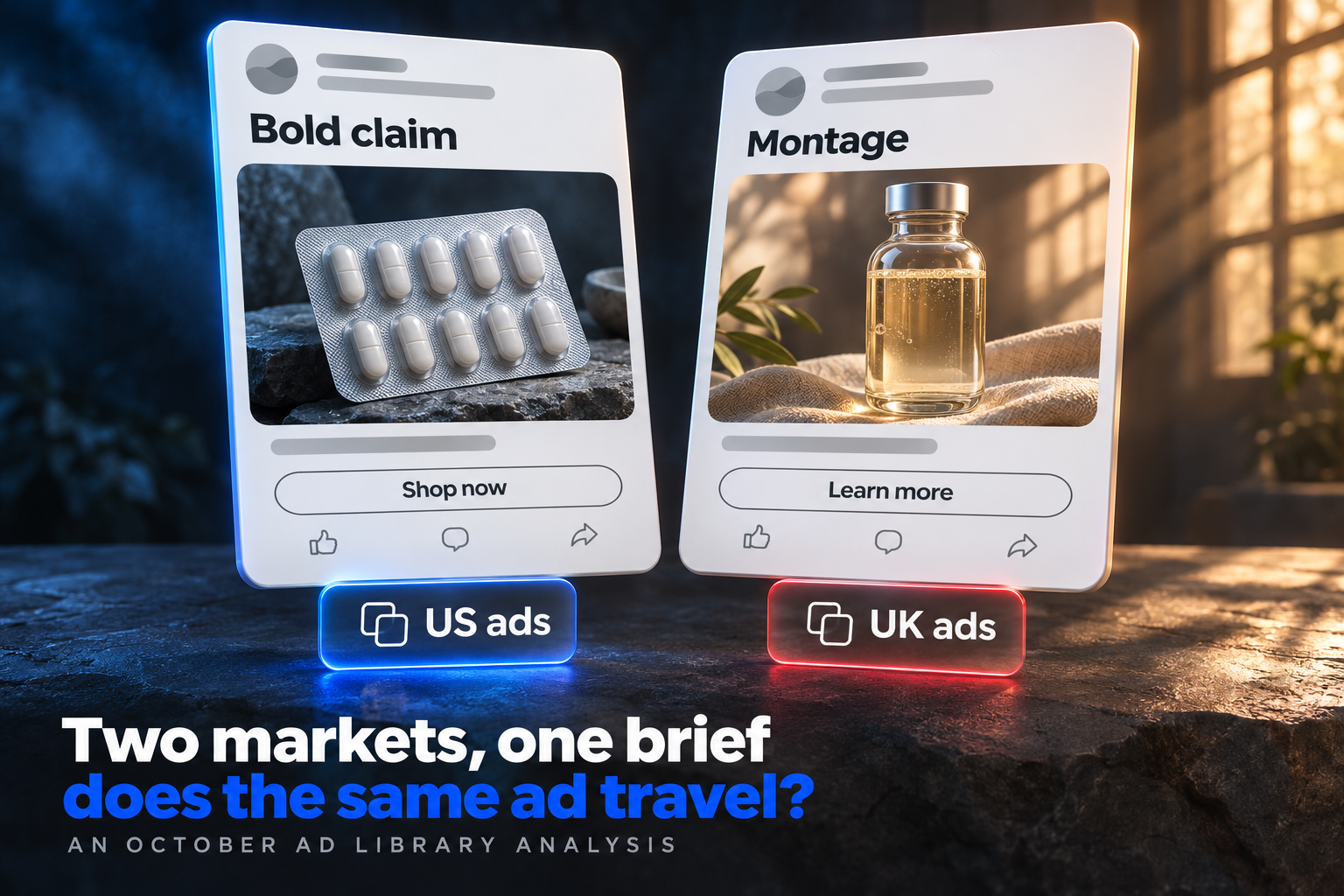
Scope: Health & Wellness ads in the US and the UK, as the eCommerceBenchmark Ad Library tracks them. US: 72 brands, 2,850 ads active in October 2026. UK: 30 brands, 1,554 ads.
One category, one month, two markets. Do they sell the same way?
A brand selling Health & Wellness on both sides of the Atlantic may brief one set of ads and run it in both places. This page checks whether that holds for October 2026: whether US and UK shoppers are opened on, argued with and shown the same thing. Both markets open on the Bold claim hook more often than on any other. Below are the three axes side by side, the rows where the markets split, real ads from each, and one test.
- One row can carry very different weight in each market. Product Demo Close-Up is the widest split on the concept axis, so the same staging meets a different crowd in each feed.
- A shared leader is a crowd you meet twice. Bold claim sits at the top of the hook table in both markets, so an ad built on it lands in a feed where it already has company.
- A split shows what brands ran, not what sold. There is no sales data here, so read every gap as a test to run, not a rule to follow.
Start where every ad starts: the first line.
Hooks: how US and UK ads open
Both markets lead on the same hook. Bold claim opened 14.6% of US Health & Wellness ads in October 2026, and 19.8% of UK ones. A hook is defined as the first line of an ad, the words a shopper meets before anything else. Among the rows in either market's hook top three, Bold claim is also the widest split. Direct question sat at 14.3% of US ads. In the UK it sat at 12.4%. Relatability runs the other way: 9.1% of US ads, against 12.2% of UK ads.
Share of October 2026 Health & Wellness ads in each market. Every row is in the top three of at least one market. Source: eCommerceBenchmark Ad Library, 2026.
Bold Claim: the hook both markets lead with, at different weights
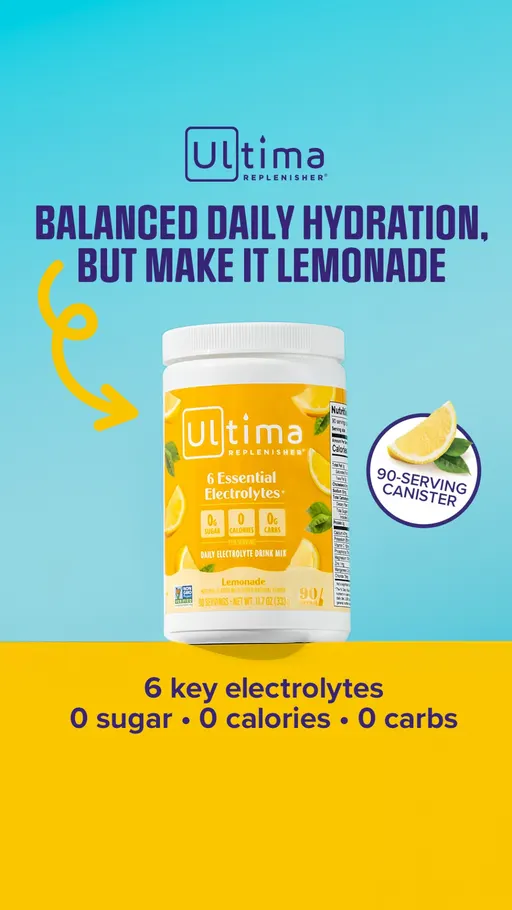
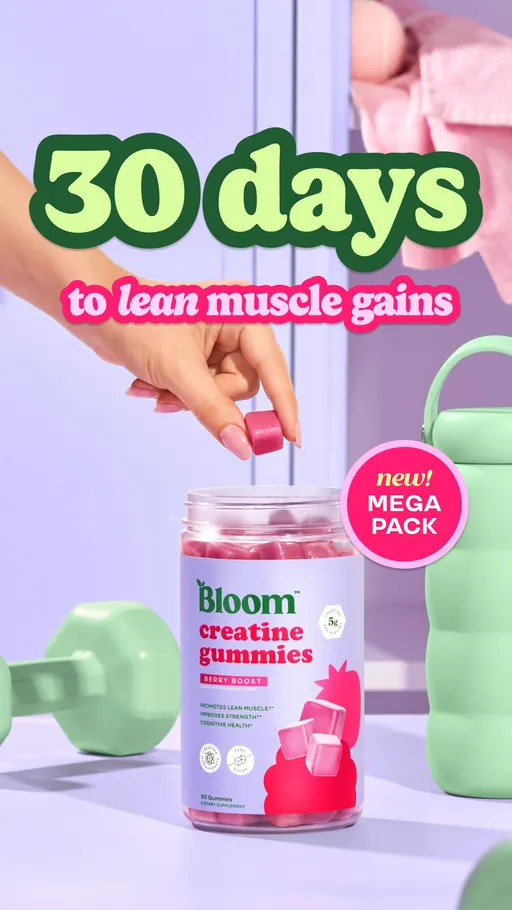

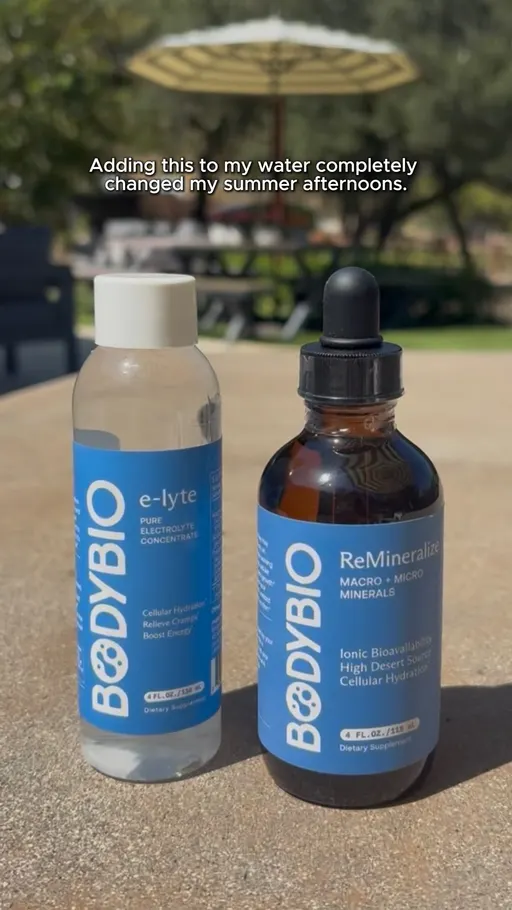
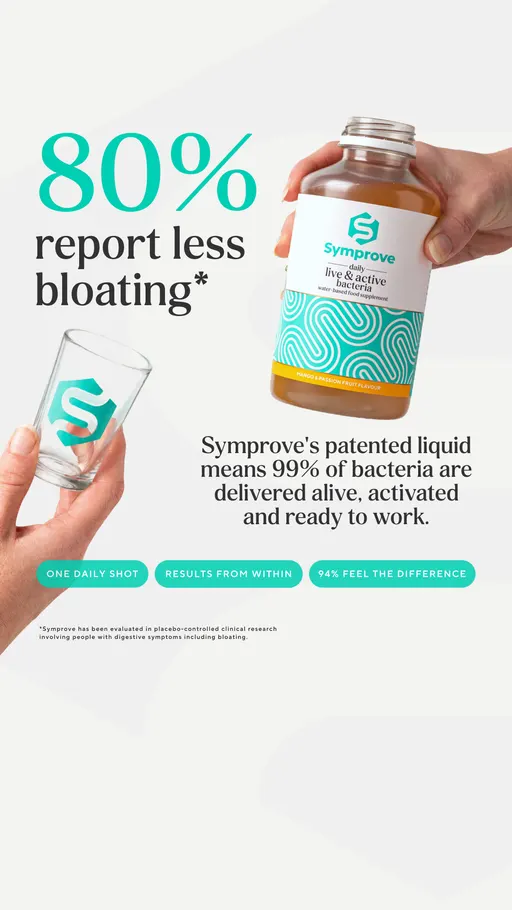
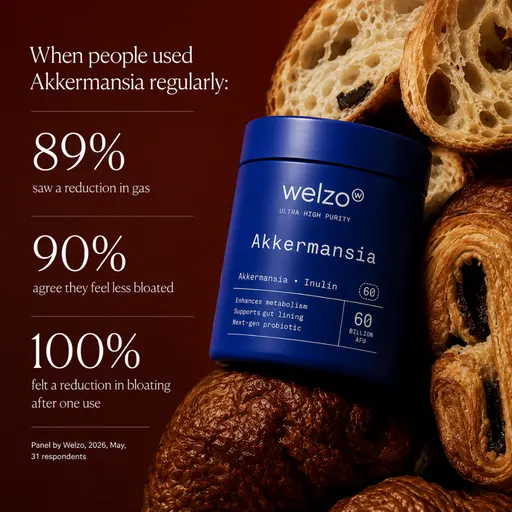
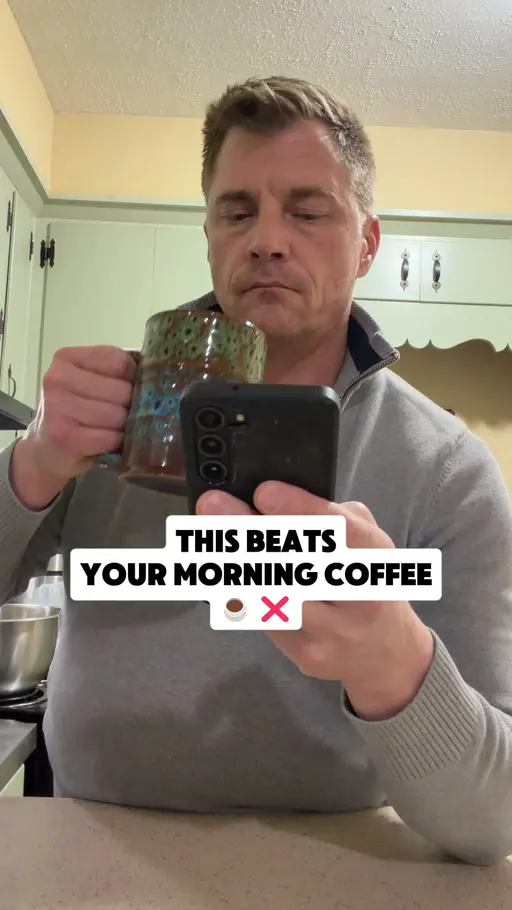
In the US. Bold claim opened 14.6% of US ads in the month, with 43 brands running at least one.
In the UK. Bold claim opened 19.8% of UK ads, with 21 brands running at least one.
Four US lines and three UK ones sit under the same row. ultimareplenisher.com twists a benefit, "Balanced daily hydration, but make it lemonade". bloomnu.com puts the deadline first: "30 days to lean muscle gains". sunhomesaunas.com claims a rank, "America's #1 Home Sauna". bodybio.com opens on a change one person says they felt. The UK three are shorter. symprove.com gives an instruction, "Support your gut". welzo.com opens mid-thought on a named ingredient. nurecover.com sets its claim against a habit the reader has. Two of the US four hang the claim on a time frame or a rank, and the other two on a twist and on a change one person felt. The UK three name a body part, an ingredient and a morning routine, and none carries a figure.
That is how they open. What do they argue?
Angles: why each market says buy
Both markets argue the same lead reason. Solution-aware took 22.8% of US Health & Wellness ads. In the UK it took 23.4%. An angle is defined as the reason to buy that an ad argues for. Among the rows in either market's angle top three, Mechanism is the widest split: 18.2% of US ads against 15.9% of UK ads. Problem-aware sits almost level, at 15.3% of US ads and 15.1% of UK ads.
Share of October 2026 Health & Wellness ads in each market. Every row is in the top three of at least one market. Source: eCommerceBenchmark Ad Library, 2026.
Mechanism: second in both markets, carried further in the US
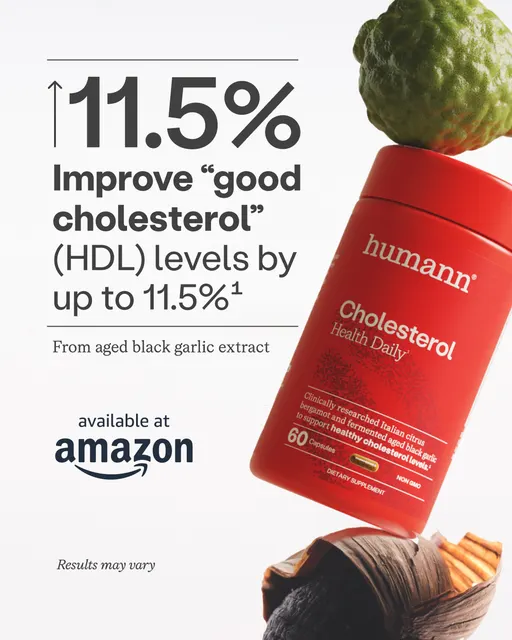

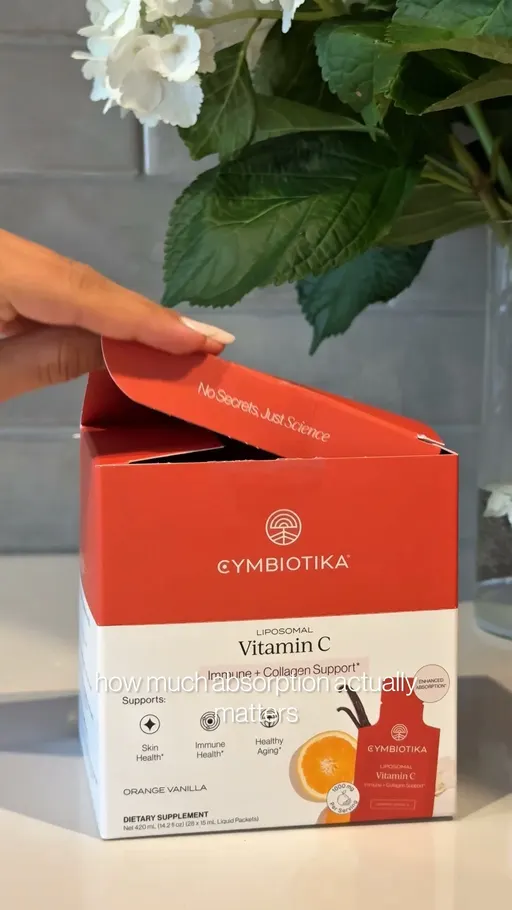


In the US. Mechanism argued 18.2% of US ads in the month, with 46 brands running at least one.
In the UK. Mechanism argued 15.9% of UK ads, with 22 brands running at least one.
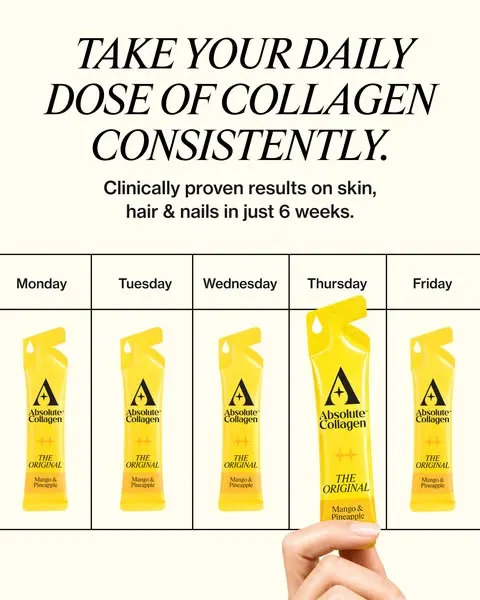
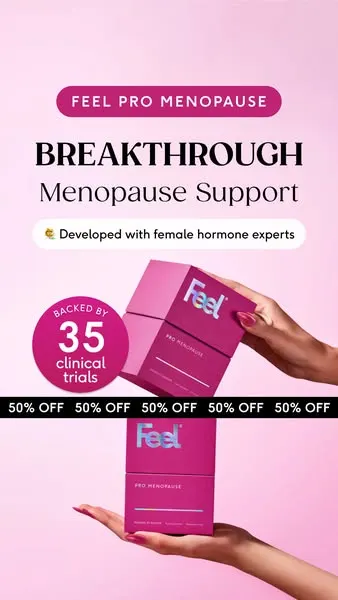
humann.com leads with the measure: "11.5% Improve “good cholesterol” (HDL) levels by up to 11.5%" . sunhomesaunas.com makes the routine the mechanism, counting mornings in a sauna and cold plunge . cymbiotika.com rules out makeup and holds the real cause back for a beat . banyanbotanicals.com points at the cause from the result . The UK four arrive differently. absolutecollagen.com opens with an order, "TAKE YOUR DAILY DOSE OF COLLAGEN CONSISTENTLY." . wildnutrition.com opens on a rule list about starting solids . symprove.com names the system it acts on . wearefeel.com names what it supports, nothing more . Three of the four US lines are told by a person about their own routine or result. Three of the four UK lines are told as an instruction or a label.
They open alike and they argue alike. Do they look alike?
Concepts: how the ads look
Here the two markets part. Product Demo Close-Up led the US at 13.7% of ads, while Montage led the UK at 10.6%. Product Demo Close-Up is also the widest split on this axis: 13.7% of US ads against 8% of UK ads. Montage staged 9.9% of US ads. Offer-first banner took 6.6% in the US and 8.2% in the UK. Cinematic B-roll took 6.3% in the US and 9.1% in the UK. One note before you read the rows: fewer ads carry a concept than carry a hook or an angle, so these figures are compared only with each other.
Share of October 2026 Health & Wellness ads in each market. Every row is in the top three of at least one market. Source: eCommerceBenchmark Ad Library, 2026.
Product Demo Close-Up: a US default the UK runs less



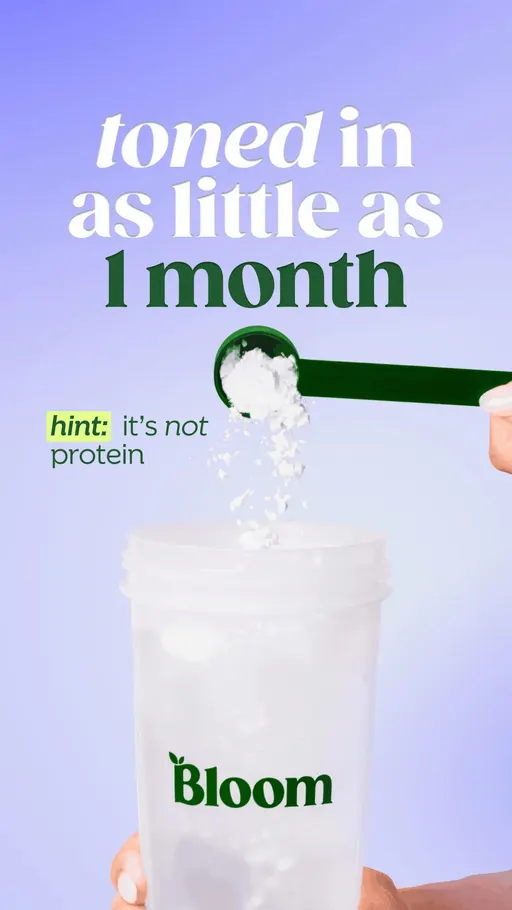

In the US. Product Demo Close-Up staged 13.7% of US ads in the month, with 36 brands running at least one.
In the UK. Product Demo Close-Up staged 8% of UK ads, with 17 brands running at least one.
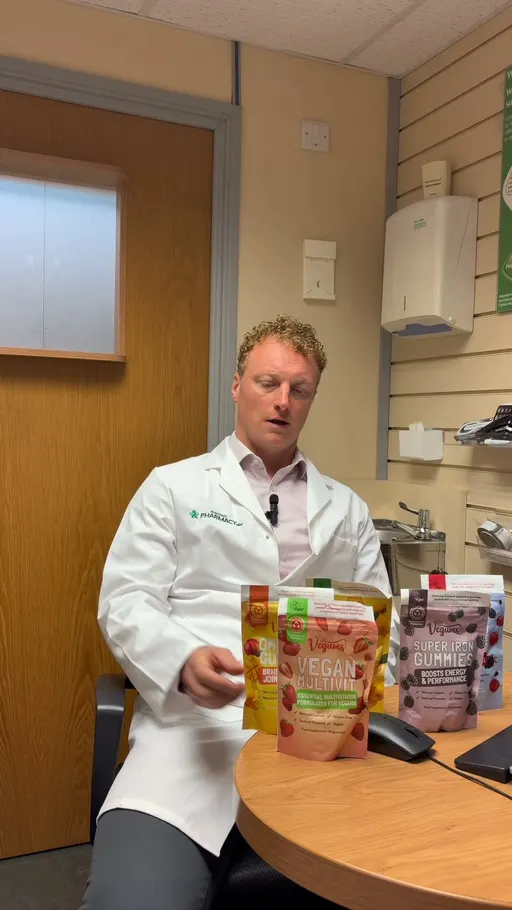
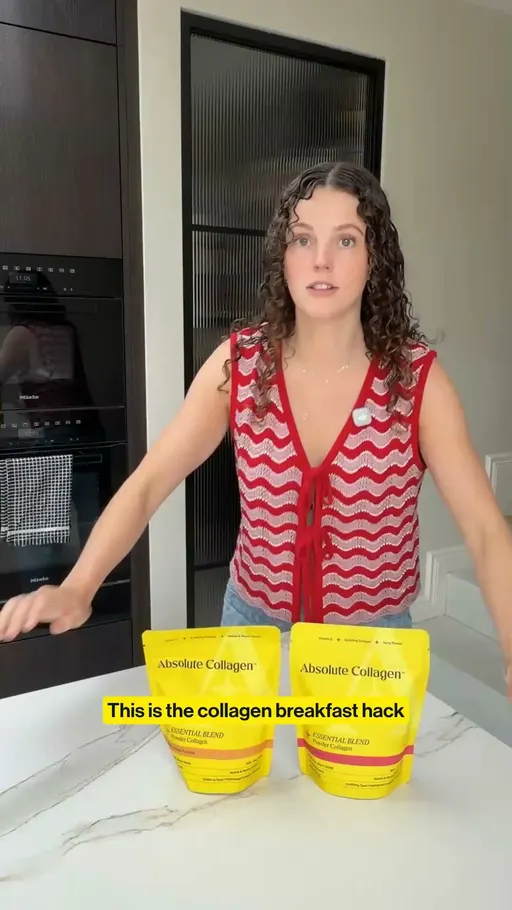
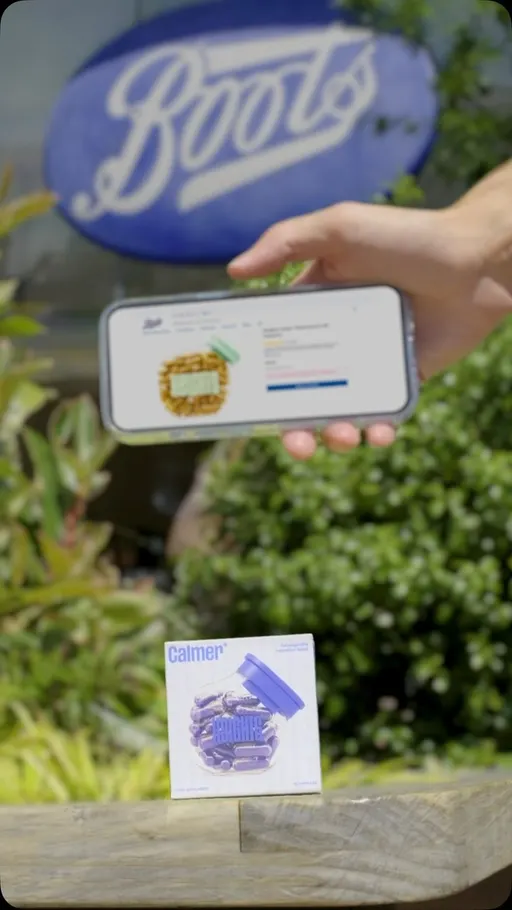
motherlove.com names the service and its price, "Signature Breast Lactation Massage NOW ONLY $38". mykudos.com puts the discount first. wthn.com names two outcomes and stops. bloomnu.com ties the outcome to a deadline. Three of the UK four open on doubt or on the object, and the fourth on an action. vegums.com says the objection out loud: "Vitamin gummies are just glorified sweets, right?" absolutecollagen.com frames the product as a breakfast trick. trysuri.com makes a one-purchase claim about a toothbrush. heights.com names the action instead of the product. Two of the four US lines put a price or discount up front. None of the UK lines does.
So the staging splits. Where do the two markets agree?
Where the two markets agree
Three hook rows fill both top threes. Bold claim opened 14.6% of US ads and 19.8% of UK ones. Direct question opened 14.3% and 12.4%. Relatability opened 9.1% and 12.2%. The angle top three matches too: Solution-aware argued 22.8% of US ads and 23.4% of UK ones, Mechanism 18.2% and 15.9%, Problem-aware 15.3% and 15.1%. On concepts the markets share two rows but not their leader: Montage staged 9.9% of US ads and 10.6% of UK ones, Offer-first banner 6.6% and 8.2%. A shared leader is a shared crowd. One ad built on it meets the same opening in both feeds.
The mistake: running one market's ads in the other
The habit is easy to spot in a brief. The category is the same, so last quarter's US set gets shipped into the UK with the currency symbol swapped, and the second market's ad set is really the first market's. The hook and angle tables say the copy travels: the same leader on both axes in both markets. The staging table does not say that. Product Demo Close-Up staged 13.7% of US ads and 8% of UK ones, the widest split on the concept axis. These shares record what brands ran, not what sold, so the import is a guess either way.
- An opening one market runs often can be a smaller lane in the other. Bold claim opened 19.8% of UK ads, and 14.6% of US ones, so the same first line meets a differently sized crowd in each feed.
- A row can carry different weight in each market even when it ranks the same. Mechanism sits second in both, at 18.2% of US ads and 15.9% of UK ads.
- Different is not the same as right. Product Demo Close-Up ran at 13.7% in the US and 8% in the UK, so test one ad before you move a whole market over.
Check your own split
- Split. Sort your last month of live ads by the market they ran in.
- Label. Write down each ad's hook, angle and concept, one line per ad.
- Compare. Where your two markets carry the same row, check whether the market data above splits on it: that is your first test.
The eCommerceBenchmark Ad Library sorts your ads into the same hooks, angles, concepts and offers used in this report and shows your mix next to the market, so you can see which shapes you have never shipped.
Audit my creatives, freeHere is that first test, written out the way a media buyer would file it.
Your test card
Bold claim leads both markets, but it carries less of the US pool at 14.6% than of the UK pool at 19.8%. So the test is one more Bold claim first line in the US, against your best US ad, judged on cost per purchase.
| Hypothesis | One more ad built on the Bold claim hook, run in the US against my current control, will hold or lower my cost per purchase. |
| Change only this | The first line of the ad, rewritten as a bold claim. Nothing else about the creative moves. |
| Keep the same | Product, offer, audience, placement and budget split. |
| Funnel stage | Say first whether this ad is for prospecting (cold) or retargeting (warm). A deal in the first line is often right for warm audiences and wrong for cold ones, so test it where the ad will really run. |
| Setup | One control and one variant, same audience, same placement, even budget split. Do not edit either ad while the test runs. |
| How long and how much | Until each version has about 50 purchases, or two full weeks, whichever comes later. This is general testing practice (Meta's own learning-phase guideline is about 50 results per ad set per week), not a library finding. |
| Success metric | Cost per purchase, not clicks. |
| Stop rule | Pause a variant that has spent about 3 times your target cost per purchase with no purchase. If it is close, keep it running. |
| What counts as a win | The variant beats the control on the metric by an amount you would act on, and still does in a second week. |
October 2026 US vs UK Health & Wellness ads: what to brief next
- 13.7% of US Health & Wellness ads were staged as Product Demo Close-Up in October 2026, against 8% of UK ads [eCommerceBenchmark Ad Library, 2026]: the widest split on the concept axis.
- 14.6% of US ads and 19.8% of UK ads opened on Bold claim, the leading hook in both markets.
- 22.8% of US ads and 23.4% of UK ads argued Solution-aware, the leading angle in both markets.
- 10.6% of UK ads were staged as Montage, the UK's leading concept, while the US led on Product Demo Close-Up; concepts compare only with each other.
- Both markets' hook and angle top threes hold the same three rows, and Montage (9.9% US, 10.6% UK) and Offer-first banner (6.6% US, 8.2% UK) overlap on concepts.
- Bold claim carries less of the US pool, at 14.6%, than of the UK pool, so one extra Bold claim ad in the US, against your control, is the test.
US vs UK Health & Wellness ads: common questions
Keep one control in each market. Then test the row the quick answer names: Bold claim carries less of the US pool at 14.6% than of the UK pool at 19.8%, so write one more Bold claim first line for the US and run it against your best US ad. Same audience, same placement, same budget split, two full weeks, judged on cost per purchase. Leave the UK set alone while it runs, so you learn one thing instead of two.