AB Smartly vs AB Tasty vs Explore (2026): The Shopify Blind Spot
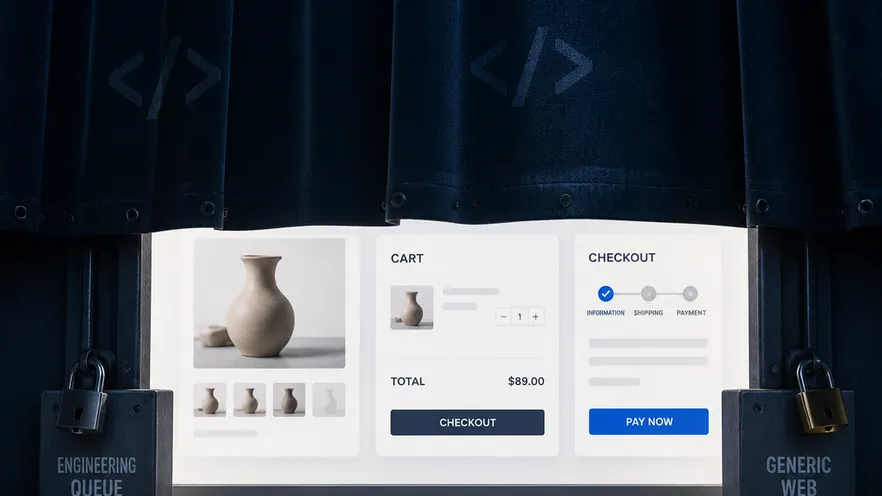
AB Smartly is a real-time experimentation platform built by former Booking.com engineers, with SDK-based assignment and no visual editor. AB Tasty is a marketing-team platform with a visual editor and feature flags, reorganised after its 2025 VWO merger. Neither is Shopify-native. Omniconvert Explore is the eCommerce CRO platform for product, cart, and checkout, measured in revenue per visitor.
- AB Smartly is a real-time experimentation platform built by former Booking.com engineers, with a 4.8 out of 5 G2 rating across 45 reviews. [G2, 2026]
- AB Tasty is a no-code web experimentation and personalisation platform, now inside the VWO group after the 2025 merger, with a 4.5 out of 5 G2 rating across 185 reviews. [G2, 2026]
- The two sit at opposite ends of the market: AB Smartly is engineer-owned and SDK-based; AB Tasty is marketer-owned and visual-editor-based.
- Neither has native Shopify integration or eCommerce-specific checkout templates, and neither reports outcomes in revenue per visitor.
- Omniconvert Explore is a Shopify-native eCommerce CRO platform: it runs A/B, multivariate, and checkout experiments through a visual editor and measures the result in revenue per visitor.
Teams comparing AB Smartly vs AB Tasty are choosing between two very different experimentation tools. AB Smartly is engineering-first: SDK-based, real-time, built by former Booking.com engineers for high-velocity testing programmes. AB Tasty is marketing-first: a no-code visual editor and feature flags, now part of the VWO family after the 2025 merger. This page covers what each does well, the eCommerce gap they share, and when Omniconvert Explore is the right layer for a Shopify store.
What is AB Smartly, and what is it actually good at?
AB Smartly is a real-time experimentation platform built by former Booking.com engineers. It uses SDK-based assignment, exposes results as they arrive rather than in batch, and connects directly to a data warehouse for downstream analysis. It is built for high-velocity engineering programmes that treat testing as continuous infrastructure. [AB Smartly, 2026]
AB Smartly is an engineering platform built by practitioners of one of the largest experimentation programmes in the industry. It holds a 4.8 out of 5 rating on G2 across 45 reviews. [G2, 2026] Its strength is speed and rigour together: results update in real time rather than in a nightly job, and the platform is designed for teams that run hundreds of parallel tests without waiting on a batch pipeline.
Assignment happens through SDKs, with server-side splits and advanced statistical methods. The warehouse connector lets a data team join experiment exposure to any downstream metric that already lives in Snowflake, BigQuery, or Redshift.
Real-time experimentation streams experiment assignment and outcome events as they happen, so exposures and metrics update continuously instead of running as a scheduled batch. AB Smartly does this well for engineering teams shipping many parallel tests. It is an execution and analysis layer for developer-owned code, distinct from running a controlled revenue experiment on Shopify product, cart, and checkout pages through a marketer-accessible interface.
Where AB Smartly is genuinely strong
- Real-time results: exposures and metrics update continuously, not in a nightly batch.
- Booking.com heritage: statistical methods and program design shaped by one of the largest testing programmes in the industry.
- Warehouse connector: joins experiment exposure to metrics already defined in Snowflake, BigQuery, or Redshift.
- Server-side and SDK based: scales for high-velocity engineering programmes running many parallel tests.
Where AB Smartly hits its ceiling for an eCommerce store
- No visual editor: variants ship through code and SDKs, not a WYSIWYG a marketer can use.
- No native Shopify integration: nothing wired to product pages, cart, or checkout out of the box.
- Engineering-priced: custom pricing designed for engineering-led organisations, not for a self-serve CRO budget.
- No multivariate testing: the platform does not run MVT natively.
- Generic outcome model: no concept of revenue per visitor as a first-class metric on the store funnel.
What is AB Tasty, and what is it actually good at?
AB Tasty is a web experimentation and personalisation platform. It combines A/B testing, feature flags, and personalisation in one interface, built around a no-code visual editor. Since merging into the VWO group in 2025 it has expanded its feature set and support resources, and remains a popular pick for marketing teams that want to run tests without developer involvement. [AB Tasty, 2026]
AB Tasty is a marketing-team platform first and an engineering tool second. It holds a 4.5 out of 5 rating on G2 across 185 reviews. [G2, 2026] Its strength is breadth for a growth team: a no-code editor for building variants on marketing pages, feature flags for gradual rollouts, and a personalisation layer for audience-based experiences, all in the same product.
Server-side testing is available through a paid add-on module rather than the core plan. Since the VWO merger the roadmap and pricing have been reorganised, and the combined platform now leans on VWO's wider testing and behaviour analytics stack for depth.
No-code experimentation lets a marketer build and ship experiment variants through a visual editor rather than through code, with variant assignment handled by the platform. AB Tasty does this well for marketing-site testing and feature-flagged releases. It is a generic web experimentation layer, distinct from running a controlled revenue experiment on Shopify product, cart, and checkout pages against native store data.
Where AB Tasty is genuinely strong
- No-code visual editor: marketers build variants without waiting on engineering.
- Feature flags in the same platform: combines experimentation and gradual feature rollouts in one interface.
- Personalisation layer: audience-based experiences alongside A/B and multivariate tests.
- Post-merger depth: access to the wider VWO testing and analytics stack after the 2025 merger.
Where AB Tasty hits its ceiling for an eCommerce store
- Limited native Shopify integration: no first-class connector to product pages, cart, or checkout out of the box.
- No eCommerce-specific templates: checkout flow experiments must be built manually rather than from a store-tuned starting point.
- Server-side is an add-on: a separate paid module is required, not part of the core plan.
- Post-merger uncertainty: pricing and roadmap have been reorganised since the VWO merger, and buyers report a moving target.
- Generic outcome model: no concept of revenue per visitor as a first-class metric on the store funnel.
What AB Smartly and AB Tasty cannot do for an eCommerce store
AB Smartly and AB Tasty sit at opposite ends of the same generic-web axis. One is built for engineering teams running server-side tests through SDKs; the other is built for marketing teams running no-code tests on web pages. Neither is built around Shopify product, cart, and checkout, or around the metric that matters there: revenue per visitor.
AB Smartly is built for engineering teams running high-velocity server-side experiments. On a Shopify store the shape is a problem: every product page and checkout variant starts as an SDK ticket, and the queue is set by engineering. The A/B test the CRO lead wanted this week ships when engineering ships it, and the outcome is reported in whatever event the developer instrumented, not in revenue per visitor.
AB Tasty is oriented towards marketing-website experimentation and feature management. A growth lead can build a variant in the visual editor without a developer, which is a real advantage. The gap opens when the test reaches the Shopify catalog and checkout: there is no native connector, no eCommerce-specific templates for cart or checkout, and revenue-focused experiments have to be built manually against custom events rather than a native store data model.
The gap the two share is the eCommerce one. Both are generic web experimentation platforms, one server-side and engineer-owned, one client-side and marketer-owned. Neither treats the product-to-checkout path as the primary surface, and neither reports the result in revenue per visitor. For the wider context on how testing programmes actually move revenue, see Has personalization replaced A/B testing?
The deeper issue is that ownership of the test never quite lands on the person who owns the revenue number for the store. In AB Smartly the engineer owns it; in AB Tasty the marketer owns it but the checkout integration still requires custom work. Omniconvert Explore collapses that loop: a visual editor for product page and checkout variants, native Shopify integration, on-site surveys and overlays in the same platform, and the outcome measured in revenue per visitor. The person who owns the store's growth number owns the test.
eCommerce conversion rate optimization (CRO) is the practice of running controlled experiments on the revenue surfaces of an online store, product pages, cart, and checkout, and measuring the result in revenue per visitor and order rate rather than generic conversion rate. Explore is defined as an eCommerce conversion rate optimization platform for product, cart, and checkout experiments, native to Shopify and priced for store traffic.
What neither tool can tell an eCommerce team
- Did the win move revenue and margin. Whether a variant raised revenue per visitor and order rate, and held its margin once discounts and returns are counted, not just moved a click or a feature-flag exposure.
- Which surface to test first. Which pages in the store funnel (product, cart, checkout) carry the highest revenue impact if tested next.
- How it behaves in checkout. How an experiment interacts with the Shopify catalog, variants, and checkout flow natively, without SDK glue work or a hand-built connector.
- Whether it holds for valuable customers. Whether the result holds for repeat, high-value customers, the Customer Value Optimization question, not just for first-session visitors.
Omniconvert benchmarks more than 7,000 eCommerce websites in its CROBenchmark Report 2026, across 248+ audit criteria. The findings show where stores actually lose orders: 99.6% fail to make guest checkout visible and prominent, and 94.2% never show checkout progress steps to the shopper. [CROBenchmark Report 2026, Omniconvert]
Those are fixes a CRO lead can hypothesise, mock up, and want to test today. In AB Smartly the same fix is an SDK ticket in an engineering queue. In AB Tasty a marketer can build the variant, but wiring the outcome back to Shopify checkout revenue is custom work. Explore runs the experiment on the real revenue surfaces and reports the outcome in revenue per visitor, without an SDK integration or a hand-built connector between the hypothesis and the result.
This is what the title means by the Shopify blind spot. Two capable testing tools, at opposite ends of the market, and both looking past the surface where a Shopify store's revenue is actually decided. Explore optimizes for revenue per visitor directly, and because Customer Value Optimization ties each result back to repeat, high-value buyers, the lift it confirms is margin the store keeps rather than traffic it rents. Explore also reaches Shopify-specific levers most generic testing tools cannot touch, including price testing; see Explore 3.0: pricing testing on Shopify.
AB Smartly vs AB Tasty vs Explore: the capability comparison
Side by side, the three tools sit at different points on the experiment lifecycle. AB Smartly is the real-time execution layer for engineering teams running server-side tests. AB Tasty is the no-code marketing layer for feature-flagged web experimentation, now inside the VWO group. Explore is the eCommerce CRO layer for the store team that owns product, cart, and checkout, and is judged on revenue per visitor. See A/B testing with Explore for how those experiments run natively on the Shopify funnel.
| Capability | AB Smartly | AB Tasty | Omniconvert Explore |
|---|---|---|---|
| Primary function | Real-time engineering-led experimentation | No-code web testing and feature management | eCommerce CRO on product, cart, and checkout |
| A/B testing | Yes SDK-based, no visual editor | Yes visual editor and feature flags | Yes visual editor plus code |
| Multivariate testing | No | Yes | Yes |
| Server-side testing | Yes core capability | Partial via a paid add-on module, not core | Yes |
| Visual editor | No code and SDKs only | Yes strong no-code editor | Yes WYSIWYG for marketers |
| On-site surveys and overlays | No | Partial personalisation, no native survey tool | Yes surveys and overlays built in |
| Shopify integration | Low no native connector | Medium limited, no native checkout connector | Yes native |
| eCommerce focus | Low built for engineering teams | Medium marketing-site oriented, not store-native | High built for store revenue workflows |
| Pricing model | Custom, contact sales, no free trial | Custom, contact sales, free trial available | Session-based, built for store traffic, free trial |
| Best for | Engineering teams wanting real-time server-side experimentation | Marketing teams wanting no-code testing and feature flags | Shopify and eCommerce teams optimizing for revenue |
| User rating | 4.8 out of 5 (G2, 45 reviews, as of 2026) | 4.5 out of 5 (G2, 185 reviews, as of 2026) | 4.6 out of 5 (G2, 191 reviews, as of 2026) |
AliveCor used Explore to run a structured A/B testing program and achieved +21% conversion rate, +5% revenue per visitor, and 94% statistical relevance across their experiments. [Omniconvert, AliveCor case study]
Competitor ratings, pricing, and plan details reflect publicly listed figures as of 2026 and can change. AB Smartly is engineering-owned; AB Tasty is a marketing-team platform now inside the VWO group after the 2025 merger. Explore uses session-based pricing; see the Omniconvert pricing page for current plans.
Get the full CROBenchmark data behind these stats: 7,000+ websites, 15+ industries, 248+ audit criteria, 100+ CRO experts. See exactly where eCommerce growth teams are losing margin in 2026.
Get the CROBenchmark ReportFrequently Asked Questions
Should you choose Explore over AB Smartly or AB Tasty?
Decide by who owns the test. If your engineering team wants Booking.com-grade real-time experiments, AB Smartly serves them. If your marketing team wants no-code testing bundled with feature flags after the VWO merger, AB Tasty serves them. For a Shopify store where product, cart, and checkout are the real revenue surfaces, run your next test in Explore and measure the outcome in revenue per visitor, not clicks.
AB Smartly and AB Tasty are both strong at what they do. AB Smartly brings real-time engineering rigour shaped by the Booking.com programme. AB Tasty brings no-code breadth to marketing teams, with feature flags and personalisation in one platform and the wider VWO stack behind it after the 2025 merger.
The question for a store is narrower: once you have a hypothesis about the cart or checkout, can a CRO lead ship the variant, measure the result in revenue per visitor, and answer whether the win holds for high-value repeat customers, without an engineering ticket or a custom checkout integration. That is the surface Explore is built for.
Stop guessing.
Start testing what moves revenue.
Explore runs A/B, multivariate, and personalization experiments on your product pages, cart, and checkout, then measures the outcome in revenue per visitor, not just clicks.
4.6 out of 5 across 191 reviews, G2 , as of 2026