
When you need to be data-driven & customer-centric
Reduce churn, increase activation rates, and improve retention with OmniConvert’s Customer Intelligence Platform built for Conversion Rate Optimization (CRO) in SaaS. Get real-time insights into user behavior, user journeys, funnel performance, and conversion bottlenecks so you can optimize onboarding flows, improve trial-to-paid conversion, increase lifetime value (LTV), and scale recurring revenue with confidence.

Schedule a consultation call with our retail expert Alex Neagu
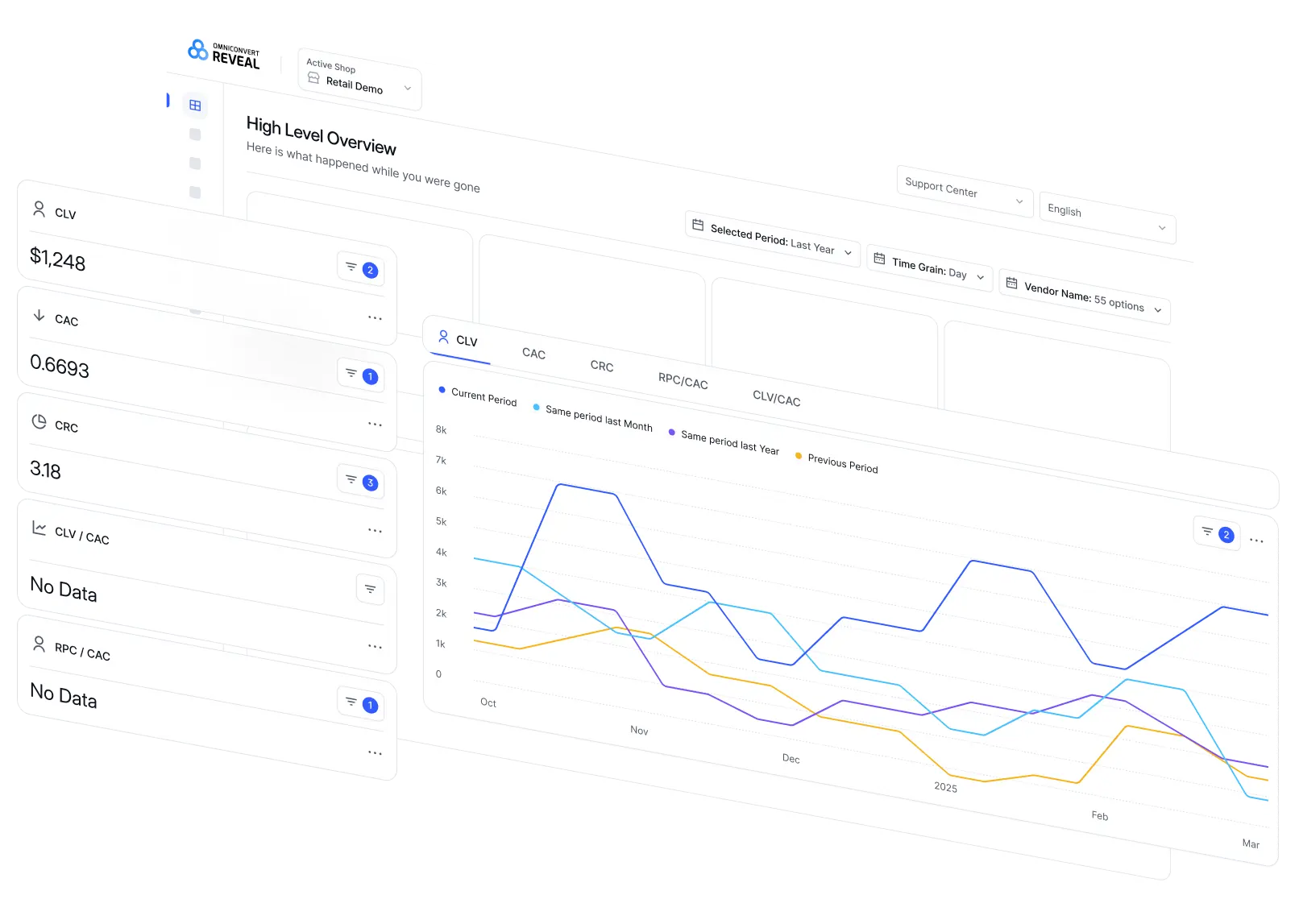
Trusted by Leading SaaS and E-commerce Brands Worldwide
Trusted by leading SaaS and e-commerce brands worldwide, Omniconvert supports data-driven optimization across content, UX, and user behavior. These brands rely on Omniconvert to improve organic visibility, strengthen engagement signals, and increase conversion rates through measurable, scalable experimentation.





CRO Software for SaaS and Integrations
Connect your data stack to optimize organic traffic, user behavior, and conversions.


Omniconvert CRO Solutions
Omniconvert delivers SEO-aligned CRO solutions that optimize content, UX, and behavioral signals to improve rankings, engagement, and conversions. By analyzing user intent, on-page performance, and funnel data, it helps SaaS brands reduce friction, strengthen topical authority, and turn organic traffic into measurable revenue.
CRO for SaaS Principles
It’s time to make these 3 things happen


CRO for SaaS Customer Experience Report
Use customer intelligence to improve acquisition, activation, and retention across your SaaS funnel. Instantly identify high-performing pages, features, and touchpoints, along with friction points that weaken engagement and conversions. Turn behavioral and feedback data into clear optimization priorities and measurable growth.
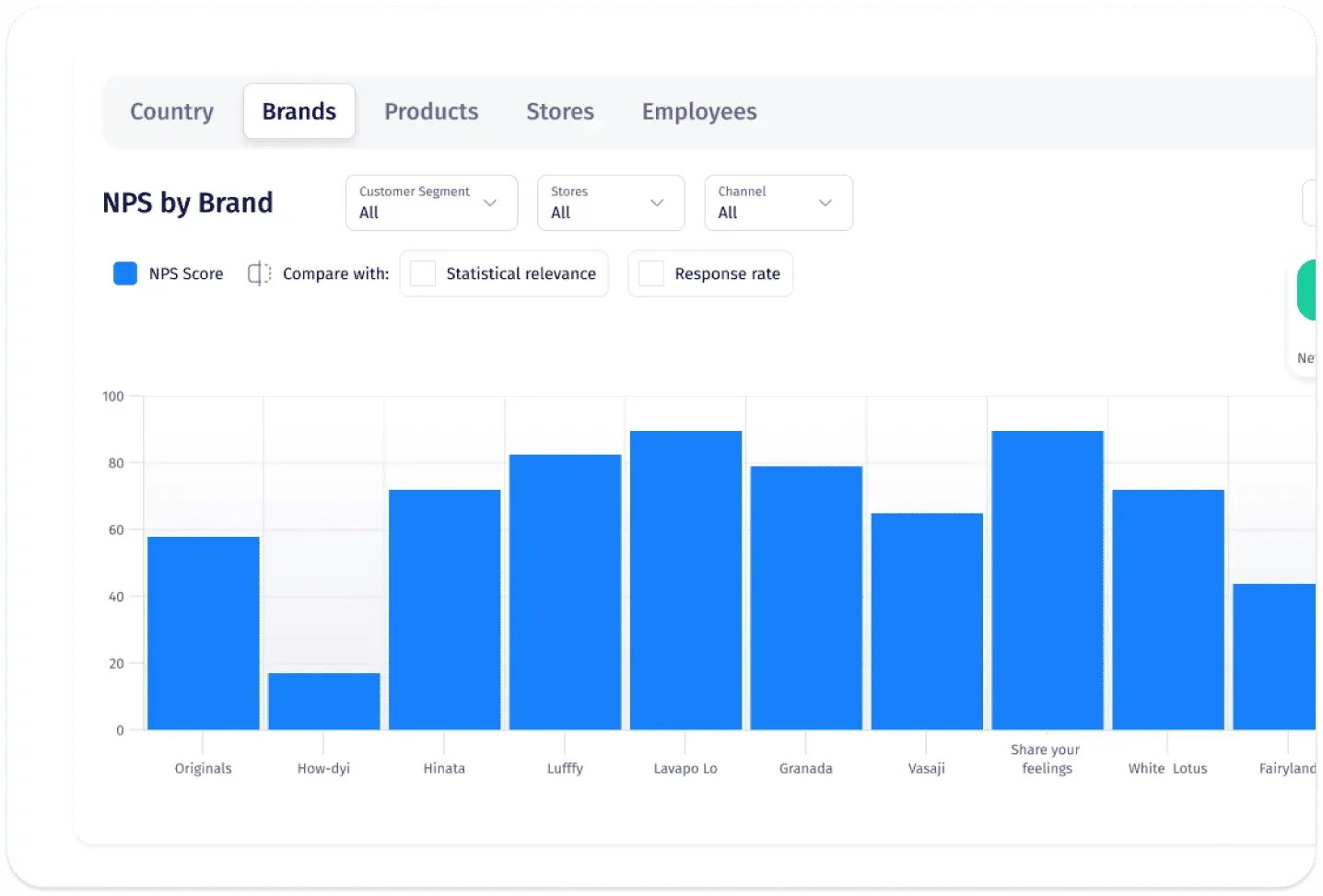
There’s nothing stopping the customer from replacing you with the competition next door. Except for a customer experience so exceptional that it creates an unwavering loyalty. Use the NPS feature to identify recurring problems in your store. Identify patterns and take action to fix complaints.
Ensure nothing in your customer experience is pushing customers away.

NPS for SaaS Pre and Post Delivery
Track NPS before and after delivery to measure true user satisfaction across the SaaS lifecycle. By connecting feedback with behavioral and conversion data, you can identify friction, improve onboarding and retention, and optimize product and content performance based on real user sentiment.
Monitor the customer’s satisfaction throughout his entire journey.
Confirm you’re delivering on your promise.
If not, take action to close the gap and deliver Customer Nirvana.
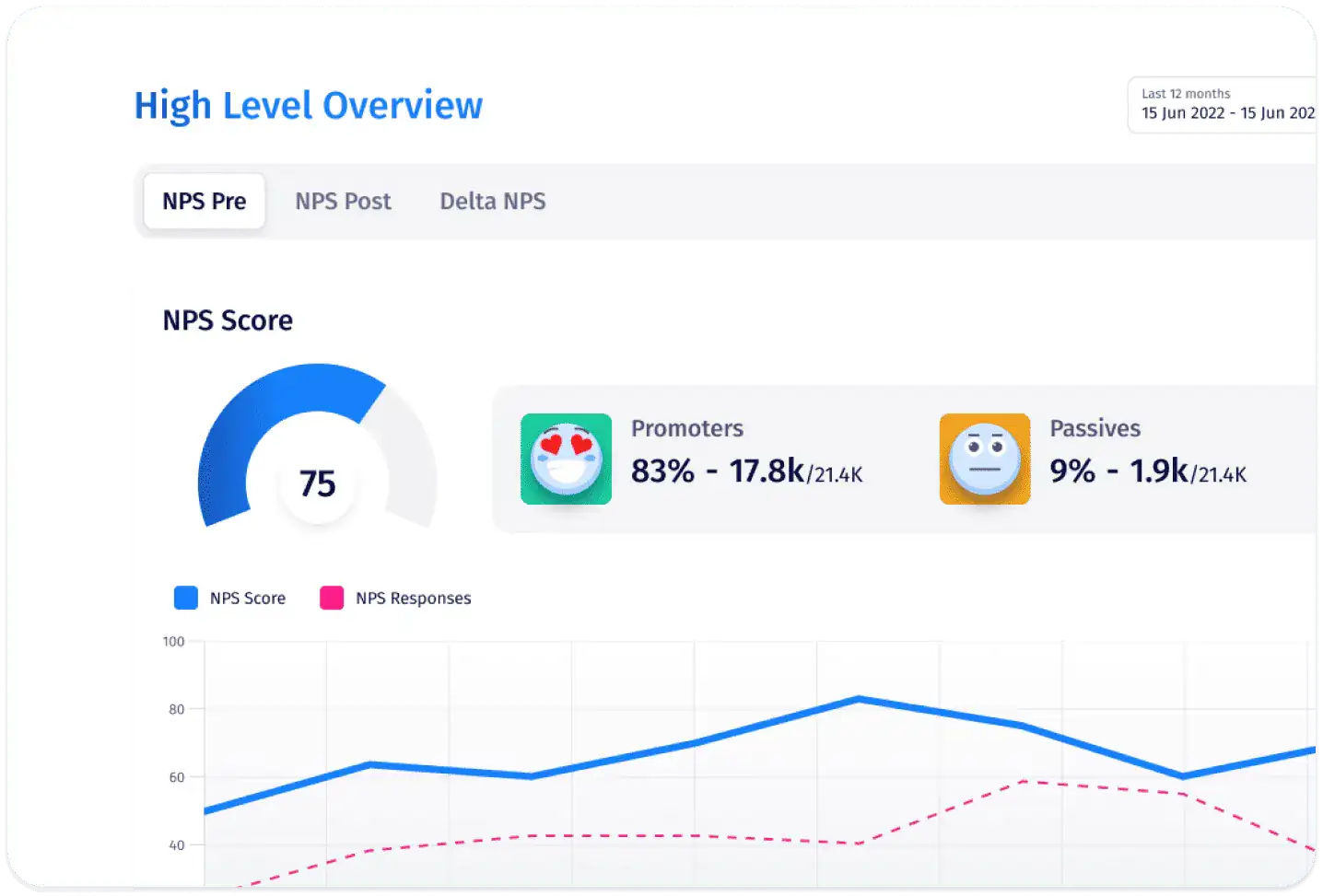
NPS for SaaS by Store and Location
Analyze NPS by store and location to uncover geographic patterns in customer satisfaction and conversion behavior. These insights help optimize local content, improve user experience, and support data-driven decisions for higher engagement and retention across markets.
Pinpoint and isolate any stores or locations dragging the business down.
Identify recurring customer issues and solve them before it’s too late.
Get a clear understanding of necessary improvements and analyze your stores in the tiniest detail.
Deliver unbeatable customer experiences across all stores in all locations.
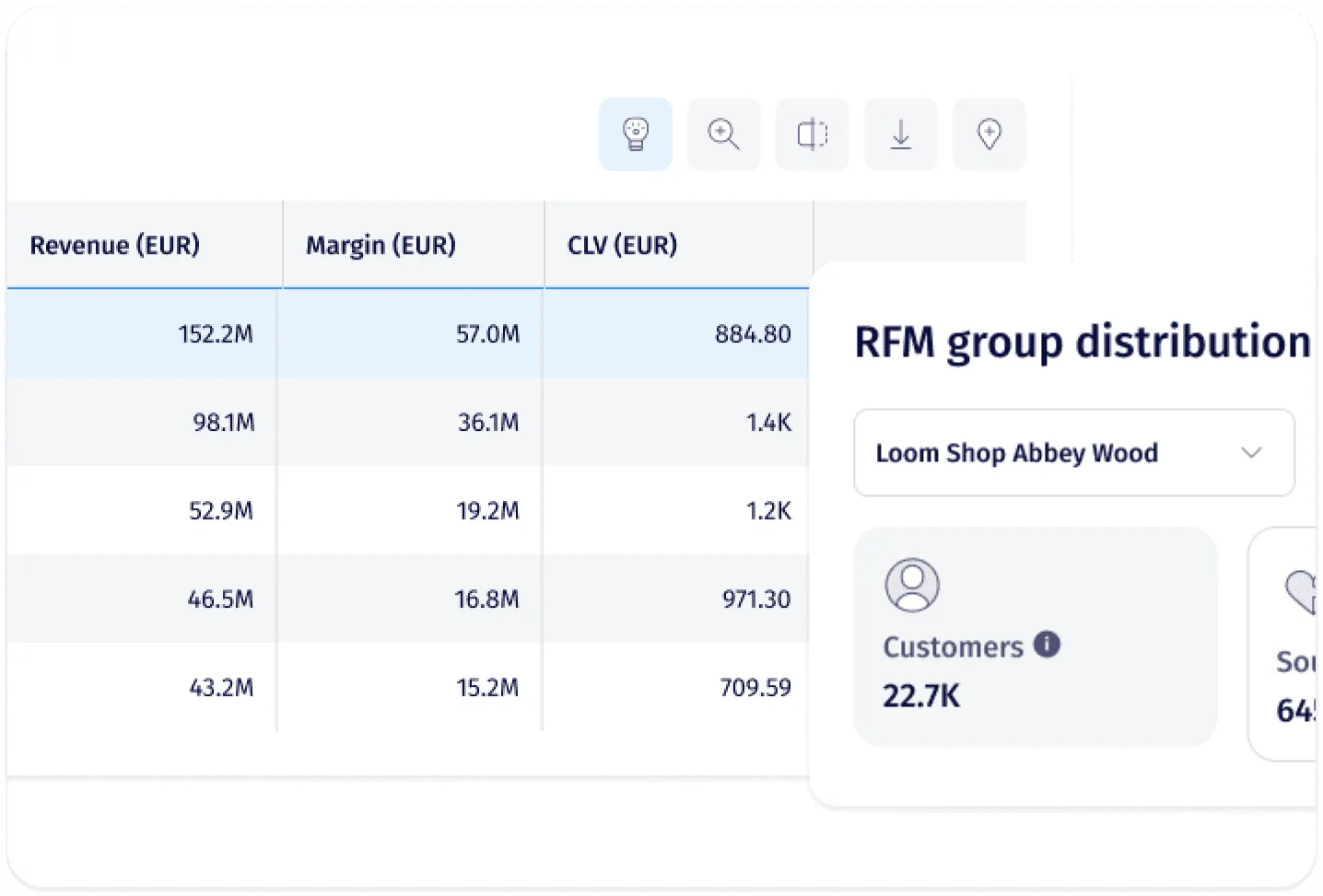
NPS for SaaS by Employee
Confusing onboarding, slow support, or unclear product experiences can lose users instantly. Monitor every interaction across the SaaS journey, from signup to activation and support. Ensure each touchpoint reduces friction, strengthens engagement, and improves long-term retention.
Unhelpful consultants, annoyed cashiers, or clueless store managers could lose you a customer forever.
Monitor the customer’s experience with your employees at every step of the buying journey.
From the cashier to the delivery team, ensure each employee offers a great experience, retaining customers in the long-run.
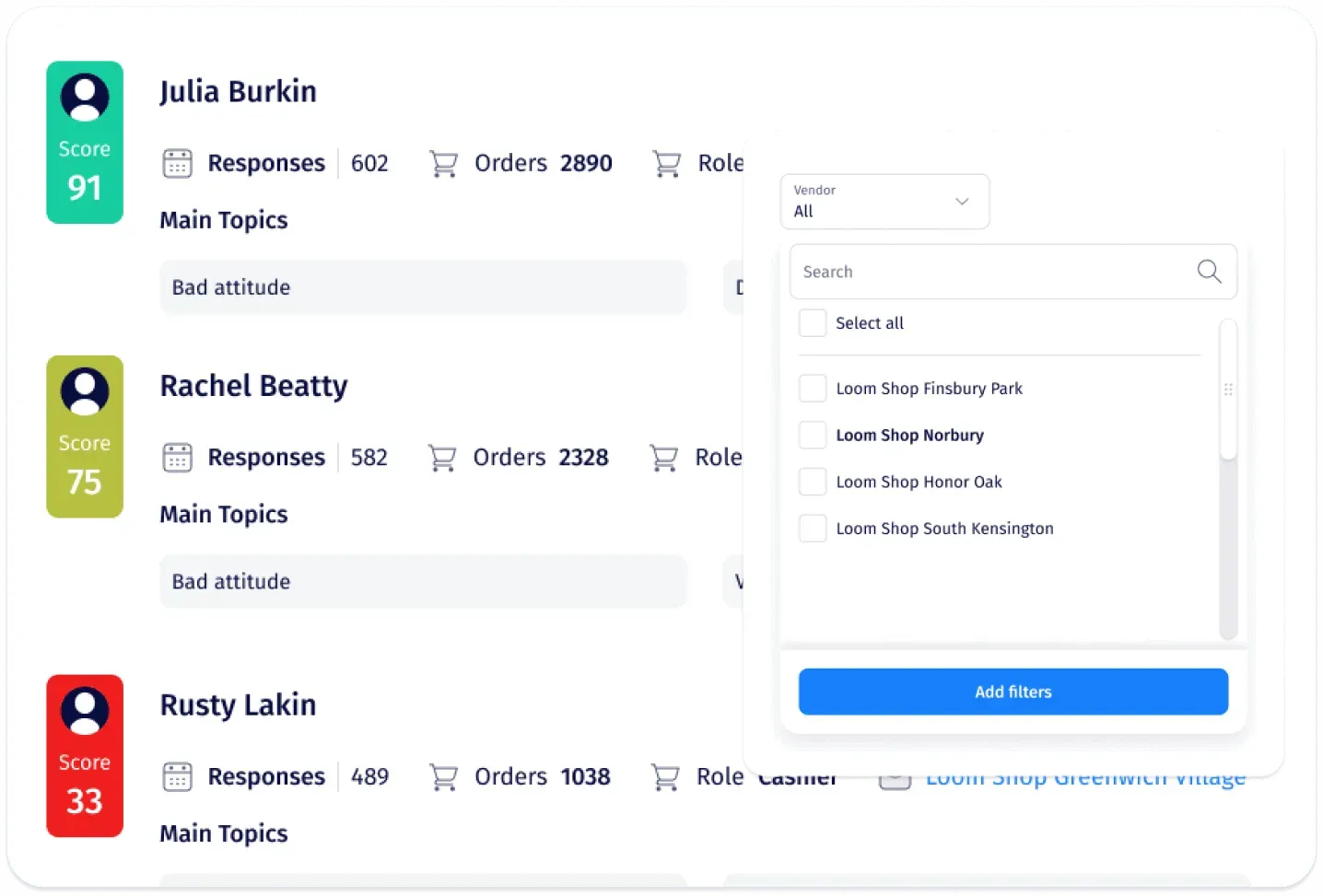
NPS for SaaS by product/brand/category
Are your customers as happy as you’re assuming?
Find out how they really feel toward your products, brands, and product categories.
Effortlessly detect any anomalies in your product assortment.
Take steps to ensure your customers consistently receive top-notch merchandise that compels them to return to your store.
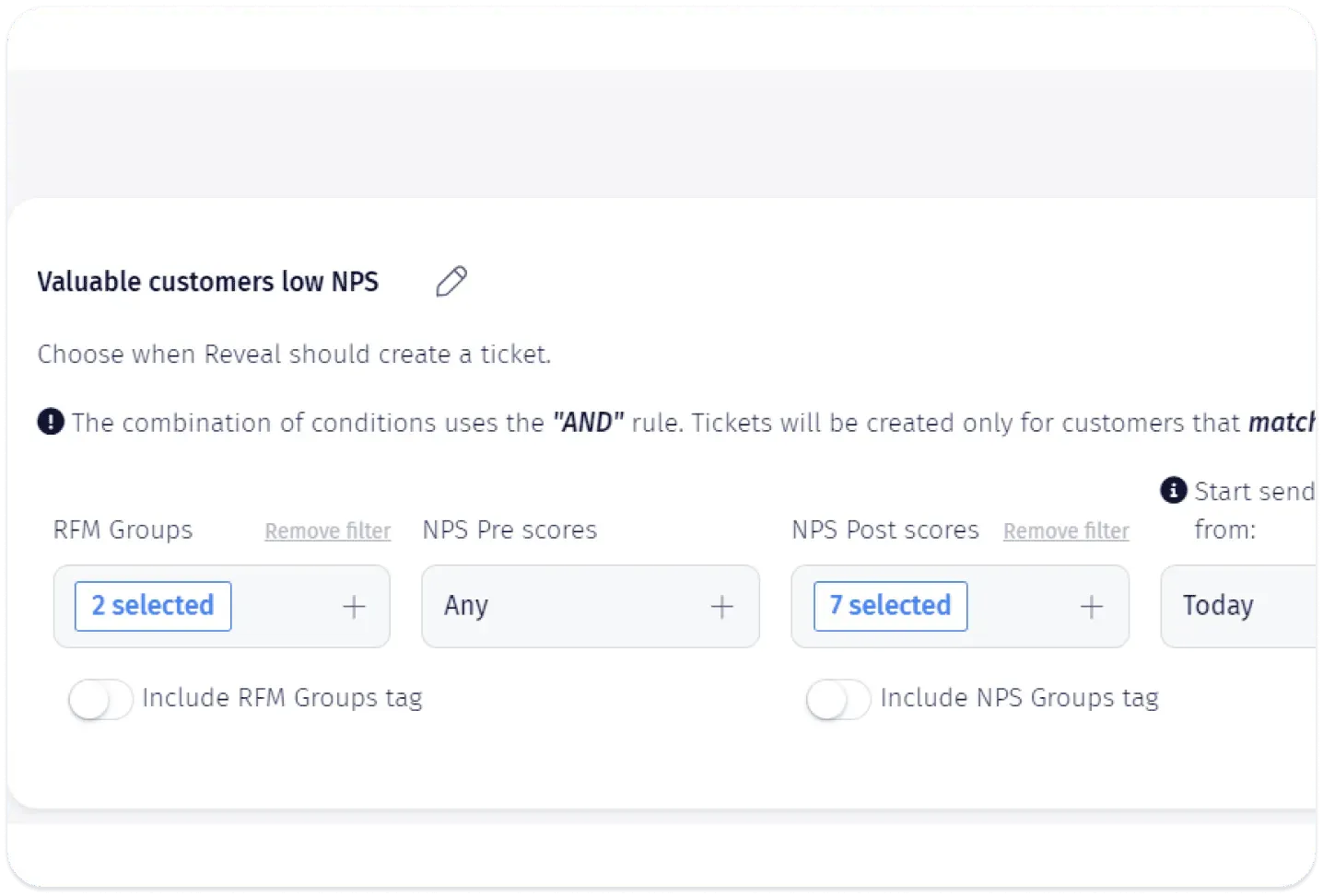
NPS for SaaS Alerts
Get real-time notifications each time a high-value customer gives a low NPS score (offline or online).
Be proactive and intervene before letting a loyal customer slip through the cracks.
Empower your CX teams to prioritize their resources, mitigate poor experience, and offer immediate support in case of any customer complaint.


Providing a directed marketing approach Culture Kings
“We believe in creating excitement for our customers when they buy our products. But you also have customers who aren’t that excited. Reveal’s NPS feature allowed our marketing to be much more directed at customers who didn’t have the greatest experience. We’ve been able to turn them into raving fans.”
CRO for SaaS and Customer Intelligence Report
Maximize product profitability and fine-tune your acquisition campaigns, product inventory, and customer-service initiatives.
With just a quick look, you’ll identify your best-selling products, products that generate customer loyalty, or products that drive people into the arms of your competitors.
There’s a small step from unlocking insights you never knew existed, to achieving results you never believed you were capable of – take it today.
Actionable Insights
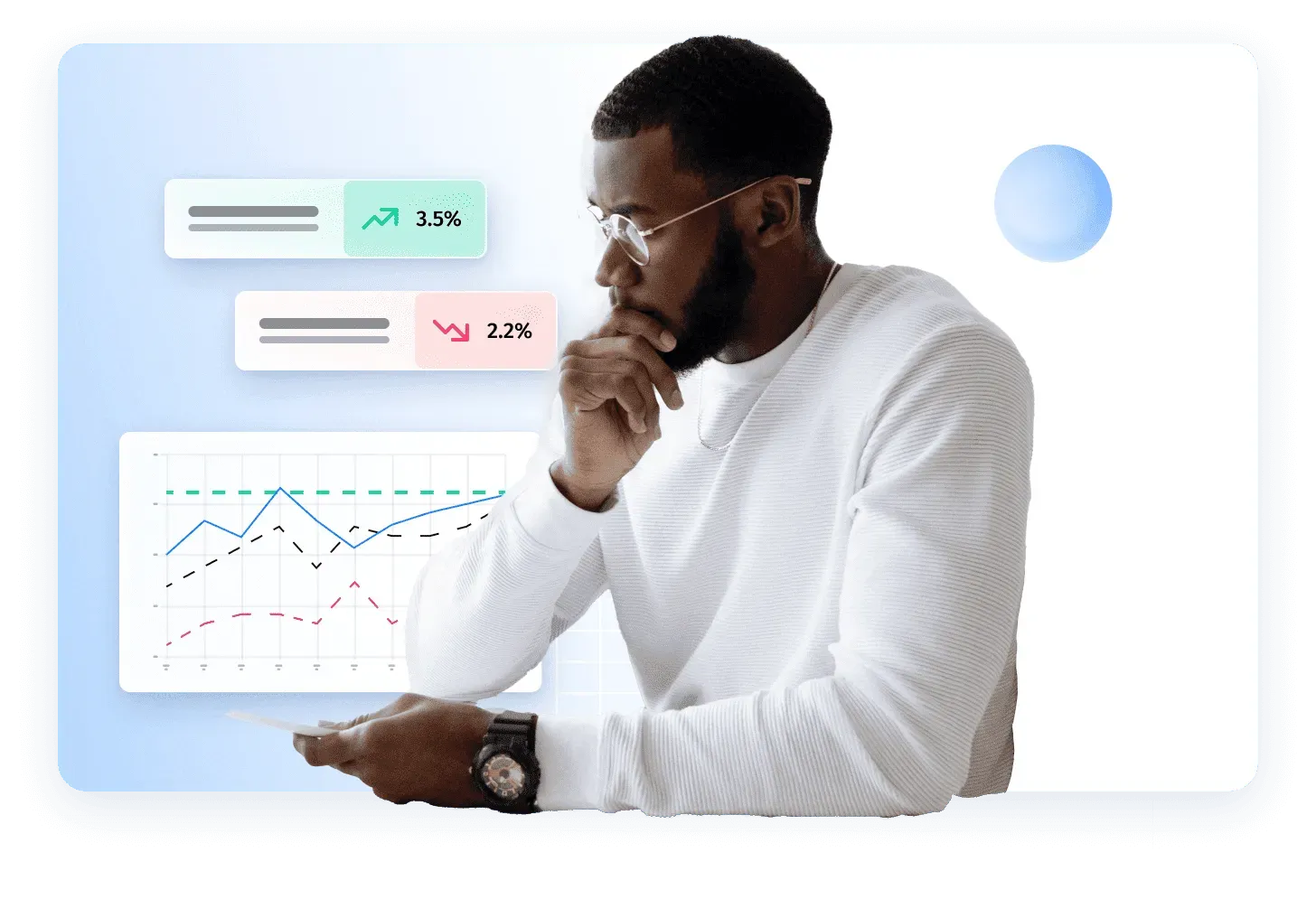
Blending HOW the customers feel with WHAT the customers do leads to internal alignment: your entire organization is united around the customer, and every department operates at its best, creating experiences that drive the business forward.
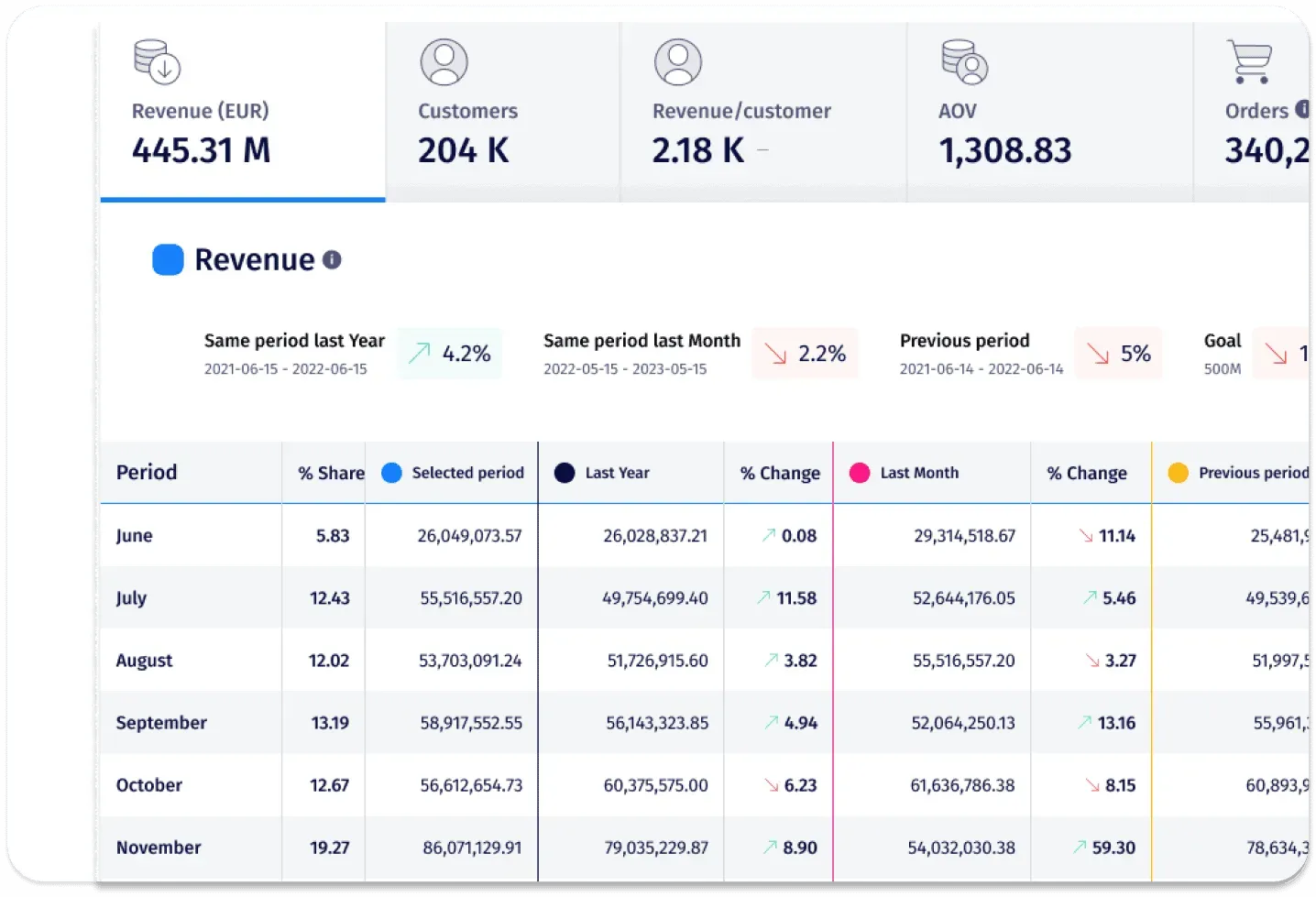
Buying Habits
Uncover Products/Categories from the 1st order that generate repeat purchases and unlock insights you never knew existed.
Spot toxic products causing customer churn after the 1st order and eliminate them from your acquisition campaigns.
Identify the products that brought your best customers over a certain period and promote them more often in your campaigns.
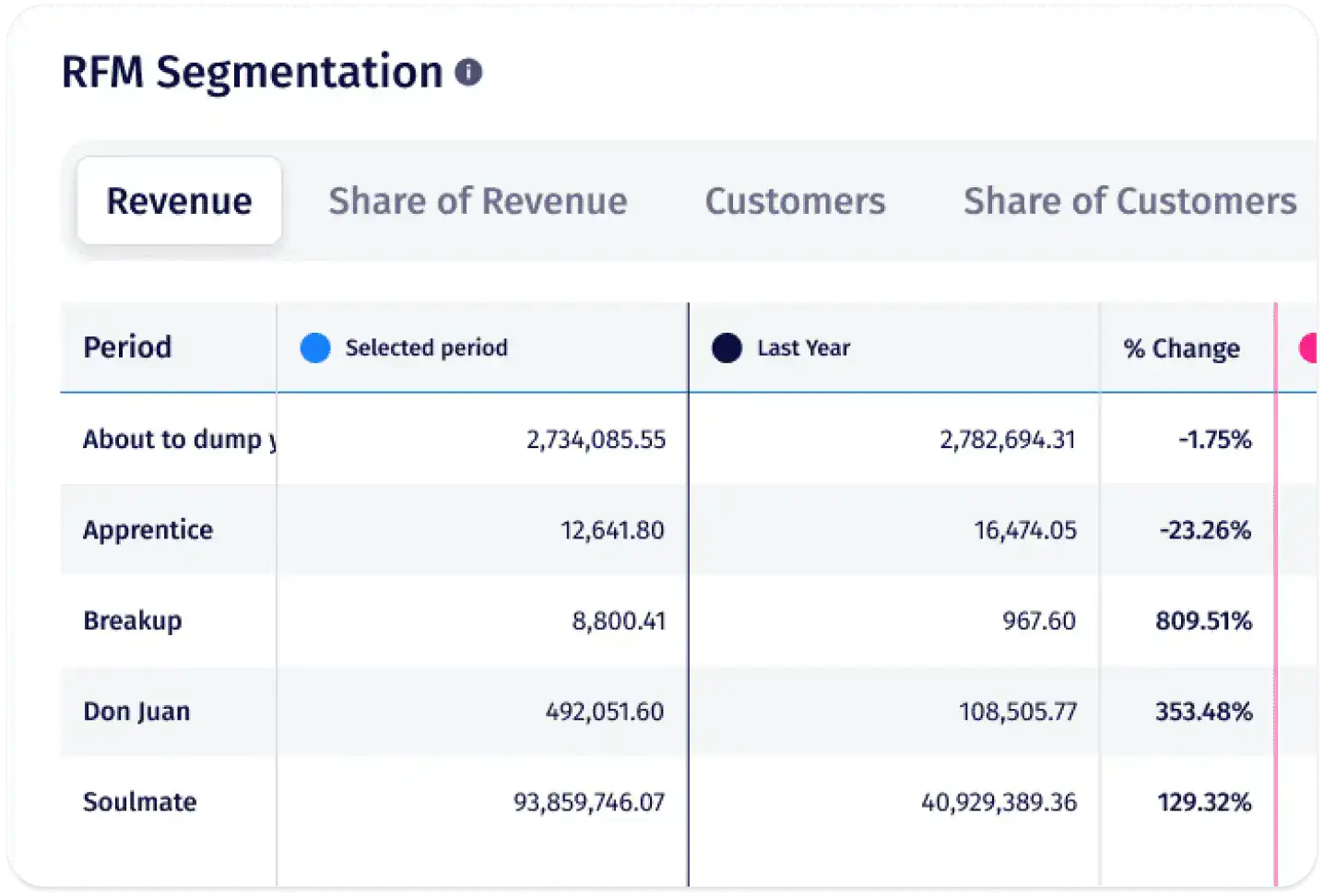
Movers & Shakers
Easily spot which products or brands are crushing it and which ones are struggling, compared to the past.
You’ll know exactly what’s hot for products, having the power to keep those must-have items in stock. Never lose customers because weren’t prepared to meet their demands again.
For vendors or locations, you’ll spot anomalies at a glance.
You’ll quickly notice if something’s gone through a fantastic evolution (replicating it to other locations) or taken a nosedive (and intervene before you lose any more money).
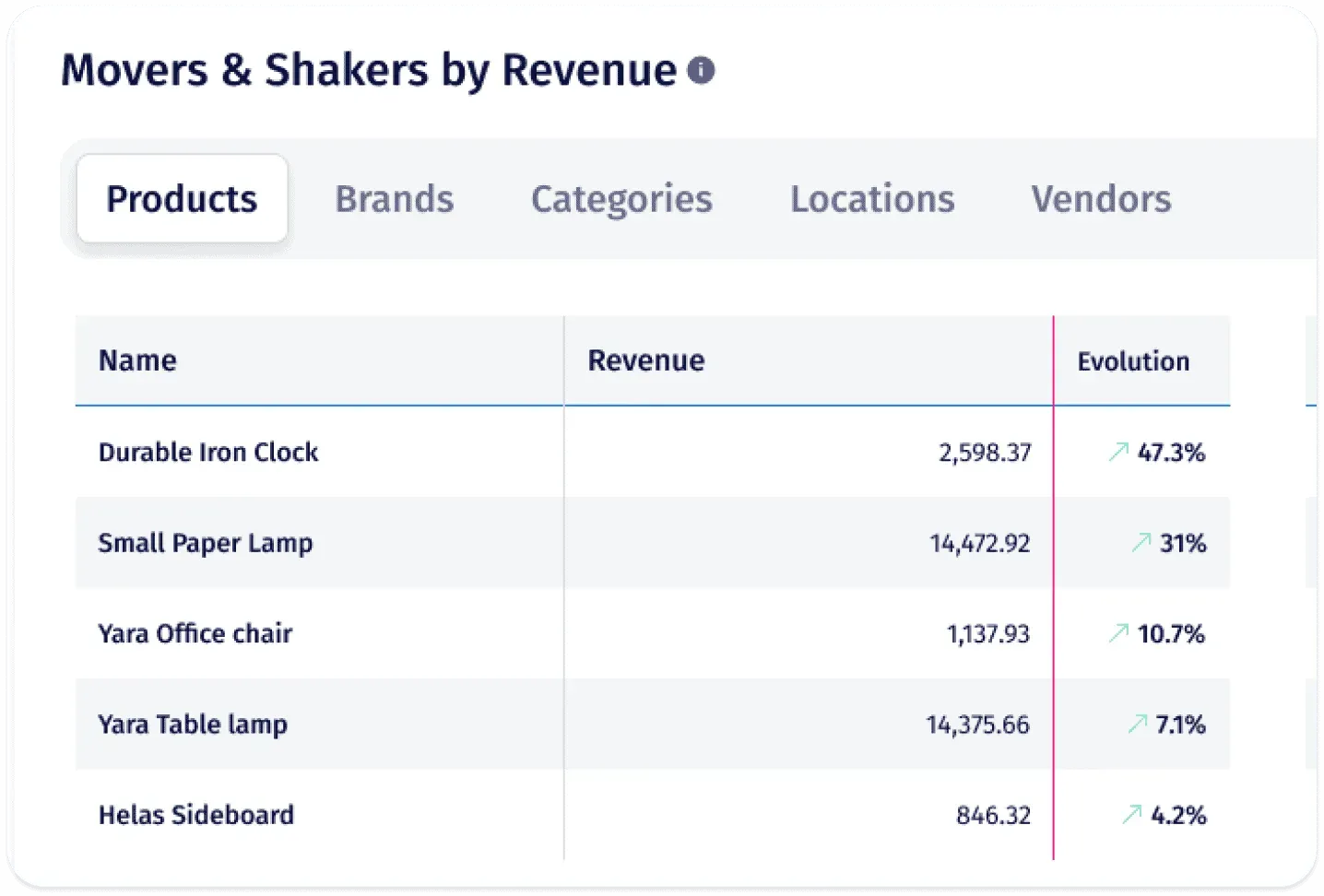
Customer Lifetime Value
Monitor CLV and unlock the true potential of your customer relationships.
Track and analyze the purchasing behaviors & patterns of your customers over time.
Discover who your most valuable customers are, understand their preferences and buying habits like never before, and make room for more data-driven decisions.
Increase revenue in a long-term and sustainable way, moving on from short wins to a more tactical approach to marketing.
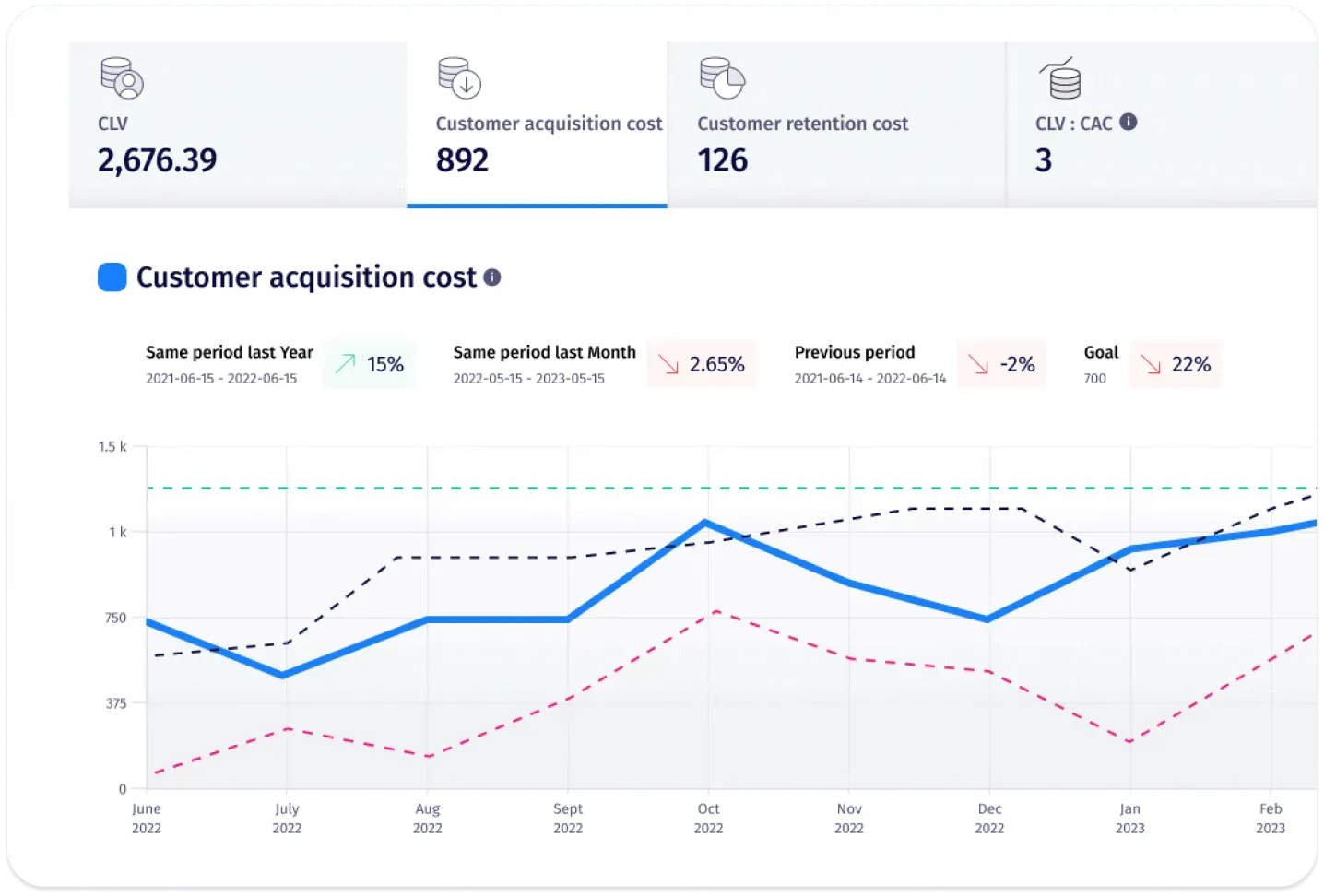


Helping Decathlon stay close to their customers
To understand customer behavior we need to collect, analyze, and use the right data. Omniconvert understands online and offline business. They help us progress on Omnichannel thanks to their out-of-the-box way of thinking and experience in data management.
Customer Engagement for Conversion Rate Optimization
When predictable user growth slows, optimization becomes the growth engine. Use customer and behavioral data to uncover actionable insights across acquisition, activation, and retention. Improve content performance, UX, and channel efficiency with evidence-based decisions. From organic search to email and paid acquisition, shift from guesswork to measurable, data-driven optimization.
When you can’t count on a steady stream of new monthly customers to drive your business forward, you need something else.
Something better.
Unlock unparalleled and actionable insights about your customers and use them to inform your acquisition, retention, and loyalization strategies.
From Soulmates to Breakups, from Email Marketing to Paid Ads, it’s time to get tactical and data-driven.

RFM Segmentation
Segment your entire customer base into smaller groups based on their past behavior and quickly identify high-value, loyal customers and potential churners.
Target each customer segment with the right retention, prevention, and loyalization campaign to prevent churn, increase loyalty, and generate more recommendations.
Email marketing
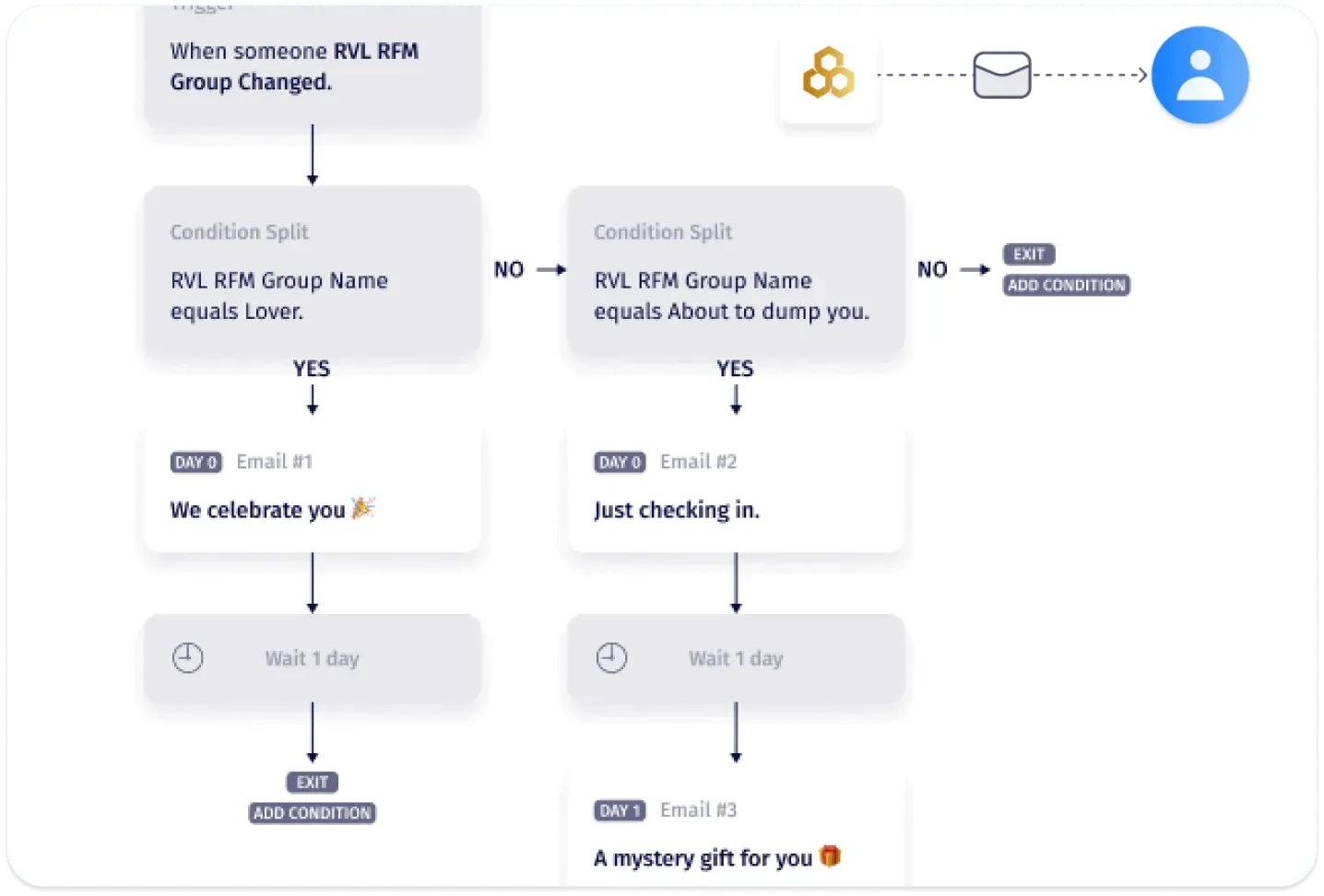
Sync Reveal with your email marketing tool to can create campaigns, flows, and segments based on the RFM score and other dynamic customer data from Reveal.
Identify the most valuable customers for your business and effortlessly create actionable audiences for your marketing communications.
Keep your most loyal customers close, win over potential customers, and avoid losing anyone along the way!
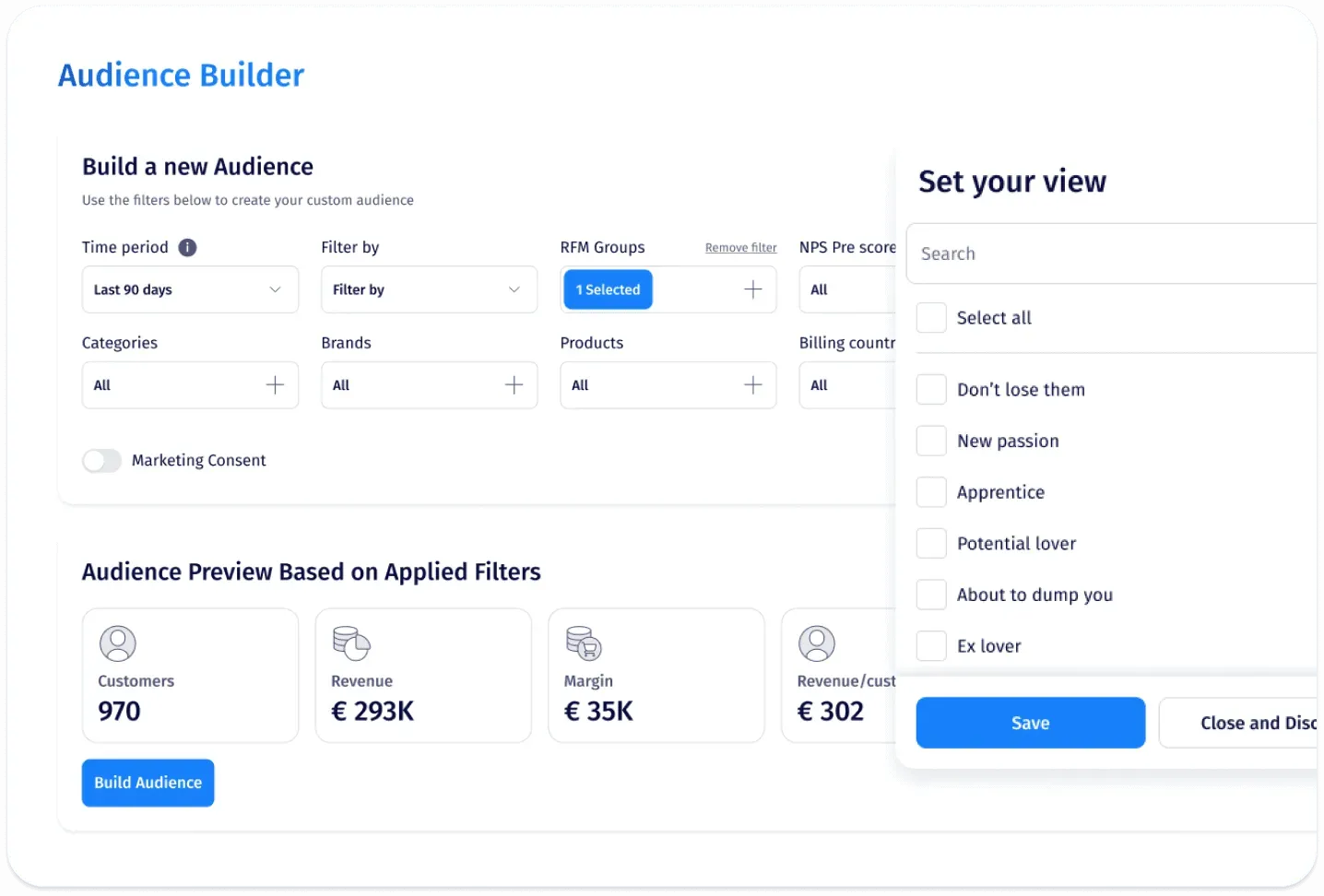
Audience builder (FB/Google)
Start optimizing your store’s ad campaigns using the Dynamic Audience Builder and generate better audiences based on your most valuable resource: your first-party data.
Attract more customers like your best customers and keep the acquisition costs as low as possible.


Empowering Auchan with customer-centric data-driven decisions.
Customers give us access to insights. The battle is delighting customers and making them come back. The Omniconvert team is like our partner, who cares about our needs and provides a working solution – not just a mere tool that may not work for us.
That's how you take action

CEO (local markets)/Retail/Omnichannel
You’re in charge of the overall strategic direction and organization’s leadership. Your day-to-day is filled with critical decisions, setting the company’s vision and goals, and ensuring that all departments work towards achieving those objectives. You can’t rely on gut instincts when the company is in your hands.

CX Manager/CRM/Retention Manager
You’re bringing all departments together into creating mind-blowing customer experiences. The customer’s satisfaction, loyalty, and long-term value depend on your strategies and initiatives. Sometimes it feels as if you have to read customers’ minds. And proving your work’s impact on the bottom line is a challenge in itself.

Marketing Manager
Your job is to promote the company’s products, attract and retain the right customers, and drive business growth. And you’re somehow expected to do it all while fighting the competition, high marketing costs, and customers’ everchanging needs and expectations. You need actionable reports, real-time data, and agility to meet your goals and wow stakeholders with your results.
Get your free consultation
Discover Strategies:
Learn how to maximize your Customer Lifetime Value (CLV) and boost your profits
Retention Insights:
Understand how to enhance customer loyalty and reduce churn rate
Personalized Approach:
Explore tools for personalized marketing, leading to improved customer satisfaction.
Predictive Analysis:
Get insights on future customer behavior to make informed business decisions.
Competitive Advantage:
Stay ahead of the competition by understanding your customer’s value better.
Data-Driven Decisions:
Harness the power of customer data to make strategic decisions that increase ROI.
FAQs about SaaS Conversion Rate Optimization
SaaS conversion rate optimization focuses on improving how effectively a SaaS product converts visitors into paying users. SaaS conversion rate optimization strengthens each decision point by guiding prospects from curiosity to commitment through refined messaging, clearer value communication, and structured testing. A strategic approach to SaaS conversion optimization creates stronger paths from page views to paid subscriptions by reducing friction and highlighting product value. Conversion actions shape the growth of any subscription product, with free trials, demo requests, and signups serving as primary turning points that influence revenue. Analytics tools monitor behavior, identify funnel drop-offs, and reveal bottlenecks that limit SaaS conversion performance. A data-driven workflow grounded in conversion rate optimization establishes a clear view of user behavior, enabling teams to address weak points and strengthen every stage of the conversion journey.
SaaS Conversion Rate Optimization is the systematic process of increasing the percentage of visitors to a software-as-a-service portal who complete a desired action, such as signing up for a trial, subscribing to a plan, or requesting a demo. A structured approach studies behavior patterns, uncovers friction within the journey, and applies precise adjustments to web pages, onboarding flows, pricing structures, and call-to-action prompts to lift conversion success.
Detailed tracking through conversion rate optimization software supports teams by measuring funnel performance, running controlled A/B tests, and producing insights grounded in real data. Performance indicators (trial-to-paid movement, churn levels, and engagement strength) confirm whether each adjustment strengthens the customer path. Continuous measurement, disciplined experimentation, and consistent refinement ensure that every modification contributes to a stronger user experience and measurable subscription growth.
SaaS CRO is important because it directly increases the effectiveness of marketing and product efforts. Improving the rate at which trial users convert to paying subscribers reduces the need to invest in additional traffic or marketing campaigns, thereby increasing user acquisition efficiency without raising costs. Optimizing signup flows, onboarding experiences, and pricing pages ensures that more visitors complete desired actions, which maximizes return on existing traffic.
CRO strengthens customer retention by addressing friction points in the product experience, encouraging continued use of the service, and reducing churn. Higher retention translates to longer subscription lifecycles, increasing lifetime value and recurring revenue. Systematically testing and refining conversion paths accelerates revenue growth by turning more visitors into active, paying customers while sustaining long-term user engagement.
SaaS Conversion Rate Optimization works by systematically analyzing the behavior of prospective users and current subscribers to increase the proportion of website visitors or trial users who complete a desired action, such as signing up, subscribing, or upgrading a plan. The methodology begins with gathering quantitative data from analytics providers to identify high-traffic pages, drop-off points, and friction in the user journey. Qualitative feedback is collected through surveys, user testing, and session recordings to understand the motivations, objections, and challenges faced by decision-makers during the conversion process.
Hypotheses are generated to address specific conversion barriers, focusing on elements such as call-to-action clarity, pricing page structure, onboarding flow, feature messaging, and trust signals (testimonials, certifications, or security badges). Controlled experiments, primarily A/B tests or multivariate tests, are conducted to measure the impact of proposed changes on key performance indicators, including trial-to-paid conversion rates, engagement with core features, and churn reduction.
Results are analyzed using statistical methods to determine which changes reliably increase conversions, and winning strategies are implemented across the product, marketing pages, and user onboarding sequences. The process repeats iteratively, with continuous monitoring of metrics, user behavior trends, and competitive benchmarks, ensuring that the SaaS company consistently improves its ability to convert traffic into paying subscribers while refining the product experience to match user expectations.
SaaS Conversion Rate Optimization Goals are listed below.
- Increase Trial Sign-Ups: Maximize the number of visitors who register for free trials of the SaaS product to create a larger pool of potential paying subscribers.
- Boost Paid Subscriptions: Convert trial users into paying customers by improving onboarding flows, messaging, and value demonstration.
- Reduce Churn Rate: Retain existing subscribers by addressing pain points in the user experience and ensuring consistent value delivery.
- Improve User Engagement: Encourage active interaction with the software’s features to strengthen user satisfaction and increase the likelihood of subscription renewals.
- Optimize Landing Page Performance: Adjust headlines, calls-to-action, and page layouts to increase the percentage of visitors completing desired actions.
- Increase Feature Adoption: Ensure that users engage with key functionalities of the software to demonstrate value and justify subscription costs.
- Enhance Revenue per User: Implement strategies such as upselling and cross-selling to raise the average revenue generated from each subscriber.
- Refine Customer Journey: Analyze and streamline all steps from first website visit to subscription completion to minimize friction and improve conversion rates.
The Steps in SaaS Conversion Rate Optimization are listed below.
- Audit Current Conversion Funnels: Examine every stage of the SaaS journey to pinpoint where users lose interest or fail to continue. Review visit patterns, trial engagement, and subscription actions to uncover specific stages that slow conversion growth.
- Define Conversion Goals: Set clear, measurable targets for trial creation, onboarding progress, and subscription commitment. Use the targets to guide strategic testing and direct effort toward meaningful gains.
- Analyze User Behavior: Review interaction patterns to understand how trial users respond to product pages, forms, and onboarding sequences. Use analytics tools to gather behavior insights (heatmaps, session recordings).
- Prioritize Optimization Opportunities: Rank every improvement area by weighing projected conversion impact against required effort. Focus attention on opportunities that deliver the strongest return for the resources invested.
- Develop Hypotheses: Form clear test statements predicting which changes create stronger conversion movement. Base each hypothesis on identifiable issues related to messaging, layout structure, or data entry steps.
- Run Experiments: Validate every hypothesis through structured tests such as A/B or multivariate setups on landing pages, signup paths, pricing displays, or onboarding flows. Select the version that produces the strongest conversion lift.
- Measure Results: Monitor performance metrics that reflect SaaS health, such as trial-to-paid progression, onboarding completion, and churn reduction. Compare metrics before and after experiments to confirm accuracy.
- Implement Successful Changes: Roll out winning versions across product areas and marketing touchpoints to reinforce consistent conversion gains. Document the results to guide future decisions.
- Iterate Continuously: Repeat the evaluation and testing cycle to maintain growth across evolving user patterns and market conditions. Use each cycle to refine future strategies and strengthen long-term conversion performance.
To start SaaS Conversion Optimization, follow the nine steps below.
- Define Goals. Identify the specific actions that indicate successful conversions, such as trial signups, paid subscriptions, or feature adoption, and assign measurable targets to each.
- Analyze User Data. Collect quantitative metrics from analytics providers (Google Analytics, Hubspot, Salesforce) to identify high-traffic pages, drop-off points, and areas where prospective subscribers disengage.
- Gather Feedback. Use qualitative methods, including surveys, interviews, and session recordings, to understand challenges and motivations of decision-makers navigating the product or marketing pages.
- Map the User Journey. Visualize the full funnel from first visit to paid subscription, highlighting friction points in onboarding, trial experience, pricing comprehension, and feature adoption.
- Formulate Hypotheses. Develop clear, testable assumptions about changes that increase conversion rates, such as modifying call-to-action wording, simplifying forms, or clarifying product value propositions.
- Conduct Experiments. Run controlled tests, such as A/B testing or multivariate testing, to measure the impact of each change on conversion metrics and ensure results are statistically valid.
- Implement Winning Changes. Apply successful modifications across marketing pages, onboarding flows, and product interfaces, ensuring consistency across touchpoints for all prospective subscribers.
- Monitor and Iterate. Continuously track conversion metrics, trial engagement, and user behavior trends, adjusting strategies to maintain improvement and adapt to evolving market conditions.
- Document Insights. Record findings, test outcomes, and behavioral patterns to build a reference library for future CRO initiatives and maintain knowledge across the product and marketing teams.
A SaaS Conversion Funnel is a structured representation of the steps that potential customers follow from first discovering a software-as-a-service portal to completing a desired action, such as signing up for a trial or purchasing a subscription. The funnel includes stages such as awareness, interest, consideration, trial, and conversion, with each stage measuring how effectively the service moves users closer to subscription. Businesses analyze B2B funnel conversion benchmarks to compare performance across similar companies and track B2B funnel conversion rates at each stage to identify friction points or drop-offs in the process. Metrics from the funnel guide product managers, marketers, and growth teams in optimizing messaging, onboarding, pricing, and feature presentation to maximize conversions. Continuous monitoring of the SaaS conversion funnel ensures that improvements produce measurable gains in trial sign-ups, subscription rates, and long-term customer retention.
To test SaaS Conversion Rate Optimization Changes, follow the five steps. First, define a clear hypothesis by specifying the change to be tested and the expected impact on a specific conversion metric, such as trial-to-paid conversion or onboarding completion. Second, segment the audience into control and test groups to ensure that the experiment isolates the effect of the change while maintaining statistical validity. Third, implement the change in the test group using A/B testing or multivariate testing tools (analytics software or CRO software) to deliver the modified experience. Fourth, measure the results by tracking key performance indicators and comparing the control group with the test group over a sufficient period to achieve statistical significance. Lastly, analyze the data to determine whether the change produced a meaningful improvement in conversions and decide whether to roll out the modification across the broader user base. Following the structured process ensures that each CRO experiment produces reliable insights, reduces risk, and drives measurable increases in SaaS conversion rates.
The KPIs that track SaaS Conversion Rate Optimization are listed below.
- Trial-to-Paid Conversion Rate: Measures the percentage of trial users who become paying subscribers, indicating how effectively the onboarding and trial experience drives revenue.
- Visitor-to-Signup Rate: Tracks the proportion of website visitors who register for a trial or account, highlighting the effectiveness of landing pages, calls-to-action, and messaging.
- Lead-to-Customer Conversion Rate: Quantifies the percentage of marketing-qualified leads that convert into paying customers, offering insight into sales and nurturing performance.
- Activation Rate: Monitors how many new users complete critical first actions within the product, revealing whether onboarding flows successfully demonstrate core value.
- Churn Rate: Measures the percentage of subscribers who cancel within a given period, indicating how retention affects long-term conversion efficiency.
- Average Revenue Per User (ARPU): Calculates revenue generated per subscriber, showing how conversion improvements impact overall financial performance.
- Engagement Metrics: Tracks in-app actions, feature adoption, and usage frequency, connecting user behavior to higher conversion potential.
- B2B Funnel Conversion Benchmarks: Compares actual B2B funnel conversion rates against industry standards to evaluate the relative performance of marketing and sales efforts.
- Customer Acquisition Cost (CAC): Assesses the cost of acquiring a new subscriber, providing context for the efficiency of conversion strategies.
- Retention Rate: Measures the percentage of subscribers who continue using the product over time, demonstrating the sustained effect of conversion initiatives on long-term value.