A/B Testing Platforms: What Separates Tools That Deliver From Those That Frustrate

- Platform complexity creates hidden costs through developer dependency and reduced testing velocity
- Support quality, particularly proactive guidance, often determines whether teams extract full platform value
- Integration limitations with your specific CMS and analytics stack should be documented before platform commitment
- Total cost of ownership includes implementation time, maintenance burden, and opportunity costs from delayed tests
- Trial periods with actual test launches reveal operational reality that demos cannot simulate
Your conversion rate optimization strategy is only as good as the tools executing it. Yet most e-commerce teams waste months wrestling with platforms that promise simplicity but deliver complexity, leaving critical tests stalled and revenue on the table.
The A/B testing landscape is crowded with options, but choosing the wrong platform creates a cascade of problems: expensive enterprise tools that require dedicated developers, budget options that break on certain CMS configurations, or interfaces so complex that marketers abandon testing altogether. For growing e-commerce brands, these missteps mean delayed optimization cycles and missed conversion opportunities.
This analysis examines the specific characteristics that distinguish effective A/B testing platforms from frustrating ones, using real performance data and practitioner feedback to help you identify what actually matters in your evaluation.
The Hidden Cost of Platform Complexity
When evaluating A/B testing tools, most teams focus on feature lists and pricing tiers. What they overlook is the operational cost of complexity. A platform with 200 features means nothing if your team can only access 20 of them without engineering support.
The most telling indicator of a platform's true usability is how quickly new tests go live. Platforms that require developer involvement for every variant create bottlenecks that slow your optimization velocity. In contrast, tools with functional live editors allow marketers to deploy copy updates, layout changes, and element tests independently.
Consider the workflow implications: a marketing team that can publish variants immediately maintains testing momentum. Teams waiting in developer queues lose that momentum, and often abandon tests entirely when priorities shift. The best platforms recognize that speed to test is itself a competitive advantage.
This operational efficiency compounds over time. A team running 12 tests per quarter will learn significantly more than a team managing 3 tests in the same period, even if individual test quality is comparable. Platform choice directly impacts your rate of learning.
Why Support Quality Predicts Platform Success

Technical support is frequently treated as an afterthought in platform evaluations. Teams assume they will rarely need help once onboarded. This assumption fails in practice, particularly for A/B testing tools where implementation nuances significantly impact test validity.
Effective support manifests in two distinct ways: reactive responsiveness when issues arise, and proactive guidance that prevents issues from occurring. Platforms with strong support teams often share industry insights, case studies, and optimization recommendations that extend beyond troubleshooting.
The value of proactive support becomes clear during test setup. A support team that identifies potential conflicts with your CMS, suggests methodology improvements, or flags statistical concerns before tests launch saves weeks of wasted effort. Reactive-only support means discovering these issues after tests have already collected contaminated data.
For growing brands without dedicated CRO specialists, support quality essentially determines whether the platform delivers value. The most sophisticated testing capabilities mean nothing if your team cannot access them effectively.
The Beginner-Friendly vs. Feature-Rich Tradeoff
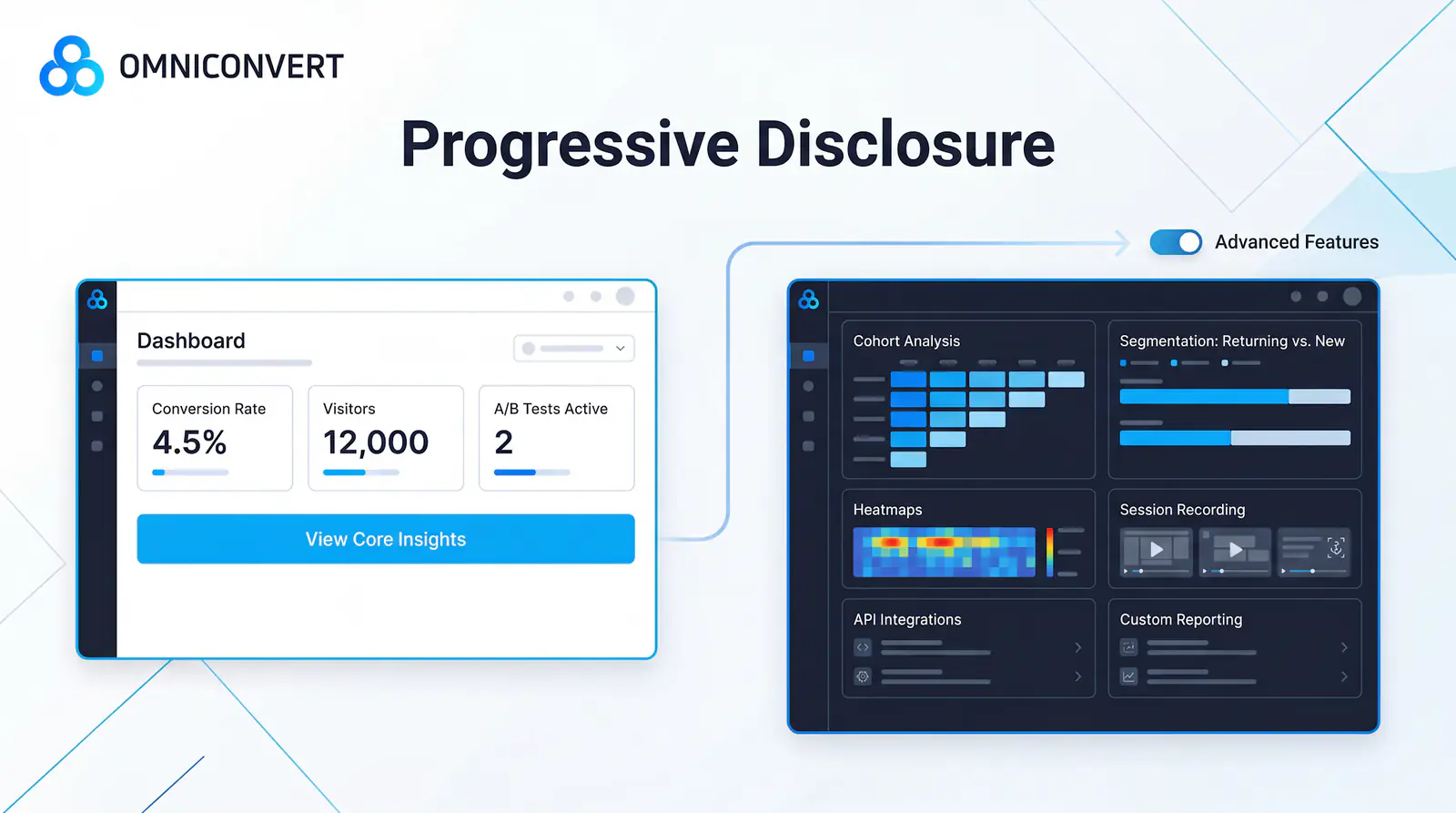
A persistent tension exists in A/B testing platforms: tools optimized for beginners often lack advanced capabilities, while feature-rich platforms overwhelm new users. The platforms that navigate this tension successfully share a common approach: progressive disclosure.
Progressive disclosure means core functionality is immediately accessible, while advanced features remain available but unobtrusive. A clear dashboard surfaces primary metrics without requiring users to navigate complex reporting hierarchies. Live editors enable basic tests while supporting custom code injection for sophisticated implementations.
This design philosophy solves a real organizational challenge. E-commerce teams frequently include members with varying technical backgrounds. A platform that serves both the marketing manager running headline tests and the developer implementing personalization logic maximizes adoption across the organization.
The risk of overly complex platforms is abandonment. Teams that cannot access basic functionality within their first week often revert to previous methods or pause optimization efforts entirely. Platforms that prioritize discoverability protect against this outcome.
Integration Limitations and Platform Boundaries
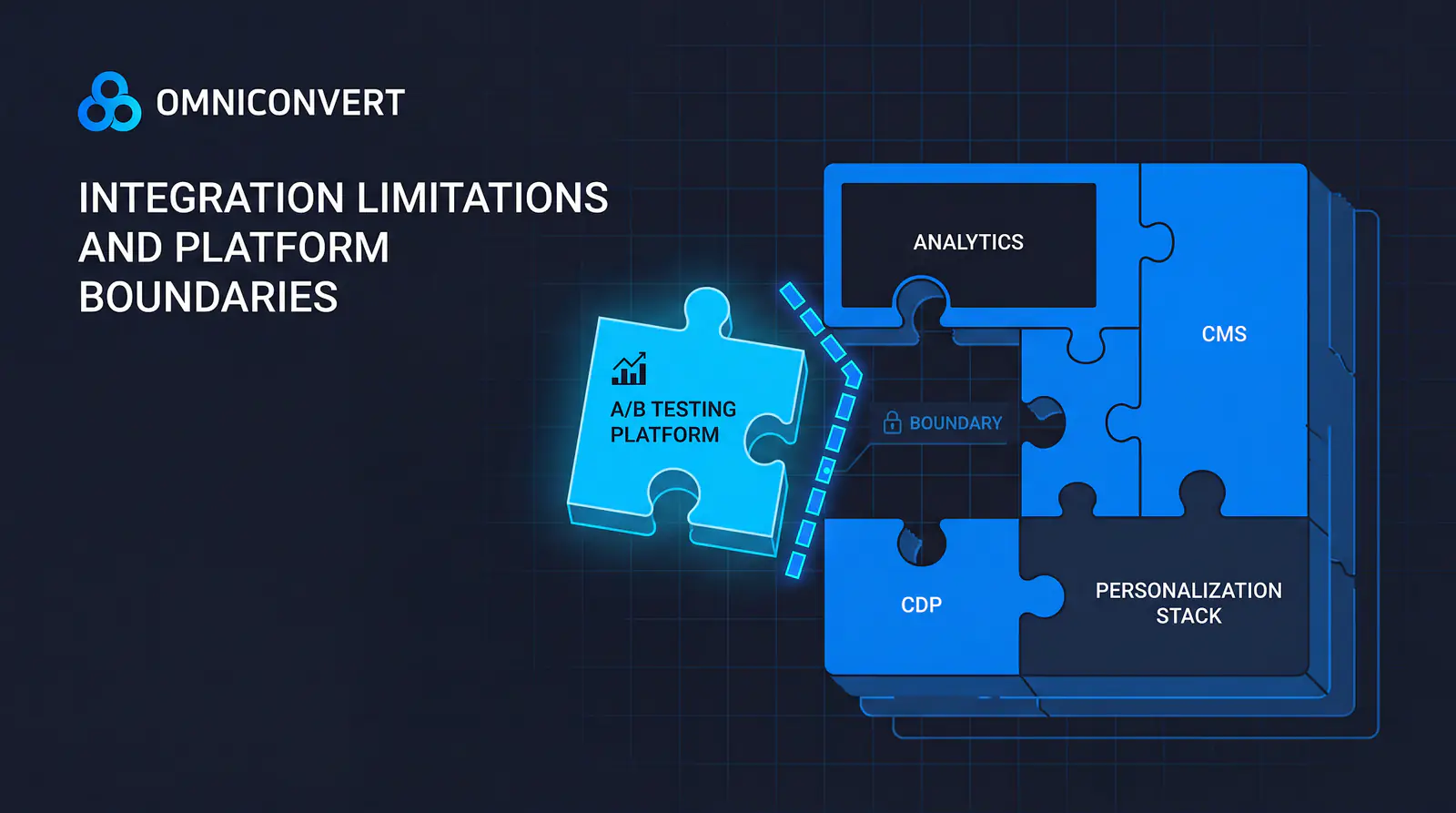
No A/B testing platform operates in isolation. Your testing tool must communicate with your analytics platform, your CMS, your customer data platform, and potentially your personalization stack. Integration quality varies dramatically across platforms, and these limitations often surface only after implementation.
Shopify merchants face particular challenges with element-level testing restrictions. Certain page elements, checkout flows, or app-generated content may fall outside testable boundaries. Understanding these limitations before committing to a platform prevents frustrating discoveries mid-project.
Analytics integration deserves specific attention. Platforms with native GA4 connections simplify goal tracking and data consolidation. Those requiring manual event configuration create ongoing maintenance burdens and increase the risk of tracking errors.
The practical approach is requesting a technical audit during evaluation. Have the platform vendor review your specific site architecture, identify potential testing restrictions, and document integration requirements. This investment prevents costly surprises after contracts are signed.
Measuring Long-Term CVR Impact vs. Individual Test Results

Individual test wins feel rewarding, but the true measure of A/B testing value is cumulative conversion rate improvement over quarters and years. Platforms that support this long-term perspective share specific characteristics.
First, they enable iterative testing without requiring complete test reconstruction. When a variant wins, the platform should support rapid follow-up tests that build on validated changes. Platforms requiring full reconfiguration for each test slow the iteration cycle.
Second, effective platforms maintain historical test data in accessible formats. Understanding what you tested six months ago, what won, and what lost informs current hypotheses. Platforms that archive data poorly force teams to rediscover insights they already earned.
Third, risk management capabilities matter for established brands. The ability to test changes on smaller traffic segments before full deployment protects against conversion drops while maintaining optimization velocity. Brands with significant transaction volume cannot afford platform-wide testing of unvalidated changes.
Evaluating Total Cost of Ownership Beyond Subscription Fees
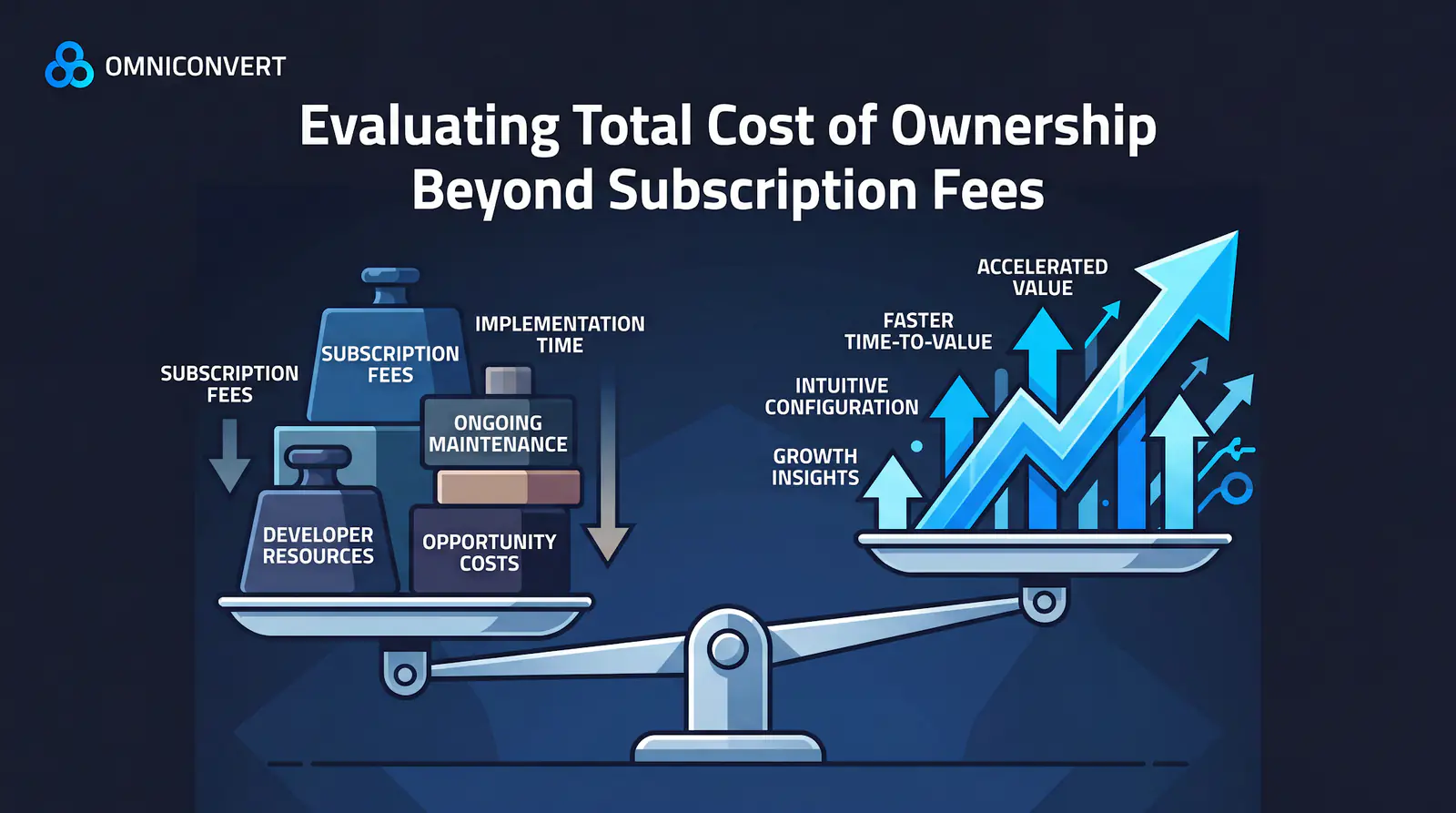
Platform pricing captures attention, but subscription costs represent only a fraction of total ownership expense. The complete calculation includes implementation time, ongoing maintenance, developer involvement, and opportunity costs from delayed tests.
Implementation timelines vary significantly. Platforms requiring extensive technical setup delay time-to-value by weeks or months. Those with straightforward installation and intuitive configuration accelerate the path to your first meaningful test.
Developer dependency creates hidden costs. If every test requires engineering hours, your testing velocity becomes constrained by sprint capacity rather than marketing priorities. Platforms that genuinely enable marketer independence multiply your effective testing resources.
Opportunity cost is the most overlooked factor. A platform that costs 30% less but runs half as many tests annually delivers worse ROI than the premium alternative. Calculate cost per test launched, not just annual subscription, to compare platforms accurately.
The most expensive platform is often the one that sits unused because complexity exceeded team capacity. Realistic assessment of your team's technical sophistication should weight heavily in platform selection.
Building Your Platform Evaluation Framework
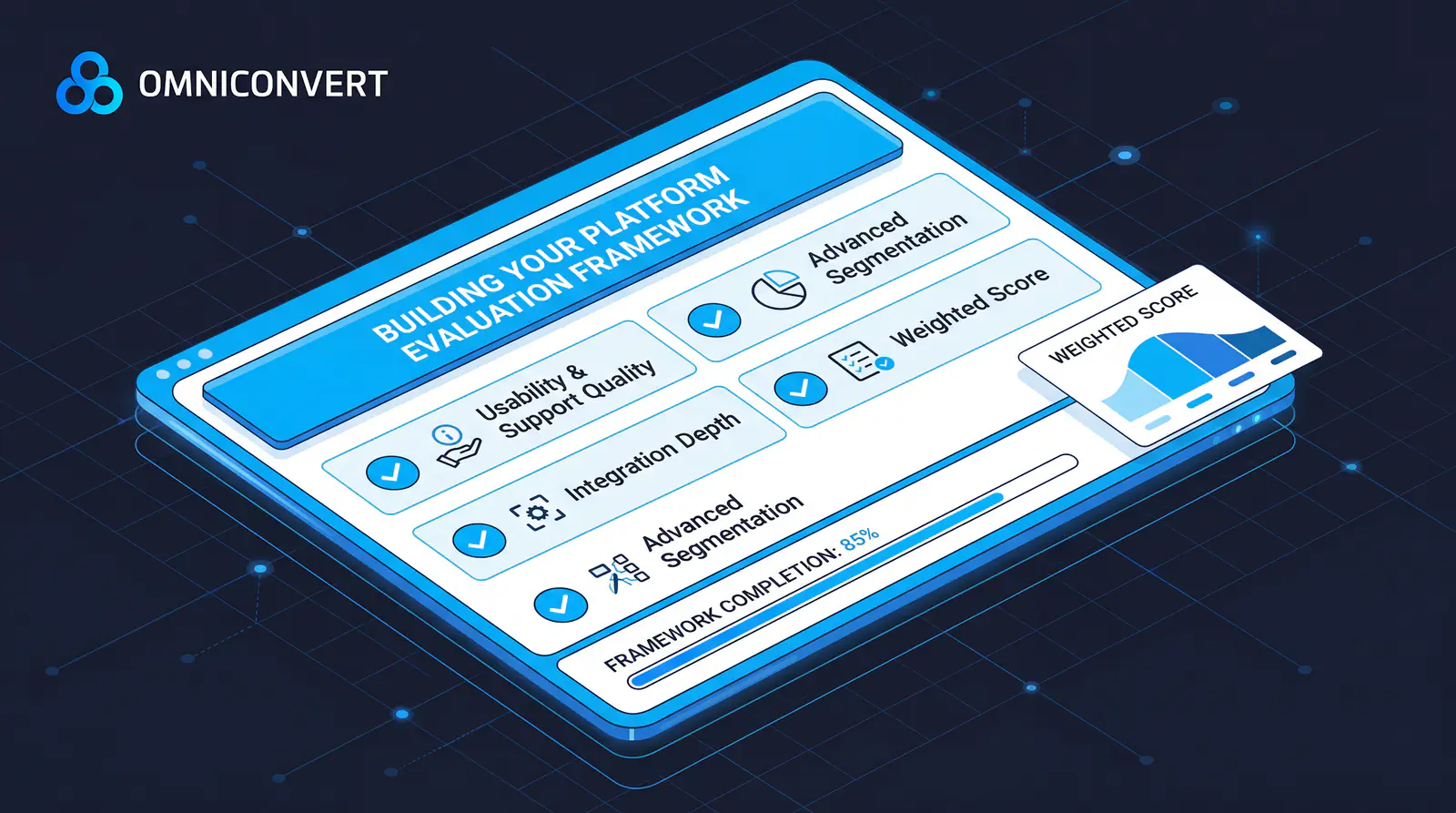
With these criteria established, constructing a practical evaluation framework becomes straightforward. Weight each factor according to your organization's specific constraints and priorities.
For teams without dedicated developers, prioritize usability and support quality. The ability to launch tests independently determines whether optimization becomes a consistent practice or an occasional project.
For technical teams with development resources, integration depth and advanced segmentation capabilities may warrant higher weighting. These teams can extract value from sophisticated features that would overwhelm less technical users.
For enterprise brands with significant traffic, statistical rigor and risk management features become critical. The cost of a false positive at scale justifies investment in platforms with robust methodology.
Regardless of team composition, request a trial period that includes launching at least three complete tests. Documentation and demos reveal intended functionality; actual usage reveals operational reality. The platform that feels natural after three tests is likely the platform that will drive sustained optimization success.
Frequently Asked Questions
The hidden cost is operational: platforms requiring developer involvement for every test create bottlenecks that reduce testing velocity. Teams waiting in developer queues often abandon tests when priorities shift. A platform that lets marketers deploy variants independently can run 4x more tests per quarter, compounding learning over time.
Effective support prevents issues before they occur — flagging CMS conflicts, methodology gaps, or statistical concerns before a test launches. For teams without dedicated CRO specialists, proactive support substitutes for in-house expertise and determines whether the platform delivers value or sits unused.
Beginner-friendly platforms prioritize accessibility but may lack advanced features. Feature-rich platforms offer depth but overwhelm new users. The best platforms use progressive disclosure: core tests are immediately accessible while advanced capabilities remain available but unobtrusive, serving both marketers and developers.
Check whether the platform can test your specific page elements — Shopify merchants face checkout and app-generated content restrictions. Verify native GA4 integration to avoid manual event configuration. Request a technical audit from the vendor before signing a contract to prevent costly discoveries post-implementation.
Track cumulative conversion rate improvement across quarters, not just individual test wins. Prioritize platforms that support iterative testing, maintain accessible historical data, and enable small-segment testing to protect against conversion drops on high-traffic pages.
Total cost of ownership includes subscription fees, implementation time, maintenance, developer hours per test, and opportunity cost from delayed tests. A cheaper platform requiring developer involvement for every test often costs more annually than a premium marketer-independent alternative. Calculate cost per test launched, not just annual subscription fees.
Weight criteria by your team: non-technical teams should prioritize usability and support quality; developer-resourced teams can emphasize integration depth; enterprise brands need statistical rigor and risk management. Always request a trial that includes at least three complete tests — demos reveal intended functionality, actual usage reveals operational reality.
Selecting an A/B testing platform is fundamentally a decision about operational capacity. The features that matter most are those your team will actually use consistently. Platforms that balance accessibility with depth, provide responsive and proactive support, and integrate cleanly with your existing stack create the conditions for sustained optimization. Those that demand constant technical intervention or hide critical functionality behind complexity barriers will eventually be abandoned, regardless of their theoretical capabilities. Evaluate platforms based on realistic usage patterns, not aspirational ones, and weight total cost of ownership above subscription pricing. The right platform accelerates your learning velocity; the wrong one stalls it.
Ready to run tests that actually ship?
Omniconvert Explore gives marketing teams a live editor, GA4-native tracking, and a support team that proactively guides every experiment — no developers required.