SmileSet vs Spotlight Oral Care: 71 of 121 SmileSet Ads Carry No Offer, and 77 of 99 Spotlight Oral Care Ads Carry One. Where Do Your Own Ads Sit?

Scope: every Meta ad by SmileSet and by Spotlight Oral Care in the eCommerceBenchmark Ad Library whose whole creative can be shown, read at the start of November 2026: 121 from SmileSet and 99 from Spotlight Oral Care. Two brands, not the market.
Two brands sell oral care on Meta. Do their ads make the same calls?
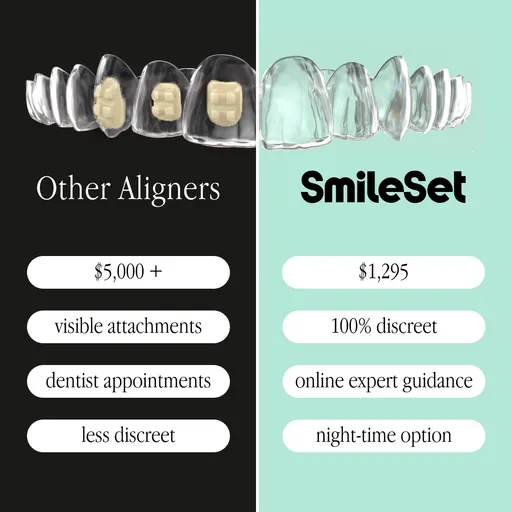
SmileSet's ads talk about straightening teeth without a chair in a clinic. One opens "Why pay thousands more for the same results?", and another carries the headline "See Your Future Smile Today". Spotlight Oral Care's ads talk about a brighter mouth at home, with lines like "If you want a brighter smile at home then stop scrolling" and "Struggling with sensitivity after teeth whitening?" Put the two ad sets next to each other and you can watch two sets of briefs make different calls on four decisions: whether to lead with a deal, how to open, what to argue and how to stage it. Their ads also differ in how long they have been on air.
- Two brands in one category can make opposite calls. These two split clearly on the offer. One mostly runs ads without one and the other mostly runs ads with one, so there is no house standard here to copy.
- A rival's ad library is a free look at a test you have not run. It shows you the choice they made. Treat it as a brief you can borrow, never as an answer.
- The split is what each brand ran, not what sold. This data records ads, offers, openings, staging and days on air. It records nothing about money.
Start with the first call each brand's brief makes: the deal.
The deal: who leads with an offer
Of SmileSet's 121 ads the library can show, 71 carry no offer at all. The other 50 carry one. Of those, 39 are discounts. Eight are free trials. Two are free gifts. One is a gateway product. Spotlight Oral Care sits the other way round. 77 of its 99 ads carry an offer. The other 22 carry none. 70 of the offers are discounts. Five are free gifts. One is a bundle. One is a gateway product.
Ads of each brand the library can show, with and without an offer. Each brand's own ads. Source: eCommerceBenchmark Ad Library, 2026.
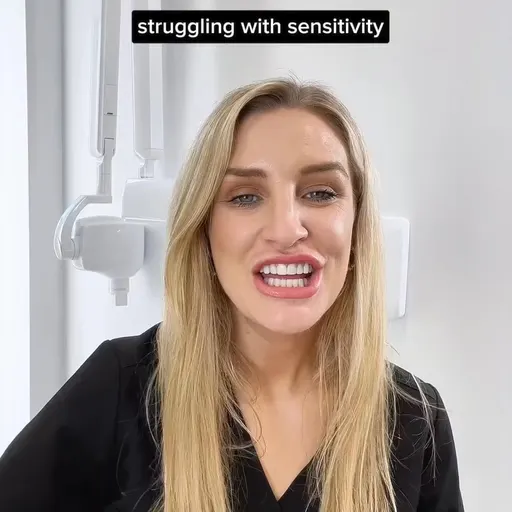
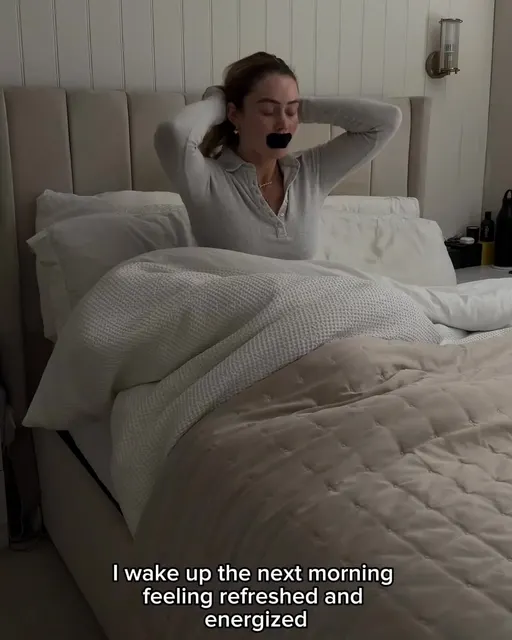
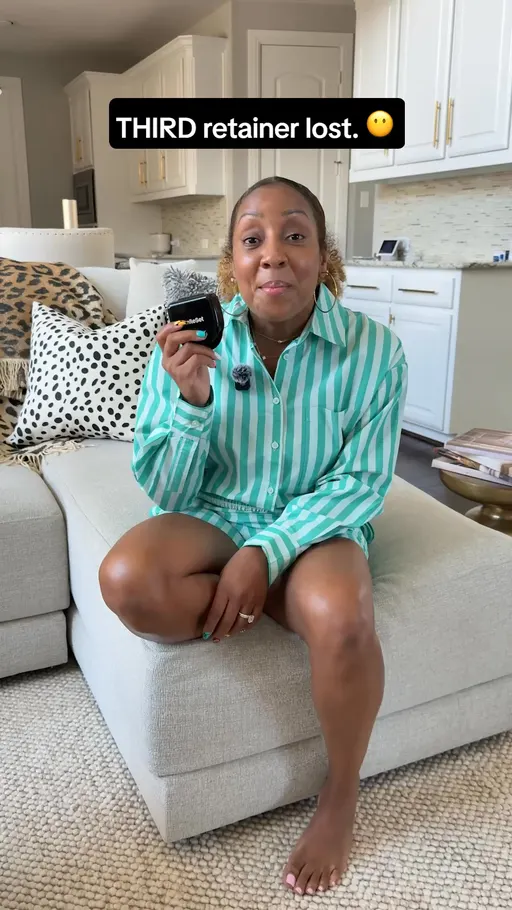
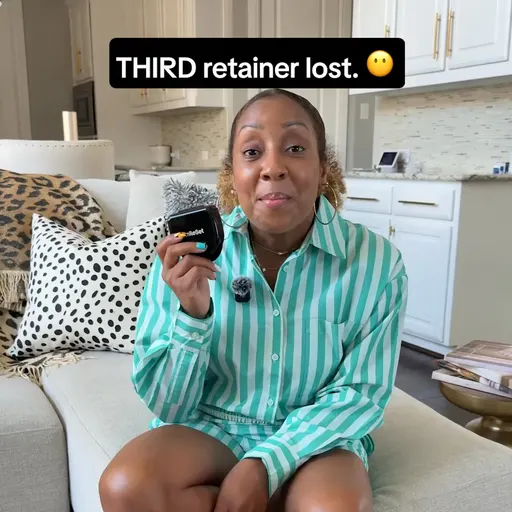
Spotlight Oral Care's deal usually sits in the headline rather than the first line. One ad opens "Struggling with sensitivity after teeth whitening?" under the headline "Save 20% with Code SMILE20 ✨". Another opens "If you've ever woken up with a dry mouth, bad breath or just felt like your sleep wasn't great, then this video is for you." under the same headline. In the SmileSet offer-free ads shown here, the first line names a problem or a question and the headline makes a promise. One opens "Why pay thousands more for the same results?" with the headline "Guided by Experts. Designed for You." Another opens on a complaint, "THIRD retainer lost.", with the headline "Protection for your smile". Where one prints a code, the other prints a moment and a promise.
The first line: how each brand opens
A hook is defined as the first line of an ad, the words that open it. SmileSet opens most on Curiosity gap, on 33 of its 121 ads, then Relatability on 24 and Direct question on 23. Spotlight Oral Care's most-used opening is Visual reveal, on 17 of its 99 ads, then Newness on 14, with Direct question on 11 and Relatability on 11. The two meet on Direct question and Relatability. They part at the top, and the chart pairs only the hooks both brands have a count for. SmileSet also files 6 ads under Authority, a group the chart leaves out too.
Ads of each brand by the hook they open on. Each brand's own ads; a hook only one brand uses is said in the text. Source: eCommerceBenchmark Ad Library, 2026.
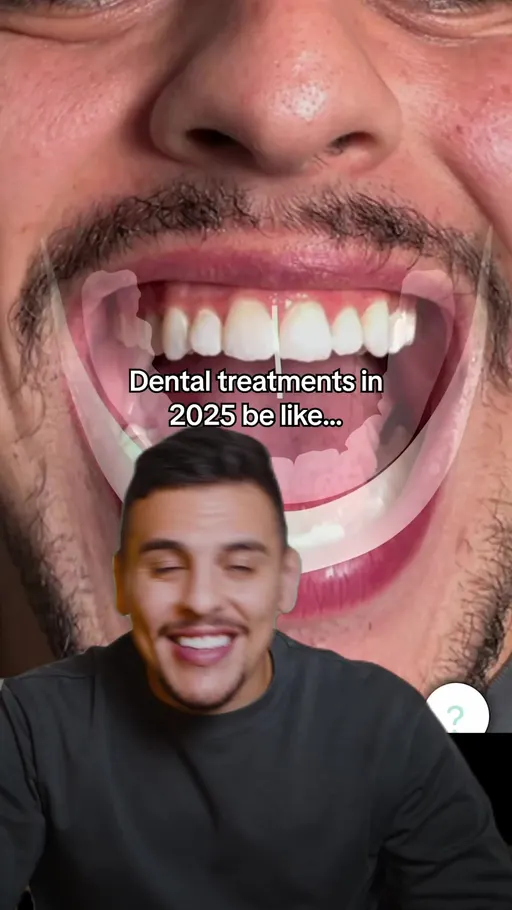
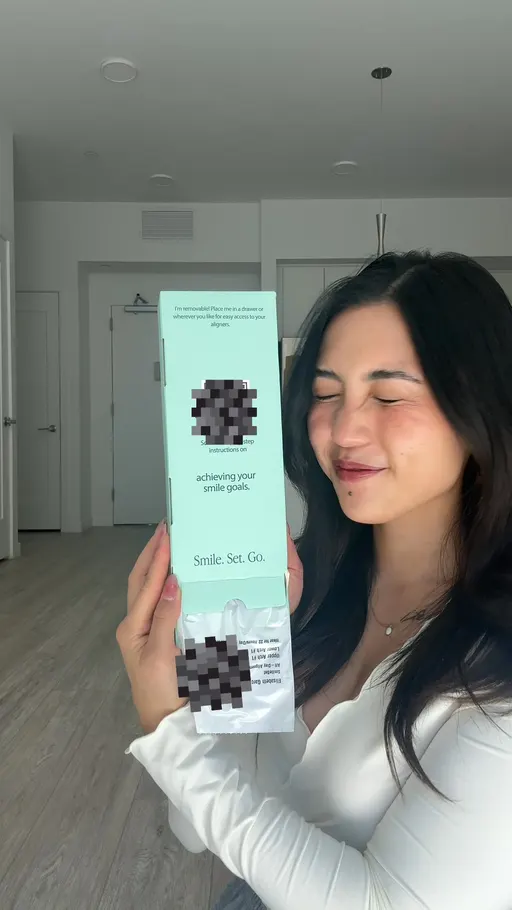
SmileSet's curiosity openings hold the payoff back. One starts "Dental treatments in 2025 be like..." Another starts "This is what my journey looks like to fix my teeth with SmileSet". Neither first line names a price, and each holds back what comes next for the lines after it. Spotlight Oral Care's Direct question opening, a hook both brands use, does a different job. "If you want a brighter smile at home then stop scrolling" names the want and the place at once, with the headline "Save 20% with Code SMILE20 ✨" beside it. One brand's first line asks you to stay for a story. The other's sorts you in or out before the second line.
The reason to buy: the angle each brand argues
An angle is defined as the reason to buy an ad argues. SmileSet argues Problem-aware in 72 of its 121 ads, with Comparison next on 23 and Solution-aware on 13. Spotlight Oral Care argues Solution-aware in 51 of its 99 ads, with Mechanism on 13 and Problem-aware on 11. Read as a share of each brand's own ads, this split is wider than the offer split: the largest angle group in one set is about the problem, and in the other it is about the fix. Comparison flips too: 23 of SmileSet's 121 ads argue it, one of Spotlight Oral Care's 99 does. Nine of its ads argue Identity.
Ads of each brand by the angle they argue. Each brand's own ads. Source: eCommerceBenchmark Ad Library, 2026.
How the ads look: concept and format
Concepts describe how an ad is staged on screen, and the two brands stage differently. SmileSet stages 65 of its 121 ads as UGC. Product Demo Close-Up is next, on 12. Spotlight Oral Care's largest is Product Demo Close-Up, on 30 of its 99. UGC comes next on 13, then Cinematic B-roll on 10, Offer-first banner on 10 and Selfie talking-head on 10.
Ads of each brand by format. Each brand's own ads. Source: eCommerceBenchmark Ad Library, 2026.
Format means the content type: static, video or carousel. Video carries most of both sets. SmileSet runs 99 of its 121 ads as video and 22 as static. Spotlight Oral Care runs 80 of its 99 as video and 19 as static.
Hear it in the lines. SmileSet's "My kid has gone through three retainers this year." is a parent talking about their child. Spotlight Oral Care's "a very summery saturday morning vlog" sets a scene and a time of day.

How long each brand's ads have been on air
SmileSet's typical ad has been on air 98 days, and the longest one we can show has been up 245 days. Spotlight Oral Care's typical ad sits at 40 days and its longest at 88. The lower median is what a set of newer ads looks like: a new ad has not had time to run long, so read it as fresh, not as a short life.
Days on air of each brand's ads the library can show, read at the start of November 2026. Source: eCommerceBenchmark Ad Library, 2026.
The mistake: copying your rival's ads
Open a rival's library on a Monday, like an ad, brief your own version by Friday. That habit treats one category as one rulebook. This pair shows how far apart two briefs inside one category can sit: 71 of SmileSet's 121 ads carry no offer, while 77 of Spotlight Oral Care's 99 carry one. Lift the surface of either and you have imported a decision made inside that brand, for its own products and its own price.
- A rival's ad was built for their brand, their price and their customers. The code in "Save 20% with Code SMILE20 ✨" prices a Spotlight Oral Care product, not yours.
- Copy them and you look like them in the feed. If you copy it, a shopper who sees both your ads and SmileSet's meets "THIRD retainer lost." twice, once from each of you.
- The borrowable part is the choice behind the ad, not its words. You cannot take their line, but you can test their side of the offer call, the one that leaves 71 of SmileSet's 121 ads with none.
Check yourself against your rival
- Pull. Open your closest rival's ads in the free Meta Ad Library and your own live ads side by side.
- Label. For each one, write down whether it leads with an offer, what its first line does and how it is staged.
- Pick one split. Choose the single element where you and your rival differ most, and brief one ad that tries their side of it.
The eCommerceBenchmark Ad Library sorts your ads into the same hooks, angles, concepts and offers used in this report and shows your mix next to the market, so you can see which shapes you have never shipped.
Audit my creatives, freeHere is that test written out the way a media buyer would set it up.
Your test card
The offer is a yes-or-no call, which makes it the cleanest of this pair's splits to test on your own account. Write the numbers down before you launch.
| Hypothesis | Running one ad on the opposite side of my usual offer habit, against my control, will hold or lower my cost per purchase. |
| Change only this | Whether the ad leads with an offer. |
| Keep the same | Product, first line, audience, placement and budget split. |
| Funnel stage | Say first whether this ad is for prospecting (cold) or retargeting (warm). A deal in the first line is often right for warm audiences and wrong for cold ones, so test it where the ad will really run. |
| Setup | One control and one variant, same audience, same placement, even budget split. Do not edit either ad while the test runs. |
| How long and how much | Until each version has about 50 purchases, or two full weeks, whichever comes later. This is general testing practice (Meta's own learning-phase guideline is about 50 results per ad set per week), not a library finding. |
| Success metric | Cost per purchase, not clicks. |
| Stop rule | Pause a variant that has spent about 3 times your target cost per purchase with no purchase. If it is close, keep it running. |
| What counts as a win | The variant beats the control on the metric by an amount you would act on, and still does in a second week. |
SmileSet vs Spotlight Oral Care: what to brief next
- The library can show 121 SmileSet ads. It can show 99 Spotlight Oral Care ads [eCommerceBenchmark Ad Library, 2026]. Read each count inside its own brand.
- 71 of SmileSet's 121 ads carry no offer. 77 of Spotlight Oral Care's 99 carry one. 70 of those are discounts.
- SmileSet opens on Curiosity gap in 33 of its 121 ads. Spotlight Oral Care opens on Visual reveal in 17 of its 99.
- SmileSet argues Problem-aware in 72 of its 121 ads. Spotlight Oral Care argues Solution-aware in 51 of its 99.
- SmileSet stages 65 of its 121 ads as UGC. Spotlight Oral Care stages 30 of its 99 as Product Demo Close-Up. Both lean video, 99 of SmileSet's 121 and 80 of Spotlight Oral Care's 99.
- SmileSet's typical ad has been on air 98 days. Its longest ad we can show has been up 245 days. Spotlight Oral Care's typical ad sits at 40 days, the mark of newer ads rather than shorter lives.
SmileSet vs Spotlight Oral Care ads: common questions
The offer is the plainest yes-or-no call these two make differently. 71 of SmileSet's 121 ads carry no offer, and 77 of Spotlight Oral Care's 99 carry one. The data cannot say which side is right, because it holds ads and days on air, not money. So run it yourself: brief one ad on the other side of your own offer habit, put it against your control with the same audience and the same budget split, leave it two full weeks, and judge it on cost per purchase.