Beauty & Personal Care Ads, September 2026: 6 in 10 Brands Open Their Ads the Same Way. Is Yours One of Them?

Scope: Beauty & Personal Care ads from every country the eCommerceBenchmark Ad Library tracks. 361 brands and 7,526 ads running in September 2026, compared with August 2026. It shows what brands ran, not what sold.
Scroll a beauty feed for ten seconds. Go on.
Serum. Cream. “Glow.” Another serum. By the fourth ad, you can't tell whose voice you're hearing. That's no accident. It's what happens when a whole category starts its ads the same way.
An opening hook is defined as the job an ad's first line does before the product is named. In beauty, one job wins by a mile. But the ranking isn't the interesting part. What it means for your ads is.
- Your ad sits between your competitors' ads. If most of them open the same way, your first line isn't the thing that tells you apart.
- A big jump can hide in a tiny crowd. The one hook that rose by more than a point did it on 33 of 361 brands. Don't re-brief your month around it.
- You probably open like everyone else, and can't see it from inside your account. Until you check.
Let's start with who opens how.
The 7 hooks beauty ads open with, ranked
Here is how September's beauty ads opened, most common first. Days on air, which you'll see below, is simply the number of days a brand kept one ad live.
Share of Beauty & Personal Care ads opening with each hook, September 2026. Bold Claim and Shocking Statement rest on fewer ads, so read them as hints. Source: eCommerceBenchmark Ad Library, 2026.
Seven names, but each one is just a job. Here they are in plain words.
| Hook | The job it does | Sounds like |
|---|---|---|
| Curiosity Gap | Holds the payoff back so you open the ad to find out | “You won't believe what happened…” |
| Authority | Hands you somebody else's verdict | “Rated 4.7/5 by 100,000+ customers” |
| Relatability | Says your own day back to you | “I gave up on my skincare routine after 40” |
| Direct Question | Asks something you answer in your head | “Is your moisturiser doing anything?” |
| Urgency / FOMO | Says the chance is closing | “Last day!” |
| Bold Claim | One flat promise, no tease | “The only serum you need” |
| Shocking Statement | Drops a hard number or a surprise | “9 in 10 people do this wrong” |
The “sounds like” lines are made-up examples to show the job, not real ads.
Is that true for all of eCommerce, or only beauty? Let's compare.
Beauty vs. the whole market: where it stands out
The same month, the same hooks, side by side. Blue is beauty. Grey is every industry together.
Share of September 2026 ads opening with each hook. Beauty & Personal Care vs. all industries in the library. Source: eCommerceBenchmark Ad Library, 2026.
Two things jump out. Beauty leans less on the tease and the hurry-up line than the market does. It leans more on “that's me”, the plain question, and the flat promise.
The opening line is only part of the story, but it is the part you can change today. So let's look at the second-place hook, and one beauty ad that has been live for 451 days.
Authority: the one line that ran 451 days
Authority hands the reader somebody else's verdict. It came second in beauty, on 148 brands, and barely moved from August.
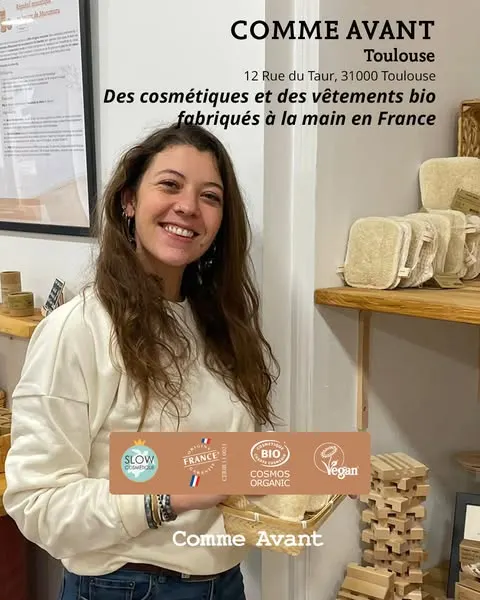
See what it does? The first thing you read is a verdict, not a promise. A rating and a customer count are numbers you didn't have to take from the brand's own mouth. That is the gap between the first and second hook in beauty.
One honest note. A long run only tells us a brand kept paying to keep one ad live. It is not a record of what the ad sold. There is no spend or revenue in this data.
Now the half-tease itself. The one that 6 in 10 brands use.
The Curiosity Gap: the half-tease on 228 brands
The Curiosity Gap is a half-tease. Start a thought. Stop. Make the reader open the ad to finish it. Think of a friend who texts “OMG, you will not believe this” and then goes quiet for an hour.
The share isn't the number to write down. The brand count is. About 6 in 10 beauty brands ran a half-tease opener, and no other hook is used by that many. That is our own count, and it is the one to hold next to your account.
These shares count every ad running in the month, not only new ones. So a brand that kept one half-tease ad live all September is in that count.
So what is worth testing? The one hook that jumped. But watch where the jump came from.
Bold Claim: a big jump with a tiny crowd
Bold Claim is a flat promise with no tease in front of it. It was the only hook that climbed by more than a point: from 2% of beauty ads in August to 3.3% in September. Here is every move since August.
Change in share of beauty ads, September vs August 2026, in percentage points. Direct Question held at 4.7% in both months. Source: eCommerceBenchmark Ad Library, 2026.
Looks big. But look at who is behind it: just 33 brands, out of 361. A rise on that few brands is a pocket, not the whole category.
It could be a few accounts rebuilding their ad libraries. Don't brief a whole quarter on it. That's like moving house because one coffee shop opened on your street.
Enough reading. Time to turn this into a plan.
Check your own beauty ads in 20 minutes
Pull your last twenty beauty ads. Read only the first line of each, with no picture around it. Put each one in a box from the table above. Then read your result like this.
| If you see this | It probably means | Try this |
|---|---|---|
| Most lines are teases | You open like 6 in 10 beauty brands, so the line isn't telling you apart | Keep one tease as your control. Add one proof line (a rating and a customer count) |
| You use almost no proof lines | You're missing the opening behind the beauty ad that has run 451 days | Test one rating-first line this month |
| You never use a plain question or a flat promise | Beauty uses both more than the whole market does, so you may be missing what shoppers in this feed expect | Test one of each against your control |
| Nearly every line is a deadline | Beauty brands lean on the clock less than the market does | Test a line that has no deadline in it |
Run only one change at a time, same picture, same budget, two weeks. And judge on cost per purchase, not clicks. Here are the three tests this data supports best.
Three beauty tests to run next month
- A proof-first opener. A rating plus a customer count as your first line, against your current control. Why: Authority came second in beauty, and one ad built on it has stayed live for 451 days.
- One flat claim, no tease. Put the product promise in the first three words, against your usual half-tease. Why: it jumped from 2% to 3.3% of beauty ads on only 33 brands, so you'd be testing a lane few are in.
- A question the landing page answers. Open on a direct question, then send the click to the page that settles it. Why: it held at 4.7% in both months, and beauty uses it more than the whole market.
Skip the spreadsheet
The eCommerceBenchmark Ad Library reads your ads, files each under a hook, and shows your mix beside the market's.
Audit my creatives, freeOne last thing. Why do teams keep writing the same line?
The mistake: briefing the half-tease because everyone does
Beauty teams keep briefing a half-tease because it's what the category already sounds like, and it gets approved without a fight. It feels on-brand to everyone in the room.
It also felt on-brand in the accounts of 228 other brands. When that many brands open the same way in one month, the first line stops saying who is talking. A shopper scrolling a beauty feed hears one voice instead of a choice, and the logo ends up doing the work the words should have done. (That's our reasoning, not something the data measures.)
The rest of the ranking, and what barely moved
Relatability held third place, with 100 brands behind it. Direct Question was flat in both months. Urgency / FOMO crept up a little. Shocking Statement slipped, and it is the smallest row in the data, so take it lightly.
Five of the seven hooks moved by at least a fifth of a point. None of those moves changed the top three. Under the leaders it's a shuffle, not a shift: one row up, three down, one unchanged. So the crowding you write against in beauty is about the same as the crowding you wrote against in August.
Want the full numbers? Here they are.
The full ranking, for the curious
| Hook | September | August | Ads | Brands |
|---|---|---|---|---|
| Curiosity Gap | 22.1% | 22.6% | 1,663 | 228 |
| Authority | 6.9% | 7.1% | 519 | 148 |
| Relatability | 5.7% | 5.8% | 430 | 100 |
| Direct Question | 4.7% | 4.7% | 350 | 105 |
| Urgency / FOMO | 4.6% | 4.4% | 347 | 129 |
| Bold Claim | 3.3% | 2% | 247 | 33 |
| Shocking Statement | 1.9% | 2.2% | 141 | 60 |
A bigger share isn't proof a hook works. This data records what brands ran, not what sold.
Your test card
Here is the first test from this article, set up the way a media buyer would run it. Fill in the blanks with your own numbers, and write them down before you launch.
| Hypothesis | A proof-first opener (a rating plus a customer count) will cost less per purchase than my usual half-tease. |
| Change only this | The first line only. |
| Keep the same | Picture, body, button, audience and placement. |
| Funnel stage | Say first whether this ad is for prospecting (cold) or retargeting (warm). A deal in the first line is often right for warm audiences and wrong for cold ones, so test it where the ad will really run. |
| Setup | One control and one variant, same audience, same placement, even budget split. Do not edit either ad while the test runs. |
| How long and how much | Until each version has about 50 purchases, or two full weeks, whichever comes later. This is general testing practice (Meta's own learning-phase guideline is about 50 results per ad set per week), not a library finding. |
| Success metric | Cost per purchase, not clicks. |
| Stop rule | Pause a variant that has spent about 3 times your target cost per purchase with no purchase. If it is close, keep it running. |
| What counts as a win | The variant beats the control on the metric by an amount you would act on, and still does in a second week. |
Key takeaways
- About 6 in 10 beauty brands open with the same half-tease [eCommerceBenchmark Ad Library, 2026]. For your ads, that means a tease is table stakes, not a differentiator.
- Beauty leans less on the tease and the hurry-up line than the whole market, and more on "that's me", plain questions and flat promises.
- Authority is second, and the named beauty ad behind it has stayed live for 451 days. Lead with a number somebody else gave you.
- Bold Claim's rise sits on 33 brands. Test one flat claim, don't plan a quarter on it.
- Five of the seven hooks moved, and none changed the top three. The crowding you write against is the same as in August.
Questions
Pull your beauty ads from last month and read only the first line of each. Put each one in a box: holds the payoff back, hands over somebody else's verdict, says the reader's day back to them, asks a question, closes a door, states a flat promise, or drops a hard number. Then count. If most of your account sits in the half-tease box, you are briefing what 228 of the 361 brands in this data also briefed. The emptiest box is your test. Brief one ad into it next month, and run it against your usual control.