Best Lifetimely Alternatives (2026): 7 LTV & Retention Apps

- Lifetimely is a strong profit-and-LTV analytics app (4.9 stars on the Shopify App Store) but has no RFM segmentation, NPS, or A/B testing, which is the main reason retention-focused merchants switch.
- Merchants most often leave over usage-based pricing that spikes in peak season, Shopify-centric architecture that strains on multichannel, and an LTV-first focus that stops short of the action layer.
- The category splits into measurement tools (profit and LTV analytics) and customer-value-optimization tools; knowing your LTV is not the same as growing it.
- Best-fit picks: Peel for cohort depth, Triple Whale for attribution, BeProfit for lean P&L, Polar or Daasity for warehouse breadth, and Nexus by Omniconvert for RFM + CLV + NPS.
- Nexus by Omniconvert offers a free plan and installs natively on Shopify, so trying it costs nothing.
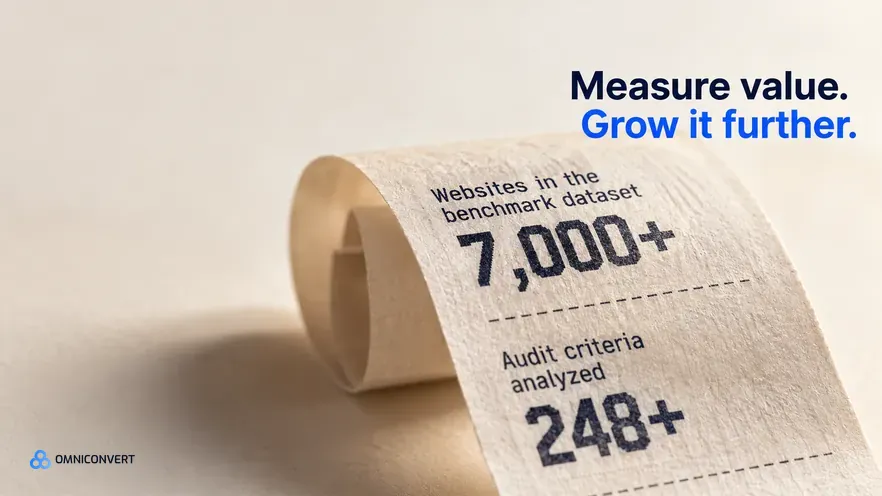
A Lifetimely alternative is any analytics tool a Shopify merchant adopts to replace or extend Lifetimely's profit-and-lifetime-value reporting, usually because they need broader channel coverage, more predictable pricing, or a layer Lifetimely does not have: customer segmentation and voice-of-customer. Lifetimely is one of the highest-rated apps in its category, at 4.9 stars on the Shopify App Store, yet across the CROBenchmark dataset of 7,000+ websites in 15+ industries, brands that acted on lifetime value by segment grew repeat purchase rate 2.3x faster than those that only measured a blended LTV [CROBenchmark Report 2026, Omniconvert].
This guide compares the seven best Lifetimely alternatives in 2026, why merchants look for one, the five criteria that should decide the switch, and where Nexus by Omniconvert fits as the AI eCommerce growth engine that turns lifetime value into ranked action. Each section answers its question directly, then goes deeper.
Why do merchants look for a Lifetimely alternative in 2026?
Lifetimely is not a weak product, which is the point: merchants rarely leave it because it fails at what it does. They leave because their needs move past what it covers. Three friction points come up again and again.
- Pricing that scales with volume: Analytics apps billed by order count or tracked events get more expensive exactly when a store is busiest, so a Black Friday spike raises the bill in the month cash is tightest. Feature-based or flat pricing is easier to plan around.
- Multichannel strain: A Shopify-first architecture is ideal for a single-channel store, but adding Amazon, wholesale, or a second storefront exposes gaps in how the data is unified.
- The action ceiling: Profit and LTV reporting answers "what is my lifetime value?" It does not answer "which customers should I act on, and how?" That requires RFM segmentation and voice-of-customer, which Lifetimely does not offer.
The third point is the one that sends retention-focused merchants shopping, and it is the theme of this comparison. A more precise LTV number is a better answer to a question that, past a certain stage, is no longer the one holding growth back.
What does Lifetimely do well, and what are its blind spots?
Give Lifetimely its due. It automates a P&L that many merchants used to rebuild by hand in spreadsheets, it breaks lifetime value down by acquisition cohort, and its predictive LTV forecasts (30, 60, 90-day and 12-month) are genuinely useful for planning acquisition spend. Paid tiers run from roughly $34 to $149 per month depending on features, and it covers both Shopify and Amazon [Shopify App Store]. For a merchant whose main gap is a clean, automated profit picture, it is an excellent choice.
Its blind spots are a matter of scope, not quality. Lifetimely does not offer RFM segmentation, so it cannot rank customers by Recency, Frequency, and Monetary value to tell you who to protect or win back. It has no NPS or survey capability, so it captures no voice-of-customer signal to explain why customers stay or leave. And it has no A/B testing, so any change you make based on its data is untested. These are the boundaries of a measurement tool, and they define exactly where an alternative earns its place.
Why is knowing your LTV not the same as growing it?
April Dunford's work on positioning by competitive alternative makes a useful point here: the reference point a buyer already holds defines the value they perceive. Most Lifetimely alternatives ask you to compare them on the same axis, whose LTV forecast is more accurate, whose P&L is cleaner. That is a measurement arms race. It optimizes for knowing, and it quietly assumes that a better number produces a better business.
Geoffrey Moore's idea of the whole product exposes the gap. The job a DTC operator actually needs done is not the LTV number; it is the decision and the intervention that raise it. The number is one component. The whole product also requires knowing which customers to act on (segmentation) and why they behave as they do (voice-of-customer). A tool that ships only the measurement leaves the operator to close that loop by hand.
There is a cognitive trap underneath this, too, and it is worth naming: vanity precision. Under uncertainty, people substitute an easy question for a hard one, "what is my LTV?" stands in for "how do I grow it?" A dashboard with a confident forecast feels like progress because it answers the easy question crisply. But a precise measurement of a number you are not acting on is motion without movement. The right axis to compare tools on is not measurement precision; it is whether the tool helps you act.
How do you choose a Lifetimely alternative? 5 criteria
A comparison table is only useful if you know which columns matter for your store. These five criteria separate a tool that measures from a tool that helps you act.
-
Pricing model, not just priceAsk how the tool bills, by order volume, tracked events, or feature tier. Volume-based pricing spikes in your busiest months; flat or feature-based pricing stays predictable when you most need it to.
-
Multichannel reachIf you sell on more than Shopify, check how the tool unifies Amazon, wholesale, or a second platform, at the customer level, not just as separate channel reports.
-
Segmentation depthDoes it do RFM, ranking customers by Recency, Frequency, and Monetary value? Without segmentation, LTV is a single average that hides both your best and worst customers.
-
Voice-of-customerDoes it capture NPS or survey feedback? Behavioral data tells you what customers did; voice-of-customer tells you why, which is what you need to fix retention.
-
The action layerDoes the tool recommend what to do next, or only report? A ranked next-best-action per segment is the difference between a dashboard you watch and a system that grows value.
What are the 7 best Lifetimely alternatives?
The table compares the seven on the criteria above. Read it for fit, not for a winner, because the best tool is the one that closes your specific gap.
| Tool | Best for | RFM segmentation | NPS / voice-of-customer | Action layer |
|---|---|---|---|---|
| Peel Insights | Cohort and retention depth | No | No | Reporting |
| BeProfit | Lean profit and loss | No | No | Reporting |
| Polar Analytics | Warehouse-scale breadth | Limited | No | Reporting |
| Triple Whale | First-party attribution | Limited | No | Reporting + alerts |
| Glew.io | Multichannel BI reporting | Limited | No | Reporting |
| Daasity | Data-team ETL and modeling | Custom | No | Reporting |
| Nexus by Omniconvert | RFM + CLV + NPS action | Yes | Yes | Ranked next-best-action |
One honest paragraph on each:
- Peel Insights: The strongest cohort and retention analytics on the list. If your gap is understanding how each acquisition cohort behaves over time, Peel is excellent, though it stays a reporting tool without a segmentation or action layer.
- BeProfit: Clean, lean profit and loss from around $49 per month. A direct like-for-like on Lifetimely's P&L strength, best for a merchant who wants profit clarity and little else.
- Polar Analytics: A data-warehouse-backed platform that unifies many sources into one dashboard. Powerful and broad, at a higher price and setup cost, aimed at teams that outgrew single-app analytics.
- Triple Whale: Best known for first-party attribution alongside LTV, popular with performance marketers who need to tie spend to revenue. Strong on measurement and alerts, light on customer-level segmentation.
- Glew.io: A multichannel business-intelligence tool with wide connector coverage, suited to merchants who want reporting across many platforms in one place.
- Daasity: An ETL and data-modeling layer for teams with a data analyst, offering maximum flexibility if you want to build your own models, and requiring the skills to do so.
- Nexus by Omniconvert: The one tool here built around action rather than measurement, with RFM segmentation, CLV per segment, and NPS. Covered in full below.
See which customers to act on, not just what your LTV is. Nexus by Omniconvert builds RFM segments, CLV per segment, and NPS, then ranks the next move, so you grow lifetime value instead of only watching it.
See how it works →Best Lifetimely alternative for RFM, CLV and NPS: Nexus by Omniconvert
Where the other six alternatives compete on measurement, Nexus by Omniconvert competes on the layer above it. It scores every customer on RFM and sorts them into named segments, from your most loyal to those about to leave, so you can see who drives value and who is slipping. It calculates CLV per segment rather than as a blended average, runs NPS surveys before and after delivery to capture the "why" behind the behavior, and predicts churn so you can intervene while win-back is still cheap. High-value segments export as lookalike audiences to Meta and Google, so acquisition targets the customers most likely to be worth keeping.
It also answers the practical objections. It has a free plan, installs natively on Shopify, and connects to Meta, Google Ads, GA4, and Klaviyo. Because it recomputes everything from your store's order history, there is nothing to re-import when you switch, and because Nexus by Omniconvert is an AI eCommerce growth engine, it ranks these actions automatically rather than leaving the next step to you.
The DTC brands that plateau at a 20 to 30 percent repeat rate consistently share one pattern: they measure lifetime value precisely but never segment it, so every customer gets the same email, the same offer, and the same attention regardless of value. In our CVO work with ecommerce brands, we repeatedly see the gap close fastest when operators treat the customer segment, not the blended LTV number, as the primary unit of measurement [Omniconvert, 2026]. That is the shift from measurement to action, and it is exactly the shift Lifetimely's feature set does not support.
The proof is in the interventions the action layer unlocks. AliveCor used Omniconvert to run a structured A/B testing programme and achieved a 21 percent lift in conversion rate, a 5 percent increase in revenue per visitor, and 94 percent statistical relevance across their experiments [Omniconvert, AliveCor case study], results that come from acting on segmented insight, not from a more precise dashboard.
Which Lifetimely alternative matches your stage?
The honest verdict is that the right tool depends on the job in front of you. Early-stage stores that just need profit clarity are well served by Lifetimely or BeProfit. Data-mature teams that want to model everything themselves will prefer Daasity or Polar. Performance-marketing-led brands lean on Triple Whale for attribution, and retention analysts reach for Peel's cohorts.
But if you recognize the pattern in this article, a precise LTV number that never turns into a decision, then the gap is not measurement, and a more accurate dashboard will not close it. That is when you want the action layer: RFM to see who matters, CLV per segment to size the opportunity, and NPS to understand the why. Start with the free Nexus plan, or read the wider category in the best Shopify CLV apps.
Lifetimely alternatives FAQ
It depends on the job. Peel Insights is strongest for cohort depth, Triple Whale for first-party attribution, and BeProfit for lean profit and loss reporting. But if the goal is to act on lifetime value rather than only measure it, Nexus by Omniconvert adds RFM segmentation, CLV, and NPS in one Shopify-native platform, which is the layer Lifetimely does not cover. Match the tool to whether you need to know your LTV or grow it.
Yes. Nexus by Omniconvert offers a free plan, and Lifetimely, BeProfit, and several others include free tiers or trials. The more useful comparison is the pricing model rather than the entry price: tools billed by order volume or tracked events can spike sharply during peak months like November, while feature-based or flat pricing stays predictable. Check how a tool bills before you commit, not just whether it has a free tier.
No. Lifetimely focuses on automated profit and loss reporting and predictive lifetime value, and it is very good at that. It does not offer RFM segmentation, NPS surveys, or A/B testing, so it can tell you what your LTV is but not which customers to act on or why they stay or leave. Retention-focused merchants who need that action layer are the ones who most often look for an alternative.
Profit analytics tells you how much money you made and what your lifetime value is, using P&L, cohorts, and predictive LTV. Customer value optimization goes one step further: it tells you which customers to target and what to do next to grow their value, using RFM segmentation, CLV per segment, and voice-of-customer signals like NPS. Measurement answers what happened; optimization answers what to do about it.
It depends on the tool, because most analytics apps recompute metrics from your store's order history rather than importing another vendor's figures. Nexus by Omniconvert connects natively to Shopify and rebuilds segmentation, CLV, cohort, and NPS views from your existing order data, so there is nothing to re-import.
For merchants selling on Shopify and Amazon together, Lifetimely itself covers both, and warehouse-based tools like Polar Analytics or Daasity unify many sources at a higher price and setup cost. For customer-level segmentation on Shopify with connectors to Meta, Google Ads, GA4, and Klaviyo, Nexus by Omniconvert is the broader fit. Choose based on whether you need channel-level P&L or customer-level segmentation.
Nexus by Omniconvert ingests your Shopify order and behavioral data to build RFM segments, calculate CLV per segment, and collect NPS, then ranks which segment to act on next. Instead of a static LTV number, you see which customers are about to churn, which are ready to buy again, and which intervention protects the most revenue. For Lifetimely users, it adds the action layer, segmentation and voice-of-customer, that profit analytics leaves out.
Every tool on this list measures lifetime value well; the question is whether measuring it is the job you actually need done. If you need cleaner P&L, Lifetimely or BeProfit is enough. If you need to grow LTV, you need the layer above measurement: RFM segmentation to see who drives value, CLV per segment to size the opportunity, and NPS to understand why customers stay or leave. That is the wedge Nexus by Omniconvert fills, and it is why brands tracking CLV by segment grow repeat purchase rate 2.3x faster than those watching a single blended number [CROBenchmark Report 2026, Omniconvert]. Start with the free Nexus plan and see your segments.
Grow LTV, don't just measure it, with Nexus
Nexus by Omniconvert adds the layer Lifetimely leaves out: RFM segmentation, CLV per segment, and NPS, with the ranked actions that grow value rather than just report it. Native to Shopify and free to start.