Ad Creative Fatigue: What It Is and Why Ads Burn Out

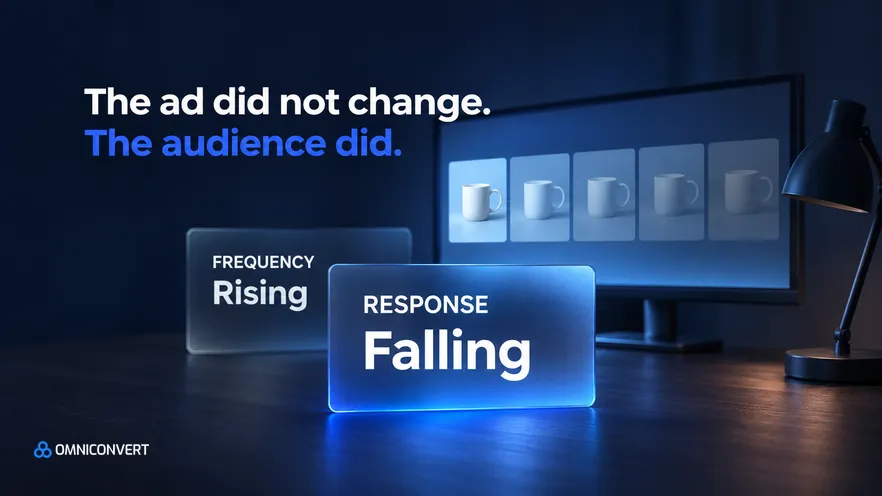
- Ad creative fatigue is falling response to an unchanged ad that the same people have seen repeatedly.
- It is a property of an ad and an audience together, so one ad can be exhausted in one segment and fresh in another.
- Audience saturation and an auction change raise cost per result too, and a new ad does not cure either of them.
- Ads burn out because repetition removes the news from the message, not because the file got worse.
- Frequency, first-time reach and early response move before cost per result, which makes cost a late alarm. They point to decay, and the cause still needs confirming.
- An ad that never worked did not fatigue: it has to earn a run of days before it can decay.
- A single frequency number is a poor tripwire, because frequency is a cause of fatigue and response is the symptom.
Ad creative fatigue is the loss of response to an ad that people have seen too often, while the ad itself has not changed. The file is the same. The audience has learned it, so each showing carries less news.
Omniconvert Commander (formerly Nexus) is the AI eCommerce growth engine for Shopify brands: it reads your store, ad and customer data, ranks growth opportunities by profit impact, and builds the campaigns to act on them, and you approve what goes live. Media buyers who work these numbers every day will find that routine in Omniconvert Commander for performance marketers.
What is ad creative fatigue?
Ad creative fatigue is defined as the decline in response to an advertisement caused by the same people seeing the same message repeatedly. Decline means change over time, not a weak start. Same people puts the cause in the audience's memory, not the market. Same message means the claim, not only the file: a new crop of an old claim is still the old claim.
An ad that never worked did not fatigue. It failed. An ad has to earn a run of days before it can decay, and creative longevity and days active shows how to read that run.
How is ad creative fatigue different from audience saturation and an auction change?
Each one has a different test. Under saturation, a new ad in the same audience also does badly, because the limit is people, not the message. After an auction change, an ad launched this morning costs more too, because the market moved. Seasonality lowers intent for every ad, and a tracking break shows as a sharp drop on one day. Under fatigue, the old ad does worse than a new one in the same audience at the same time.
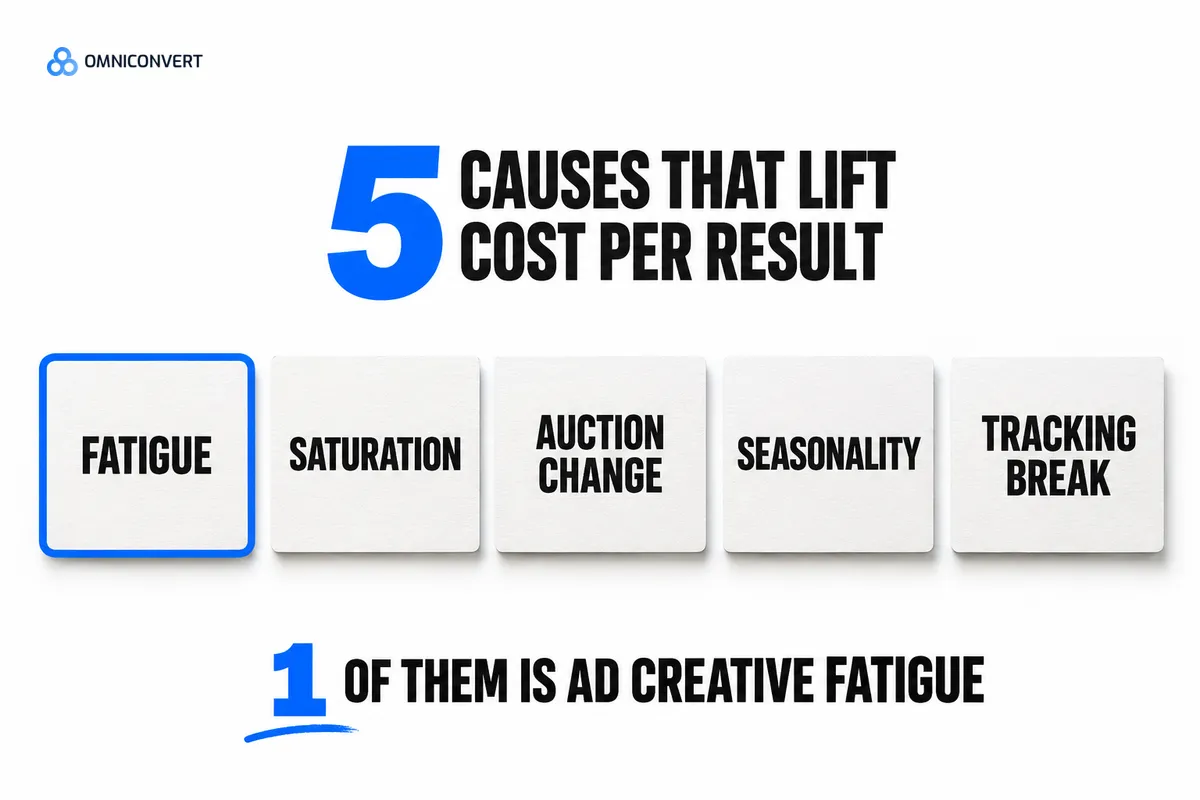
Five causes can lift cost per result, and only one of them is ad creative fatigue, so name the cause before the cure. The look-alikes often run together, so a single cost line cannot separate them. The six-step ad creative fatigue solution starts with this confirmation, and the complete guide to creative fatigue sets out the order of changes.
Why do Meta ads stop working?
The first showing carries the whole argument. Later showings carry only the fact that you are still asking. Two things speed it up. Budgets tend to sit on fewer assets, so each ad meets its audience more often. And delivery tends to favour ads people respond to, so a slipping ad wins fewer cheap impressions.
Which ad burnout signals show fatigue?
An ad burnout signal is defined as an early reading that shows response decaying before cost per result moves. A signal points to decay. It does not prove fatigue until the cause is confirmed. Reading these as slopes, not levels, is the subject of creative fatigue forecasting.
| Signal | What it shows | What it cannot prove alone |
|---|---|---|
| Frequency rising | The same people see the ad more often | That response has fallen |
| First-time reach falling | Fewer new people are being reached | Whether the ad or the audience is the limit |
| Early response slipping | Attention is fading at the click or in the first seconds | The cause: offer, page or repetition |
| Cost per result rising | The ad has become dearer to run | That the creative is the cause |
| Days active long | The ad earned its place for a while | That it is still earning it |
Some teams settle on one frequency number from an old rule of thumb and pause every ad that crosses it. The rule feels safe, because frequency is easy to see. The cost runs both ways. A strong ad is paused while its response is healthy. A weak ad in a small audience stays under the line while its first-time reach has collapsed. Frequency is a cause of fatigue. Response is the symptom.
Confirming a cause works best as a small test: the new ad against the old one, same audience, same days, with the result line written before launch.
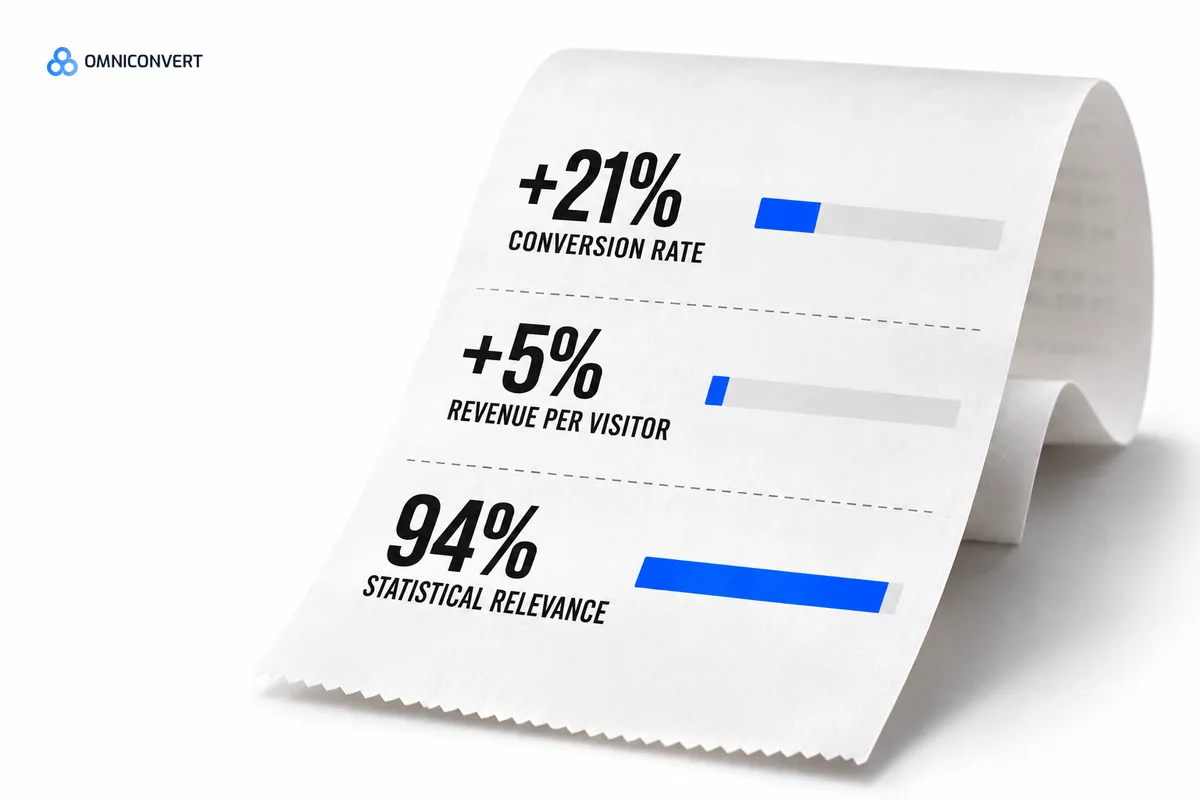
AliveCor used Omniconvert to run a structured A/B testing programme and achieved +21% conversion rate, +5% revenue per visitor, and 94% statistical relevance across their experiments. [Omniconvert, AliveCor case study]
Where does ad creative fatigue end and the fix begin?
Omniconvert Commander measures True Profit per ad and gives a scale, hold, reduce or kill recommendation on each ad, which you approve. When an ad needs replacing, it generates launch-ready assets from customer data. If you are weighing tools that watch creative, see how Omniconvert Commander compares with Motion.
Ad creative fatigue: FAQs
What is ad creative fatigue?
Ad creative fatigue is the decline in response to an ad caused by the same people seeing the same message repeatedly. The ad has not changed. The audience has learned it.
What are ad burnout signals?
Ad burnout signals are early readings that show response decaying before cost per result moves: rising frequency, falling first-time reach and slipping early response. Read together on one ad, they point to decay. Confirm the cause before you call it fatigue.
Why do Meta ads stop working?
Ad creative fatigue is only one cause. Four others look the same: audience saturation, an auction change, seasonality and a tracking break. Confirm which one you have before you replace anything.
How do I tell fatigue from an auction change?
Launch one new ad and compare it with the old one in the same audience. If the new ad does no better, the auction moved or the audience is used up. Only a new ad that does better in the same audience points to fatigue.
Is ad creative fatigue the same as audience saturation?
No. Fatigue is about what the people you reach already know. Saturation is about how few new people are left to reach. New creative does not fix saturation.
How does Omniconvert Commander help with ad creative fatigue?
Omniconvert Commander does not draw a fatigue curve, so diagnosing the cause stays with your Ads Manager or a dedicated tool. It measures True Profit per ad, not ROAS, which shows whether a slipping ad still earns, and it recommends scale, hold, reduce or kill on each ad. You approve every recommendation.
Name the decay first
Ad creative fatigue is response falling because the same people have heard the same message too often. Not every rising cost is fatigue. Check the cause against audience saturation, an auction change, seasonality and a tracking break, read the early signals as pointers to decay, and only then decide what to change.