Static, Video or Carousel? What eCommerce Brands Launched in October 2026

Scope: every Meta ad the eCommerceBenchmark Ad Library first saw in October 2026, across every industry and country it tracks: 6,858 ads from 340 brands. A launch is the day the library first saw the ad, and it finds new ads late, so every count here is a floor.
Picture the last new ad your team shipped.
Before anyone wrote a line of copy, somebody picked a shape: a flat image, a video, or a carousel of cards you swipe through. Nothing else gets briefed until that call is made.
In October 2026 the eCommerceBenchmark Ad Library first saw 6,858 Meta ads from 340 brands. Most of them were video: 3,075. Carousel took 2,339. Static took 1,444.
That is what brands made. It is not the mix of every ad running, and it is not a scoreboard. Here is the split, the brands behind each shape, and how many of each were on air when we read the library.
- Video led the month's launches. 3,075 of the 6,858 new Meta ads the library found in October were video. That is one month, on one platform.
- The brand base is wider than the gap looks. 284 brands launched at least one video. 253 launched a static. Carousel came from 250 brands, so video has the widest base.
- Most launches were on air when we read it. Video kept 2,545. Carousel kept 1,984. Static kept 1,053. Keeping an ad on is a different decision from launching one.
First, the counts.
Video led October's launches: 3,075 of 6,858
A launch is defined as an ad the library saw for the first time in the month. Format is defined as the content type an ad is delivered as: static, video or carousel. Of the 6,858 Meta ads first seen in October 2026, 3,075 were video. Carousel took 2,339. Static came last, at 1,444.
The brand base behind each shape sits closer together than the ad counts do. 284 brands launched at least one video. 253 launched a static. Carousel came from 250 brands. A shape many brands reach for is a habit across the field. A shape a few brands make a lot of is a handful of heavy launchers. Video here is the first kind.
Meta ads first seen in October 2026, by format. A launch is the day the library first saw the ad. Source: eCommerceBenchmark Ad Library, 2026.
Launching is one thing. Keeping an ad on is another.
How many were on air when we read it
The library was read after October ended, so an ad first seen at the start of the month had weeks more to be switched off than one first seen at the end. Read the three counts below as a floor under each shape, not a race between them.
2,545 of the 3,075 video launches were on air.
1,984 of the 2,339 carousel launches were on air.
1,053 of the 1,444 static launches were on air.
Staying on air says a brand kept paying for an ad, never what it sold.
Here are some of the month's launches, in their own words.
October's launches that ran longest
These are the longest-running of October's launches whose whole creative can be shown, so a carousel appears only where its whole creative can, and a video is shown by its still frame.
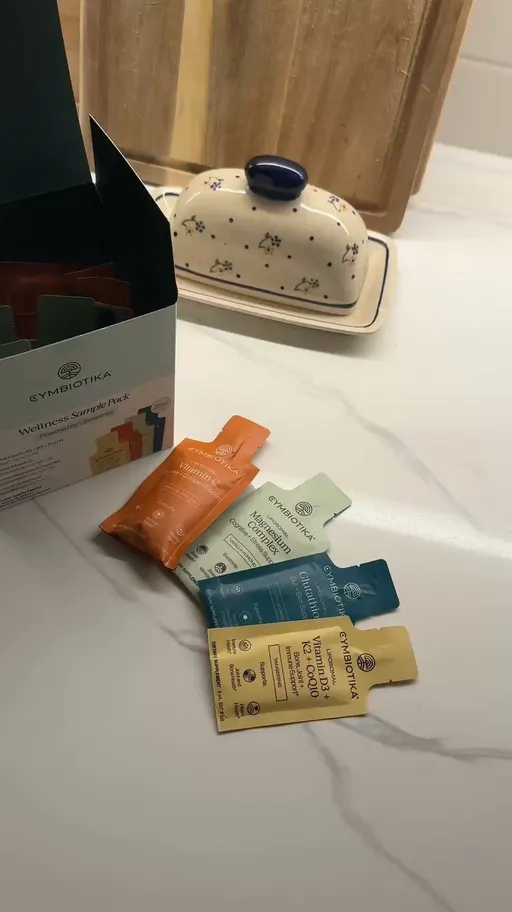




cymbiotika.com ran a video that opens "Your wellness routine doesn't need to be complicated, it needs to be consistent", on air 41 days when the library was read. rixo.co.uk ran a static that opens "When the dress code calls", on air the same 41 days. Every launch we can name here sits at that one mark, so read the list as the ceiling this group reached, not an order of merit (that's time on air, not sales).
So what do you do with this?
Three format tests worth running
- One message, two formats, one month. Build the same product message once as a video and once in the format you run least, one cell each, for a full month. Video took 3,075 of October's launches.
- A new opening inside the format you already run most. Same product, same offer, a different first line, against your current control. 284 brands launched at least one video in October.
- Keep the control on while you test. Do not pause the ad you trust to fund the experiment. 2,545 of October's video launches were on air when the library was read.
The eCommerceBenchmark Ad Library sorts your ads into the same hooks, angles, concepts and offers used in this report and shows your mix next to the market, so you can see which shapes you have never shipped.
Audit my creatives, freeBefore you pick one, read the next part. It names the way a launch count usually gets misread.
The mistake: switching every ad to the format everyone launched
Here is how it goes wrong. A buyer reads one month's launch count, treats the biggest number as an instruction, and rebuilds the whole next batch in that one shape. The format that was already carrying the account comes off. Ten new ads go live, and a shopper meets the same look ten times in a week.
A launch count cannot carry that weight. It counts what brands made, never what worked, and no spend or sales figure sits behind it. When enough brands switch in the same month, the next month's count stops describing the market and starts describing the copying.
Your test card
Here is the first test from the box, set up the way a media buyer would run it. Write your own numbers down before you launch.
| Hypothesis | The same message in video will land within my current format's cost per purchase. |
| Change only this | The format only: the same ad delivered as a video instead of the shape I run now. |
| Keep the same | Product, offer, opening line, audience, placement and budget split. |
| Funnel stage | Say first whether this ad is for prospecting (cold) or retargeting (warm). A deal in the first line is often right for warm audiences and wrong for cold ones, so test it where the ad will really run. |
| Setup | One control and one variant, same audience, same placement, even budget split. Do not edit either ad while the test runs. |
| How long and how much | Until each version has about 50 purchases, or two full weeks, whichever comes later. This is general testing practice (Meta's own learning-phase guideline is about 50 results per ad set per week), not a library finding. |
| Success metric | Cost per purchase, not clicks. |
| Stop rule | Pause a variant that has spent about 3 times your target cost per purchase with no purchase. If it is close, keep it running. |
| What counts as a win | The variant beats the control on the metric by an amount you would act on, and still does in a second week. |
Key takeaways
- Video led October's launches: 3,075 of the 6,858 Meta ads the library first saw in the month [eCommerceBenchmark Ad Library, 2026].
- Carousel took 2,339 of them. Static took 1,444.
- 284 brands launched a video. 253 launched a static. Carousel came from 250 brands.
- On air when we read it: 2,545 video launches. Carousel kept 1,984. Static kept 1,053.
- The longest-running launch we can show is cymbiotika.com's video, on air 41 days. That is time on air, not sales.
- Test one format beside the one you run; don't switch.
Questions
Open your last ten ads and sort them into three boxes: static, video, carousel. One box is probably empty, or close to it. That is the cell to add next month, at one cell's worth of budget, beside the ad you already trust. Video took 3,075 of October's 6,858 launches, and carousel took 2,339, so whichever box is empty in your account, plenty of other brands are filling it. What none of those counts can tell you is what any of them sold. Your own test can.