Your First A/B Test in Under an Hour: A Practical Starter Guide


- Start with a single, high-visibility element you can modify without developer involvement
- Calculate required sample size before launching and commit to running the full test duration
- Document every test result to build institutional knowledge that guides future experiments
- Focus on test velocity over individual test perfection — learning compounds over time
- Use your first test as a template to make subsequent experiments faster and more efficient
You have a hunch that a bigger "Add to Cart" button could boost conversions. But somewhere between spreadsheets, developer requests, and statistical significance calculators, that simple idea turns into a three-month project.
E-commerce teams often delay experimentation because the learning curve feels steep, technical dependencies create bottlenecks, and the fear of running tests incorrectly leads to analysis paralysis. The result? Valuable optimization opportunities sit untested while competitors iterate faster.
This guide walks you through launching your first meaningful A/B test within 60 minutes, giving you a repeatable framework that builds confidence and delivers actionable data from day one.
Why Speed to First Test Matters More Than Perfection
Here is a counterintuitive truth about experimentation: your first test does not need to be groundbreaking. It needs to be finished. The faster you complete your initial experiment cycle, the faster you build the muscle memory that makes every subsequent test easier.
Many teams spend weeks debating which element to test first, then more weeks designing the perfect variant. Meanwhile, they gather zero data. The most successful experimentation programs treat early tests as learning exercises, not make-or-break business decisions.
Think of your first A/B test as a calibration run. You are learning how your testing platform works, how long it takes to reach statistical significance with your traffic levels, and how to interpret results. These insights compound over time, turning hesitant experimenters into confident optimizers.
The goal today is simple: pick one element, create one variant, and let data start flowing. Everything else — including advanced segmentation, multivariate testing, and personalization — comes later once you have this foundation in place.
Step 1: Choose a High-Visibility, Low-Risk Element
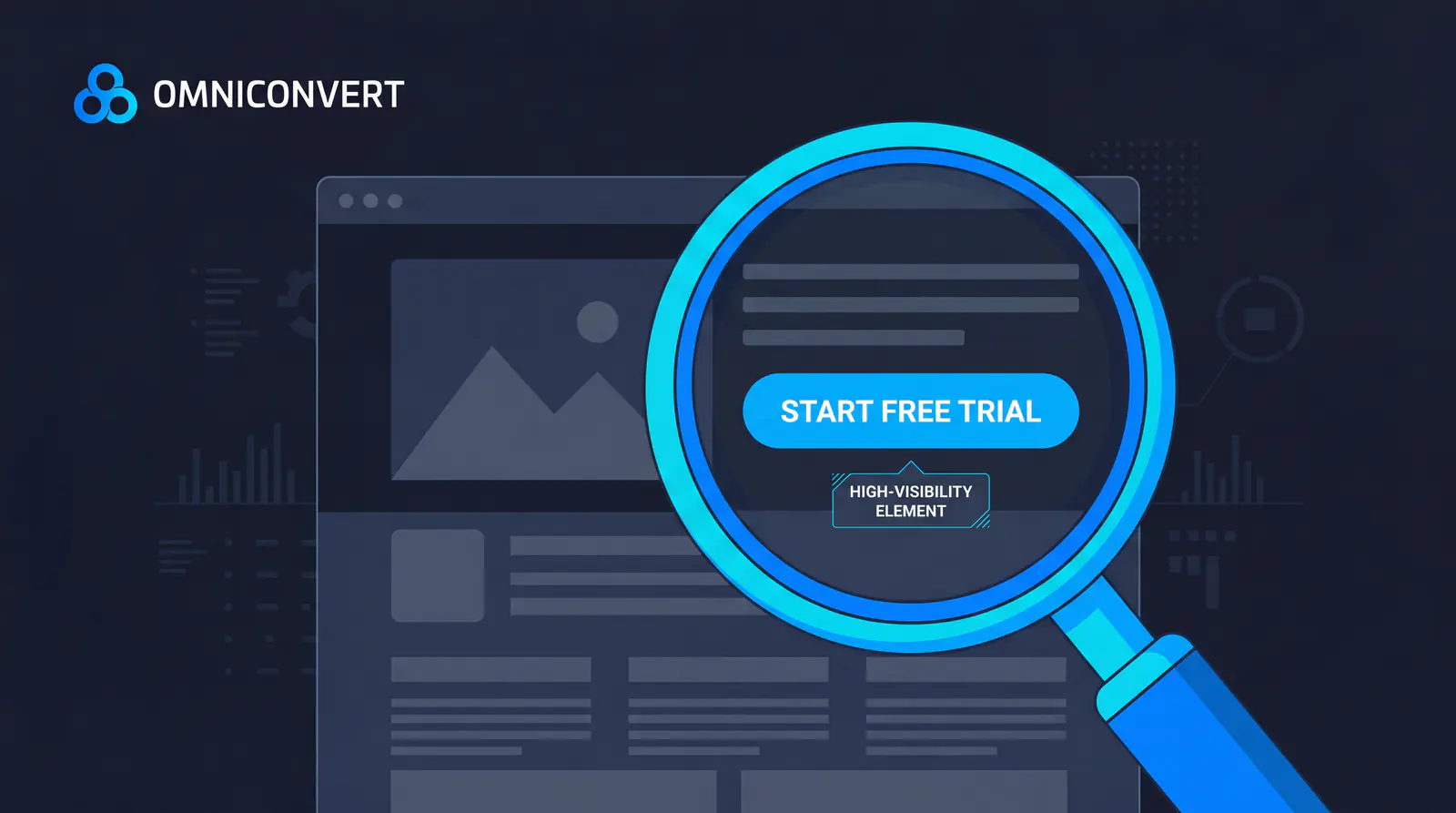
Your first test should target something visible enough to generate meaningful data but low-risk enough that a failed variant will not damage your business. Product page CTAs, homepage hero text, and cart page messaging all fit this criteria perfectly.
Avoid testing major navigation changes, checkout flow restructures, or anything requiring significant development work. You want an element you can modify through a visual editor or simple code snippet without involving your engineering team.
Good candidates for your first test include:
- CTA button text ("Add to Cart" vs. "Buy Now" vs. "Get Yours")
- Product image order on listing pages
- Urgency messaging near the purchase button
- Headline variations on landing pages
The key is choosing something where you can formulate a clear hypothesis: "I believe changing X to Y will increase metric Z because of reason A." Without this structure, you are just making random changes and hoping for the best.
Step 2: Set Up Your Test Without Developer Dependencies
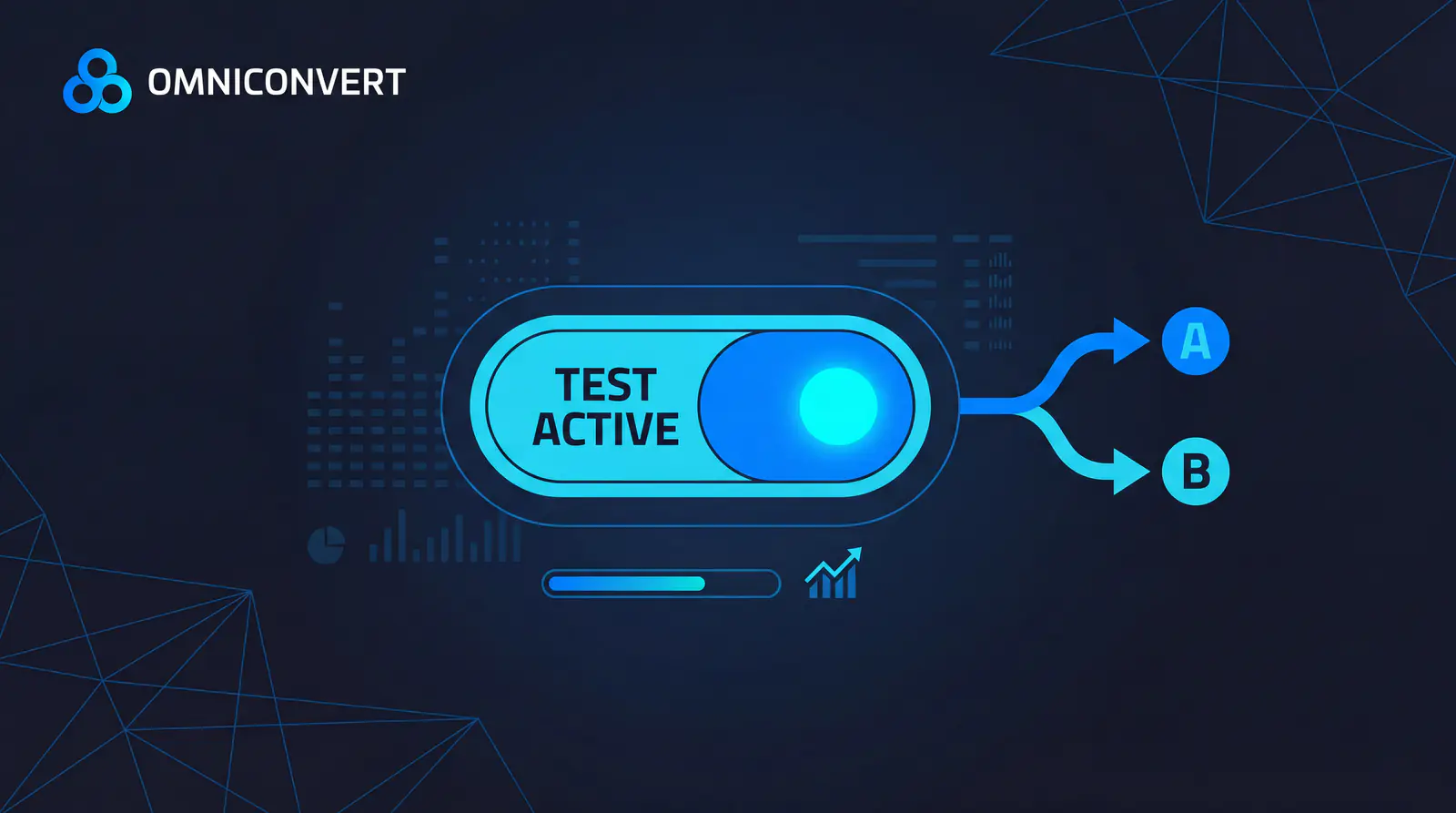
Modern A/B testing platforms let you create experiments using visual editors that work directly on your live site. You simply select the element you want to modify, make your change, and the platform handles the rest.
For your first test, stick to the visual editor rather than custom code. This approach eliminates the back-and-forth with developers and lets you iterate quickly if you spot issues during QA.
When configuring your experiment, set your traffic split to 50/50 between control and variant. While more sophisticated allocation strategies exist, an even split gives you the clearest data for learning purposes. Set your primary metric to match your hypothesis. If you are testing CTA button text, track clicks on that button. If you are testing product page layout, track add-to-cart rate.
Before launching, preview your variant across devices. Mobile rendering issues are the most common cause of invalid test results. Spend five minutes checking that your changes display correctly on phone, tablet, and desktop views.
Step 3: Determine Sample Size and Test Duration
The most common mistake new experimenters make is ending tests too early. Seeing a 15% conversion lift after 100 visitors feels exciting, but that number will almost certainly regress as more data comes in.
Before launching, calculate how long your test needs to run using this simple framework: take your current conversion rate, your expected traffic volume, and the minimum detectable effect you care about. Most sample size calculators will tell you the number of visitors needed per variant.
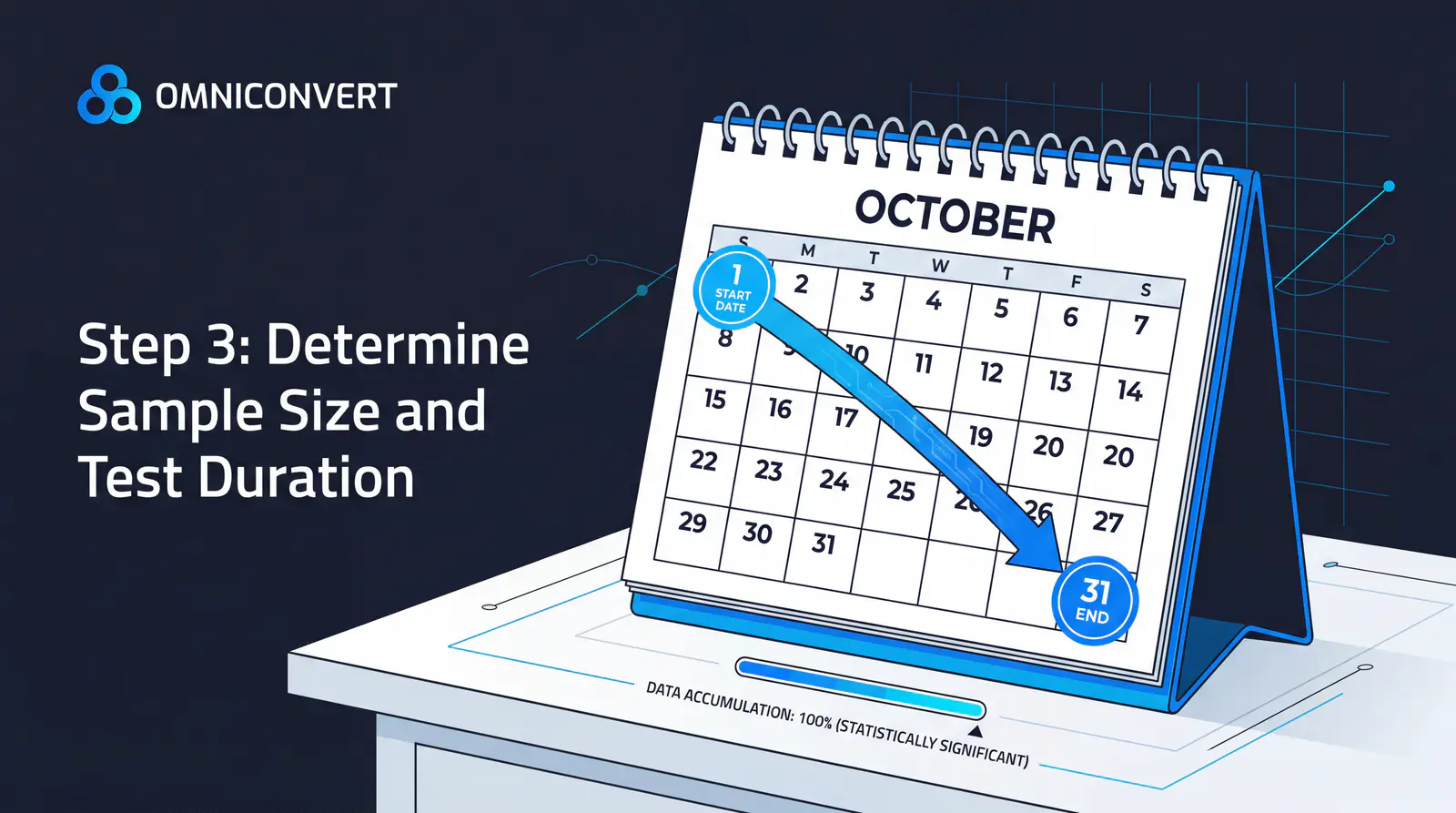
For most e-commerce sites with moderate traffic, plan for a minimum of two full weeks. This captures weekday and weekend behavior patterns, accounts for traffic fluctuations, and gives you enough data to trust the results.
Set a calendar reminder for your test end date. Resist the temptation to peek at results daily, as this leads to premature conclusions. If your platform offers a sequential testing methodology, you can check more frequently without inflating false positive rates, but traditional fixed-horizon tests require patience.
Step 4: Read Results Without Overthinking
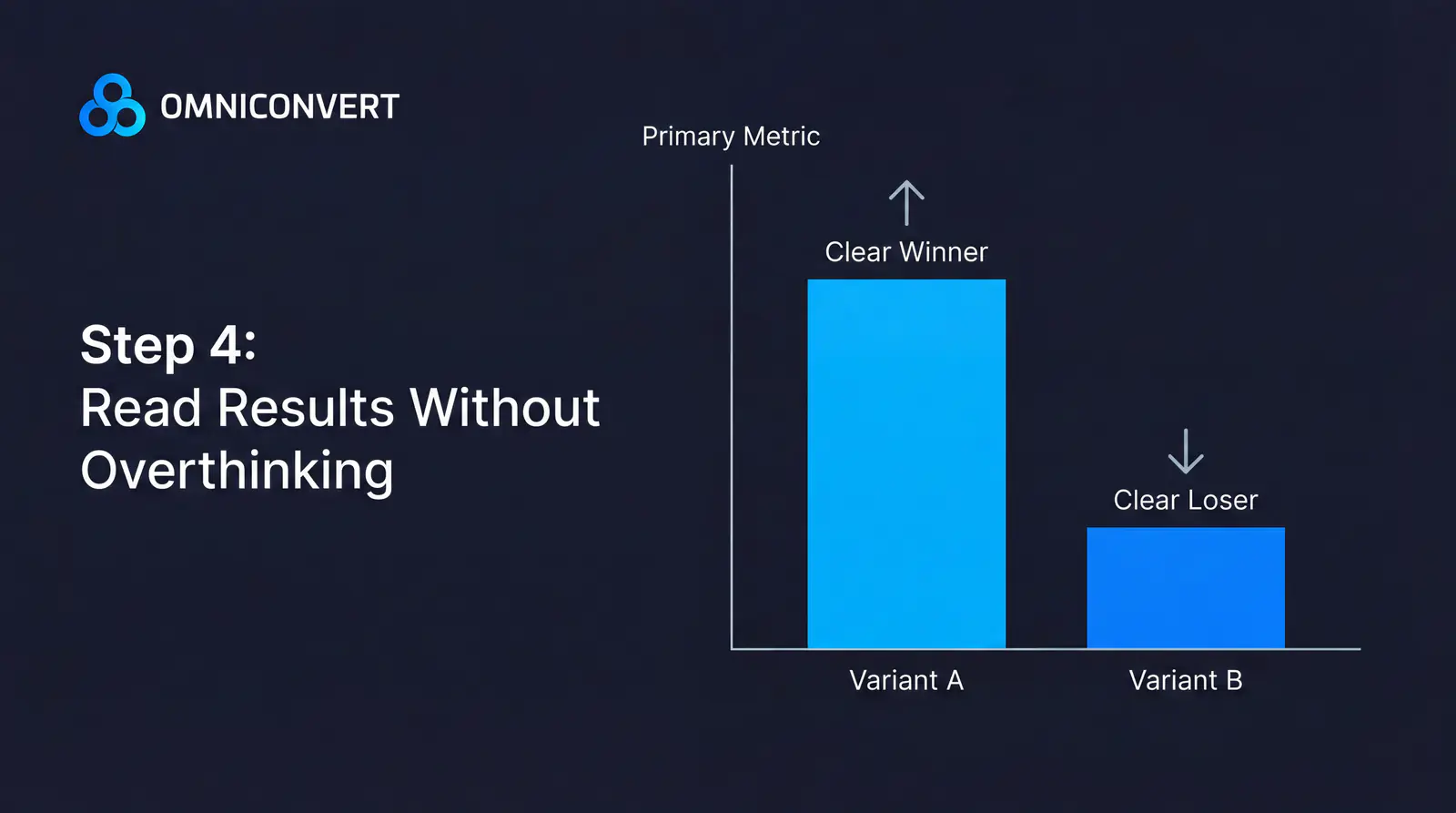
When your test concludes, you will see one of three outcomes: a clear winner, a clear loser, or no statistically significant difference. All three are valuable.
A winning variant gives you a change to implement permanently. A losing variant prevents you from making a harmful change you might have deployed based on intuition alone. An inconclusive result tells you the element you tested does not meaningfully impact user behavior, freeing you to focus elsewhere.
Focus on your primary metric first. If you set add-to-cart rate as your success criterion, evaluate that before diving into secondary metrics. Testing platforms show dozens of data points, but chasing every minor fluctuation leads to false conclusions.
Document your results in a simple format: hypothesis, what you tested, what happened, and what you learned. This creates an institutional knowledge base that compounds over time. Teams that document experiments avoid repeating failed tests and build on successful patterns.
Building Momentum: Your Second and Third Tests
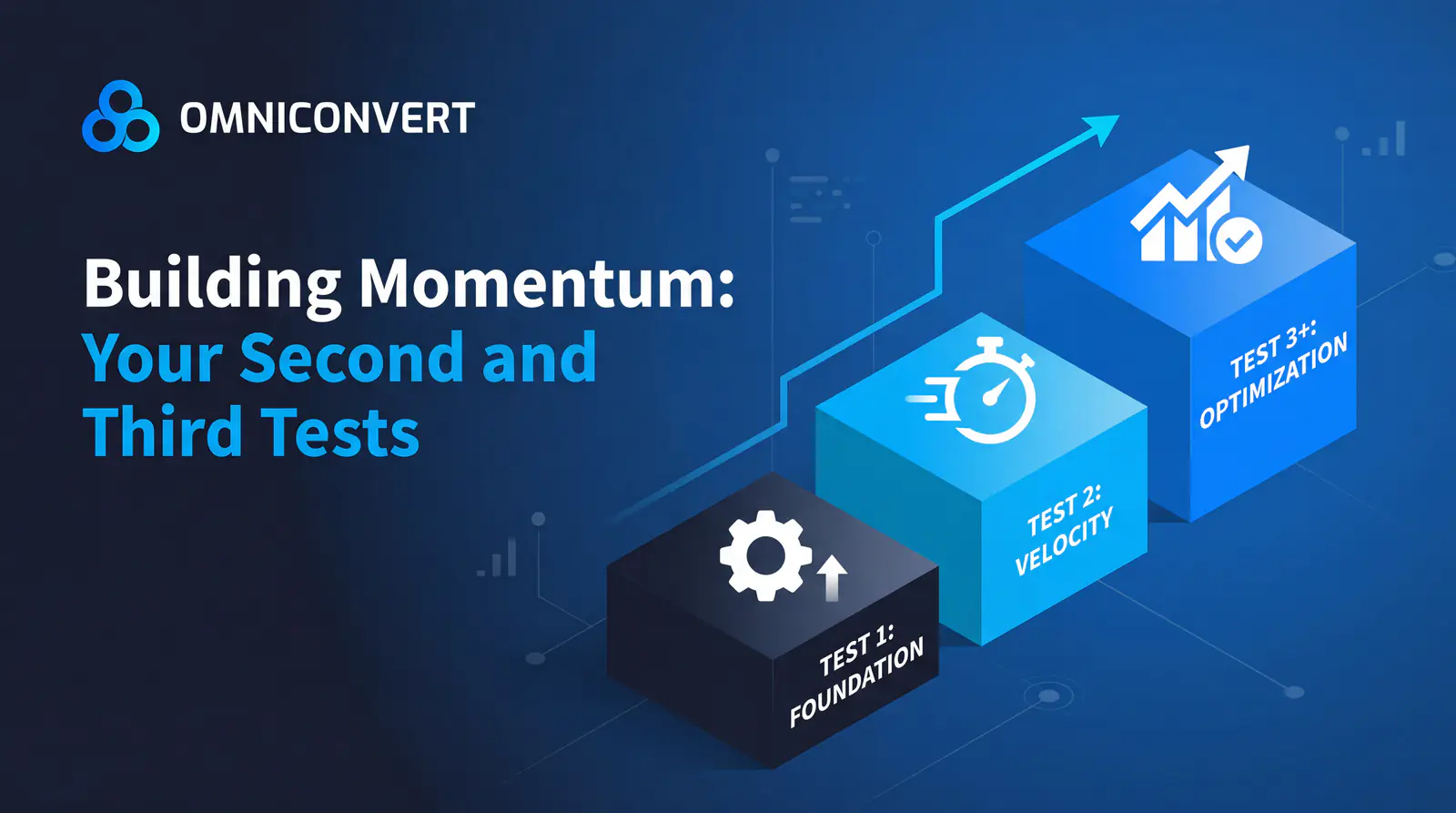
Your first test is complete. Now the real work begins. The difference between teams that dabble in experimentation and teams that drive consistent conversion growth is test velocity. More tests mean more learning, more wins, and faster optimization.
Use your first test as a template. What worked well in the setup process? What caused friction? Refine your workflow so the second test takes half the time. By your fifth test, launching a new experiment should feel routine.
Expand your testing scope gradually. After mastering single-element tests, try testing entire page sections. After validating changes on product pages, explore cart and checkout optimization. Build complexity incrementally rather than jumping to advanced techniques before you have the fundamentals locked in.
Consider establishing a regular testing cadence. Many successful teams run two to four tests per month, creating a steady stream of insights. This rhythm keeps experimentation top of mind and prevents optimization from becoming an occasional afterthought.
Common First-Test Mistakes and How to Avoid Them

Even with a solid framework, certain pitfalls trip up new experimenters. Awareness of these issues helps you sidestep them entirely.
Testing too many changes at once: Your first test should isolate a single variable. If you change button color, button text, and button placement simultaneously, you cannot determine which change drove the result. Save multivariate testing for later.
Ignoring mobile traffic: Over half of e-commerce traffic comes from mobile devices. If your variant breaks on phones or tablets, your test data becomes unreliable. Always QA across screen sizes before launching.
Declaring winners too early: Statistical significance is not a suggestion. Calling a test before reaching your predetermined sample size introduces bias and leads to implementing changes that may not actually improve performance.
Forgetting to document: In six months, you will not remember why you tested a specific headline variation. Written records turn isolated experiments into an optimization playbook that guides future decisions.
Frequently Asked Questions
Choose a high-visibility, low-risk element you can modify without developer involvement — CTA button text, product image order, urgency messaging near the purchase button, or headline variations on landing pages. Avoid testing major navigation changes or checkout restructures for your first experiment.
For most e-commerce sites with moderate traffic, plan for a minimum of two full weeks. This captures weekday and weekend behavior patterns, accounts for traffic fluctuations, and gives you enough data to trust the results. Calculate required sample size before launching and commit to running the full duration.
Set your traffic split to 50/50 between control and variant. While more sophisticated allocation strategies exist, an even split gives you the clearest data for learning purposes and is the standard starting point for new experimenters.
The four most common mistakes are: testing too many changes at once (isolate one variable), ignoring mobile traffic (always QA across screen sizes), declaring winners too early before reaching statistical significance, and failing to document results. Written records turn isolated experiments into an optimization playbook.
Focus on your primary metric first — the one you defined in your hypothesis before launching. All three outcomes are valuable: a winner gives you a change to implement, a loser prevents a harmful change, and an inconclusive result tells you the element doesn't meaningfully impact behavior, freeing you to focus elsewhere.
Your first A/B test is not about hitting a home run. It is about building the foundation for a data-driven optimization practice that delivers compounding returns over time. By choosing a simple element, setting up your test without technical dependencies, committing to adequate sample sizes, and documenting your learnings, you create a repeatable process that scales. The teams that win at experimentation are not necessarily smarter or better resourced. They simply test more, learn faster, and build on their results. Start your first test today, and you will be surprised how quickly confidence replaces uncertainty.
Ready to run your first test in under an hour?
Omniconvert Explore gives you a visual editor, GA4-native tracking, and a support team that guides your first experiment from setup to results — no developers required.