How Successful E-commerce Teams Run A/B Tests That Actually Convert

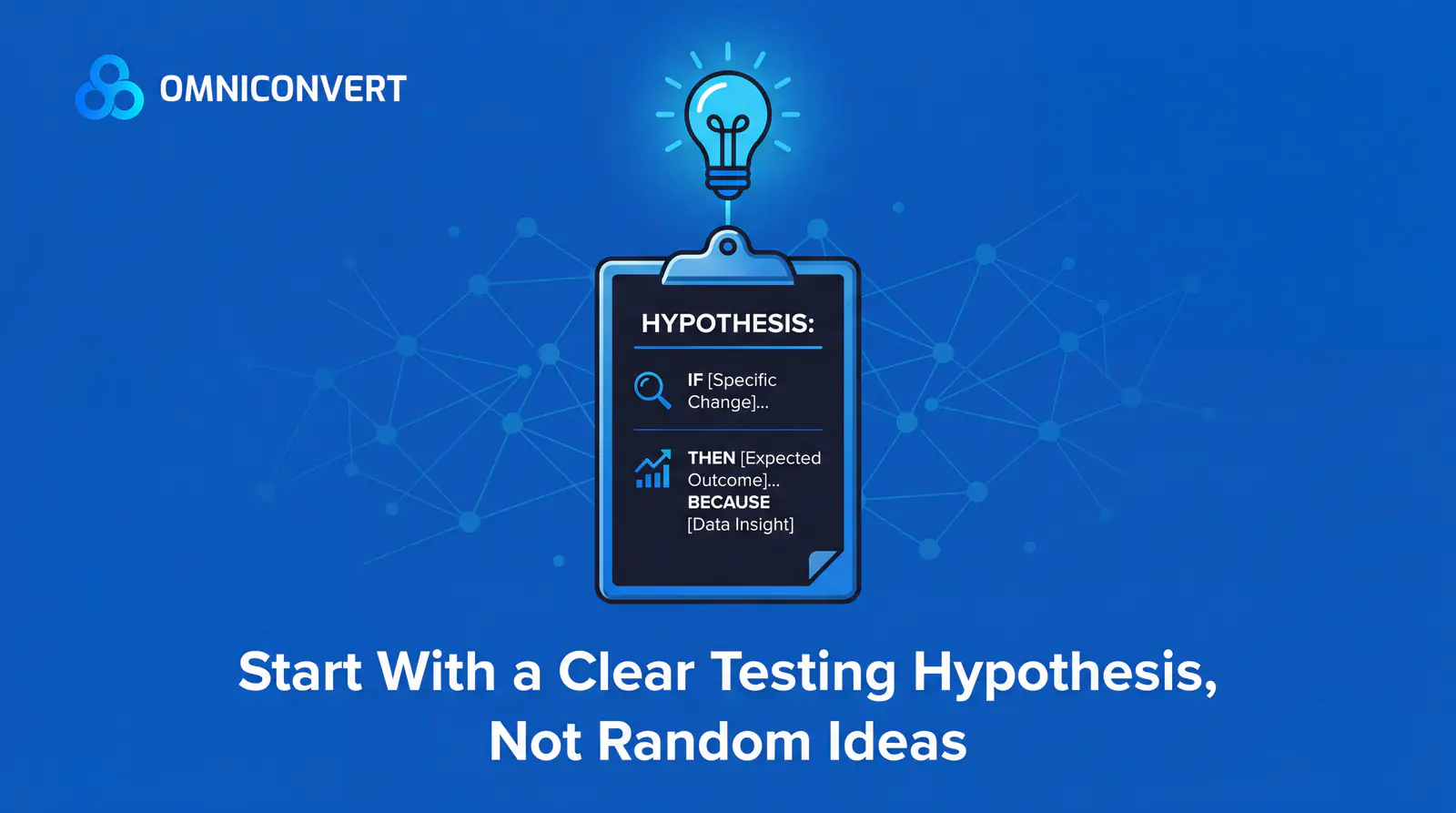
- Document clear hypotheses with expected outcomes before launching any test to ensure actionable results
- Reduce developer dependencies by choosing tools that allow marketers to launch experiments independently
- Plan your testing calendar around major sales periods, validating your highest-traffic pages 8 to 12 weeks in advance
- Combine quantitative test results with behavioral analytics like session recordings for deeper insights
- Establish clear ownership and SLAs for implementing winning variations to capture the revenue gains you've proven
The difference between e-commerce teams that consistently hit their conversion targets and those that struggle often comes down to one thing: how they approach experimentation. High-performing brands have moved beyond random testing to build systematic optimization programs that compound results over time.
Most e-commerce teams know they should be testing more, but the reality is messier. Heavy developer dependencies create bottlenecks. Complex platform integrations slow down experiment velocity. And without clear processes, even winning tests get stuck in implementation limbo instead of driving real revenue impact.
This guide breaks down the exact practices successful e-commerce teams use to run clean, reliable A/B tests that translate into measurable conversion improvements and faster decision-making.
Start With a Clear Testing Hypothesis, Not Random Ideas
Successful testing teams never launch experiments based on hunches or competitor copying. Every test begins with a documented hypothesis that connects a specific change to an expected outcome backed by data. This discipline separates teams that generate insights from those that just run tests.
The formula is straightforward: identify a friction point in your customer journey using analytics, formulate a specific hypothesis about what change will reduce that friction, and define success metrics before launching. Teams that skip this step end up with inconclusive results because they never defined what they were actually measuring.
Your hypothesis should follow this structure: "We believe [specific change] will [expected outcome] because [supporting evidence]." For example: "We believe simplifying our checkout form from 5 fields to 3 will increase completion rates by 8% because session recordings show 34% of users abandon at the address entry step."
This approach also makes stakeholder buy-in easier. When your CEO asks why you're testing a new hero image instead of working on the product page, you have data-backed reasoning ready. It transforms testing from a creative exercise into a strategic business function.
Reduce Developer Dependencies to Increase Test Velocity

One of the biggest barriers to effective experimentation is the developer bottleneck. When every test requires engineering time, your testing velocity drops to one or two experiments per month. That pace simply cannot generate enough learnings to move conversion metrics meaningfully.
The most effective e-commerce teams choose tools that allow marketers and CRO specialists to launch tests independently. This means visual editors, no-code experiment builders, and pre-built integrations with your commerce platform. The goal is getting from idea to live test in hours, not weeks.
Adobe Commerce and Magento environments present particular challenges here due to platform complexity. Teams running on these platforms report that proper tooling makes the difference between experimentation being a strategic advantage versus a constant struggle.
Build Validation Into Your Workflow Before Major Sales Periods
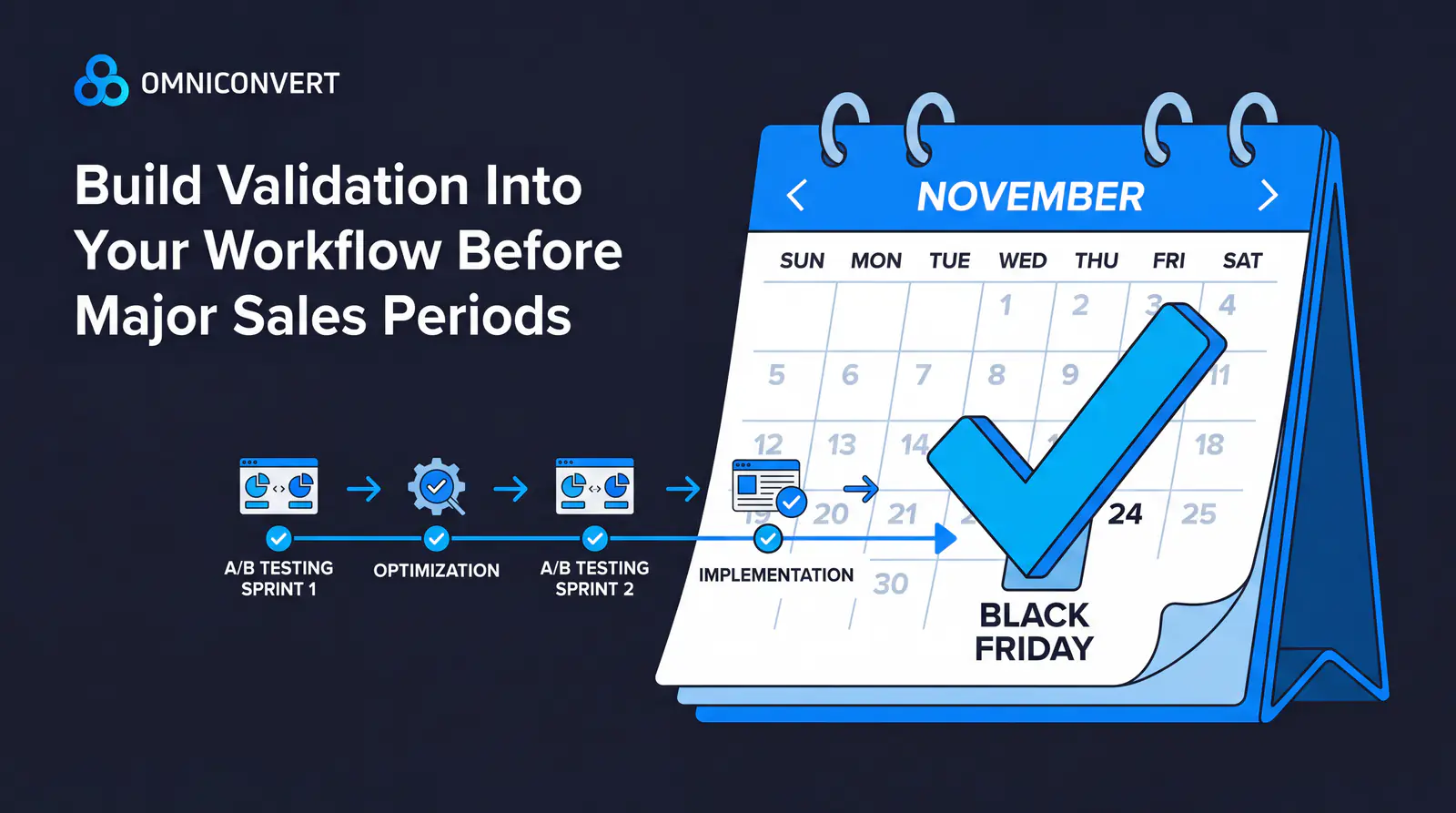
High-performing teams treat A/B testing as preparation for high-stakes moments, not something to pause during them. The weeks before Black Friday, holiday sales, or major product launches are when you need the most confidence in your conversion funnel.
This means planning your testing calendar around your commercial calendar. Start optimization sprints 8 to 12 weeks before major sales periods. Run your highest-impact tests first so you have time to implement winners. Save lower-risk experiments for quieter periods when stakes are lower.
The teams that see the biggest results use this approach to systematically optimize their highest-traffic pages before peak season. They enter Black Friday knowing their hero banners, product pages, and checkout flows have been validated with real customer behavior data.
Combine Testing Data With Behavioral Analytics for Deeper Insights
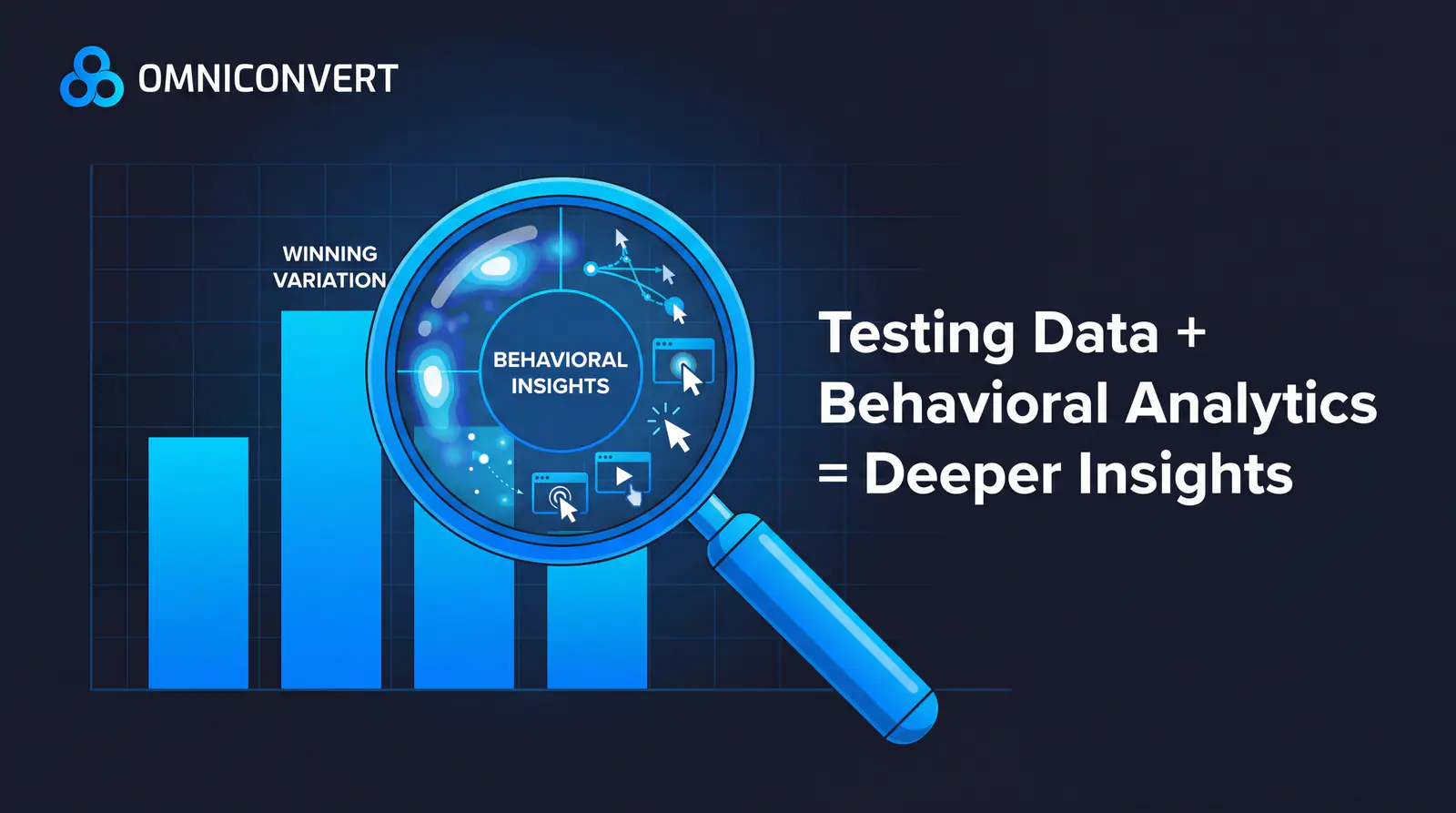
Quantitative A/B test results tell you what happened. Behavioral analytics tell you why. The most sophisticated e-commerce teams combine both to extract maximum learning from every experiment.
When a test variation wins, session recordings and heatmaps reveal the specific user behaviors driving that improvement. When a test loses unexpectedly, behavioral data helps you understand what went wrong and inform your next hypothesis. This combination accelerates learning velocity dramatically.
Practical implementation looks like this: set up your testing tool to trigger session recording for all test participants, segment recordings by variation, and review at least 20 to 30 sessions per variation before drawing conclusions. Look for patterns in scroll depth, click behavior, and hesitation points.
This approach transforms testing from a binary win/lose exercise into a continuous learning system. Even "failed" tests generate valuable insights when you understand the behavioral context behind the numbers.
Keep Your Testing Tool Simple Enough for the Whole Team
The best testing program in the world fails if only one person on your team can actually run experiments. Tool complexity creates knowledge bottlenecks that slow down your entire optimization operation.
When evaluating testing platforms, prioritize ease of use for your actual team members. Can your growth marketer set up a test without calling engineering? Can your content team run headline experiments independently? Can a new hire get productive within their first week?
This does not mean sacrificing capability. Modern testing platforms offer sophisticated statistical engines, advanced targeting, and deep integrations while maintaining intuitive interfaces. The key is finding tools designed for business users, not just technical specialists.
Establish a Fast Path From Winning Test to Production
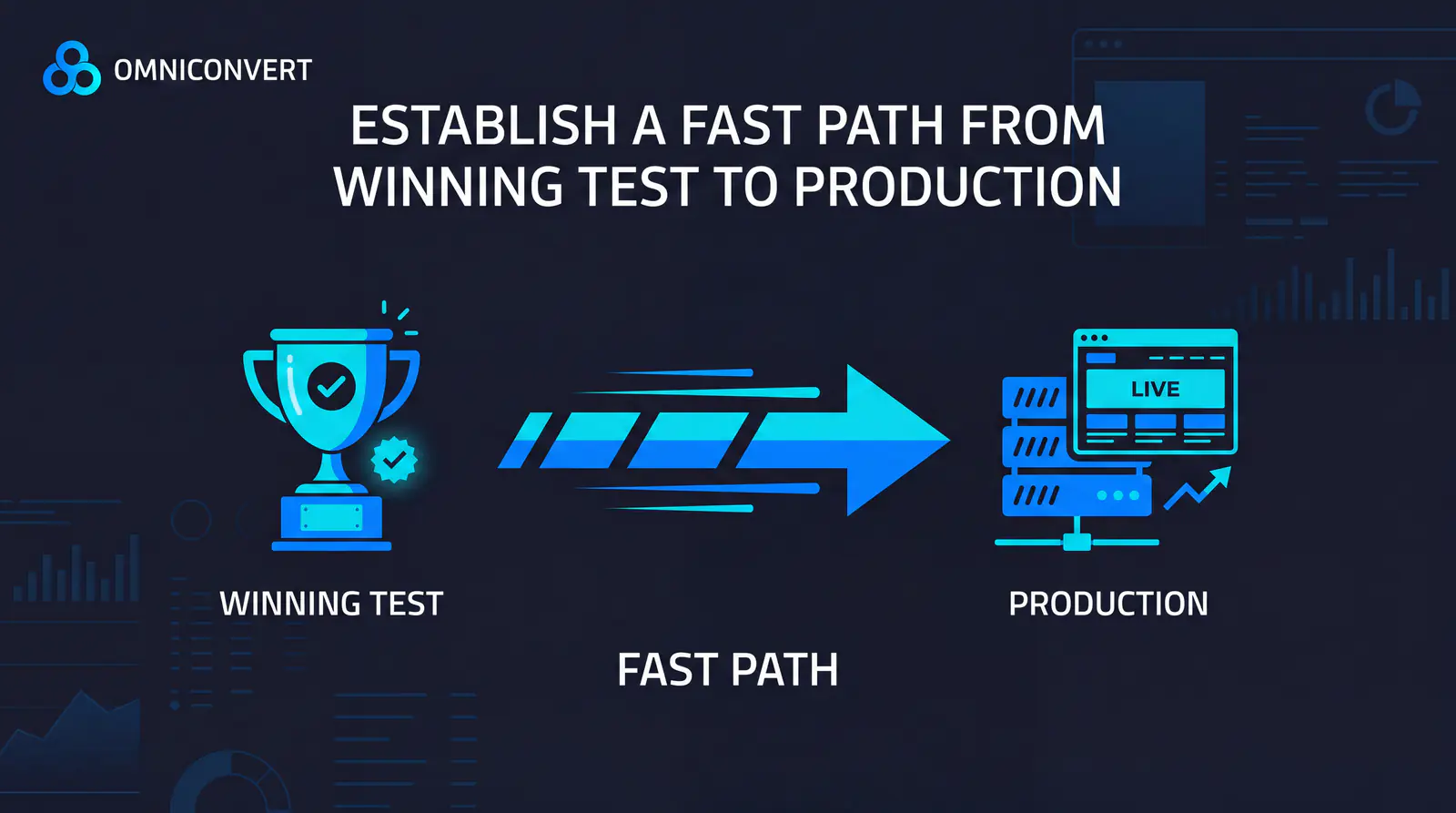
A surprising number of e-commerce teams run successful tests, celebrate the results, then never actually implement the winning variation. The test sits in a queue while new experiments launch, and potential revenue gains evaporate.
Fixing this requires process changes, not just tool changes. Establish clear ownership for test implementation. Set SLAs for how quickly winning variations must go live. Track implementation rates as a team metric alongside test velocity and win rates.
Some teams address this by having their testing tool push winning variations directly to production, bypassing the traditional development cycle entirely. Others build implementation sprints into their regular development cadence. The specific approach matters less than having any system at all.
The math here is compelling: a test showing 10% conversion improvement generates zero value until implementation. Every week of delay is lost revenue. Teams that treat implementation with the same urgency as test launches consistently outperform those that let winners languish.
Invest in Support and Partnership, Not Just Software

The technical capabilities of testing platforms have largely converged. What differentiates the best from the rest is often the human element: support quality, strategic guidance, and genuine partnership in your optimization journey.
When evaluating testing vendors, ask about their support model. Do you get a dedicated contact or a ticket queue? How quickly do they respond during critical periods? Do they offer strategic guidance or just technical troubleshooting?
The best vendor relationships feel like an extension of your team. They help you solve problems proactively, suggest testing opportunities based on their experience with similar businesses, and genuinely invest in your success beyond just software uptime.
Frequently Asked Questions
A strong hypothesis follows this format: 'We believe [specific change] will [expected outcome] because [supporting evidence].' For example: 'We believe simplifying our checkout form from 5 fields to 3 will increase completion rates by 8% because session recordings show 34% of users abandon at the address entry step.' This connects the change to a measurable outcome backed by data.
Choose testing tools with visual editors and no-code experiment builders that allow marketers and CRO specialists to launch tests independently. The goal is getting from idea to live test in hours, not weeks. Pre-built integrations with your commerce platform and drag-and-drop variant creation eliminate the need for engineering involvement on every experiment.
Start optimization sprints 8 to 12 weeks before major sales periods like Black Friday. Run highest-impact tests first so you have time to implement winners before peak traffic arrives. Save lower-risk experiments for quieter periods. This ensures your hero banners, product pages, and checkout flows are validated with real customer behavior before stakes are highest.
Quantitative A/B test results tell you what happened; behavioral analytics like session recordings and heatmaps tell you why. When a test variation wins, recordings reveal the specific user behaviors driving improvement. When a test loses unexpectedly, behavioral data helps you understand what went wrong and inform the next hypothesis — accelerating learning velocity dramatically.
Establish clear ownership for test implementation and set SLAs for how quickly winning variations must go live. Track implementation rates as a team metric alongside test velocity and win rates. A test showing 10% conversion improvement generates zero value until it ships — every week of delay is lost revenue.
Ask whether you get a dedicated contact or a ticket queue, how quickly they respond during critical periods like Black Friday, and whether they offer strategic guidance beyond technical troubleshooting. The best vendor relationships feel like an extension of your team — proactively suggesting testing opportunities and investing in your success beyond just software uptime.
Building a high-performing A/B testing program requires more than just running experiments. It demands systematic processes: documented hypotheses, reduced dependencies, strategic timing, combined data sources, accessible tools, fast implementation paths, and strong vendor partnerships. The teams seeing the biggest conversion improvements have moved beyond treating testing as a tactical activity and positioned it as a core business function. Start by auditing your current testing workflow against these practices, identify your biggest bottleneck, and address it systematically. The compound effect of consistent, well-executed experimentation will separate your conversion rates from competitors who are still running random tests and hoping for results.
Ready to run tests that actually ship?
Omniconvert Explore gives marketing teams a live editor, GA4-native tracking, and a support team that proactively guides every experiment — no developers required.