How to Track Customer Interactions Across All Channels

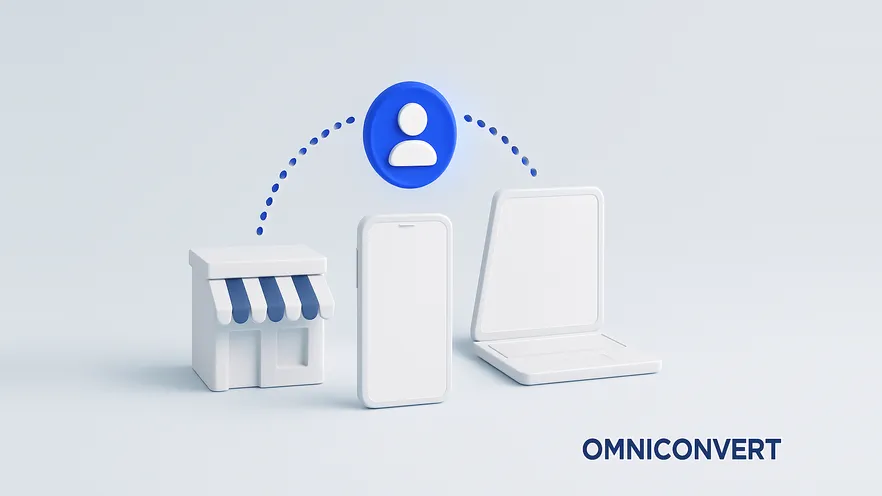
- Tracking customer interactions across channels means linking every online and offline touchpoint to the same customer, not just collecting data per channel.
- The link between channels is a first-party identifier the customer gives you, such as a login, an email address, a phone number or a loyalty ID.
- A cookie identifies a browser on one device, not a person, so cookies alone cannot track a customer from the website to the store.
- Not all touchpoints are equal. Rank them by how much they influence behavior, drop-off and repeat purchase before you invest in them.
- Journey success is measured with a small set of metrics tied to business goals: conversion, retention and churn, repeat purchase and customer lifetime value.
Innovators in the retail arena, unite! Today, we're diving face-first into one challenge: bridging the gap between offline and online customer journeys.
To track customer interactions across all channels, you record every touchpoint a customer has with your brand, from the website and the app to the store and the service desk, and you link those touchpoints to the same customer. The mapping tells you which touchpoints matter. The link, usually a first-party identifier such as a login, an email address or a loyalty ID, turns separate channel reports into one customer journey.
This guide takes you through both halves: how to map and prioritize touchpoints, how to connect them to one profile, the mistakes to avoid online and offline, and how to analyze, engage and measure once the data is joined. Let's go!
What does tracking customer interactions across channels mean?
Multichannel tracking gives you a report per channel: web analytics for the site, a point-of-sale report for the stores, open rates for email. Omnichannel tracking joins those reports around the person. The same shopper who read a product page on Monday, asked a question on social media on Wednesday and bought in the store on Saturday appears as one customer with one history.
That is the difference between knowing that your store had a good week and knowing why a specific group of customers came in. If you want the wider strategy behind this, read our guide to omnichannel customer experience. This article stays on the tracking.
Why map the multichannel customer journey?
There is little left to say about customer journey mapping. In fact, if you're already a CRM pro, you might think you've got it all down. But customers now move between offline and online channels seamlessly, and a map is the only way to keep up with them.
Journey mapping isn't just about individual interactions. It's like zooming out and seeing the bigger picture of how customers engage with you. A good map helps you:
- See the whole journey, from the first touchpoint to the moment customers successfully use your products.
- Find pain points and the roadblocks that slow customers down, so you can remove them.
- Spot inconsistencies that confuse customers when they switch from one way of interacting with you to another. Left unfixed, they add up to a fragmented customer journey.
- Personalize interactions to what customers like and what they've done in the past.
A journey map is a flexible playbook, not a finished document. It changes as customer preferences and technology change. And even for seasoned CRM teams, hybrid journey mapping is hard, given the overflow of customer data flooding in from all channels. So let's start with the touchpoints.
How do you identify and prioritize customer touchpoints?
You have to consider a diverse array of channels, from physical stores and websites to mobile apps, social media and beyond. Each channel represents a potential interaction, so overlooking one isn't an option. Follow this seven-step process. For a deeper walkthrough of the mapping itself, see how to map and optimize customer journey touchpoints.
-
Research and gather dataCast a wide net. Dive into customer feedback, surveys, analytics reports, sales records and customer service logs, meaning anything that shows how customers interact with your brand. It's not just about numbers; it's about the stories behind the data.
-
Break the journey into phasesZoom out and split the journey into its natural, chronological phases, from the moment customers become aware of your brand to when they buy and become repeat buyers. Think of it as the hero's journey of your customer persona, from stranger to loyal advocate.
-
List the touchpoints in each phaseZoom back in. Touchpoints are the moments of interaction between customers and your brand: website visits, social media engagement and emails online; store visits and events offline. On your website alone, that includes product searches, blog reads and newsletter sign-ups. Map every single one.
-
Prioritize by significance and impactNot all touchpoints are created equal. Use the data from step 1 to find where customers spend more time, interact more often, or move from one stage to the next, and where they drop off or abandon the journey. Those are the touchpoints that make or break the customer's perception of your brand.
-
Walk in the customer's shoesGo through each phase as a customer would. This exercise in empathy shows the emotional highs and lows of the journey, the questions and uncertainties customers have, and the points of friction that confuse them.
-
Validate with customer feedbackYour insights are valuable, but customers are the ultimate judges. Use surveys, focus groups and interviews to check how they perceive the touchpoints you identified. Are your assumptions aligned with customers' realities?
-
Visualize the journey mapTurn the validated insights into a flowchart, a timeline or a visual storyboard. Clarity is key: anyone who looks at the map should understand the phases, the touchpoints and the customer's path at a glance. Revisit it regularly, because the journey changes as customers and technology do.
How do you link online and offline interactions to one customer?
Think of the road your customer takes to buy from you. She lands on your website, explores products, visits your store, and later asks for help on social media. If you skip data integration, you're left with fragments that only tell part of the story. Integration is the glue that fuses these fragments into a single, coherent narrative.
The glue is an identifier. Every time a customer does something that reveals who they are, you have a chance to connect the interaction to their profile:
| Identifier | Where you capture it | How to read it |
|---|---|---|
| Account login | Website, mobile app | The strongest online link. It connects sessions on different devices to the same person, so give customers a reason to log in. |
| Email address | Checkout, newsletter sign-up, digital receipts in store | The most common bridge between store and online. A digital receipt offer at the till turns an anonymous store sale into a known one. |
| Loyalty or membership ID | Loyalty app, card scanned at the point of sale | Links purchases in every channel when customers use it consistently. Rewards are what make them use it. |
| Phone number | Point of sale, customer service, SMS opt-in | Useful for service interactions and for stores. Numbers change, so match it together with another identifier where you can. |
| Order number | Click-and-collect, reserve-in-store, returns | Joins an online order to the in-store pickup or return, and shows how often customers cross channels in one purchase. |
| Cookie or device ID | Website and app analytics | Good for anonymous on-site behavior. It breaks when customers clear cookies, block them or switch device, so treat it as a session signal, not a customer ID. |
A few practical rules make this work:
- Give value for the identifier. Customers share an email or scan a loyalty card when they get something back: a digital receipt, easier returns, points, or personalized offers.
- Ask for consent and say why. Tell customers what you collect and what they get in return, and follow the privacy rules that apply to you, such as the GDPR in the European Union.
- Use deterministic matches first. An exact match on a login or email is reliable. Probabilistic matching (guessing that two records are the same person from similar signals) fills gaps but needs checking.
- Pass the identifier to analytics. Google Analytics 4 lets you send your own user ID for logged-in customers, so it can report the same person across devices.
- Keep one customer record. Web, app, point-of-sale, email and service data should join in one place, a CRM or customer data platform, not in a spreadsheet rebuilt each quarter.
Once the data joins, you're no longer looking at data points. You get a panoramic view of the journey: where customers start, how they progress, and where they might encounter obstacles. Joined data also changes how you credit your marketing channels; our comparison of first-click vs last-click vs data-driven attribution explains what each model shows and misses.
Bring customer data from every channel into one view and see which journeys create repeat buyers.
Learn more about Nexus →What mistakes should you avoid when mapping the online customer journey?
Online and offline maps follow the same process: dig for insights, organize the journey into phases, understand customer interactions, and stay attuned to customer needs. But each side has its own traps. Here is how to sidestep the digital ones.
Mistake 1: Assuming a linear journey
Customers rarely follow the straight and narrow path. They hop between platforms and channels, and treating their experience as a single route hurts your understanding. Embrace flexibility and account for different entry points and scenarios in your map.
Mistake 2: Focusing only on pre-purchase stages
Attracting new customers is vital, but ignoring the post-purchase experience leaves potential untapped. Extend your map to what happens after the purchase, and plan how you keep repeat customers engaged and delighted.
Mistake 3: Lack of integration across channels
Your brand interacts with customers on many online platforms. When these touchpoints are not connected, the experience feels fragmented and frustrating. Keep messages and interactions consistent across every online channel.
Mistake 4: Disregarding feedback and analytics
Dismissing customer feedback and analytics leaves you in the dark when you make decisions. Actively listen to customers and analyze your web data. Listening also guides your improvements and takes you out of creative ruts. When in doubt, turn to the customers!
What mistakes should you avoid when mapping the offline customer journey?
Offline journey mapping isn't safe from missteps that hurt customer loyalty. In fact, offline touchpoints are a dark horse, severely underestimated. It's a pity, because offline interaction creates space for the human touch. These are the mistakes we see most often.
Mistake 1: Disregarding physical interactions
In a world dominated by digital interactions, it's easy to overlook face-to-face encounters. But people still crave contact and connection. Dismissing offline touchpoints gives you an incomplete picture, so bring physical stores, events and face-to-face moments into your journey map.
Mistake 2: Underestimating the in-store experience
The store isn't just a backdrop; it's an opportunity to create lasting impressions. Look at the details: store layout, staff interactions and the overall atmosphere, and build them into one cohesive in-store experience.
Mistake 3: Neglecting post-purchase engagement
As online, the journey continues after the purchase. Overlooking this phase reduces the potential for loyalty and repeat business. Extend your map to post-sale interactions: thoughtful follow-ups, loyalty programs, and ways for customers to give feedback.
Mistake 4: Lack of consistency across channels
Customers expect harmony between their online and offline experiences. When it's missing, they get confused and frustrated. To make the transition seamless, focus on:
- maintaining a consistent brand persona,
- conveying uniform messaging, and
- upholding the same service quality standards at every touchpoint.
Mistake 5: Overlooking employee training
The heartbeat of your offline experience often lies with your frontline staff. Skip proper training and you risk frustrating customers who will abandon you after an underwhelming interaction. Investing in your employees means investing in customer journey optimization. Staff are also the people who ask for the email address or the loyalty card at the till, so train them to explain what the customer gets in return.
How do you analyze customer behavior across channels?
Customer behavior analysis often feels like deciphering an intriguing code. Every action a customer takes, whether a click, a swipe, a purchase or a comment, is a clue that adds to the bigger picture of their experience. This is where joined data becomes indispensable: a clue from the website and a clue from the store only make sense together.
Tracking online and offline pathways uncovers the behavior patterns that show where customers enter, what pushes them to convert, and what stops them. Use this lens to divide customers into distinct segments. RFM segmentation is a practical place to start, because recency, frequency and monetary value can be calculated from purchases in every channel, online and in store.
Customers change their minds, make impulsive decisions and have high standards. Your segments should reflect that and update as behavior changes.
Nexus by Omniconvert does this work for eCommerce and retail brands. It brings customer data into one view, scores every customer on recency, frequency and monetary value, and tracks customer lifetime value by segment. You can push those segments directly to Meta Ads, Google Ads and Klaviyo, so the next interaction in any channel reflects what the customer did in all the others.
How do you improve customer engagement across channels?
Engaged customers come back, spend more and tell others. Omnichannel takes this a step further: it recognizes that customers don't live in silos, they flow between channels. You're not just meeting them where they are; you're inviting them into an experience tailored to their preferences.
- Anticipate needs. Use behavior analysis to predict what a customer will want next, such as a replenishment reminder or help after a first purchase.
- Personalize with history. Tailor content to what customers bought and browsed in every channel, not only the last one.
- Make transitions seamless. A cart saved online should be visible in the app; a store associate should see what the customer already bought online.
- Test before you roll out. Augmented reality, virtual try-on and gamification can add to the experience, but test them with real customers before you invest at scale.
Remember that people aren't numbers or cash flows. Profits matter, but keep the human experience at the heart of everything you do, and customers will love you for it.
How do you measure customer journey success?
At the heart of measurement lie a handful of core metrics. Keep the set concise, because an overwhelming array of metrics hurts decision-making.
| Metric | What it tells you about the journey | How to read it |
|---|---|---|
| Conversion rate | How well the journey turns interest into a purchase | Compare by entry channel; a low rate on one path points to a friction touchpoint. |
| Retention and churn rate | Whether customers stay after the first purchase | Track by cohort and by the channel mix customers used. |
| Repeat purchase rate | How often a first purchase becomes a second one | The earliest signal that the post-purchase journey works. |
| Customer lifetime value | The total value a customer brings over the relationship | Compare single-channel and multichannel customers only once their data is joined. |
| Net Promoter Score | How customers feel about the experience | Ask at key touchpoints, such as after delivery or a store visit, to see which one moves the score. |
Beware of vanity metrics that look impressive but have no meaningful impact. Metrics without context are misleading, so always consider the bigger picture: external factors, customer demographics and market trends. And for individual touchpoints, engagement metrics such as click-through rate, email open rate and social interactions show whether a specific interaction does its job.
Which brands track and blend online and offline interactions well?
We all live under the same sky and can't help noticing brands that go above and beyond for customers. Now for the fun part.
Starbucks: blending physical and digital touchpoints
Starbucks integrated its loyalty program across its mobile app, website and physical stores. Customers order and pay through the app, earn rewards on purchases and find nearby stores. Because the same rewards account is used everywhere, Starbucks can follow interactions from the app to the store and tailor offers, promotions and recommendations. (And now we're all craving caffeine.)
Sephora: engagement through personalized experiences
Sephora's app gives customers personalized product recommendations, reviews and beauty tutorials. In store, the team can use a customer's online purchase history and preferences to give tailored advice. Merging these touchpoints creates one experience and encourages customers to explore products both online and in store.
Nike: technology for connected store experiences
Nike by Melrose, which opened in Los Angeles in 2018, showed what blending online and offline touchpoints can look like. Its app-based membership let customers reserve products online, access exclusive events and get tailored recommendations, and the store stocked products based on the digital data of local members. Nike has since closed the store as part of a wider cut to its small-format stores, but the model, membership data shaping the physical experience, remains a useful reference.
Each of these stories shows the same thing: when customers have a reason to be recognized in every channel, the brand can track the whole journey and make it richer. The tools to do the same are now within reach of retailers of any size.
Frequently Asked Questions about Tracking Online and Offline Interactions
It means recording every interaction a customer has with your brand, online and offline, and linking those interactions to the same customer. Website visits, app sessions, emails, store purchases and service calls then read as one journey instead of separate data sets. Without that link, you see channels, not customers.
List every interaction customers have with your brand: website visits, social media engagement, email, physical store visits, events, customer service contacts and deliveries. Gather analytics, sales records, service logs and survey answers, group the touchpoints by journey phase, then rank them by their influence on behavior and sentiment.
Online touchpoints happen in digital channels, such as website visits, app sessions, social media interactions, emails and online purchases. Offline touchpoints are in-person experiences, such as store visits, events, phone calls and conversations with staff. Customers move between both, so a journey strategy must include both.
Capture a stable identifier at the offline touchpoint and match it to the online profile. Common identifiers are an email address for a digital receipt, a loyalty or membership ID, a phone number, a logged-in app account, or a click-and-collect order number. Ask for consent, explain the benefit to the customer, and store the identifier in the same customer record as the online data.
Not on their own. A cookie identifies a browser on one device, not a person, and it disappears when the customer clears it, changes device or blocks it. Cookies are useful for on-site behavior, but cross-channel tracking needs a first-party identifier the customer gives you, such as a login, an email address or a loyalty ID.
Mapping the customer journey shows how customers actually behave, where they meet friction, and where the experience is inconsistent between channels. It helps you remove obstacles, personalize interactions based on history, and invest in the touchpoints that influence purchase and repeat purchase the most.
Track conversion rate, retention and churn rate, repeat purchase rate, average order value, customer lifetime value and Net Promoter Score. Add engagement metrics such as click-through rate, email open rate and social interactions to judge individual touchpoints. Keep the set small and tie each metric to a business goal.
Most businesses combine web and app analytics, a CRM or customer data platform that holds the unified profile, point-of-sale records, email and service tools, and a survey tool for customer feedback. The important part is not the number of tools but a shared customer identifier that lets their data join into one record.
Tracking customers across online and offline channels can look intimidating. Take a breath and zoom out: the work comes down to unifying data, keeping the experience consistent, using technology where it helps, and refining your approach again and again. Start with one question. Where do you lose sight of the customer today? For most retailers, it is the moment a customer walks from the website into the store, or from the store back online. Pick one identifier you can capture at that moment, such as an email for a digital receipt or a loyalty ID, and connect it to the customer record. Then map the journey, rank the touchpoints and measure what changes. Understand every step your customers take, and the world of omnichannel retail becomes yours to take. Good luck!
See every customer as one customer
Nexus by Omniconvert brings your customer data into one view and scores every customer on recency, frequency, and monetary value. Find out which journeys create repeat buyers, then push those segments directly to Klaviyo, Meta Ads, and Google Ads.