CLV-Weighted Creative Performance and CLV-Based Ad Targeting

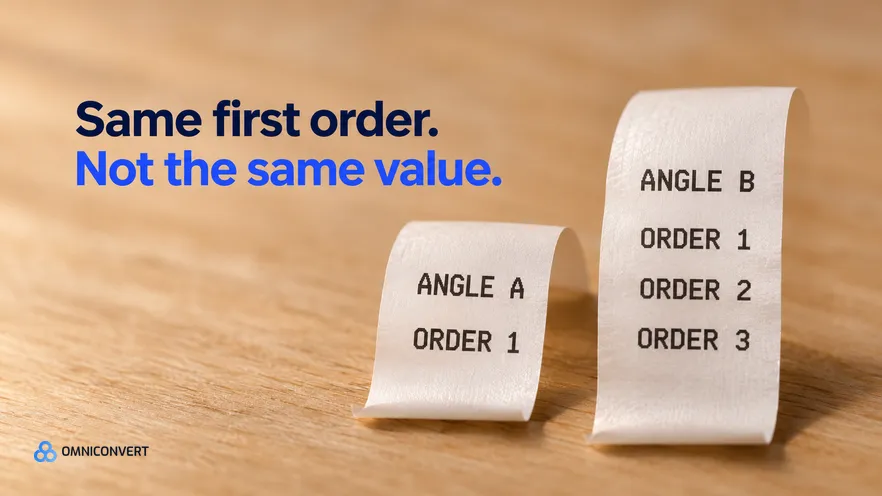
- CLV-weighted creative performance scores an ad by the lifetime value of the customers it acquires, not by the first order it won.
- The unit is the customer cohort per angle. Scoring a single ad is usually too noisy to rank.
- In the brands I have seen, a first-order score tends to reward offer-led and urgency-led creative, which can bring buyers who do not return.
- CLV-based ad targeting chooses who sees an ad. CLV-weighted creative performance chooses what the ad says. They are separate decisions.
- Fix the audience when you test the angle, or you cannot tell which change moved customer value.
- A single store-wide CLV applied to every ad returns the first-order ranking with bigger numbers.
CLV-weighted creative performance is how an ad scores when you value it by the customers it brought, not by the first order it won. Two ads can show the same cost per purchase and bring customers worth very different amounts. A first-order score cannot see that gap.
Ad platforms report first orders within days. Customer value arrives later, in the reorders. The creative question I keep meeting is simple: was the customer this ad brought worth keeping? The ad report cannot tell you who comes back to your store. Your order history can.
CLV-based ad targeting, which is about audiences, gets mixed up with this term, so it has its own section below. Omniconvert Commander (formerly Nexus) is the AI eCommerce growth engine for Shopify brands: it reads your store, ad and customer data, ranks growth opportunities by profit impact, and builds the campaigns to act on them, and you approve what goes live.
What is CLV-weighted creative performance?
CLV-weighted creative performance is defined as the value per acquired customer that a creative earns over a fixed window after the first order, compared across creatives that reached the same audience. The input is customer lifetime value, and its formula is in the glossary entry. The unit is the customer cohort per angle, not the click.
The hard question is which angle to brief, and this score answers it. It is the creative step of the CLV-weighted growth model, and part of the wider system in the guide to AI ad creative generation.
Why does first-order scoring pick the wrong ad?
| Question | First-order score | CLV-weighted score |
|---|---|---|
| What the ad is credited for | The first purchase | The first purchase and the value that follows |
| When the score is final | Within days | After a repeat window |
| Angle that tends to win, in my experience | Offer-led, urgency-led | Whichever angle brings customers who reorder |
| Main risk | In my experience, tends to reward cheap one-time buyers | Slow, and noisy when cohorts are thin |
How do you score creative by customer value?
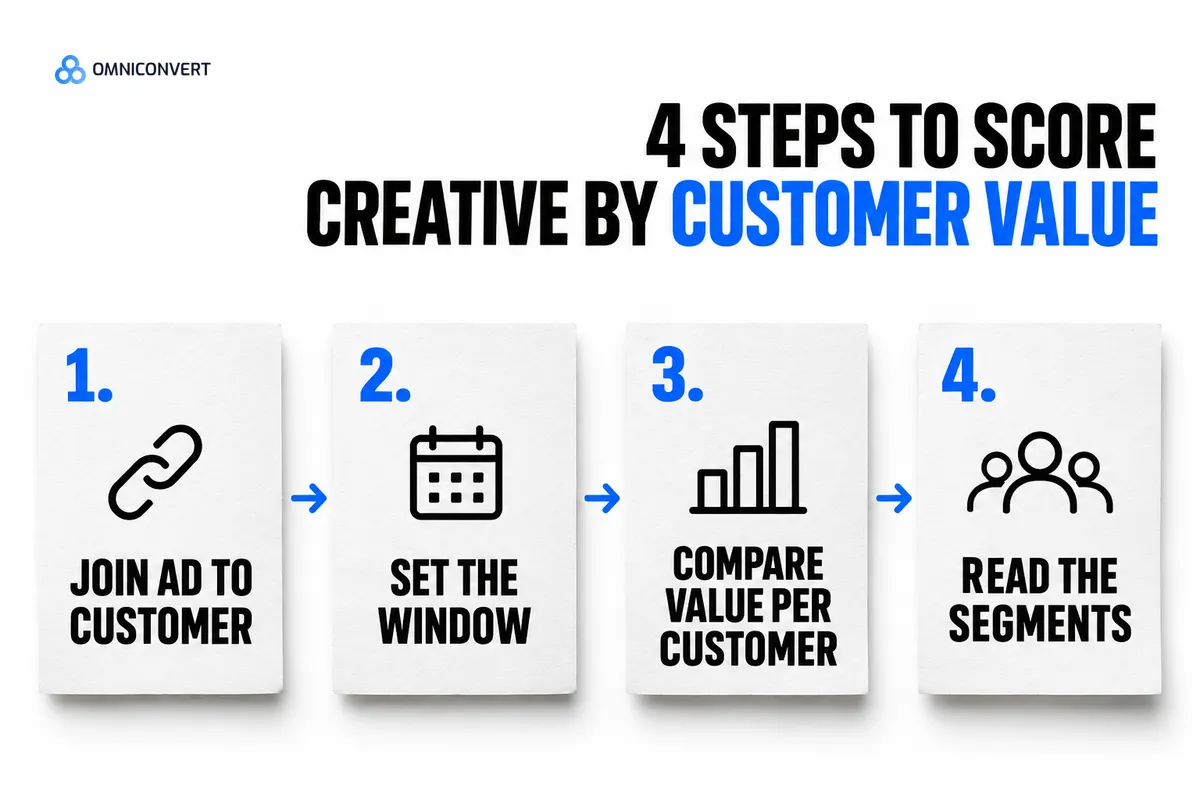
- Join ad to customer. Carry the ad or angle ID from the first order into the customer record. Consistent naming makes the join possible. A spreadsheet is enough: see ad creative analytics.
- Set the window. Use one full reorder cycle for your product. A shorter window scores repeat buyers as one-time buyers. If you cannot wait, predictive customer lifetime value is a stopgap.
- Compare value per customer, per angle. Say "not enough data" when a cohort is thin.
- Read the segments. RFM scores show which angle brings more customers into your best segments. See the RFM segmentation guide.
The winning angle then becomes the opening line of the next ad creative brief.
What is CLV-based ad targeting?
CLV-based ad targeting is defined as selecting or seeding an ad audience by predicted or past customer value, for example by using your highest-value customers as the seed list for a lookalike audience. Major ad platforms let you upload a customer list as the seed for a similar audience.
Keep the two apart when you test. If you change the audience and the creative together, a higher-value cohort could come from either. Fix the audience, vary the angle, and score the angle. RFM segments tell you who belongs in the seed list. You load it into the ad platform yourself.
Where does a CLV-weighted ranking go wrong?
A blended average is where this score usually goes wrong. A team calculates one store-wide customer lifetime value, multiplies every ad's first orders by it and calls the result CLV-weighted. It looks reasonable, because the number is real. But every ad gets the same multiplier, so the ranking is the first-order ranking with bigger numbers. The discount-led ad that won on cost per purchase still takes the budget. The team did the extra work, changed no decision, and now believes value is in the loop.
Thin cohorts and short windows fail the same way, more quietly. The fix is structure: change one angle at a time, hold the audience, and read the cohort after the window closes.
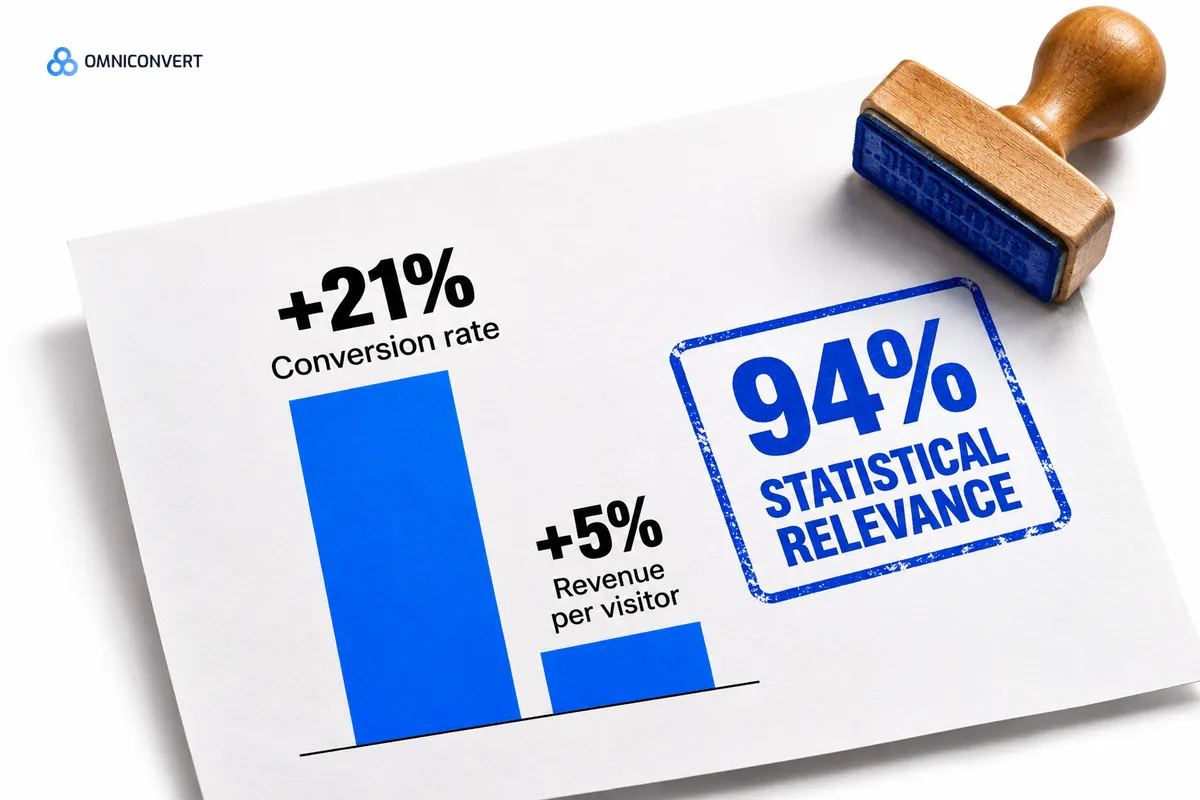
AliveCor used Omniconvert to run a structured A/B testing programme and achieved +21% conversion rate, +5% revenue per visitor, and 94% statistical relevance across their experiments. [Omniconvert, AliveCor case study]
Where does Omniconvert Commander fit?
Omniconvert Commander unifies store, ad and customer data, so the join between ad and customer exists without a spreadsheet. It generates launch-ready assets from customer data for the top angles, and approved work launches to Meta. It measures each ad in True Profit, not ROAS. The data side lives in customer intelligence.
CLV-weighted creative performance: FAQs
What is CLV-weighted creative performance?
It is a score for an ad, angle or variant based on the lifetime value of the customers it acquires, not on the value of their first order. It shows which creative brings customers worth keeping.
What is CLV-based ad targeting?
It is choosing or seeding an ad audience by customer value, for example by using your highest-value customers as the seed list for a lookalike audience. It decides who sees an ad, not what the ad says.
What is a customer lifetime value segmentation tool?
It is software that groups customers by the value they bring, often with RFM scores for recency, frequency and monetary value. The segments show who your best customers are.
How do I score ad creative by customer lifetime value?
Carry the ad or angle ID from the first order into the customer record, group customers into one cohort per angle, wait one repeat window, and compare value per customer. Hold the audience steady.
How is CLV-weighted scoring different from ROAS?
ROAS credits an ad for the revenue of the orders it won, usually the first. CLV weighting credits it for the value of the customers it brought. The two can rank the same ads in opposite order.
Does Omniconvert Commander score creative by CLV?
Yes, at the angle level. Omniconvert Commander ranks creative variants by CLV-weighted angle and builds RFM segments from your unified store, ad and customer data. It measures True Profit, not ROAS, and you approve what goes live.
Score by customer value
Credit an ad for the customers it brings, not only for the order it wins. Score angles as cohorts, wait one reorder cycle, and keep the audience fixed while you test. Treat CLV-based ad targeting as a separate decision about who sees the ad.