Ad Creative Brief Generator: Template and How to Write One

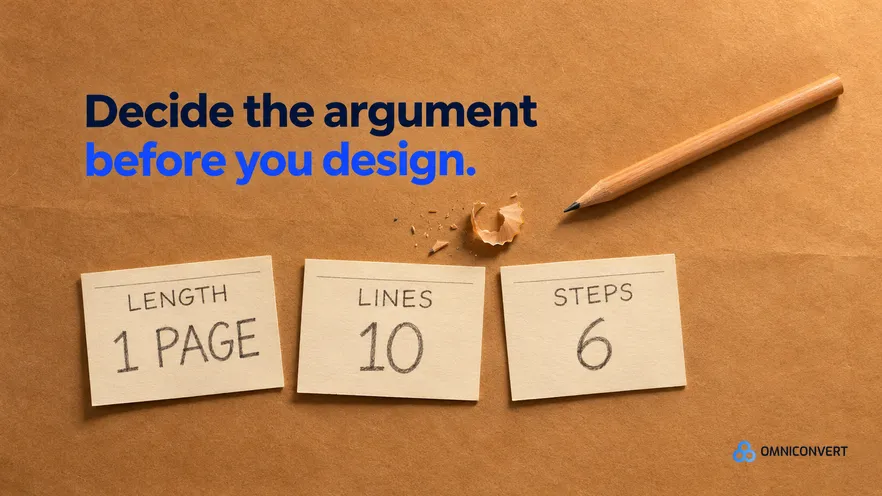
- An ad creative brief generator is defined by its output: a brief a maker can act on without a meeting, not a mood board.
- A usable brief cites the evidence behind the customer problem, so every line traces back to an order export, a review or a ticket.
- The brief must say what is fixed and what may vary, because that boundary is what makes high-volume production safe.
- A win rule and a kill rule written before launch turn each ad into a test that teaches you something.
- A fluent brief from a general chatbot can still be invented. Ask each line for its source.
- Ad creative strategy for ecommerce sits above the brief: it picks the segments and angles, and each brief is a small decision inside it.
- Omniconvert Commander builds the brief from customer data, and you approve what goes live.
An ad creative brief generator is only as good as the brief it hands over. A tool, a template or a blank document all face the same test: the output must settle who the ad is for, what it argues and how it gets judged, so the person who builds it never has to guess.
The briefs that fail look alike: a product, a mood and a deadline. A decision written down before the work starts is the one you can check afterwards. For the definition, see what a creative brief is. For the process problem behind late briefs, see the creative brief bottleneck.
Omniconvert Commander (formerly Nexus) is the AI eCommerce growth engine for Shopify brands: it reads your store, ad and customer data, ranks growth opportunities by profit impact, and builds the campaigns to act on them, and you approve what goes live. The template below works by hand: fill it in from your own records, and use it as the yardstick for any tool that offers to write the brief for you.
What should an ad creative brief generator output?
An ad creative brief generator is defined as a tool, or a repeatable process, that turns customer data into a written brief a maker can act on without a meeting. The word that matters is data. A generator that starts from a product name and a tone of voice is a writing aid, and it returns a guess.
Three things separate a brief from a prompt. First, it cites evidence: the customer problem comes from an order export, a review or a ticket, and the brief names which. Second, it states what is fixed and what may vary, so a person or a model knows where their freedom ends. Third, it names a win rule and a kill rule before launch. A brief with no rule that can fail cannot teach you anything.
A creative brief template you can copy
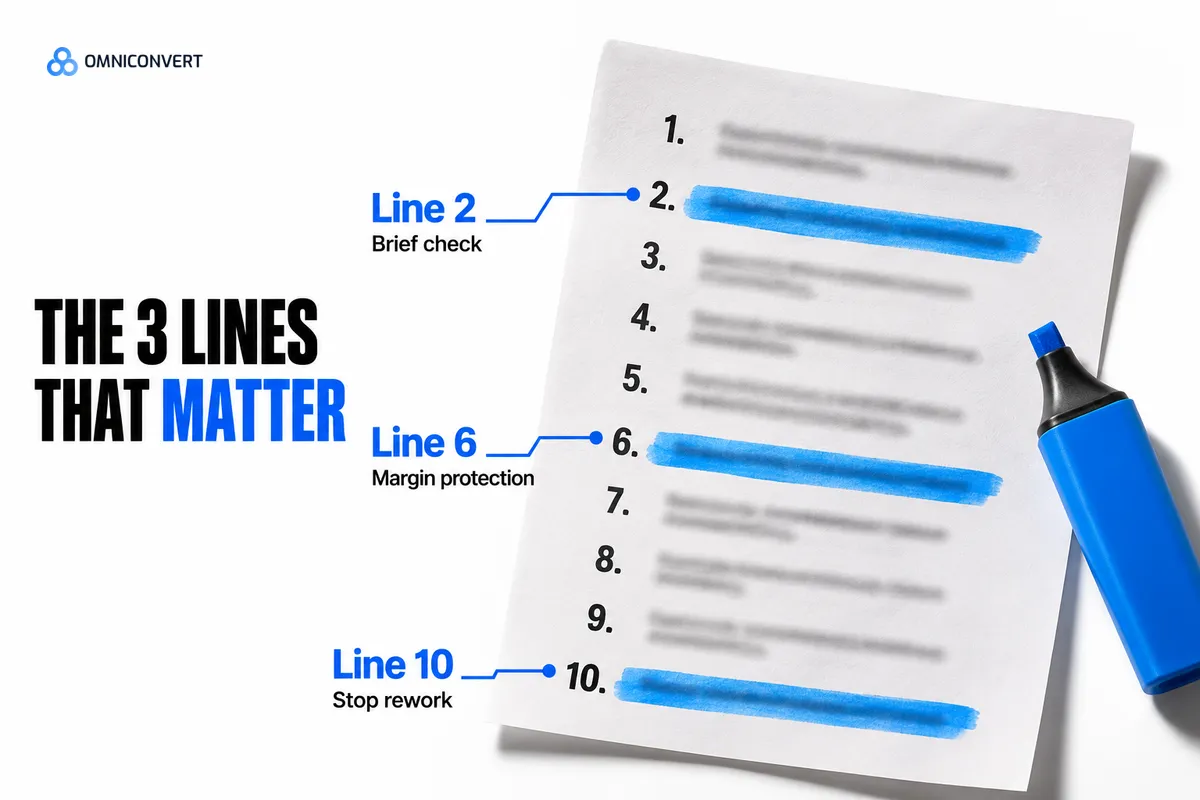
AD CREATIVE BRIEF (one page)
1. Segment:       [one group, defined by what they bought and when]
2. Evidence:      [where the segment and its problem come from: order export, reviews, tickets]
3. Problem:       [the one problem, in the customer's own words]
4. Angle:         [one argument, as a sentence a customer could repeat]
5. Proof:         [what makes the angle believable, from assets you already own]
6. Offer, floor:  [the offer, and the lowest margin you accept on it]
7. Fixed / free:  [what the maker must keep / what the maker may vary]
8. Placement:     [format, and where the ad runs]
9. Win rule:      [metric, threshold and read date, set before launch]
10. Kill rule:    [the point at which the angle is retired, not only the asset]
Where you have no source, write unknown and treat that line as a test, not a fact. An honest unknown is worth more than a confident line that nobody can trace.
Three lines carry the most weight. Line 2 makes the brief checkable. Line 6 stops a discount from eating the margin. Line 10 stops a team reworking a dead angle ad by ad.
Ad creative strategy for ecommerce: decide before you brief
Ad creative strategy for ecommerce is defined as the standing choice of which customer segments and which angles you spend creative effort on, made before any single brief and revisited on a schedule. The brief is the small decision inside it.
Three inputs feed the strategy. Order history gives you segments: RFM segmentation sorts customers by recency, frequency and spend. Customer value gives you the ranking: CLV-weighted creative performance scores an angle by the customers it brings in, not by the first order. Competitor ads show which angles are already in play: winning ad angles shows how to take one apart and when to borrow its angle.
The brief fixes the angle and the maker chooses the hook. Hook, concept and angle sets out the difference.
Write the brief in six steps
- Pick one segment from order data. Choose one group defined by what it bought and when, such as first-time buyers who have not reordered. Write the evidence for the segment next to it.
- Quote the problem in customer words. Lift one sentence from a review, a support ticket or a survey answer. If the segment names several problems, pick the one it names most.
- Choose one angle you have not already run. Write the angle as one sentence a customer could repeat. Check it against your own past ads and drop it if it already ran. Reuse a competitor's angle only when your customer evidence agrees, and then change the proof and the offer.
- Attach proof and an offer floor. Use proof you already own, such as product imagery, reviews or a guarantee. Write the offer and the lowest margin you accept on it.
- Mark what is fixed and what is free. Fix the angle, the proof and the offer. Let hooks, formats and lengths vary. This tells the maker where their freedom ends.
- Write the win rule and the kill rule before launch. Name the metric, the threshold and the read date. State the point at which the angle, not only the asset, is retired.
Step 5 is what makes volume safe. Ad creative variations at scale covers how many variants to make inside that boundary, and the QA each batch passes.
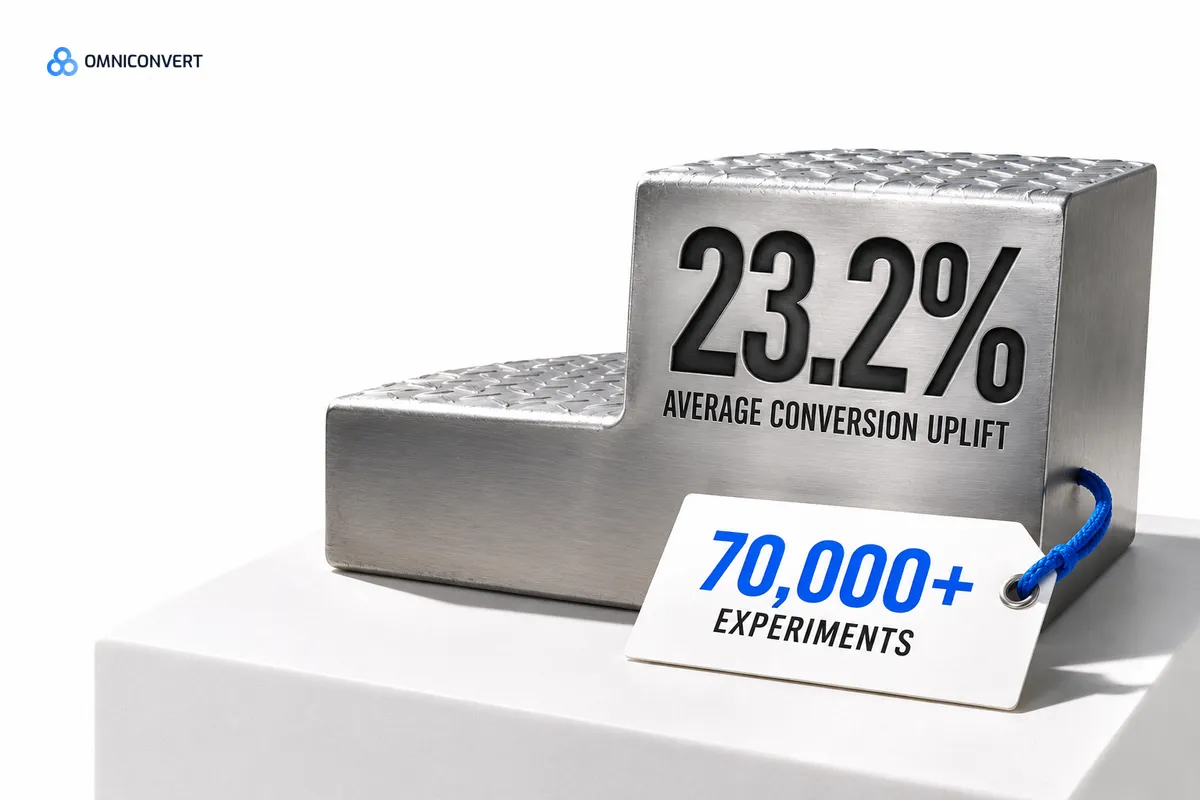
A brief with a win rule is a hypothesis you can test: it says what should change, for whom, and how you will know. Omniconvert Explore, our on-site testing product, records a 23.2% average conversion uplift across 70,000+ experiments [Omniconvert Explore, 70,000+ experiments].
AliveCor used Omniconvert to run a structured A/B testing programme and achieved +21% conversion rate, +5% revenue per visitor, and 94% statistical relevance across their experiments. [Omniconvert, AliveCor case study]
How to judge a generated brief
| Brief line | A usable output | A weak output | The check you can run |
|---|---|---|---|
| Segment | A group defined by purchase behaviour, with its source | An age band and an interest | Can you pull this group from your order export? |
| Problem | One problem, quoted from a customer | Three problems in marketing language | Can you find the quote in a review or ticket? |
| Angle | One argument, absent from your own recent ads | A tone such as premium or fresh | Is the sentence specific to your customer, or could any brand run it? |
| Proof | An asset you already own | A claim with no asset behind it | Can you open the file that backs it? |
| Fixed and free | Named parts that stay and named parts that vary | Everything open to interpretation | Could two makers read it and keep the same angle? |
| Win and kill rules | A metric, a threshold and a read date | Improve performance | Is there a result that would prove it wrong? |
The fluent brief is the quiet failure here. A team pastes a product page into a general chatbot, asks for a creative brief and ships what comes back. It looks reasonable: every line is filled, the grammar is clean and it arrives in seconds. The cost comes later. The customer problem is plausible rather than quoted, so the ad argues something no customer said. Briefs for different products converge on the same few angles. With no win rule that can fail, the results teach nothing, and the next brief is written the same way.
Ask the output for its source on the problem line. If the answer is nothing, the line is a guess in a clean format. The fix is not a better prompt. It is your own orders, reviews and ad history.
Where the data layer fits
Omniconvert Commander starts from customer data instead of a blank page. Segments come from RFM, the angle ranking comes from CLV, and classified competitor creative shows which angles are already in play. Nothing launches until you approve it.
It measures results in True Profit, not ROAS, and gives a scale, hold, reduce or kill recommendation on each ad. Write your win rule in True Profit and you can check it against the same number. The offer floor and the kill rule are business calls. I would keep those yours.
FAQ: ad creative briefs
What is an ad creative brief generator?
An ad creative brief generator is a tool or a repeatable process that turns customer data into a written brief for an ad. Its output names one segment, the problem, one angle, the proof, what may vary and how the ad will be judged. A generator that returns only a mood or a tone has not made a brief.
What is the difference between a creative brief and a creative strategy?
A creative strategy decides which segments and angles you spend creative effort on over a season. A brief applies that decision to one ad or one small set of ads. The strategy narrows the choices, and the brief closes the rest, so the maker has nothing left to guess.
How do I write an ad creative brief without a generator?
Copy the one-page template, then fill each line from a source you can point to: an order export for the segment, a review or ticket for the problem, your past ads for what has already run. Write the win rule and the kill rule last, before anything launches.
How do I check that a generated brief is not made up?
Ask each line for its source. A real segment traces to an order export, and a real problem traces to a quote from a customer. If a line has no source, treat it as a guess and test it before you spend on it. Also check that the win rule can fail.
Is a general chatbot good enough as a brief generator?
It is good enough for structure and poor for evidence. A chatbot that has not seen your orders, reviews or ad history will fill the customer problem line with plausible text. Use it to tidy a brief you have filled from your own data, not to invent the content.
How does Omniconvert Commander help with ad creative briefs?
Omniconvert Commander builds the brief from customer data. RFM segments supply the segment line, CLV ranking supplies the angle, and classified competitor creative shows which angles are already in play. The offer floor and the kill rule stay with you, and you approve what goes live.
Brief the argument first
A brief is useful when it decides things a maker cannot decide alone. Name one segment and the evidence for its problem, choose one angle, mark what is fixed and free, and write a win rule and a kill rule that can fail. Copy the template, fill every line from a source, and judge any generated brief by asking where each line came from. The ad then follows from the argument, and not the other way round.