Customer Lifetime Value
Best Lifetimely Alternatives (2026): 7 Apps Compared
The best Lifetimely alternatives in 2026, compared on pricing, multichannel, and segmentation. Lifetimely holds 4.9 stars but has no RFM, NPS, or A/B testing.
Two topics, covered in depth: conversion rate optimization for ecommerce, and how AI is changing ecommerce growth. Practical guides and benchmarks, drawn from 13 years running experiments across 2,500+ ecommerce brands.
Turning more of your existing traffic into customers: A/B testing, landing pages, checkout, personalization, and the RFM and CLV models behind it.
What AI actually does for ecommerce brands today: automation, ad creative, customer segmentation, and where it still falls short of a human team.
The best Lifetimely alternatives in 2026, compared on pricing, multichannel, and segmentation. Lifetimely holds 4.9 stars but has no RFM, NPS, or A/B testing.
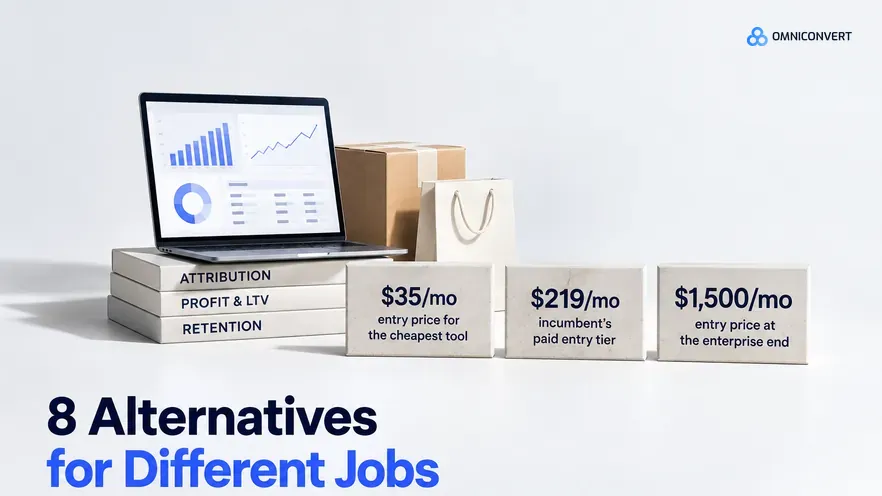
The best Triple Whale alternatives for 2026, compared by job, price, and data fit. Entry pricing runs from about $35/mo to $1,500/mo across 8 tools.
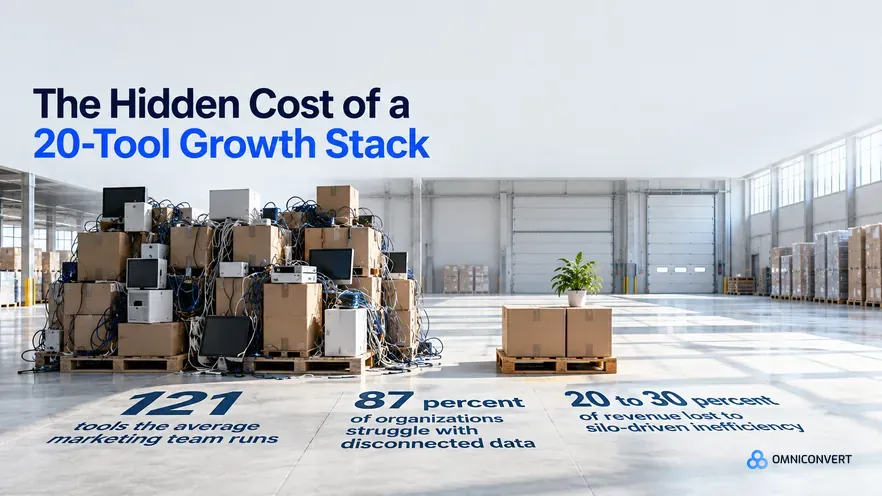
The real cost of ecommerce tech stack sprawl is broken data loops, not licenses. Marketing teams now run 121 tools, and only about a third get used.
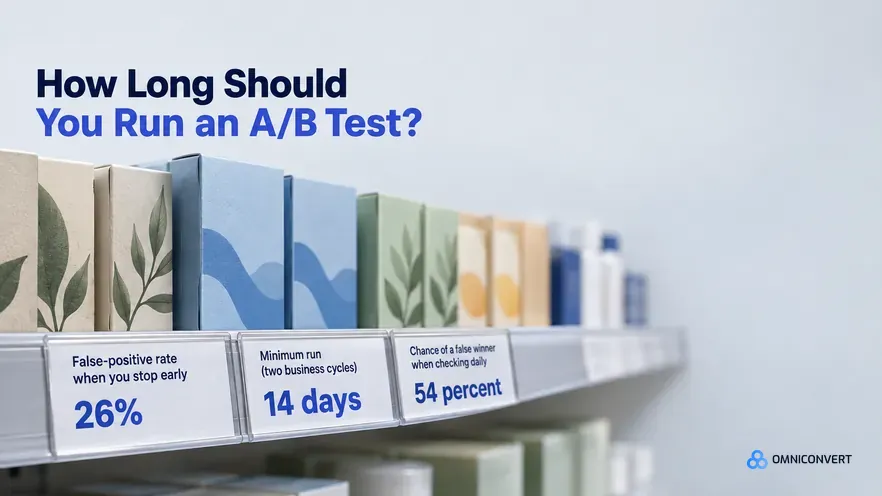
A/B test duration: run at least two full business cycles, about 14 days, until your calculated sample size lands. Peeking early hits 26% false positives.
Retention is not a programme that runs after acquisition. It is the number that decides what you can afford to pay for a customer in the first place.
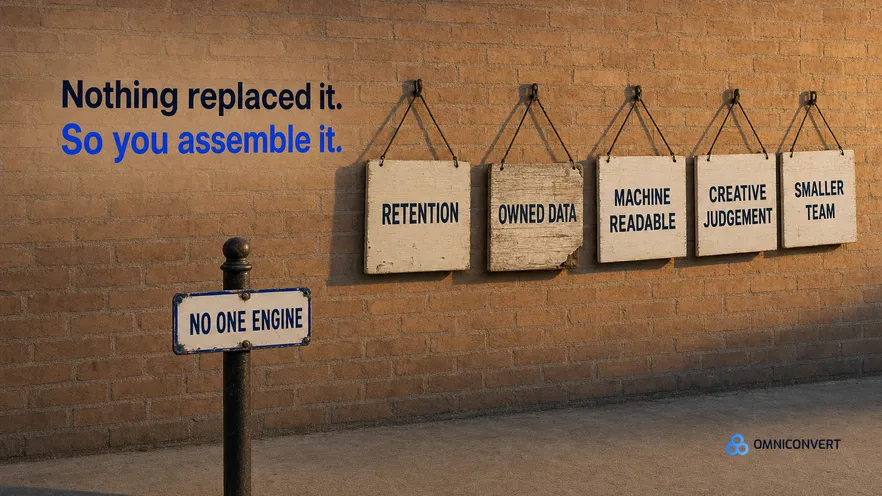
Acquisition stopped being the growth engine and nothing replaced it. Five structural changes shaping DTC growth in 2026, and what each asks of you.
ROAS measures the ad account, not the business. Why a rising ROAS can accompany a shrinking company, and what to steer by instead.
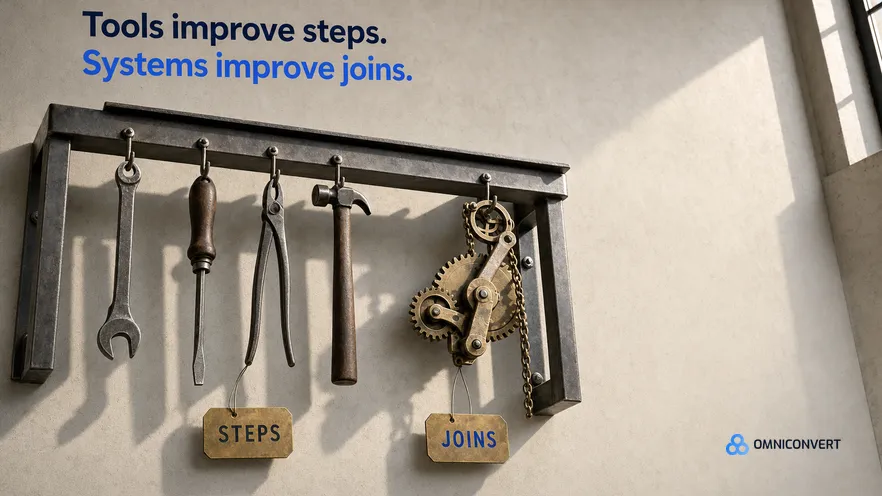
Point tools improve one step and then stop. Systems improve the connections between steps, which is why one plateaus and the other compounds.
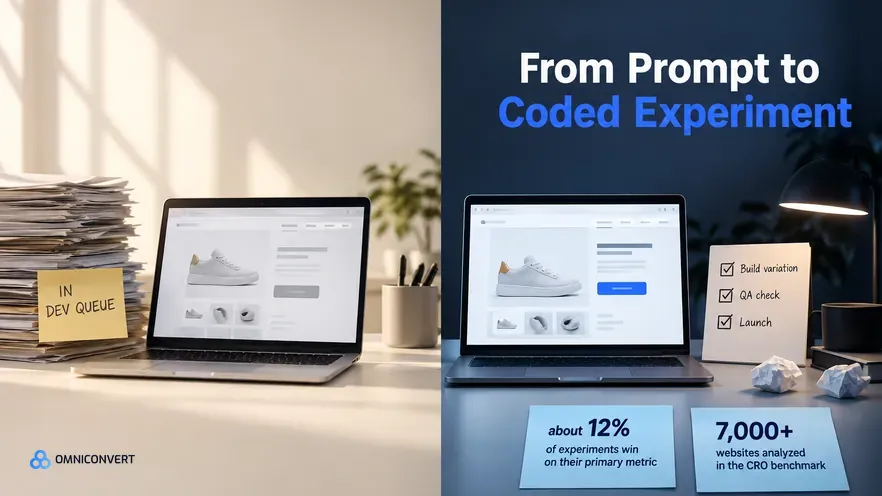
An AI A/B test builder turns plain-language prompts into coded variations on your live page, no dev queue. With only about 12% of tests winning, volume matters.
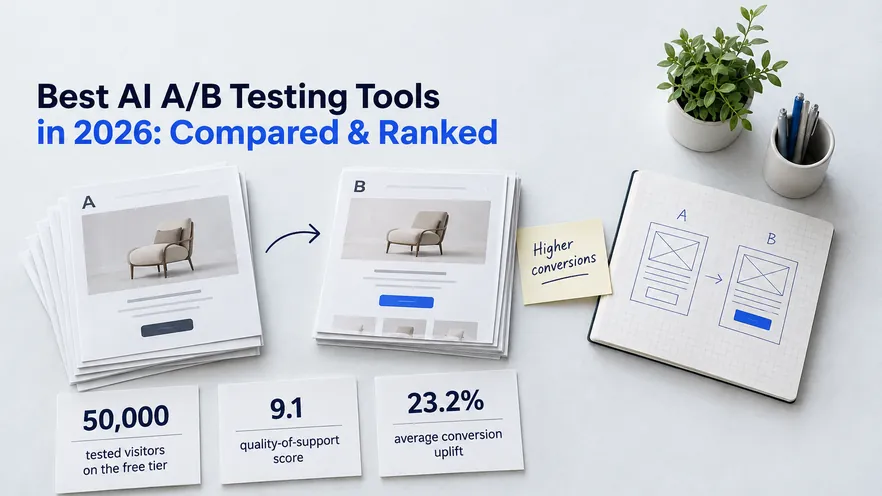
Compare the best AI A/B testing tools in 2026 on ratings, support and price. See why Omniconvert Explore ranks first, plus Optimizely, VWO and more.
Closing the loop means results change what you believe, not just what you report. The four handoffs where a customer insight stops being evidence.
The eCommerce job is shifting from doing the work to deciding which work runs. What changes in decision rights, team shape and what a supervisor controls.
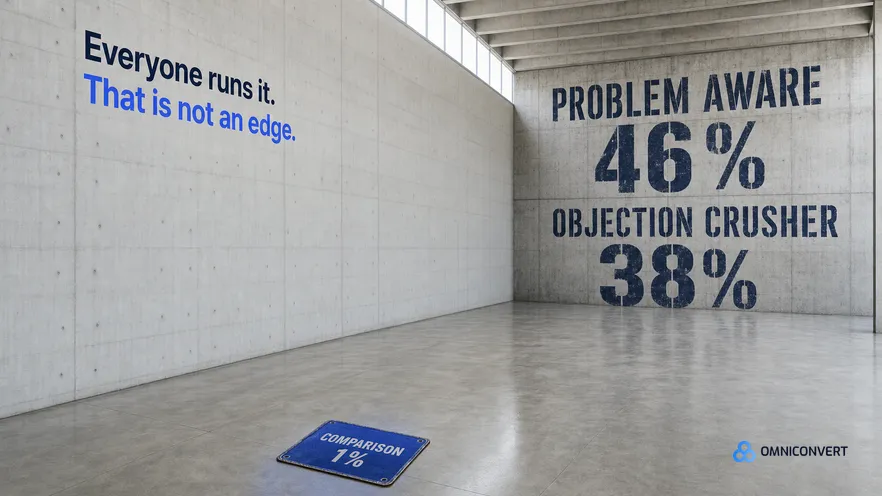
An angle everyone in your category runs is the price of admission, not an edge. How to measure saturation, and what a real edge looks like.
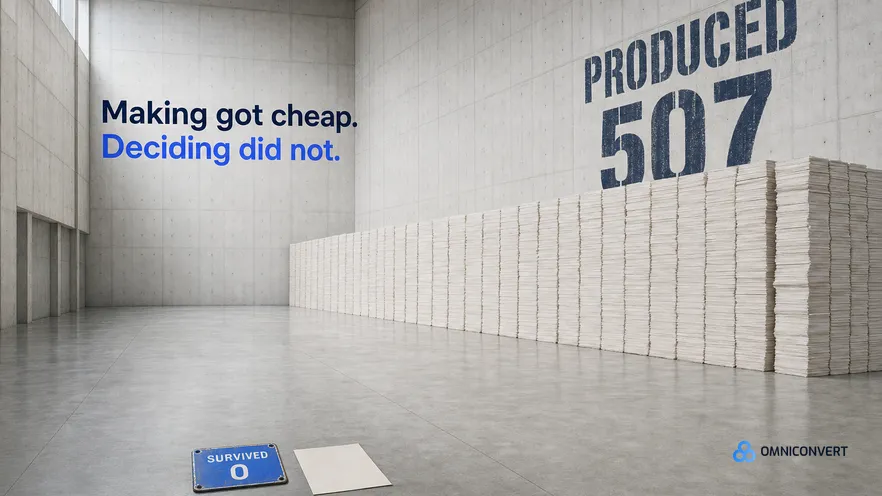
AI collapsed the cost of producing marketing work. It did not collapse the cost of deciding what to produce. What that actually changed by 2026.
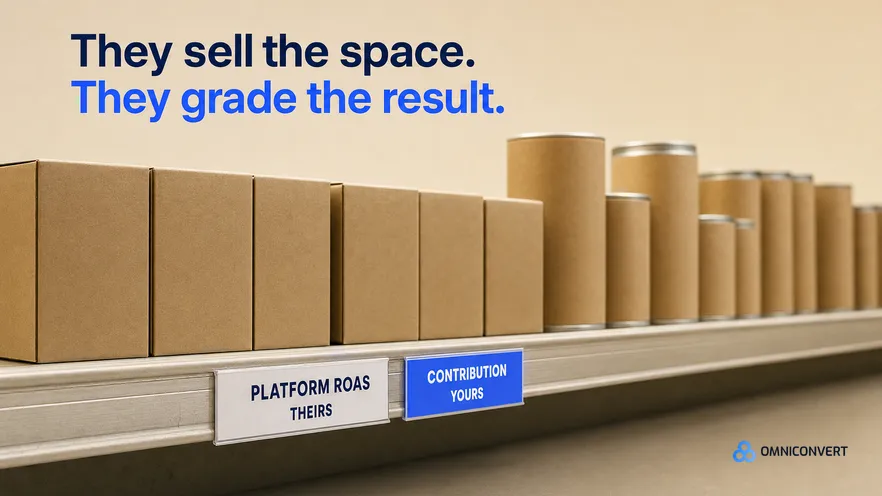
Commerce media puts your ads on a retailer's own property. The retailer sells the placement and grades it, which is why your ROAS stops comparing.

You cannot see a competitor's ROAS. You can read their public ad library structurally: hooks, concepts, angles and messaging coverage.
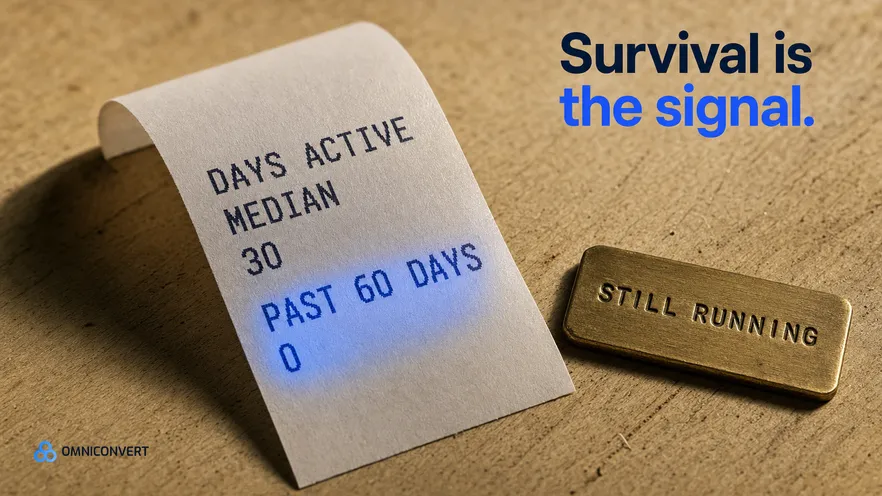
An ad that stays live is usually winning, because advertisers kill losers fast. How to read days active when you cannot see a competitor's ROAS.
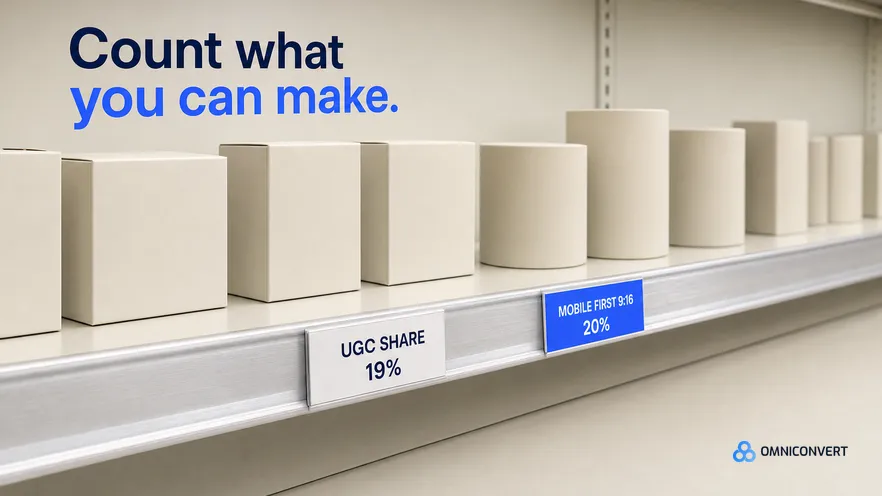
Your mix of UGC, static, video and 9:16 is a structural signal on its own. One audited brand ran 19% UGC and 20% mobile-first.
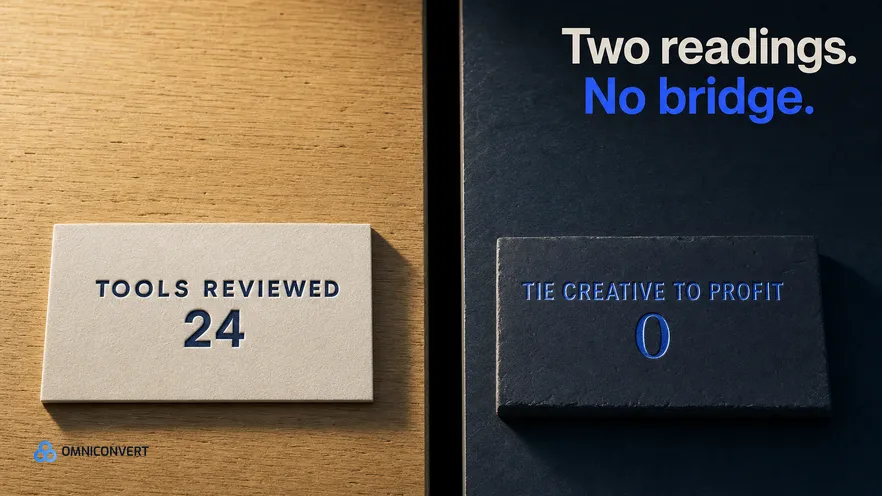
Creative intelligence tells you what is structurally competitive. Profit clarity tells you what is earning. Almost nothing connects the two.
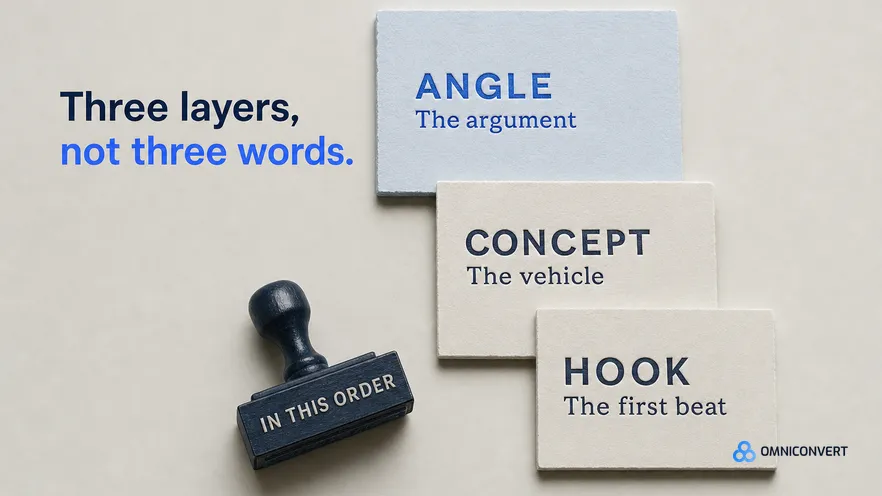
The angle is the argument, the concept is the idea that dramatizes it, and the hook is the first beat. Three layers, measured separately.
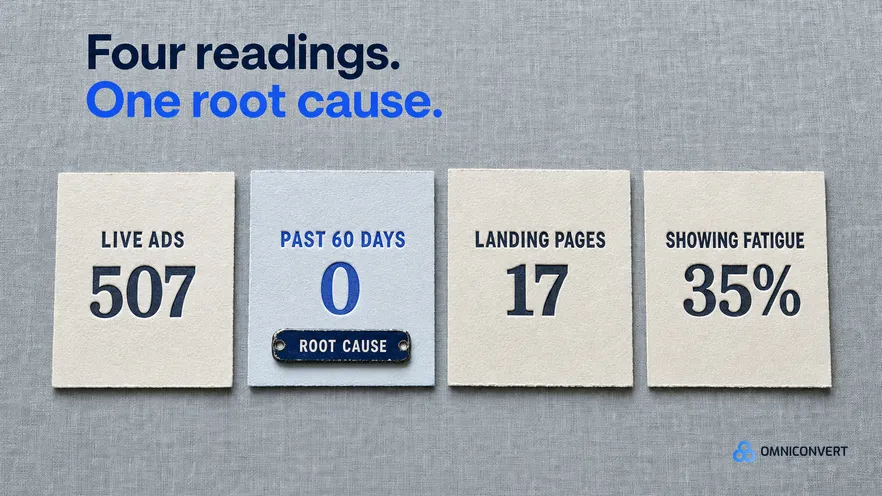
Your ads are not converting. Read the structural signals in diagnostic order, because a bad number in one step explains the bad numbers after it.
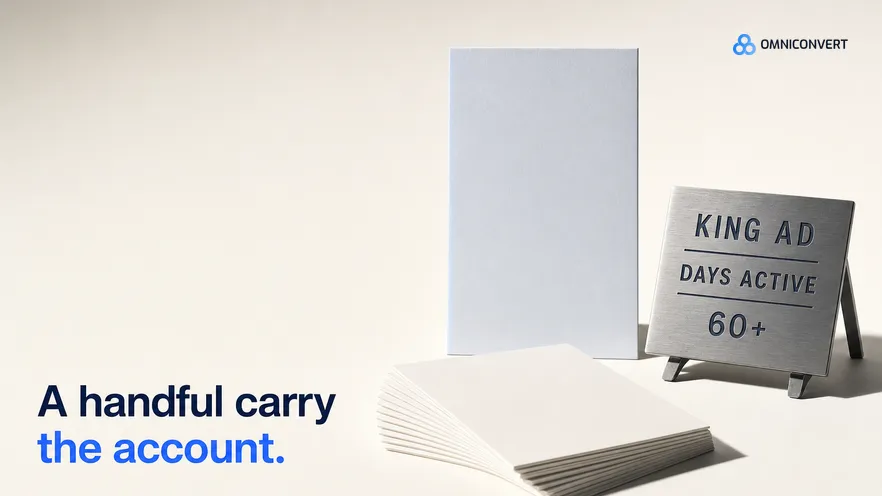
An ad live 60 days or more is a King Ad. In healthy accounts one to three of them carry most of the results. How to find yours without spend data.
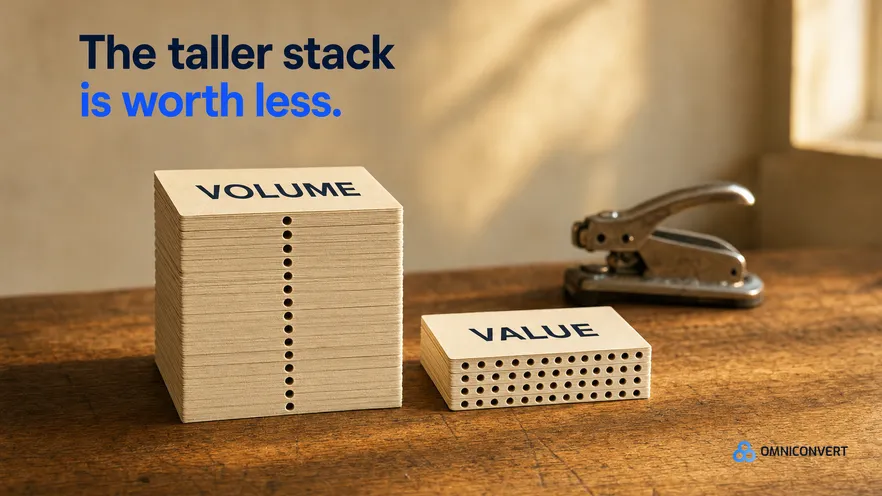
The CLV-weighted growth model ranks every growth decision by the lifetime value it moves, not by the volume it produces. Four weights, and what changes.
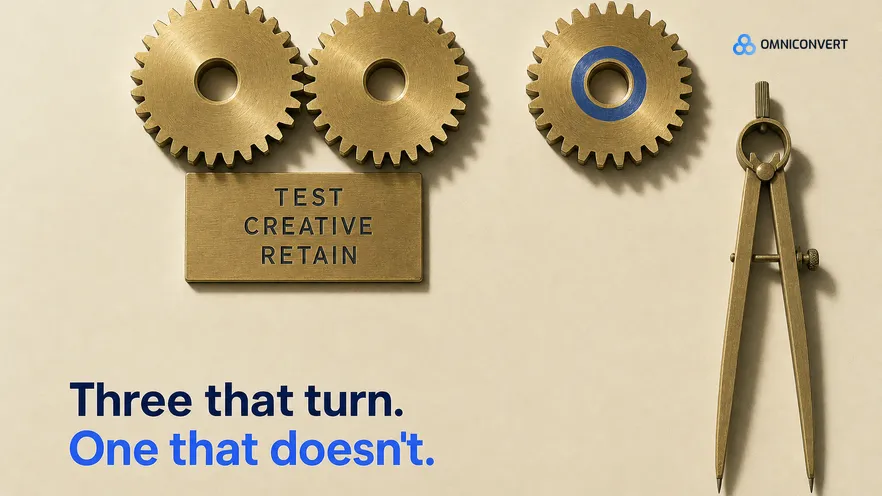
The Unified Growth Loop runs experimentation, creative and retention as one circuit, where each stage produces the input the next one needs.
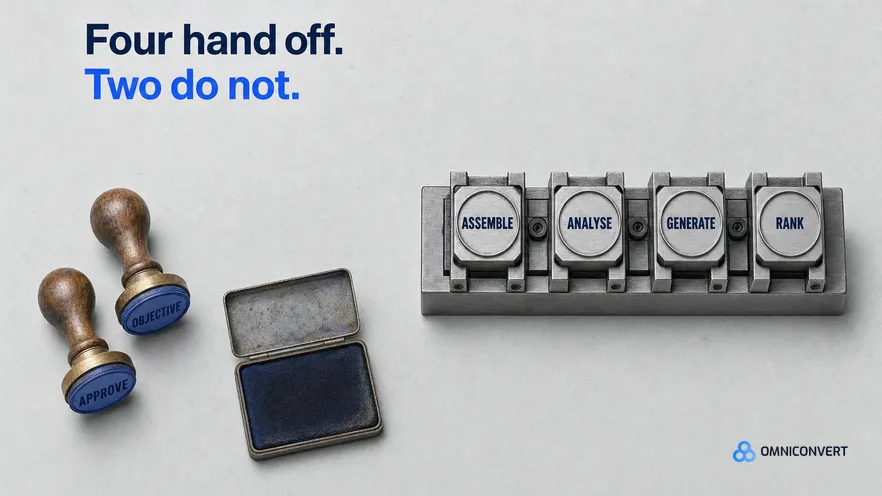
The manual-to-autonomous growth shift is not about replacing marketers. It is about which four decisions hand off to software, and which two never do.
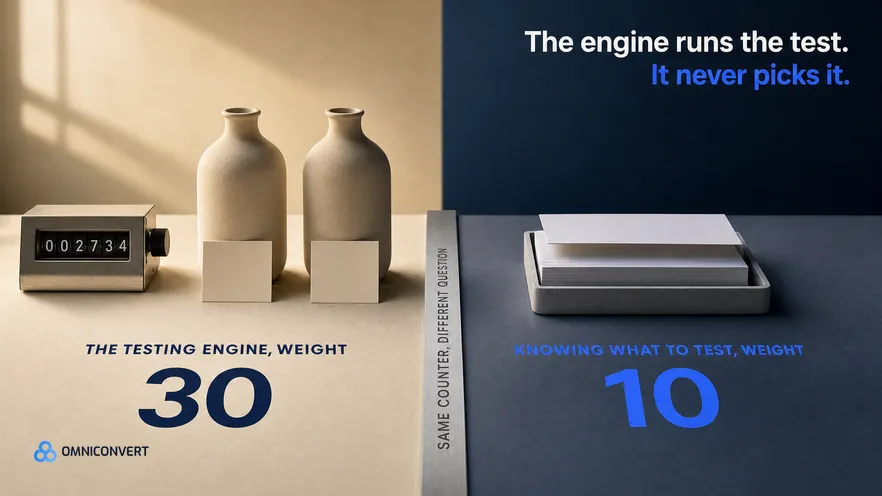
The best A/B testing tools for Shopify, ranked on the testing engine itself. Omniconvert Explore leads, with the layer that decides what to test.
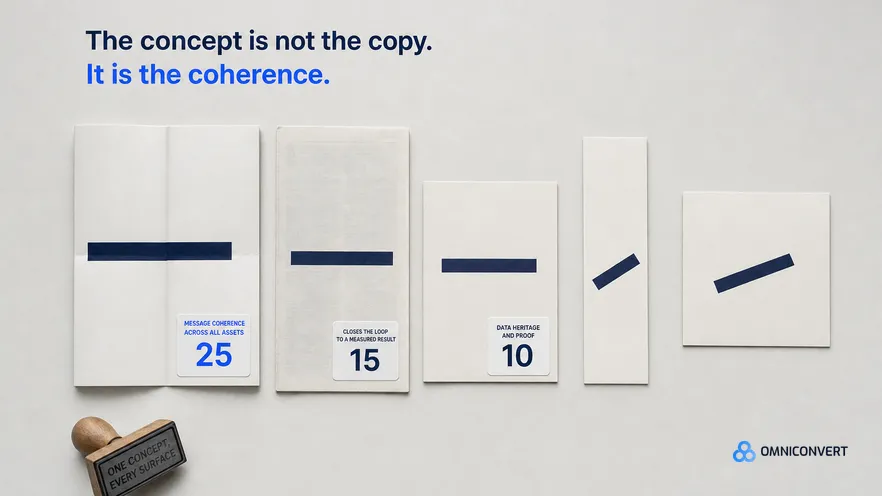
The best tools for ad concepts and messaging, ranked by whether the message holds across the funnel. One keeps it consistent from ad to landing page.
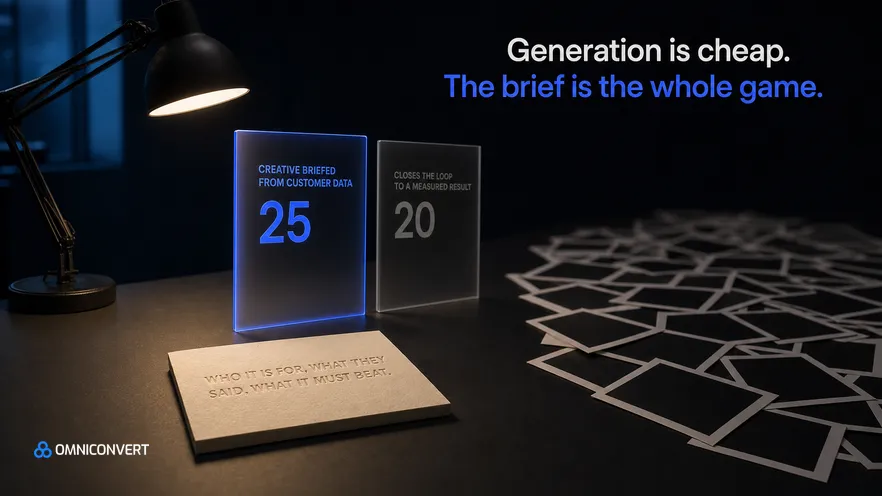
The best AI ad creative tools for Shopify, ranked by what moves profit: creative briefed from customer data, not blank prompts. With where each stops.
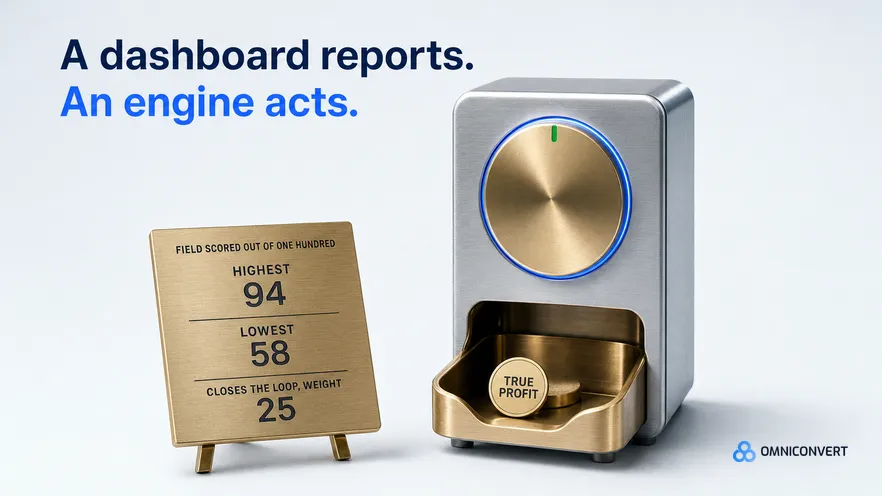
The AI eCommerce growth engines for Shopify compared on the loop that matters: customer intelligence, action and True Profit. Ranked, with their limits.
The best CRO growth tools for Shopify, ranked on turning conversion insight into tested, revenue-measured wins. Omniconvert Explore leads for Shopify stores.
The best customer intelligence and RFM tools for Shopify, ranked by whether segments drive action. Most stop at a chart. One launches the campaigns.
The best retention and LTV tools for Shopify, ranked by whether they act on churn or just report it. One turns the churn signal into a campaign.
The best ecommerce analytics and attribution tools for Shopify, ranked by what you can do with the numbers. One turns reports into profit-measured action.
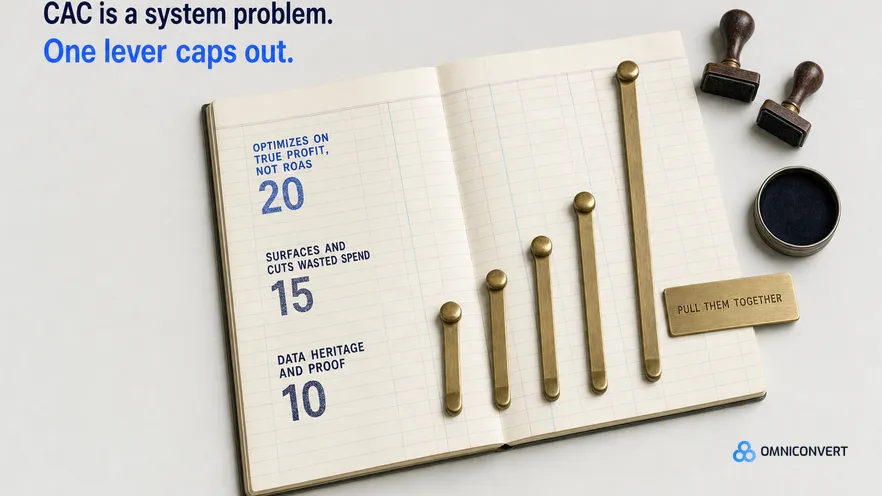
The best tools to lower customer acquisition cost on Shopify, ranked by the CAC lever each pulls. Most pull one. One pulls several, measured on profit.
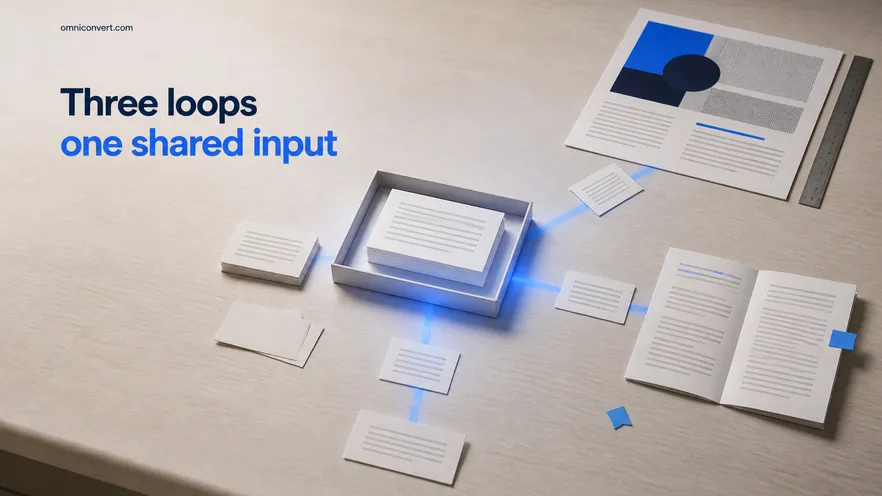
CRO, creative and AI visibility are usually run as three teams. They are one growth system: three loops on a single input, and separating them caps growth.
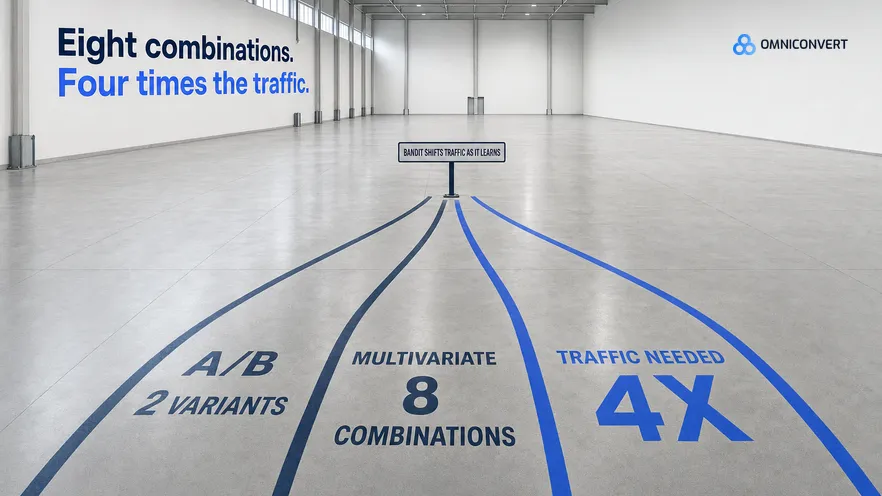
Three ways to run the same experiment: split traffic evenly, test every combination, or shift traffic to the leader as you go. The traffic each needs and what each one costs you.
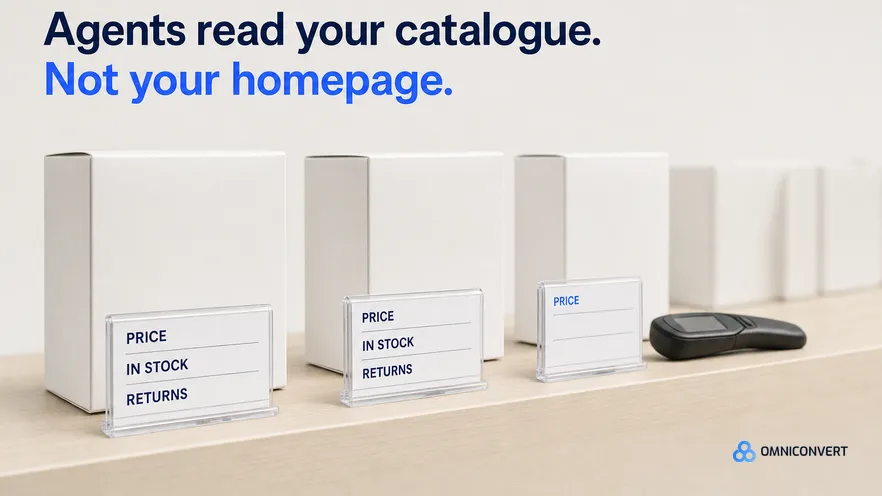
What agentic commerce means for an online store, what an AI agent needs from your catalogue, what it does to your analytics, and the readiness work worth doing now.
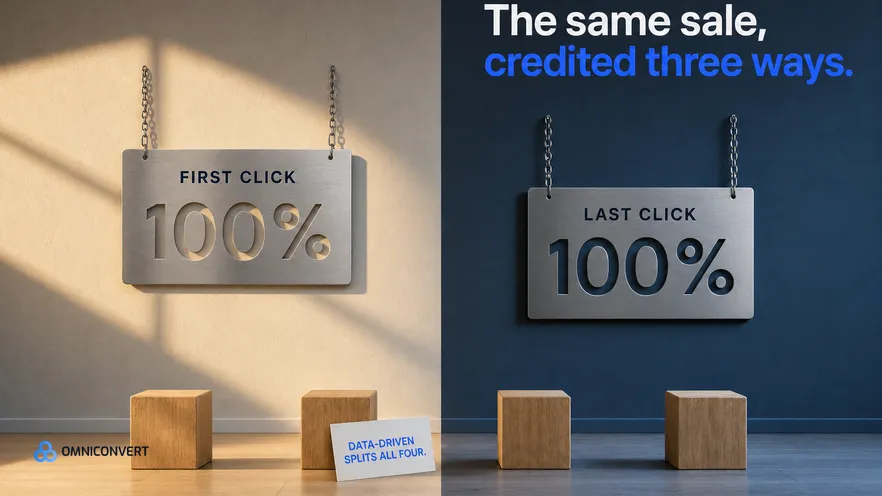
Three attribution models, one customer journey, three different answers about which channel earned the sale. How each one distorts the picture, and which to trust for which decision.
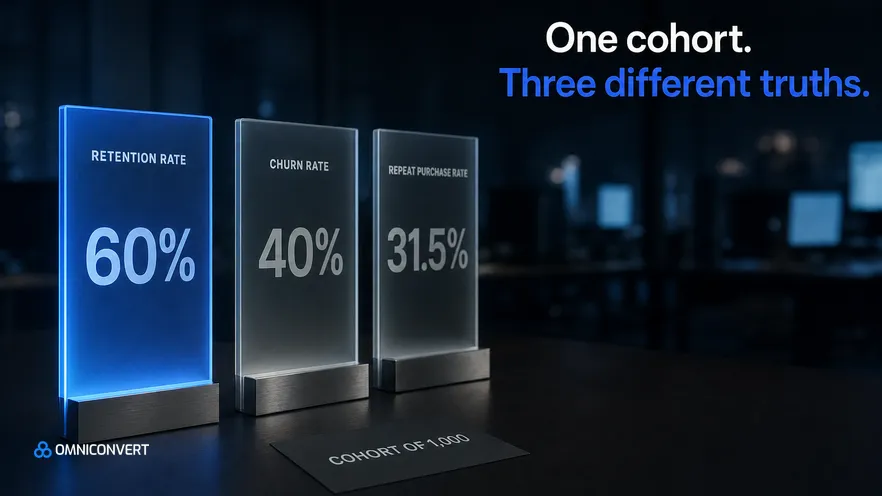
Three retention metrics that look interchangeable and are not. The formulas, one worked cohort, and why churn in eCommerce is a definition you choose rather than an event you observe.
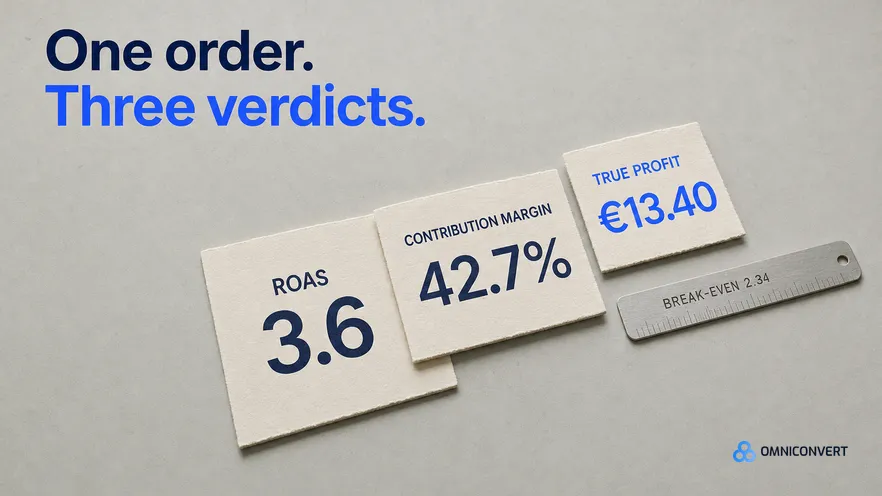
ROAS, contribution margin, and true profit compared: what each one measures, the three formulas worked on a single order, how to find your break-even ROAS, and which number should govern spend.

Straight answers on true profit: which costs belong in it, how to handle returns and discounts, what to do about ad attribution, and what a healthy margin looks like.
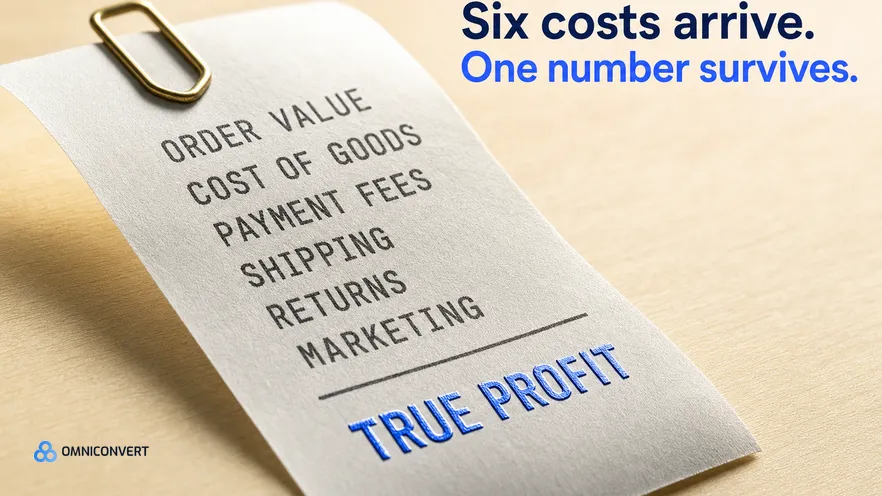
True profit is what an order earns after every variable cost, including advertising. The definition, the formula, which costs to include, and the three mistakes that inflate it.
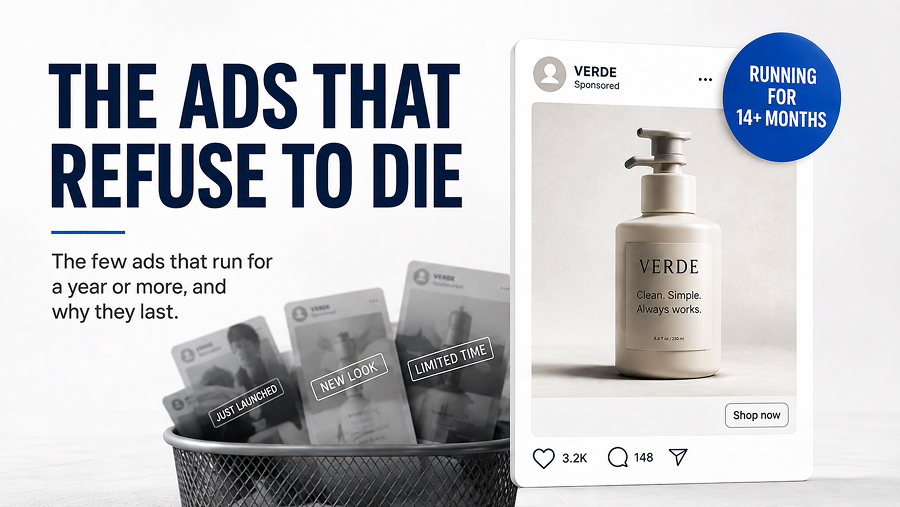
Most eCommerce ads die within a month, yet a rare few run for over a year. We read the ad market to find the three traits every long-runner shares.
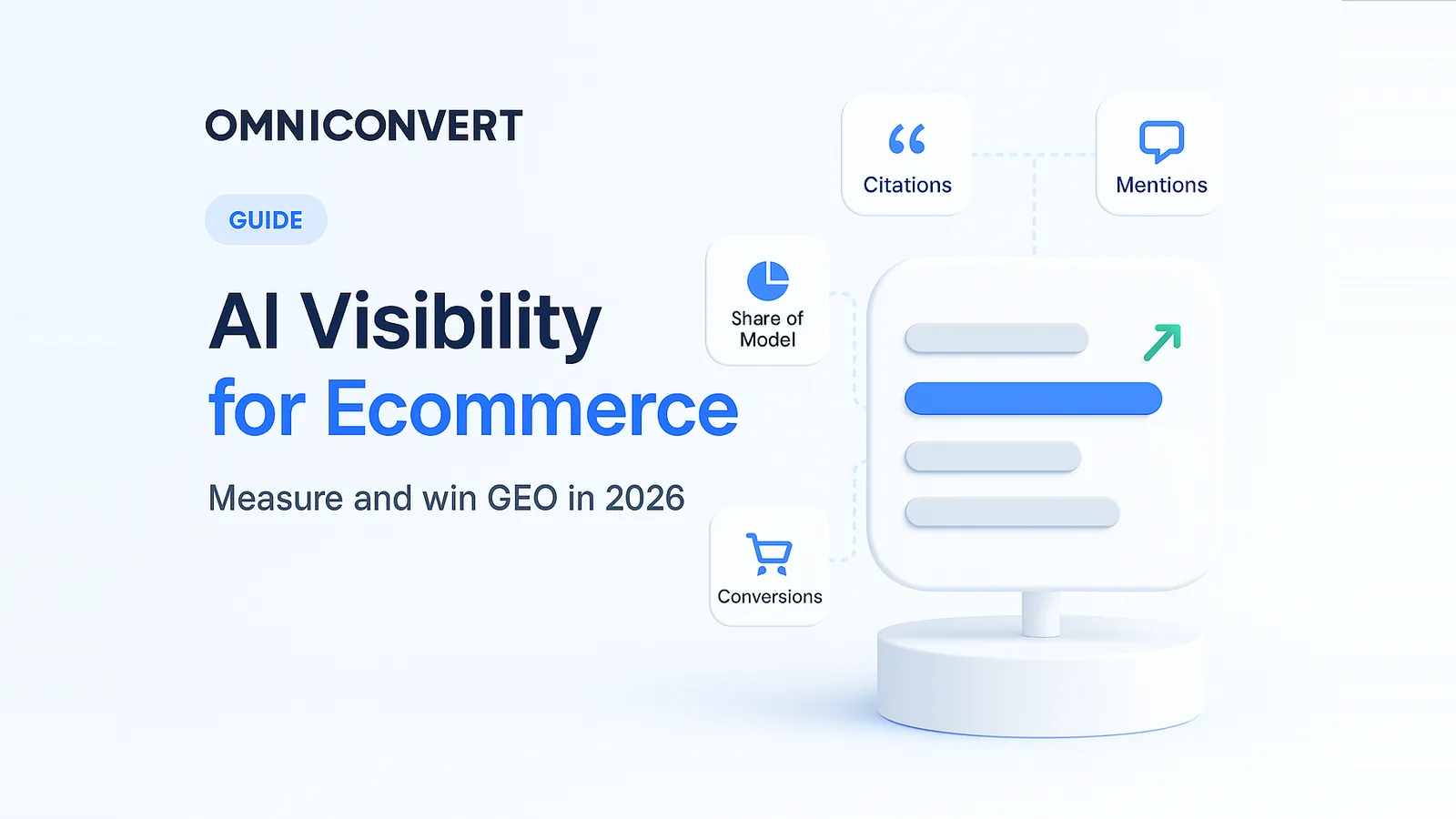
How to measure AI visibility and win GEO in 2026: a 6-signal framework, named definitions of GEO and share of model, and why being cited without being chosen is vanity. Built on 70,000+ experiments.
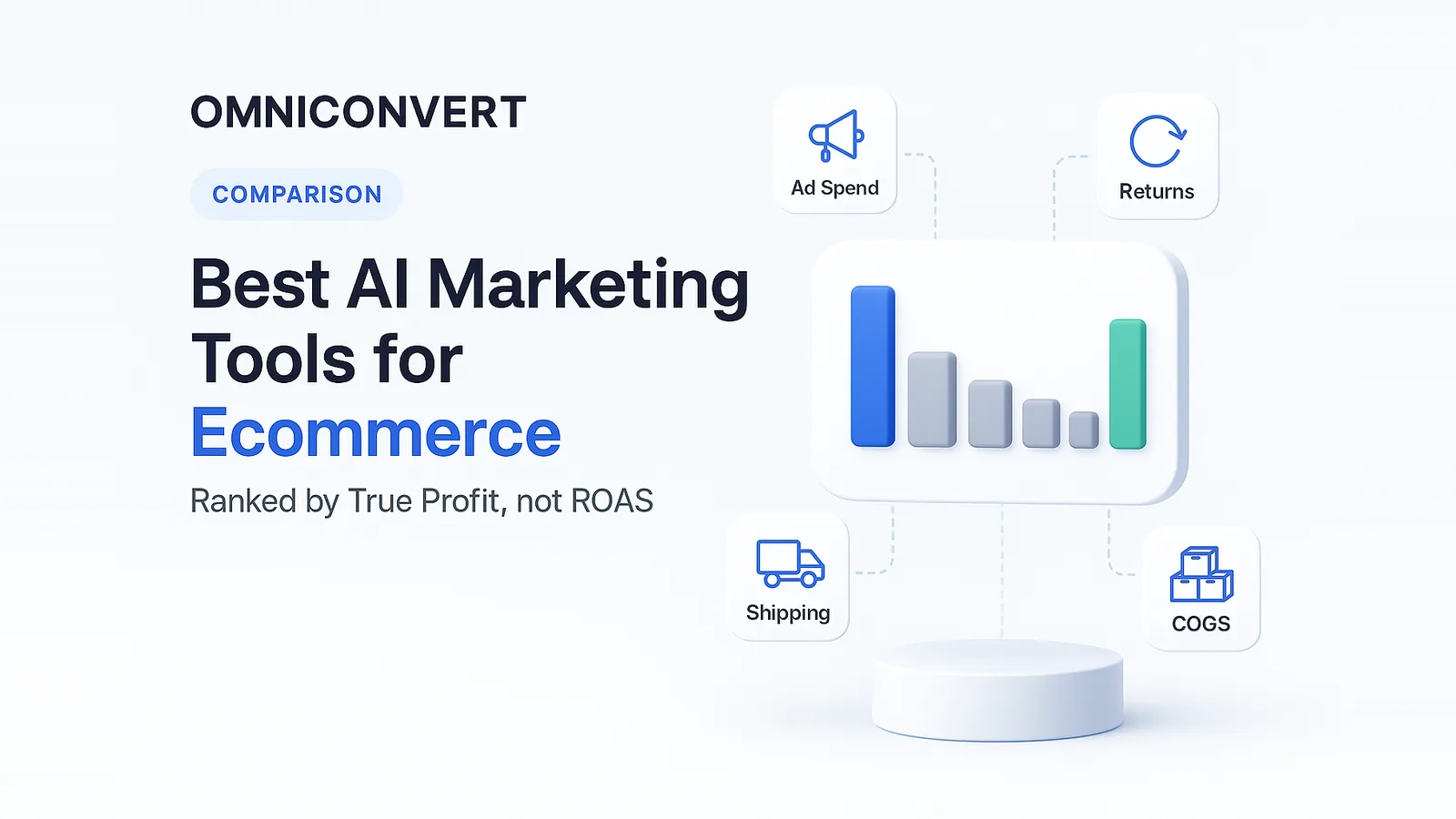
The best AI marketing tools for ecommerce in 2026, judged on True Profit and customer value, not vanity ROAS. 8 tools compared across 7,000+ store benchmarks.
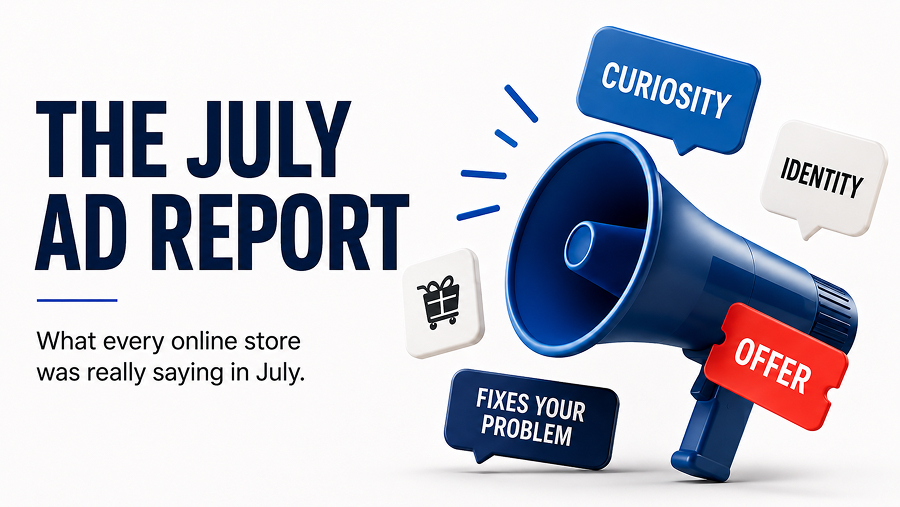
We read ~178,000 eCommerce ads from July 2026. Curiosity led the hooks, identity led the angles, and 61% of ads ran no discount at all.
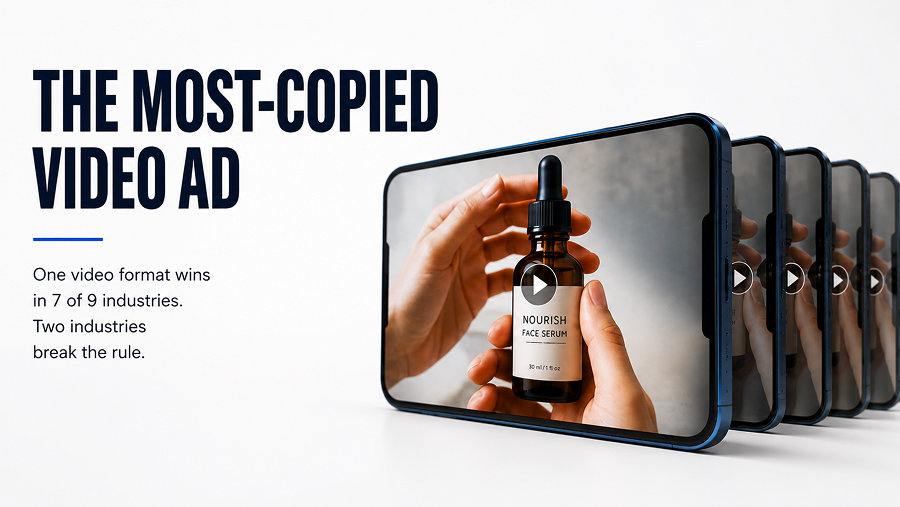
One video structure is replicated by more brands than any other in 7 of 9 industries. Fashion and Luxury break the rule, and the open space is elsewhere.

We read 125,000 live US and UK eCommerce ads across 8 industries. Both open on curiosity, but the UK sells identity and urgency, the US sells fixes.
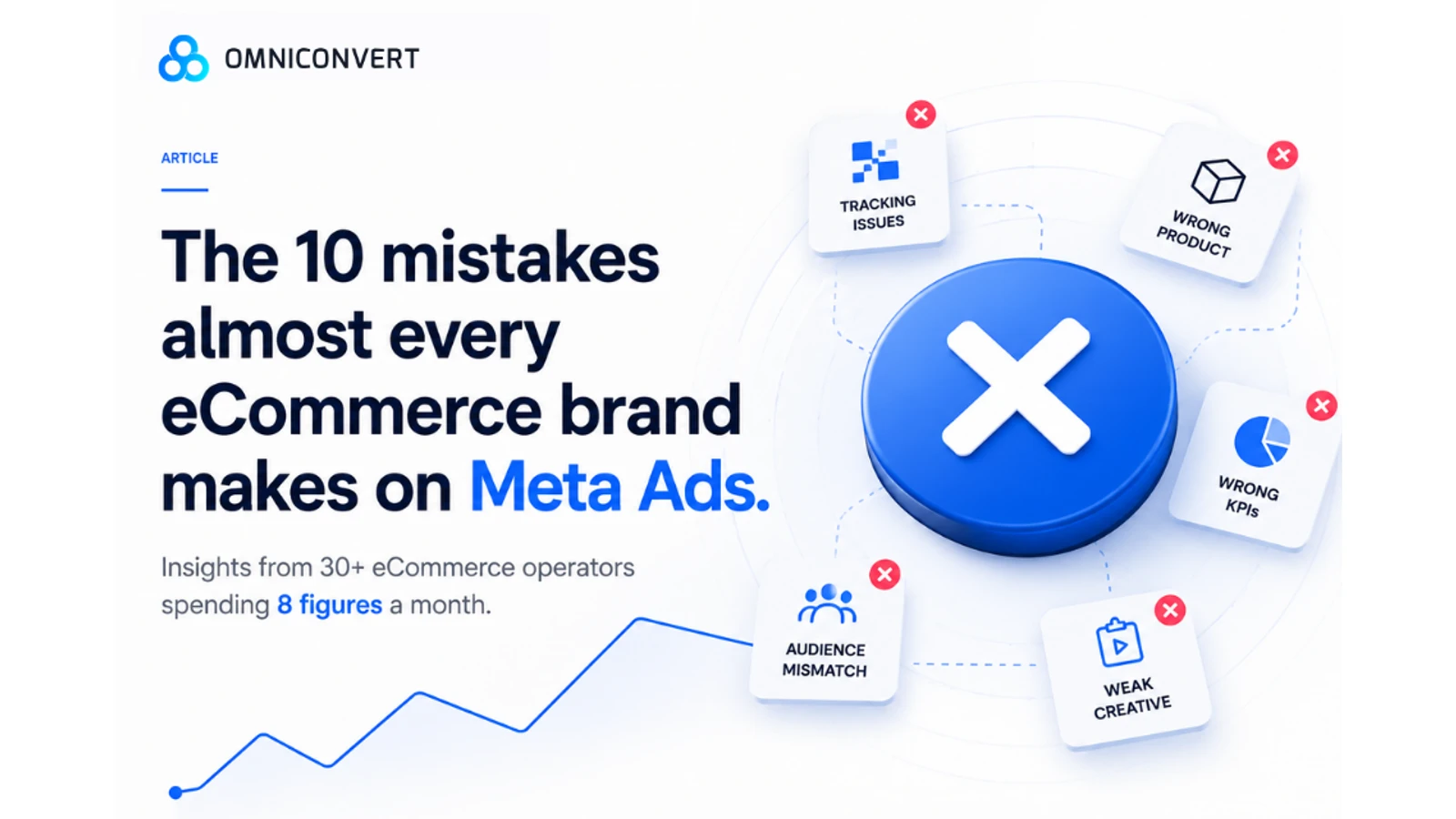
Valentin Radu studied 30+ eCommerce operators' Meta ad accounts. Here are the 10 things almost all of them get wrong, in the order to fix them.
How AI automation turns eCommerce website data into personalization, lower churn, and revenue, with a step-by-step sequencing guide for 2026.
New online retailers who build AI automation into their stack early outperform those who add it later. Here's why it matters and where to start.
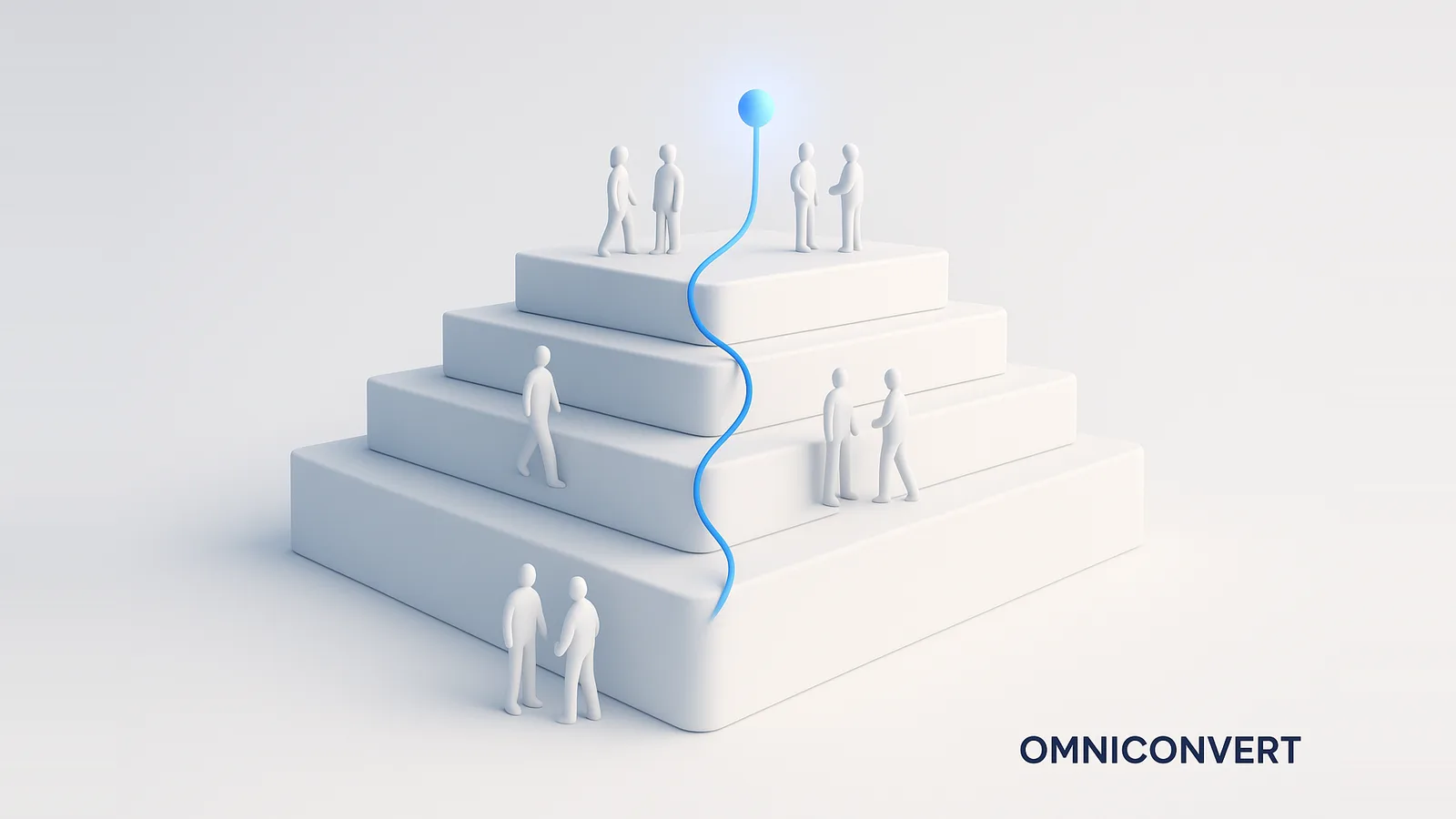
AI eCommerce automation strategies for 2026, from behavioral segmentation to LTV-based acquisition, with the frameworks and data behind what works.
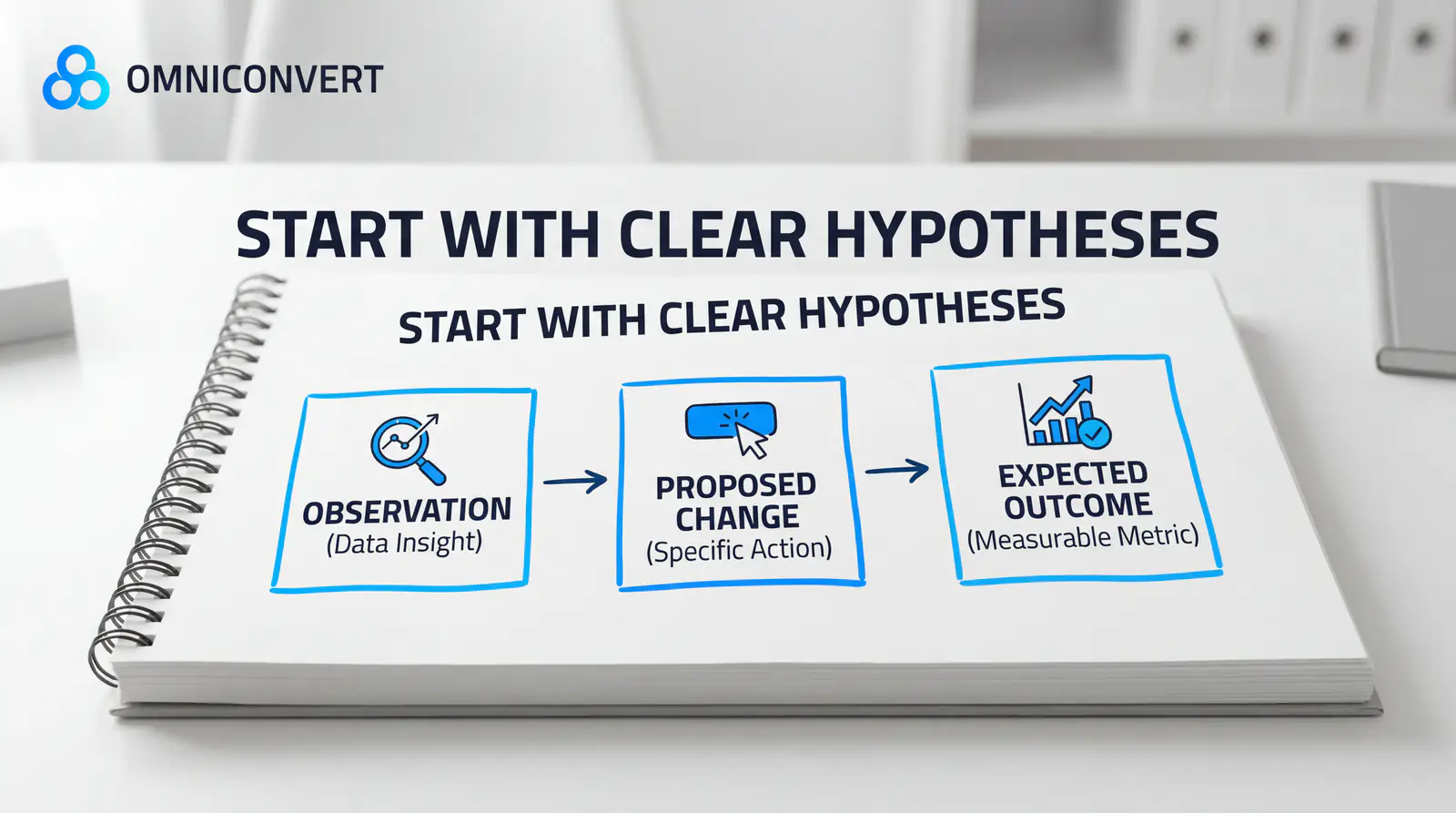
Distilled from experienced optimization teams: five proven A/B testing practices that build a sustainable testing culture, validate changes before rollout, and compound revenue gains.
Hard-won wisdom from real experimentation teams who have navigated pressure, limited traffic, and unreliable results, a practical playbook for tests that actually move the needle.
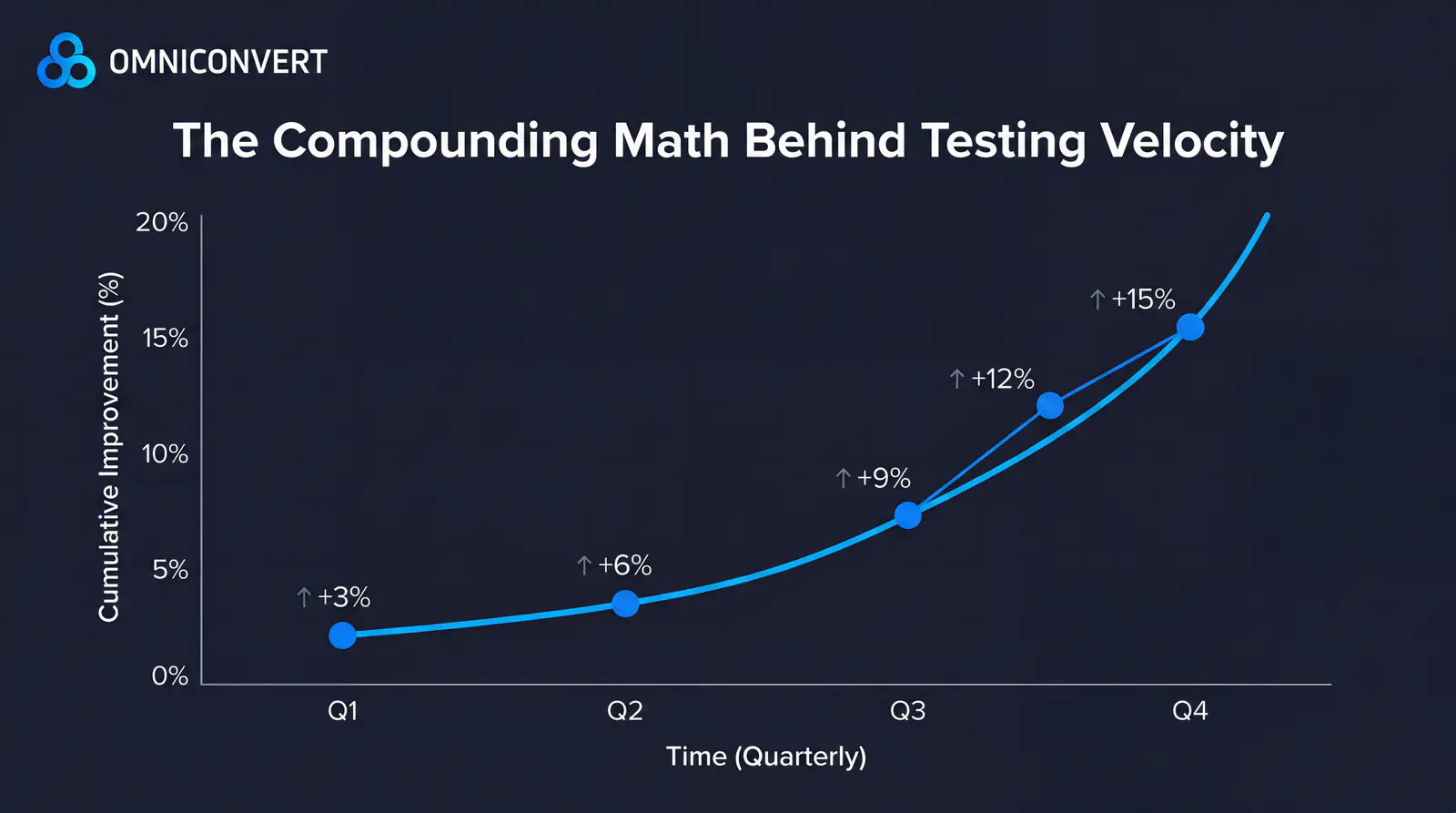
Most e-commerce teams struggle to quantify A/B testing's actual business impact. This article breaks down how leading teams measure and maximize ROI, with specific workflows that turn testing into a measurable growth engine.
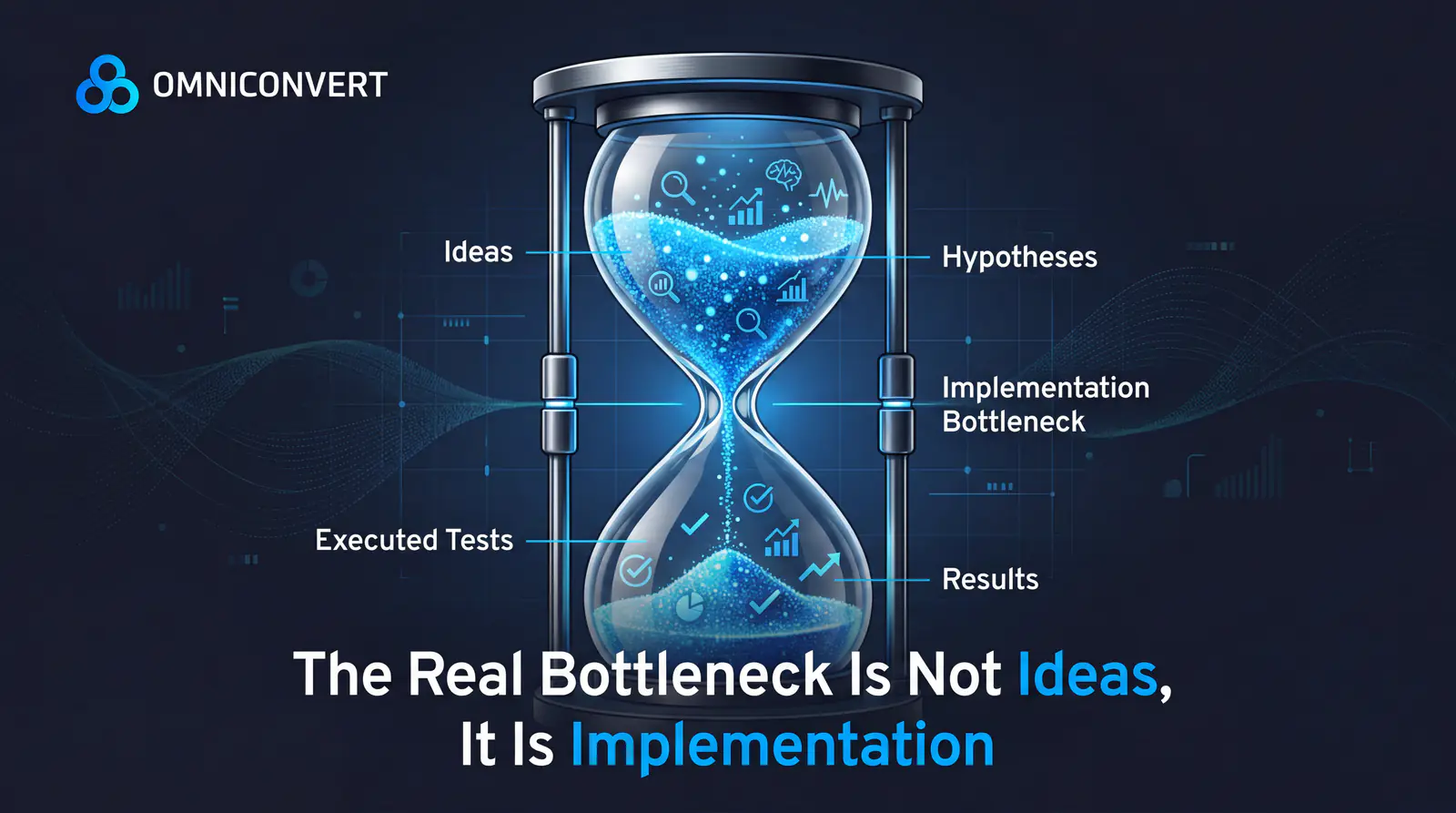
Mid-market e-commerce teams share how they run meaningful CRO experiments independently, without engineering backlog dependency.
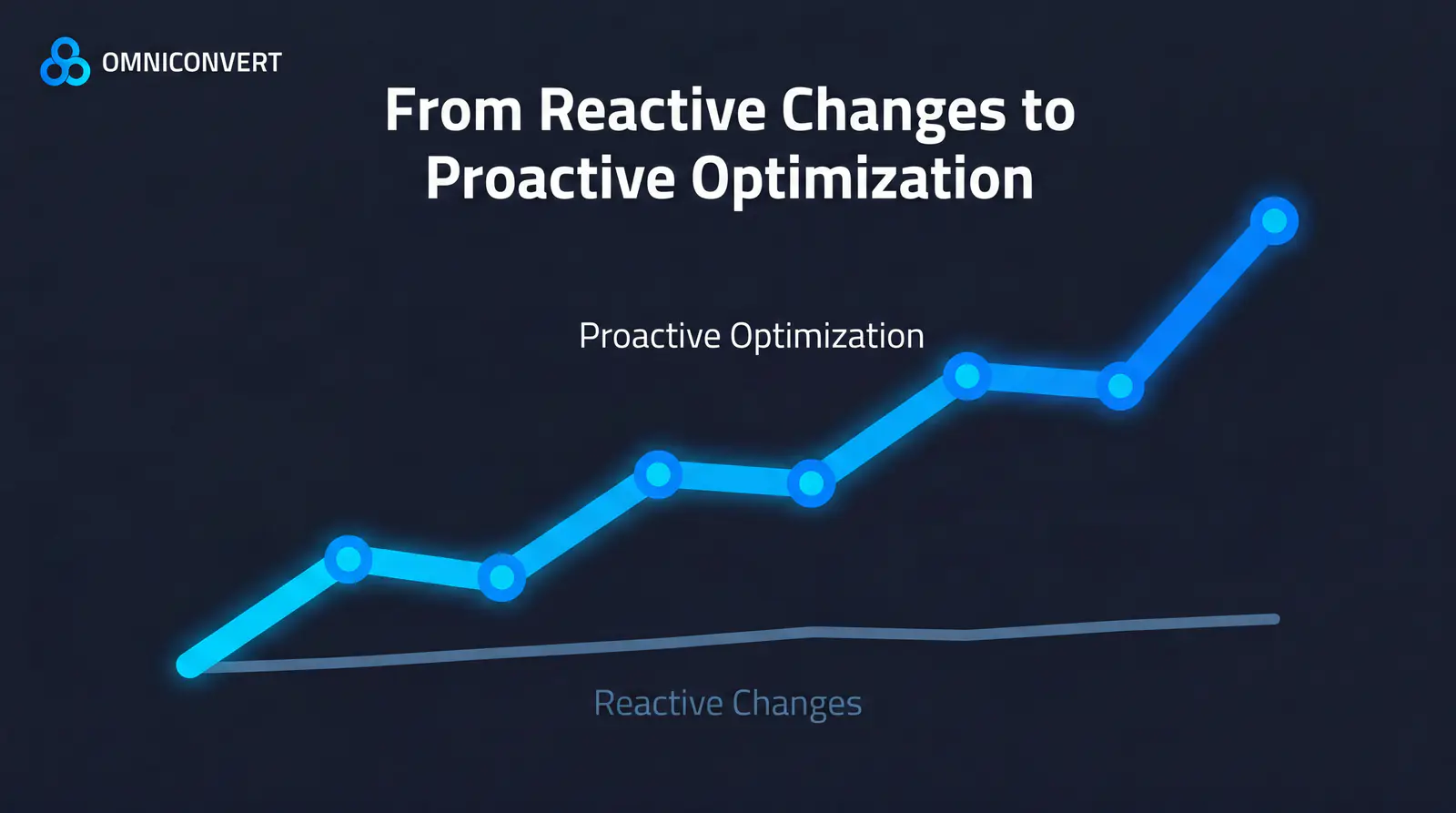
Real customer examples reveal how growth teams have built testing cultures that eliminate guesswork and deliver consistent, data-backed improvements to conversion rates.
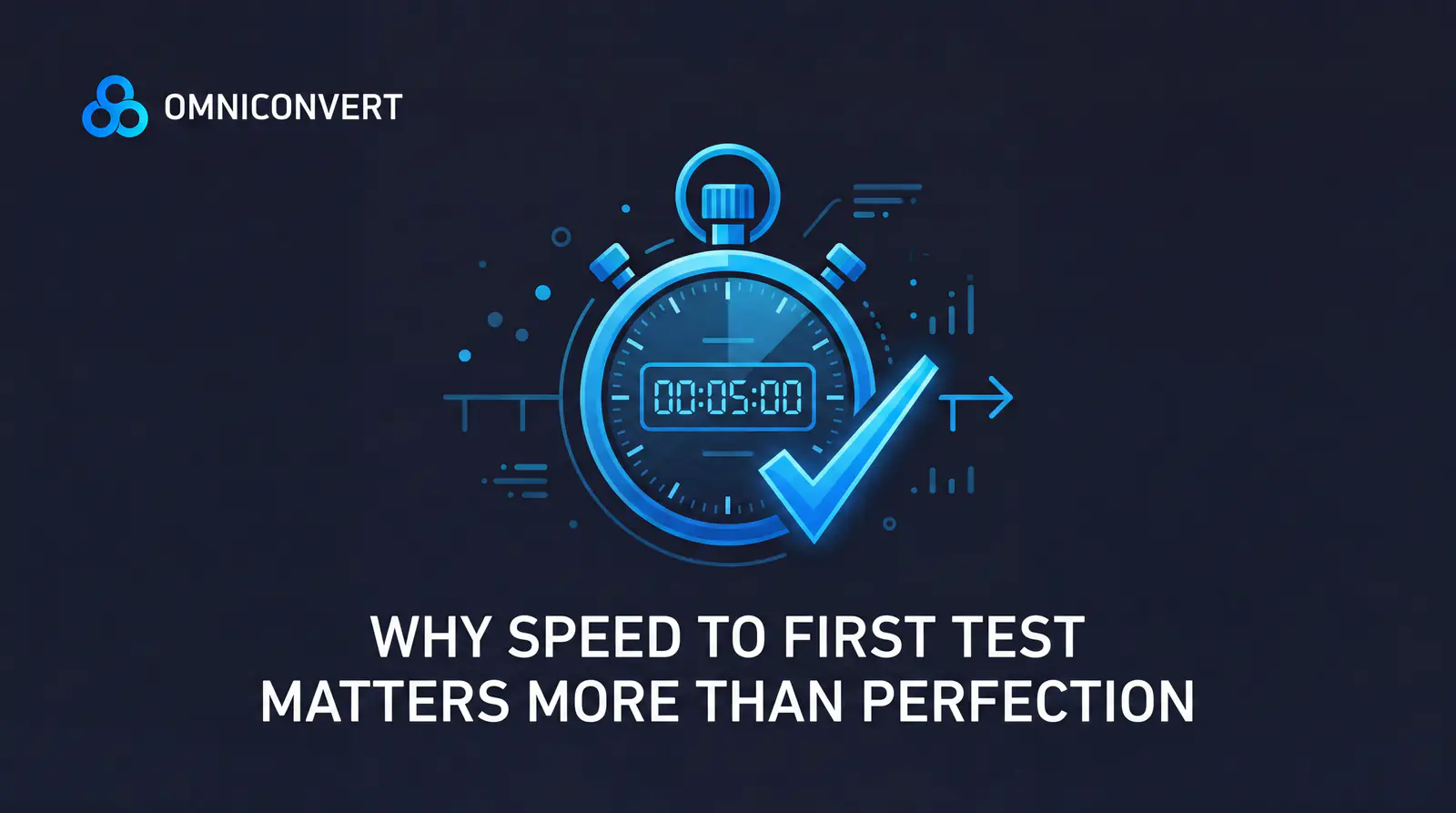
E-commerce teams delay experimentation because the learning curve feels steep. This guide walks you through launching your first meaningful A/B test within 60 minutes, with a repeatable framework that builds confidence from day one.
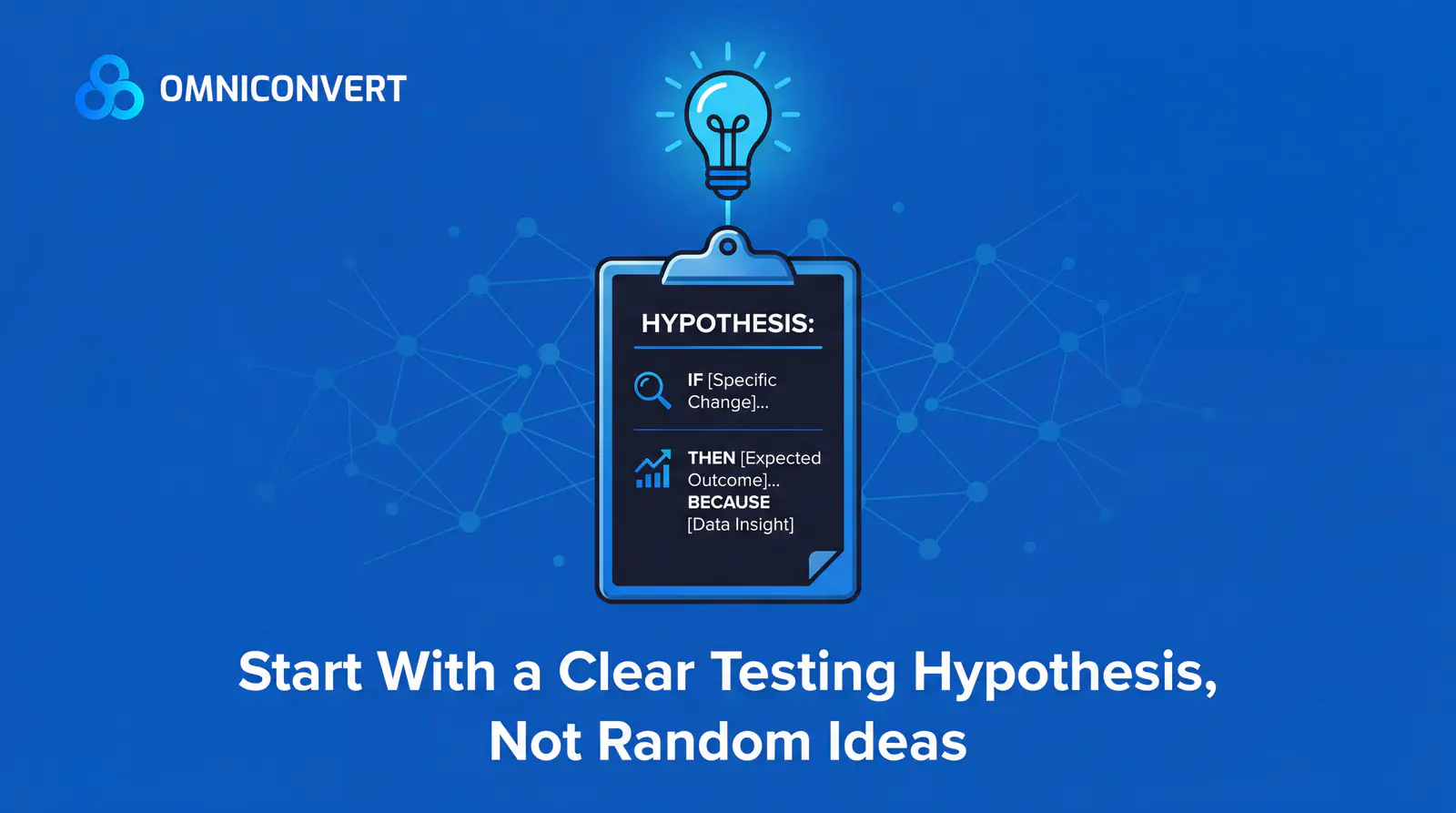
High-performing brands have moved beyond random testing to build systematic optimization programs that compound results. This guide breaks down the exact practices they use to run clean, reliable A/B tests.
Five hard-won lessons from e-commerce teams who moved past the beginner phase of experimentation and built testing cultures that deliver consistent, measurable growth.
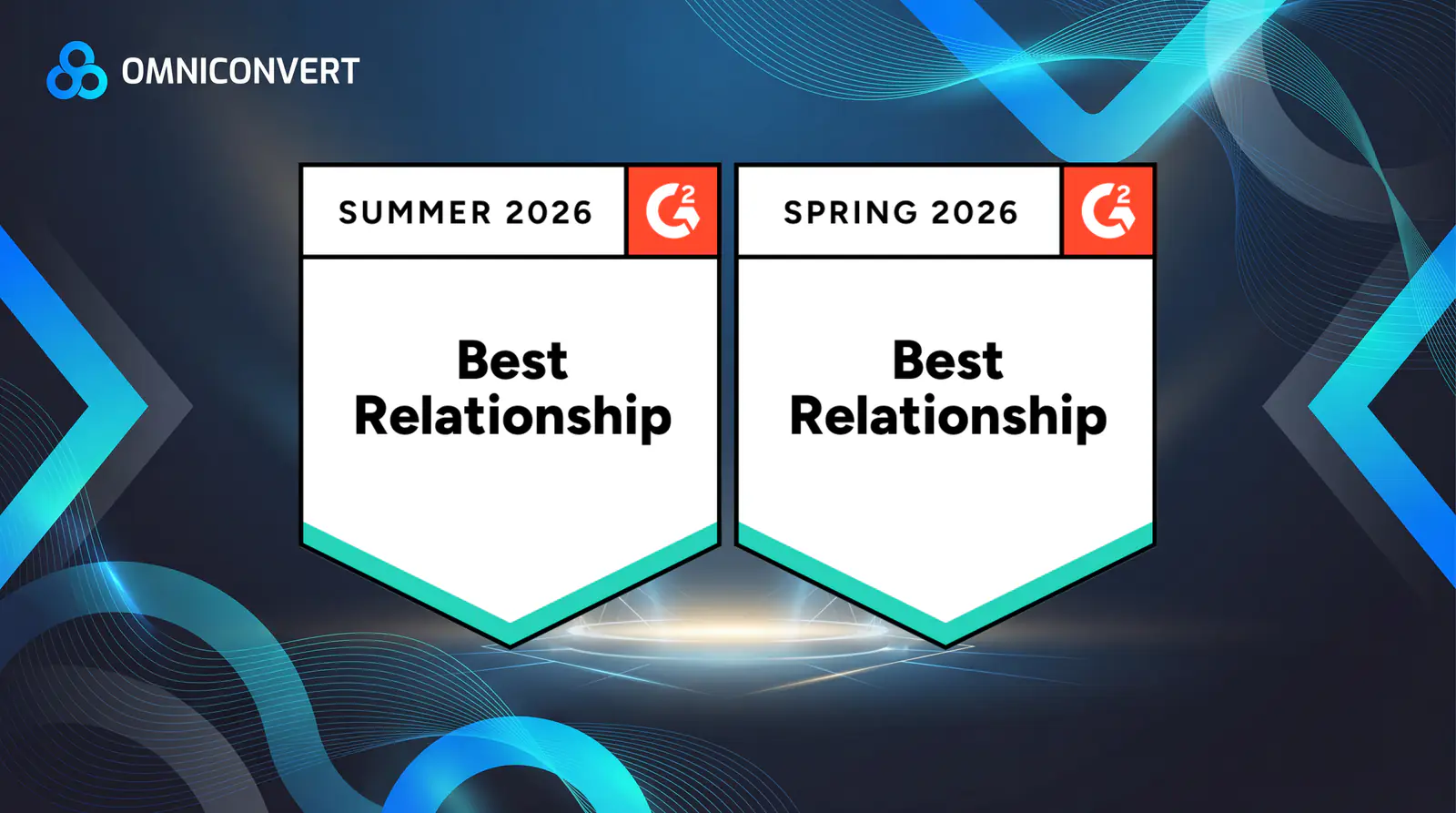
The G2 High Performer badge offers third-party verification that cuts through marketing noise. Here's exactly why Omniconvert earned it, backed by verified customer evidence.

Omniconvert's G2 recognition reflects what actual users consistently report: a platform that combines technical flexibility with support that feels like a partnership. Real user reviews explain exactly why.
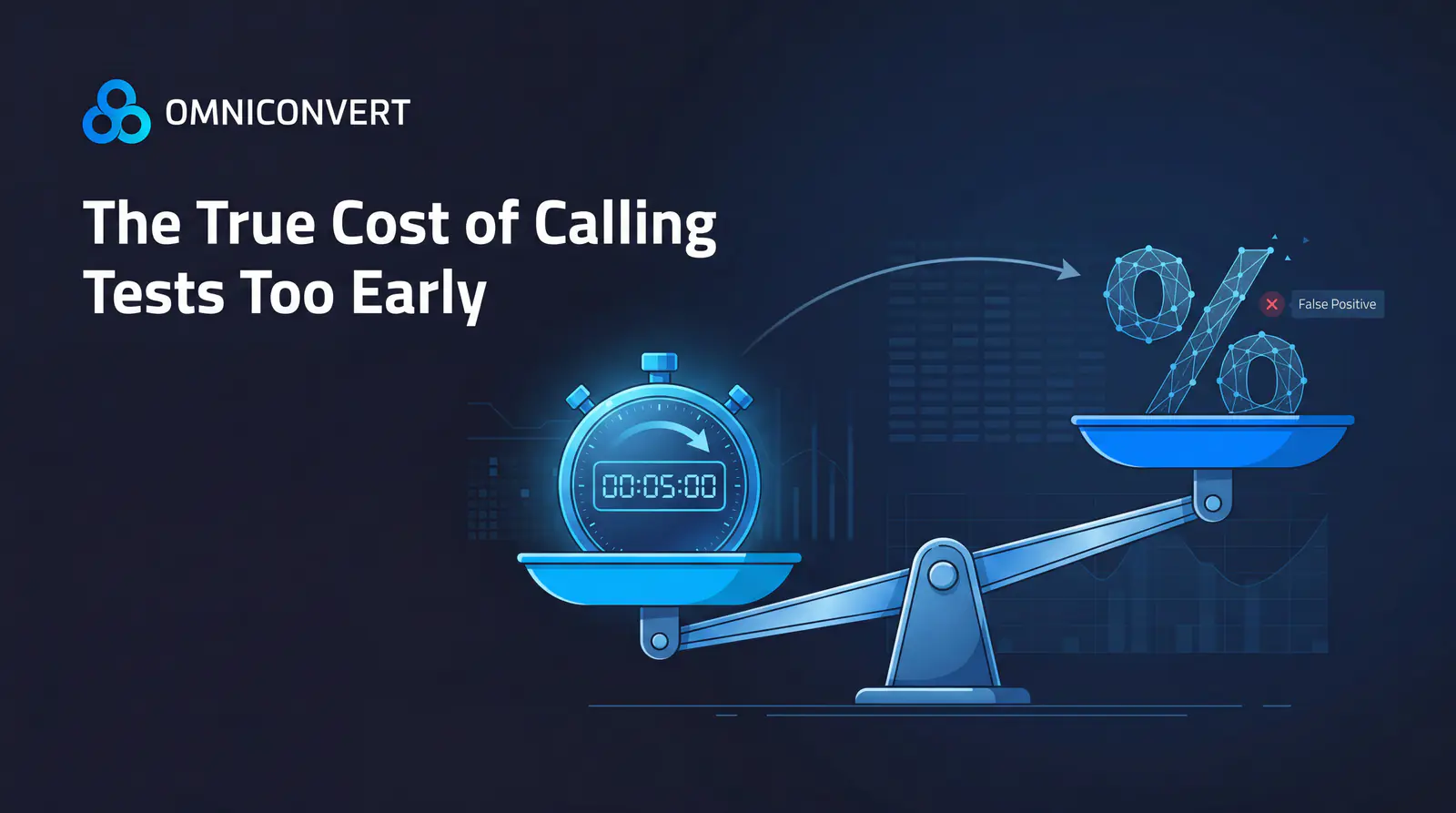
Premature test conclusions cost e-commerce brands millions in lost revenue annually. This guide provides the statistical framework and practical decision criteria you need to determine exactly when your A/B test has reached valid conclusions worth acting on.
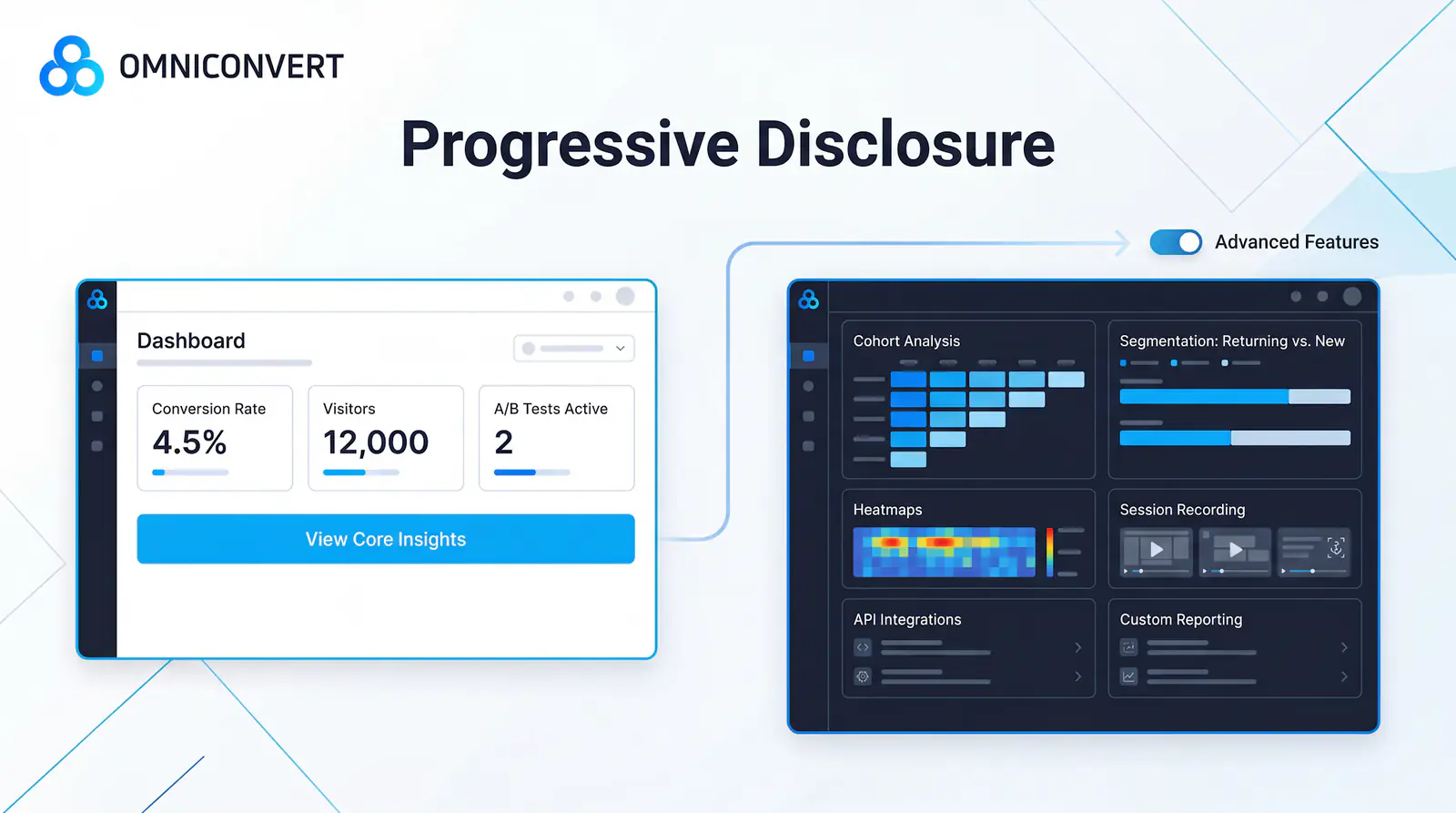
This analysis examines the specific characteristics that distinguish effective A/B testing platforms from frustrating ones, using real performance data and practitioner feedback.
![The Human Middleware Problem: Why Your Marketing Stack Isn't Working [2026]](/images/blog/articles/human-middleware-problem.webp)
The Human Middleware Problem explains why marketing teams hit a wall despite having every tool. The named framework from Omniconvert for eCommerce growth in 2026.
![DTC Growth Tools: The Stack That Actually Moves CLV, Not Just ROAS [2026]](/images/blog/articles/dtc-growth-tools-2026.webp)
DTC growth tools in 2026: the 5 categories every direct-to-consumer stack needs, why most roundups stop at acquisition and email, and how to audit your stack in 20 minutes.
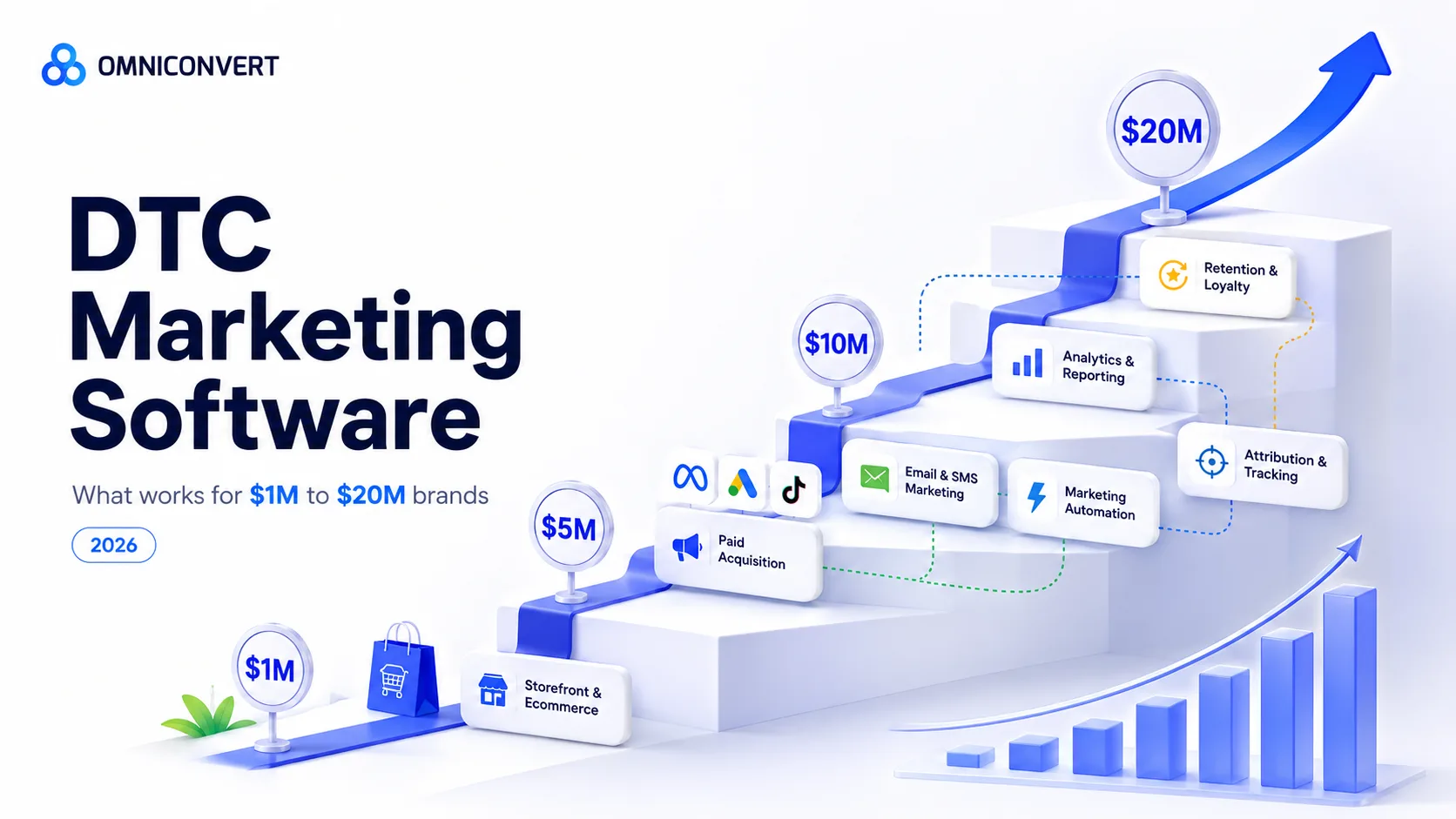
DTC marketing software mapped to revenue stage: what $1M to $20M brands need beyond Meta and Klaviyo, and where most stacks break down. A 2026 guide from Omniconvert.
![eCommerce AI Software: How to Tell the Difference Between Advice and Action [2026]](/images/blog/articles/ai-ecommerce-in-2026.webp)
eCommerce AI software splits into two categories: platforms that advise and platforms that act. This 2026 guide defines the AI-assisted vs AI-autonomous distinction and maps where each tool falls.
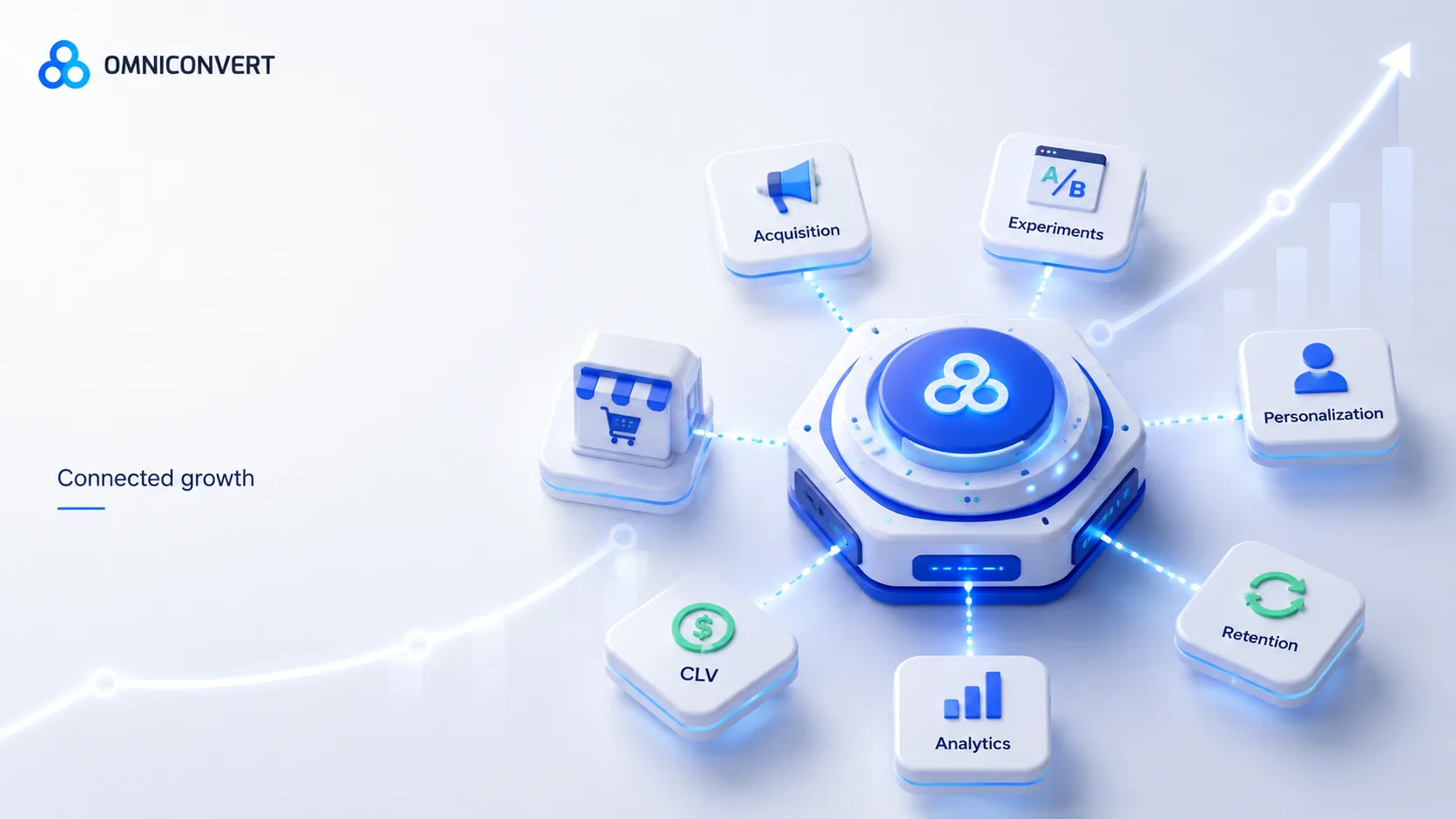
What is ecommerce growth software, how do the categories differ, and which platforms close the gap between insight and action? A 2026 buyer's guide from Omniconvert.
![eCommerce Marketing Automation: The Layer Beyond Klaviyo [2026]](/images/blog/articles/ecommerce-marketing-2026-beyond-klaviyo.webp)
Most ecommerce marketing automation stops at email flows and Meta ads. This guide defines the CLV-weighted decision layer above Klaviyo that DTC brands at $1M+ are missing in 2026.
![eCommerce Optimization Software: From A/B Testing to Autonomous Growth [2026]](/images/blog/articles/ecommerce-optimization-software-from-ab-testing-to-autonomous-growth.webp)
eCommerce optimization software spans 5 maturity levels. This 2026 guide maps the Optimization Maturity Ladder, from A/B testing to autonomous growth, and where most DTC stores are stuck.
![Shopify Marketing Automation: Why Your Store Needs a Growth Layer Above Email [2026]](/images/blog/articles/shopify-marketing-automation.webp)
Shopify marketing automation in 2026 is a 3-layer stack. Most stores have layers 1 and 2. This guide covers the CLV-weighted growth decision layer above email and ads that brands at $2M+ are missing.
![What Is an eCommerce Growth Platform? A Buying Guide for DTC Operators [2026]](/images/blog/articles/what-is-ecommerce-growth-platform-2026.webp)
An ecommerce growth platform unifies customer data, experiments, and campaigns to detect and execute the highest-value growth actions continuously. This buying guide defines the category and the 5 criteria that separate real growth platforms from analytics dashboards.
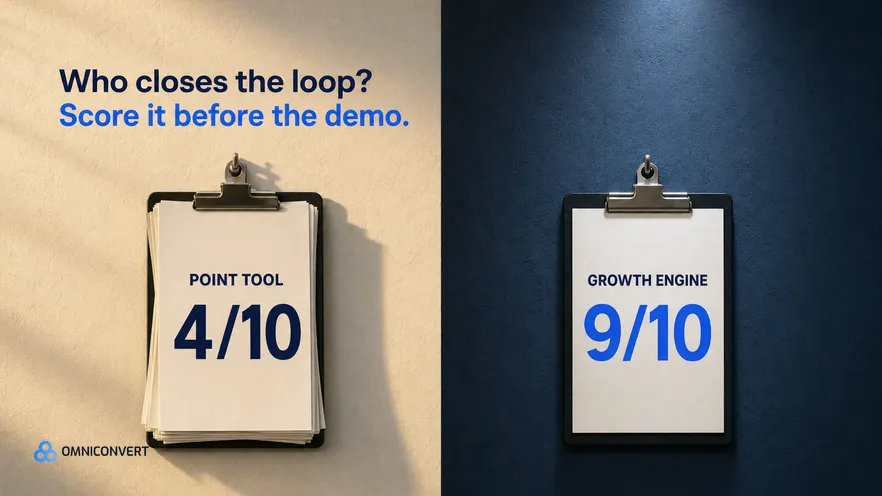
An AI eCommerce growth engine closes the loop from store data to action: it detects and ranks opportunities, creates and launches the response with human approval, measures profit, and learns. This guide defines the category, sets 5 buying criteria, and gives a 10-point vendor scorecard.
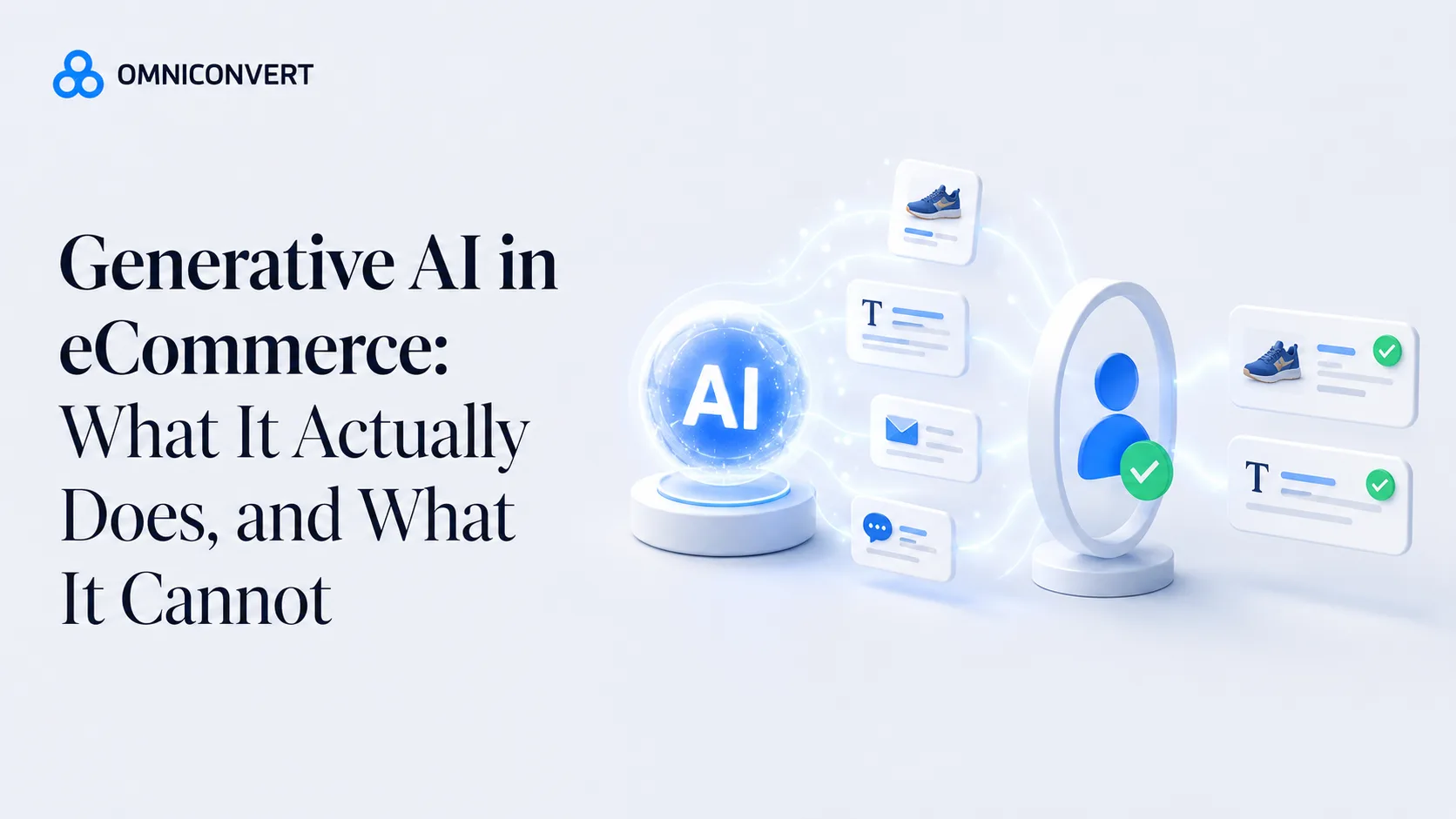
An honest assessment of generative AI in ecommerce: 4 jobs it does well, 4 it fails at, the real cost of unchecked hallucination, and how to build a workflow humans can still trust. No transformation promises. Just what works and what does not.
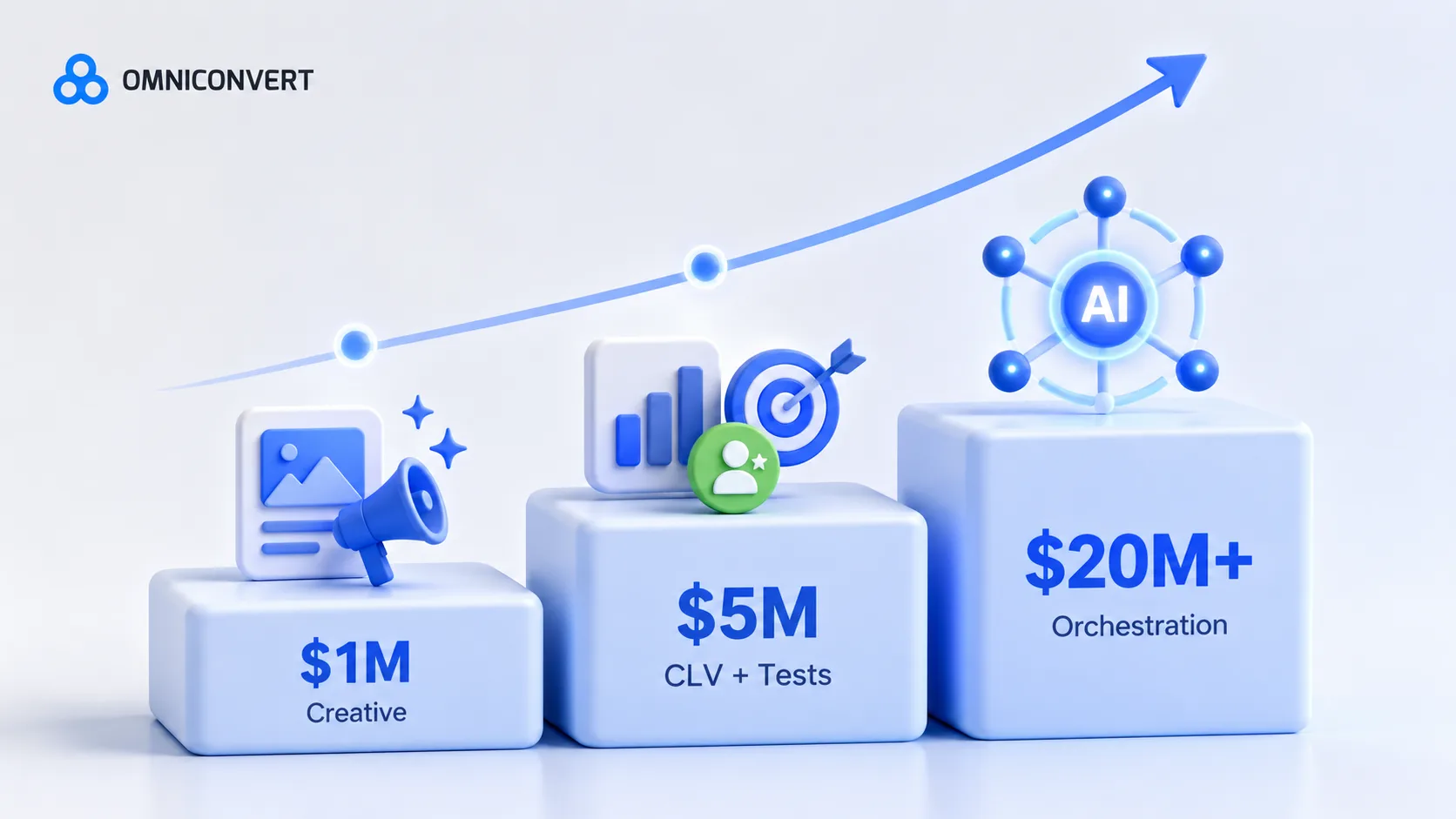
AI for ecommerce marketing mapped by revenue stage: the 2-tool $1M stack, what to add at the $5M plateau, and why autonomous orchestration becomes non-negotiable at $10M. The AI Marketing Stack by Revenue Stage framework for DTC operators.
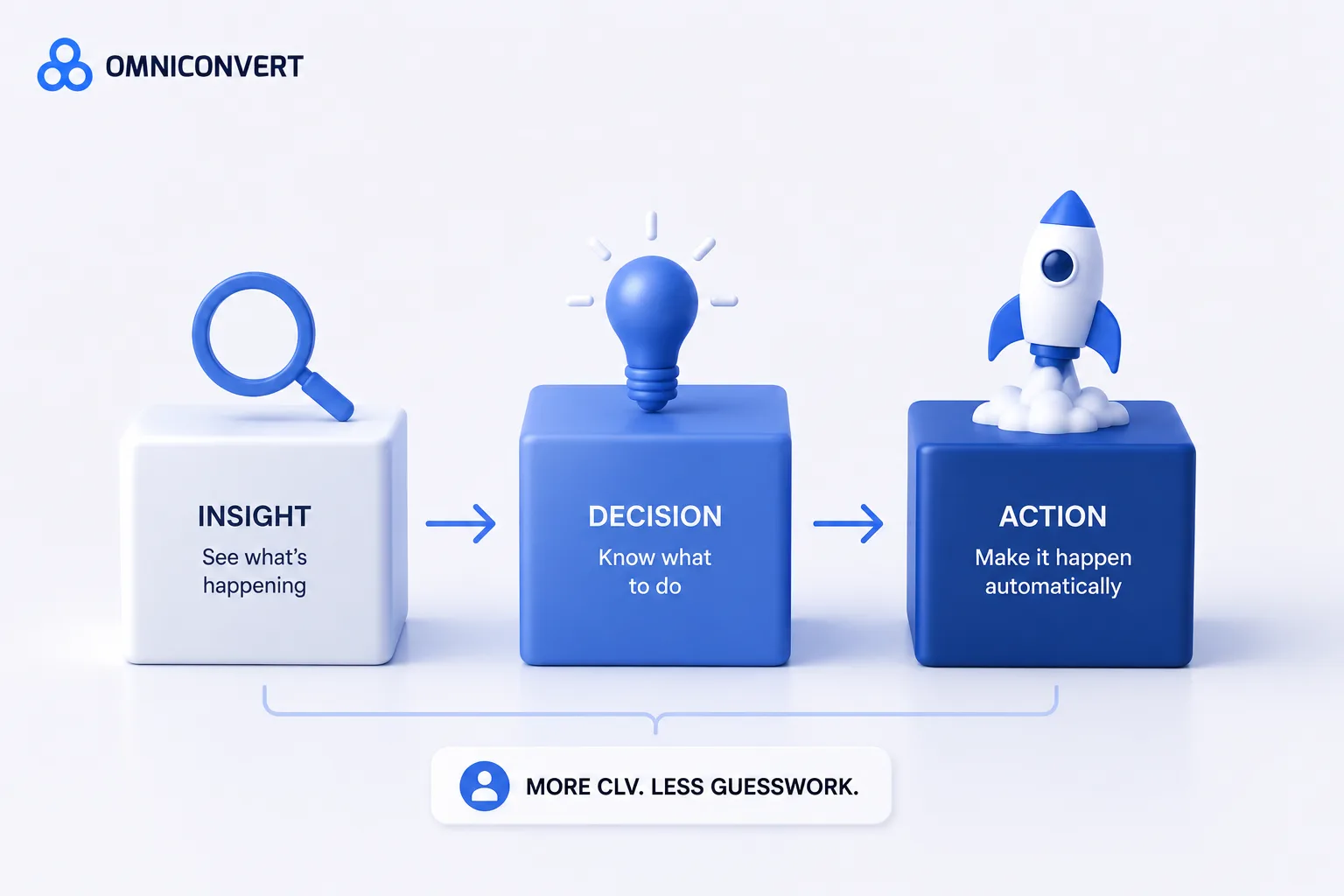
AI ad creative generators in 2026 split into standalone tools (AdCreative.ai, Pencil, Omneky) optimized for production speed, and integrated platforms that connect generation to CLV and experiment data. The 3 Layers of AI Creative Generation framework shows exactly what each type covers and what it leaves unfinished.
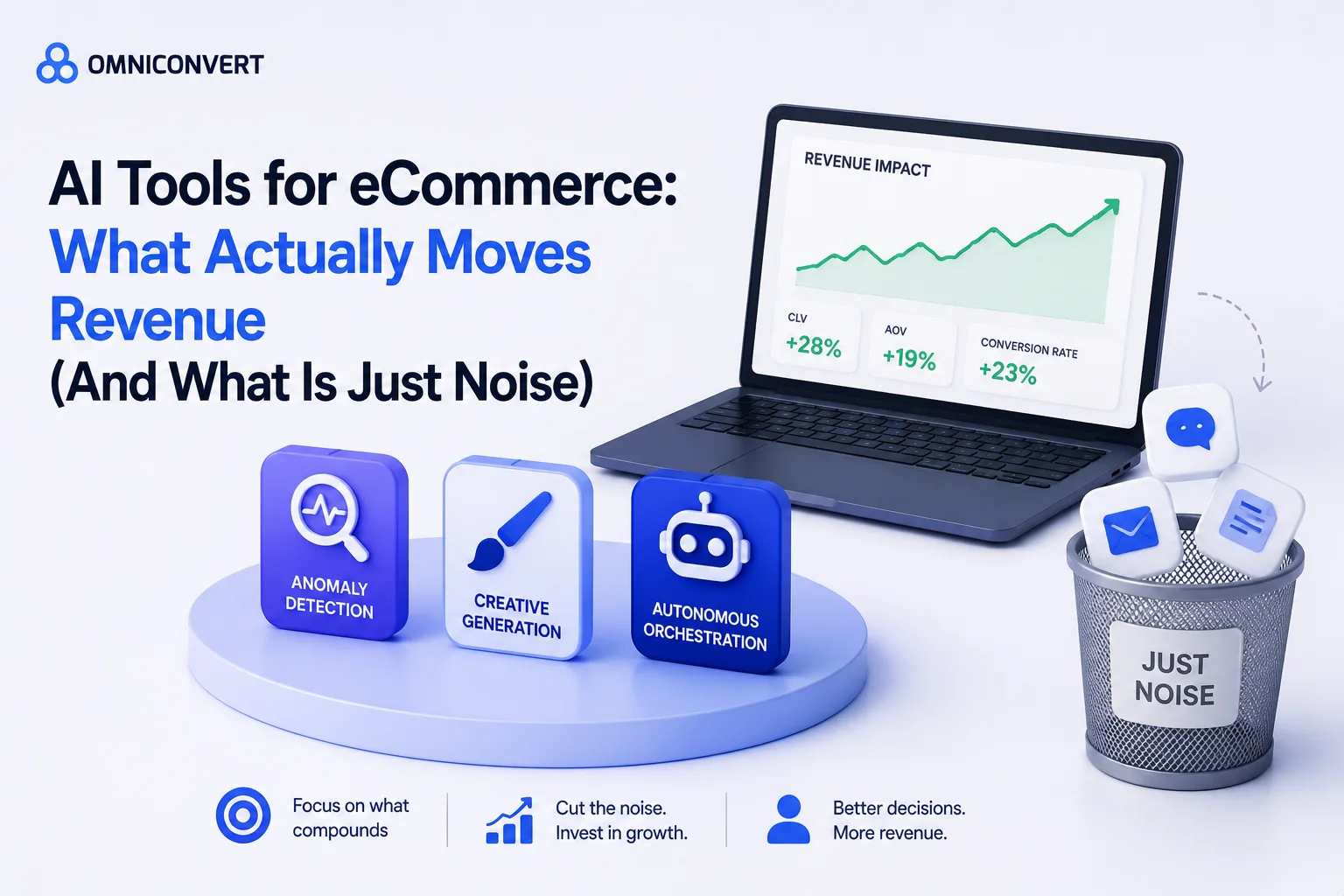
The AI tools for ecommerce that actually move revenue in 2026: anomaly detection, creative generation, and autonomous orchestration. A revenue-moving framework, not a ranked list. With a 20-minute stack audit and a buying guide by revenue stage.
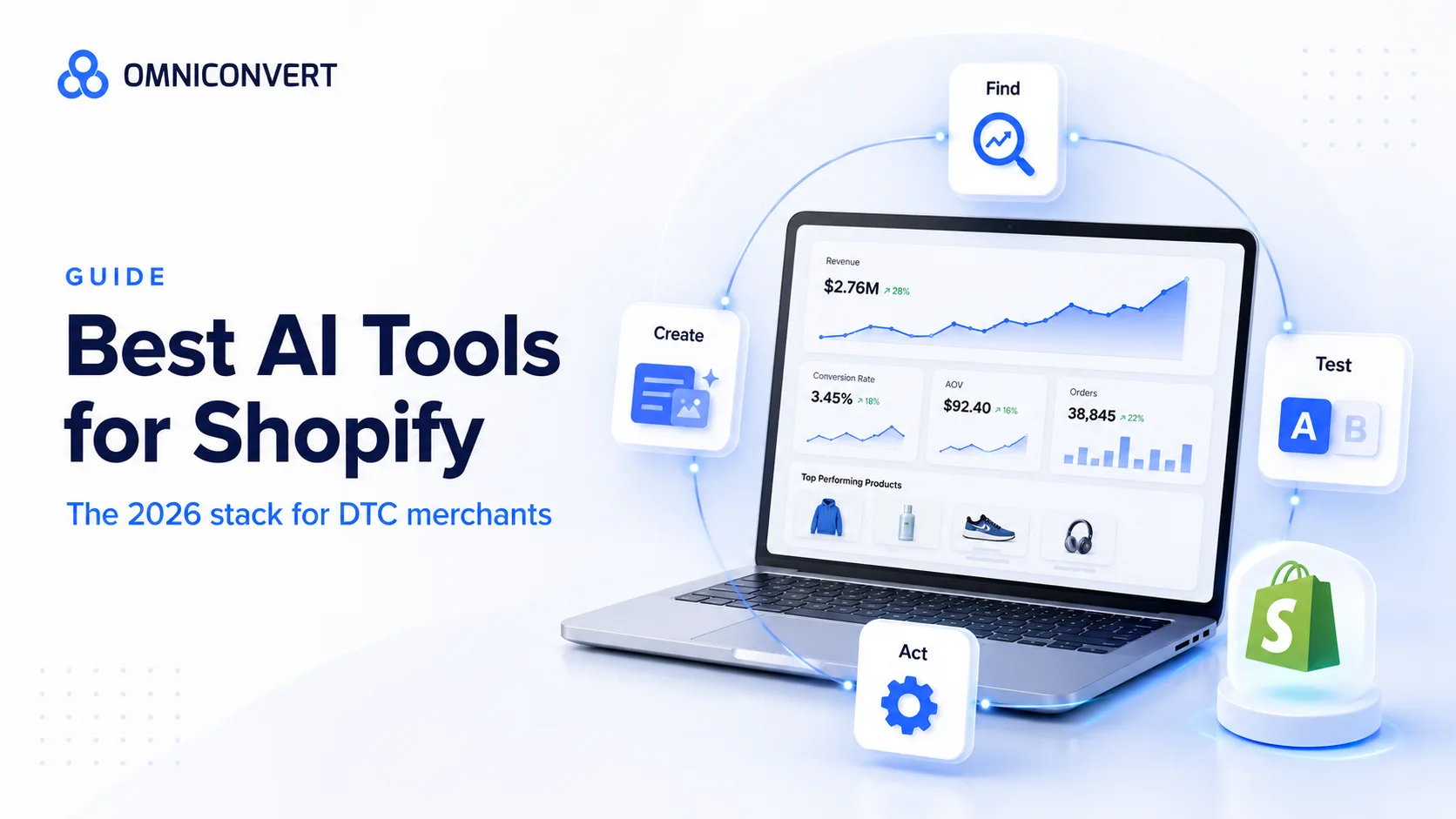
The best AI tools for Shopify in 2026, organized by the job they do: finding revenue leaks, producing creative at scale, testing what works, and acting on the signal. A framework for DTC merchants, not an app store roundup.
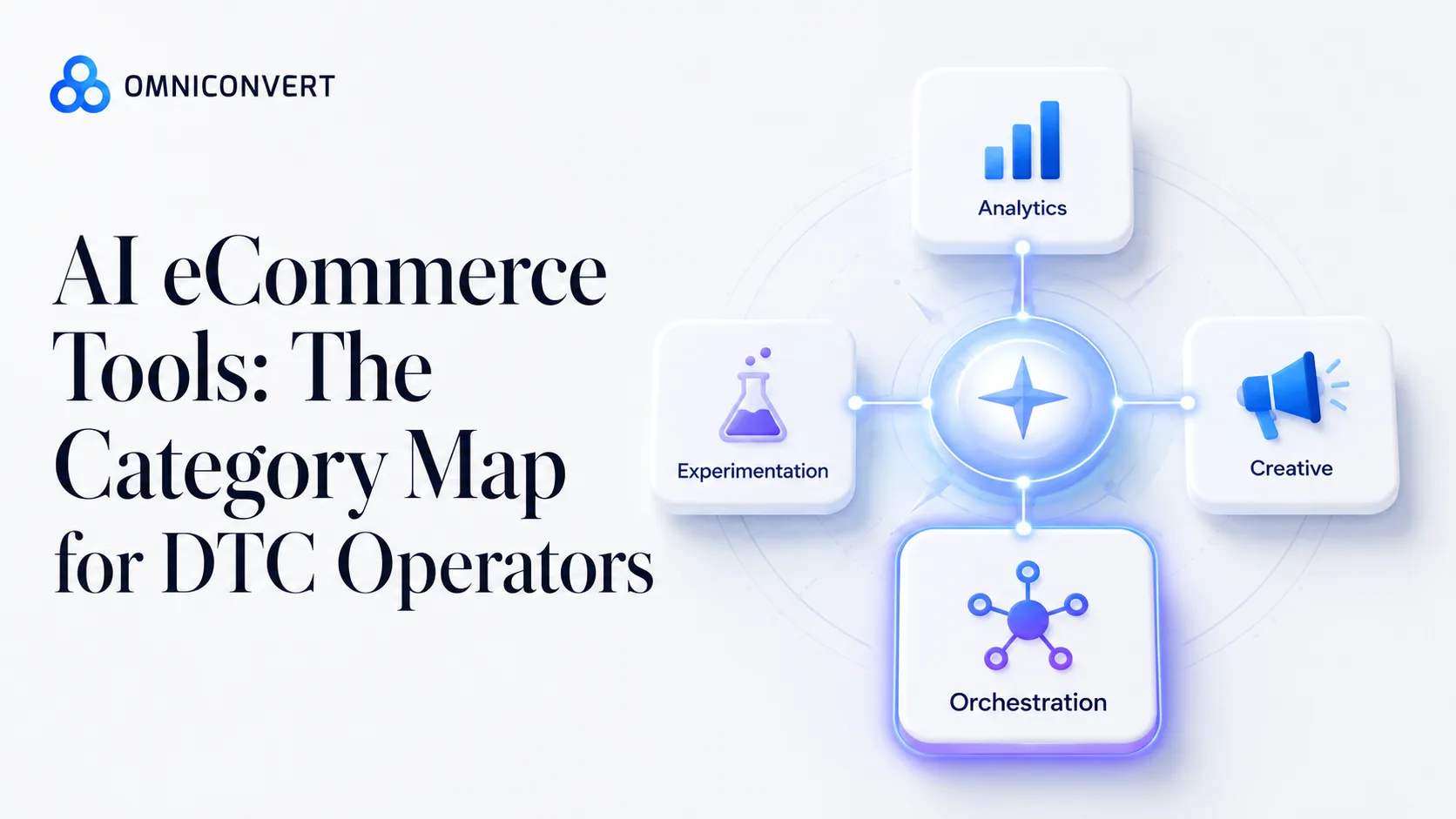
The AI ecommerce tool market mapped into 4 functional categories: analytics and attribution, creative generation, conversion and experimentation, and growth orchestration. A framework for DTC operators evaluating 50+ tools.
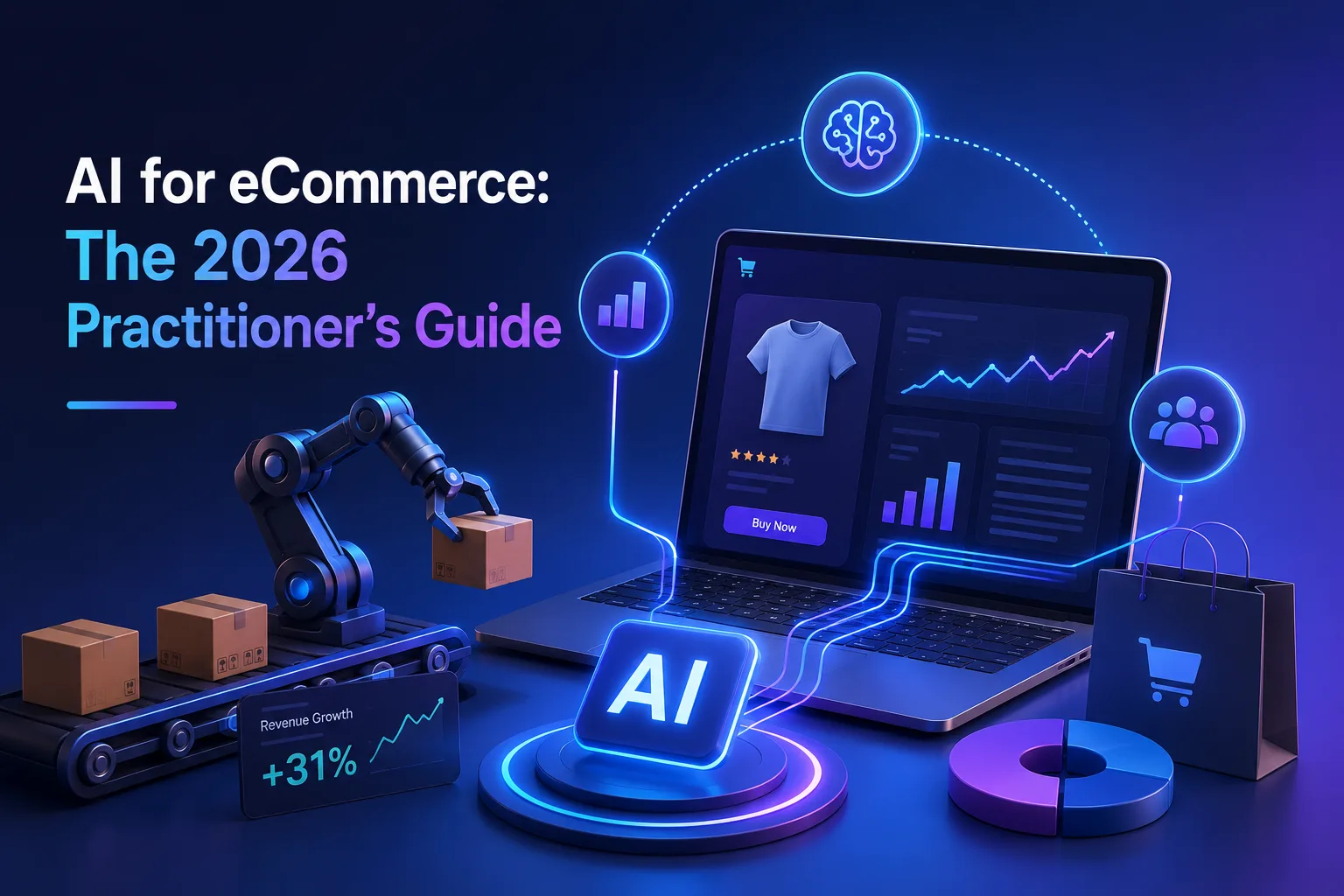
AI for ecommerce in 2026: what it is, how AI-assisted and AI-autonomous platforms differ, the 5 jobs AI is taking over in DTC growth teams, and how to evaluate tools without vendor spin.

The eCommerce customer retention trends shaping 2026: retention-first growth, RFM and value segmentation, JTBD, CLV, and real-time AI interventions.
The 23 best analytics tools of 2026, organized by use case: web, BI, product, CRO, and data science. Find the right tool fast. Updated June 2026.
The best data analysis tools by type: spreadsheets, BI and visualization, programming, big data, and web behavioral analytics for CRO. Updated 2026.
Engagement metrics explained: the definition, key types, how to measure them, a framework to organize them, and how to improve them. Updated June 2026.

10 call to action examples that convert, what makes a CTA work, the verb-benefit-urgency format, and the A/B test data behind them. Updated June 2026.

The best CRO audit tools, grouped by what they audit: analytics, behavior, feedback, testing, and pages. Which to use and how to run a CRO audit in 2026.

Meet 20 top ecommerce and Shopify CRO experts, grouped by what they do best, plus how to choose the right CRO expert or consultant for your store.
eCommerce CRO turns existing traffic into more buyers. 26 conversion rate optimization tips, conversion rates by vertical, and how to test each. 2026.

The 14 best free CRO tools, organized by type: analytics, heatmaps, A/B testing, and lead capture. What each does best, and when to upgrade. 2026.
How to optimize website messaging: the 4 components of a clear message, best practices for ecommerce and SaaS, and how to test, personalize and survey your copy.

How to increase ROAS: 24 high-impact tactics across ads, landing pages, customer lifetime value, and the ad platforms, plus what a good ROAS is. 2026.
How to implement an NPS survey on Shopify: install Omniconvert Explore, build the 0 to 10 survey, pick pre- or post-delivery timing and act on the answers.

Bottom-of-funnel (BOFU) marketing turns high-intent leads into customers. Learn the strategies, content, metrics and tools that help close the deal.
Conversation analytics turns customer calls, chats, and reviews into intent and sentiment you can act on. How it works, benefits, and real examples.

Middle-of-funnel (MOFU) marketing explained: the consideration stage, strategies and content that nurture leads, real examples, KPIs, and tools.

User feedback in SaaS: the main types of feedback, the best methods and tools to collect it, and how to turn it into product decisions.

Top-of-funnel (TOFU) marketing explained: what it is, why it matters, the strategies and content types that build awareness, and how to measure success.
Mobile CRO is how you convert more of your mobile traffic. Learn the best practices, a mobile audit, and real A/B test results. Updated June 2026.

Time to value (TTV) is how fast a customer reaches their first value. Learn the types, how to measure it, and how to reduce it, for SaaS and eCommerce.
Dynamic pricing in eCommerce explained: how it works, the main types, the risks to trust and margin, and how to test it without a price war.

CRO for SaaS explained: the metrics that matter, a step-by-step framework, and how to test your funnel with Explore. Updated June 2026.

The 10 customer retention metrics that matter, each with its formula, a worked example, and a metric-by-metric table showing what it tells you and when to use it.
The 10 best session replay tools compared on recordings, analytics, and pricing, plus how to choose and where Omniconvert Explore fits for CRO. 2026.
Bounce rate vs exit rate explained: what each means, how they are calculated, the key difference, and how to reduce both. Updated 2026.
25 About Us page examples that convert, the key elements behind them, how to write your own, and how to test it. Updated June 2026.
Cookieless personalization runs on first-party and zero-party data, the one approach that works in every browser. Learn the methods, strategies and tools.
The best customer lifetime value apps for Shopify to measure, predict, and grow LTV, with pricing and what each is best for. Updated June 2026.

The 10 best CRO tools compared by job: A/B testing, heatmaps and journey analytics, with best fit, pricing model and how to choose the right one.
The 10 categories of CRO metrics, what each one measures, the formulas with worked examples, and how to pick the handful that fit your business.

CRO best practices that work: 16 conversion rate optimization techniques, real A/B test results, the metrics to track, and the process to run them.
9 user experience improvements that lift conversion, a UX change vs conversion impact table, how to measure success, and how to test each. 2026.
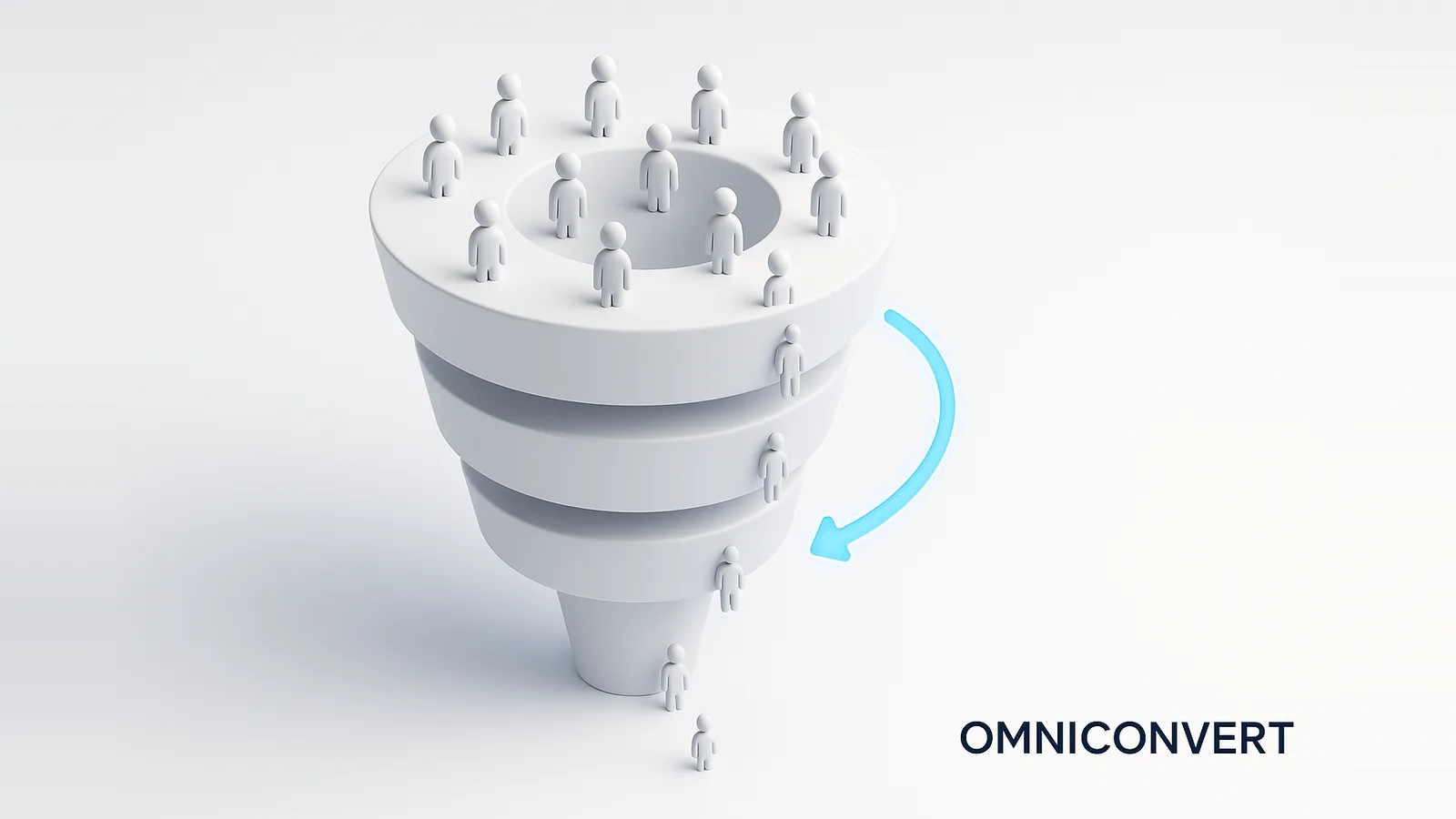
What an eCommerce sales funnel is, its 4 stages, the metrics to track at each, common bottlenecks, and how to optimize it. Updated 2026.
Below the fold explained: what it means, what to put there, examples, and how to A/B test it for more conversions. Updated June 2026.
10 eCommerce copywriting tips and examples that convert, plus real A/B copy-test results showing which wording won and by how much. Updated June 2026.

6 hero section examples that convert, the components behind them, best practices, mistakes to avoid, and how to test your own. Updated June 2026.

Statistical sampling made simple: probability vs non-probability methods, how to pick sample size, cut bias, and apply it to A/B testing. Updated 2026.
eCommerce checkout optimization cuts the 70% cart abandonment rate: 25 best practices for guest checkout, fewer fields, upfront costs, and testing.
NPS survey best practices: how to structure the survey, when to send it, how to lift response rates, and how to act on the results. Updated June 2026.
Omnichannel customer experience: definition, omnichannel vs multichannel, the CLV impact, a framework to build it, and real examples. 2026 guide.
AI A/B testing uses AI to design, run, and analyze experiments faster. Learn how it works, AI vs manual testing, its limits, and best practices. 2026.

The best CRO resources for A/B testing and conversion rate optimization: 4 courses, 6 books, 7 blogs, 10 experts to follow and 3 YouTube channels.
Product details page optimization: the product details that drive conversions, how to design and test PDPs, and how to measure and keep improving them.
Above the fold explained: what it means, the key elements, 10 examples, how it affects CRO and SEO, and how to test it. Updated June 2026.

15 customer engagement strategies that grow lifetime value, a framework to organize them, the KPIs to measure, and how to act on them. Updated 2026.

The 15 best customer retention platforms compared on features, type, and pricing, plus how to choose and where Nexus by Omniconvert fits. Updated 2026.

Split testing for pricing: what you can safely test, why revenue per visitor is the metric, and how to avoid the trust and legal risks of live price tests.

The 10 best heatmap tools compared on heatmap types, features, and pricing, plus how to choose and where Omniconvert Explore fits for CRO. Updated 2026.

How to integrate AI in your CRO process: where AI helps in each of the 6 CRO steps, which AI tools to use, ChatGPT prompts, and the challenges to plan for.
What conversion rate analysis is, how to calculate it, a step-by-step framework, the metrics and benchmarks that matter, and how to act on it. 2026.

How to hire a CRO consultant: what they do, what to look for, freelancer vs agency vs fractional, and CRO consultant vs CRO platform. 2026 guide.
A/A testing explained: what it validates, how to read a significant A/A result, how long to run it, and when the traffic is better spent on a real A/B test.
15 real A/B testing examples with conversion and revenue lift, the hypotheses behind them, and how to run your own. Updated June 2026.

eCommerce growth hacking explained with 25 real brand examples, plus how to test tactics that lift conversions, retention, and customer lifetime value.

Russell McAthy on using customer lifetime value (CLV) as a marketing growth strategy: attribution, cohort analysis, and short- vs long-term thinking.
Does A/B testing affect SEO? Not when you test the right way. Google's rules for testing, plus what we saw when we checked rankings during live experiments.
How to create an experimentation culture: move from CRO to CVO, align incentives with customer outcomes, break down silos, and educate teams to test.

Netflix A/B testing case study: how Netflix tested two password-sharing models in Latin America, what won, and what your team can learn from it.
10 CRO case studies from Omniconvert's CRO team: the challenge, hypothesis and measured uplift for CLX Gaming, Leroy Merlin, Avon, ING, OLX and more.

Eight A/B testing case studies from Omniconvert's CRO team: the hypothesis, the variation, and the measured lift for AliveCor, Orange, Tripsta and more.
Null and alternative hypothesis explained: what each one claims, the difference, and how to write and test them in A/B testing. Updated June 2026.

NPS vs CSAT vs CES compared: what each measures, the formulas, benchmarks, when to use which, and how to combine them. A clear comparison guide for 2026.
Conversion funnel analysis: the funnel stages, how to calculate step and overall conversion rates, GA4 funnel exploration, key metrics and how to fix drop-offs.
How to run in-store experiments: form a hypothesis, choose test and control stores, run the change consistently, and read the results against CLV.

A Customer Value Optimization expert uses first-party customer data to grow Customer Lifetime Value. Learn their skills, impact, tools and how CVO differs from CRO.
Organizational silos explained: why they form, the problems they cause, the benefits of unified reporting, and how to break silos down without a revolt.

Organizational inertia explained: the four types, the signs your company is stuck, and a practical plan to overcome resistance to change and measure progress.
How to track customer interactions across online and offline channels: map touchpoints, link them to one customer profile, and analyze the full journey.
Stakeholder communication, step by step: tailor your message to the CEO, CFO and CMO, build trust, tell the story, back it with data and measure buy-in.

How to align online and offline channels: map touchpoints, unify customer data, analyze cross-channel behavior, and deliver one consistent customer experience.

Traditional vs. smart marketing compared side by side: data, personalization, ROI measurement and engagement, plus how to combine both without losing reach.

Why fragmented customer journeys waste budget and lose customers, and how a holistic customer journey built on unified data, RFM, NPS and JTBD fixes it.
Descriptive, predictive and prescriptive analytics in retail: what each one answers, what AI adds in 2026, and how to move up the ladder without stalling.

Type 1 and Type 2 errors explained: false positives vs false negatives, how they distort A/B test results, and how to avoid both. Updated June 2026.

CRO marketing applies conversion optimization to every marketing channel, not just the website: the elements, the KPIs, the process, the tools and the tests.
What user flows are, how they differ from task flows, how to create a user flow diagram, and an 11-step plan to optimize user flows for conversions.
Data-driven CRO with Ruben de Boer: how CRO fits into Customer Value Optimization, why experimentation is customer research, and how to beat inertia.
What KPI tracking is, the main types of KPIs, how to calculate them, and a step-by-step process to track KPIs and review them on a steady cadence.
The customer experience lifecycle explained: the five stages, the benefits of lifecycle mapping, how to run a lifecycle analysis and how to manage it.
Scaling an eCommerce business means growing revenue without growing costs at the same pace. The 6 basics, when you are ready, and how to scale profitably.

How to identify your best customers with RFM analysis and CLV, build a best-customer profile, keep them from churning, and turn more customers into top ones.

20 eCommerce customer experience examples from brands that nail it, what made them exceptional, the patterns they share, and how to apply them. 2026.
What market segmentation is, the main types of market segmentation, the errors to avoid, a 5-step strategy, and how segmenting your market improves profit.
21 NPS question examples grouped by who you are asking: the standard 0-10 question, detractor, passive and promoter follow-ups, and when to send each.
Sports apparel product page examples from Patagonia, Running Warehouse, New Balance, Road Runner Sports and Brooks Running, and what each does well.
How to build an A/B testing plan: set goals and KPIs, prioritize hypotheses with PIE, write testable hypotheses, size the test, document it, and iterate.
20 proven ways to convert social media followers into customers in 2026, from trust and content to testing what actually drives the sale.

How persuasive colors influence conversions, what each color means, the truth about CTA color, and the Explore A/B test data behind it. Updated June 2026.

What a Customer Value Optimization (CVO) Specialist does, the skills and tools the role needs, and a job description template you can copy and adapt.

A customer retention strategy keeps customers buying. Learn the framework, tactics, retention and churn metrics, and CLV impact, in this 2026 guide.
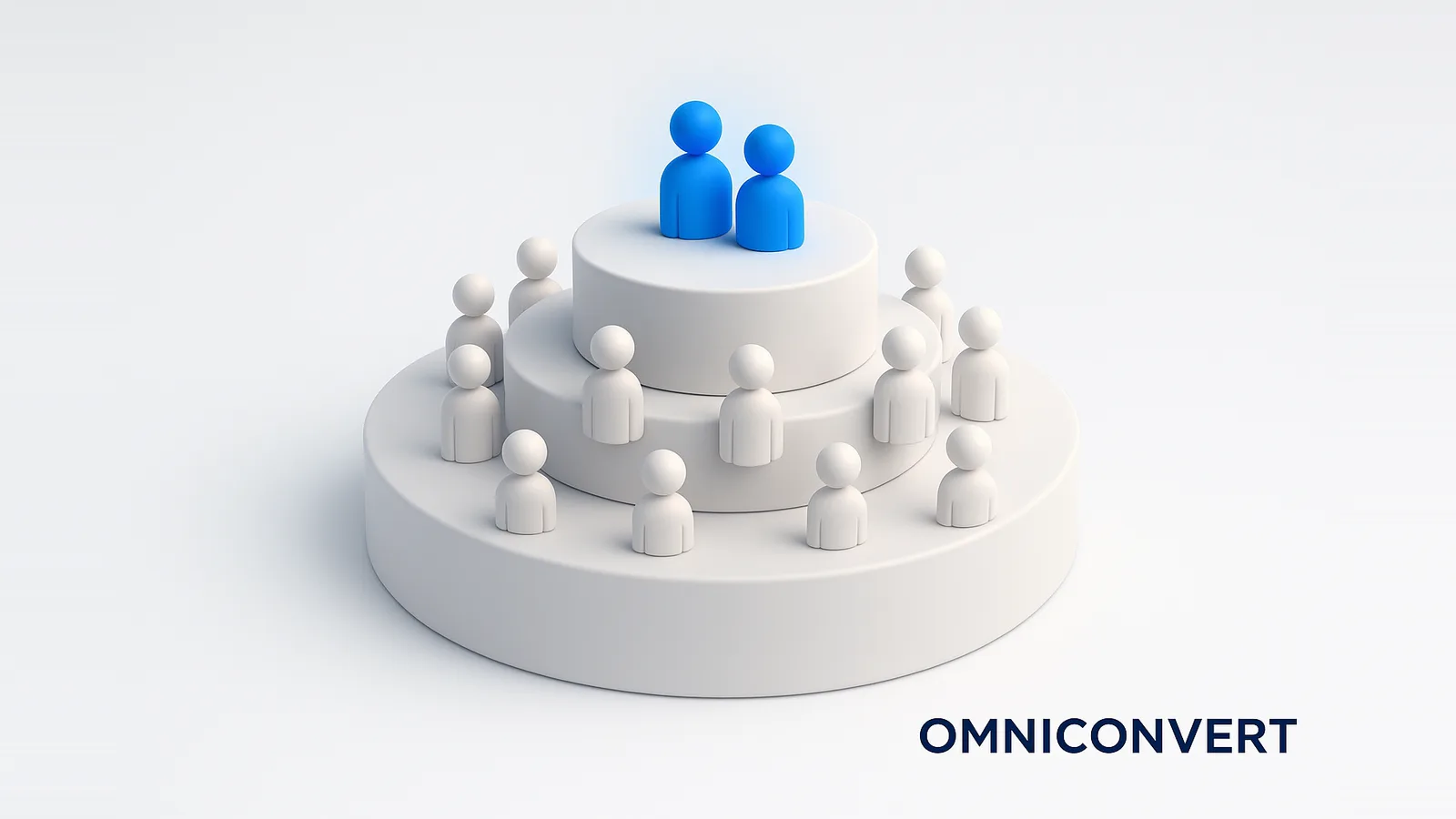
The RFM model explained: how it scores recency, frequency, and monetary value, the segments it creates, the Pareto link, and how to build one. 2026.
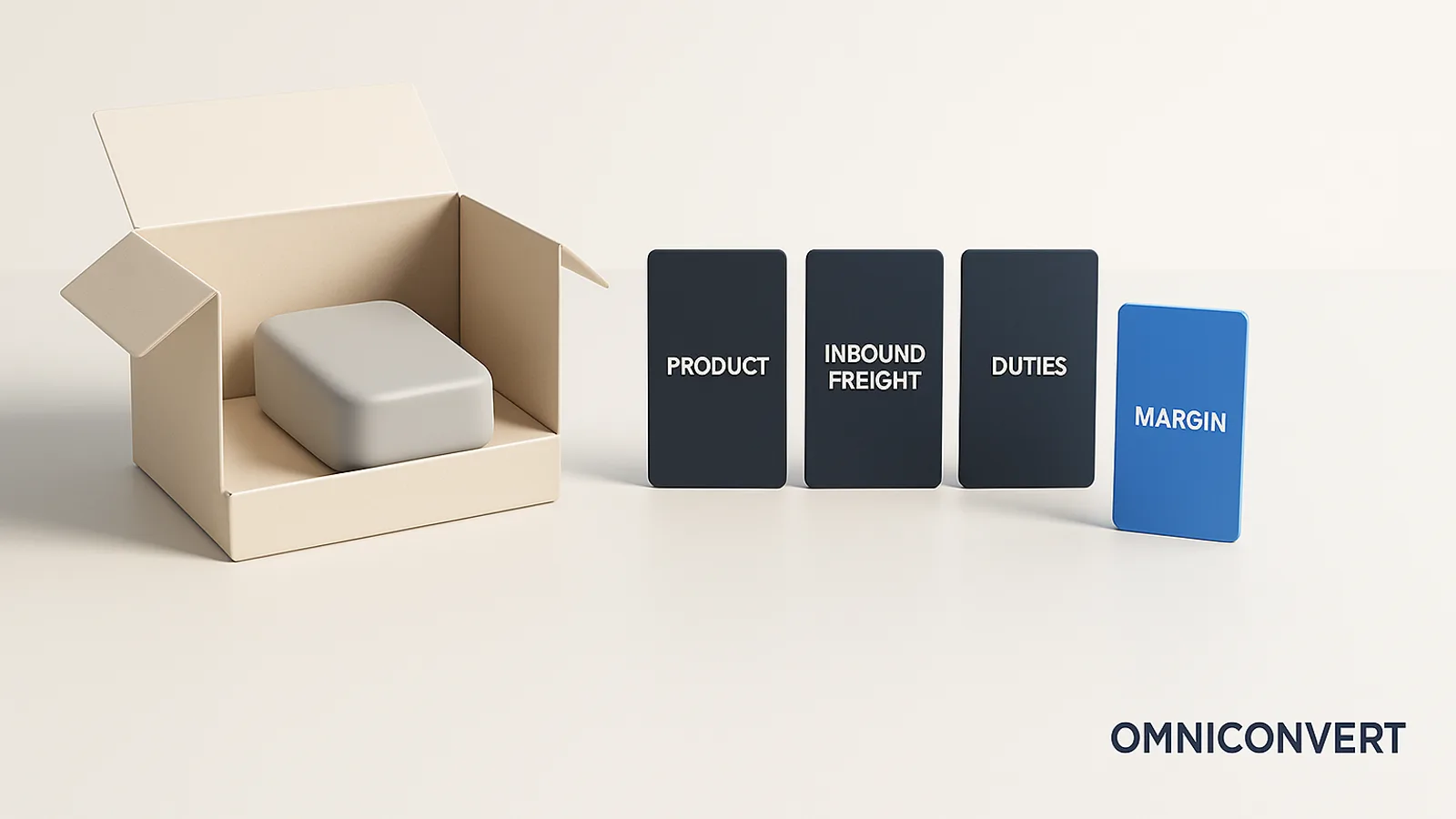
The cost of goods sold (COGS) formula, worked examples, what it includes, eCommerce-specific COGS, and how it drives gross margin. Updated June 2026.
eCommerce profit margin explained: gross, operating and net margin formulas with a worked example, margin vs markup, and how CLV grows your margins.
4 ways to win back customers using SMS marketing: time-limited offers, SMS plus email, VIP targeting and feedback, plus consent rules and opt-out causes.

7 eCommerce business ideas that can scale to a 7-figure brand, plus which models have the highest customer lifetime value and retention. Updated 2026.
How to choose a survey scale: 12 survey scale types compared, odd vs even points, the neutral midpoint, labelling rules, and which scale fits each question.

NPS benchmarks explained: absolute vs. relative benchmarking, the factors that move industry scores, and average Net Promoter Scores by industry.

Which technologies actually changed eCommerce: predictive customer analytics, generative AI, personalization, fraud prevention, and product visualization.

The 7 benefits of a financial performance dashboard for your eCommerce business, which metrics to put on it, and the 3 dashboard mistakes to avoid.
Scarcity in marketing makes limited offers drive faster purchases. The types, the psychology, real A/B test lifts, and how to use it without losing trust.
Inventory velocity in eCommerce: the formula (COGS ÷ average inventory), a worked example, related metrics, and practical ways to improve it.
Customer sentiment analysis explained: what customer sentiment is, how to measure it, the types of sentiment analysis, and a 5-step process to act on it.
Audience analysis explained: what it is, a step-by-step framework, the data and segments to use, buyer personas, and mistakes to avoid. Updated 2026.

Find out why customers do not come back. 7 common customer retention problems, the signs of each one in your data, and a practical fix for every problem.
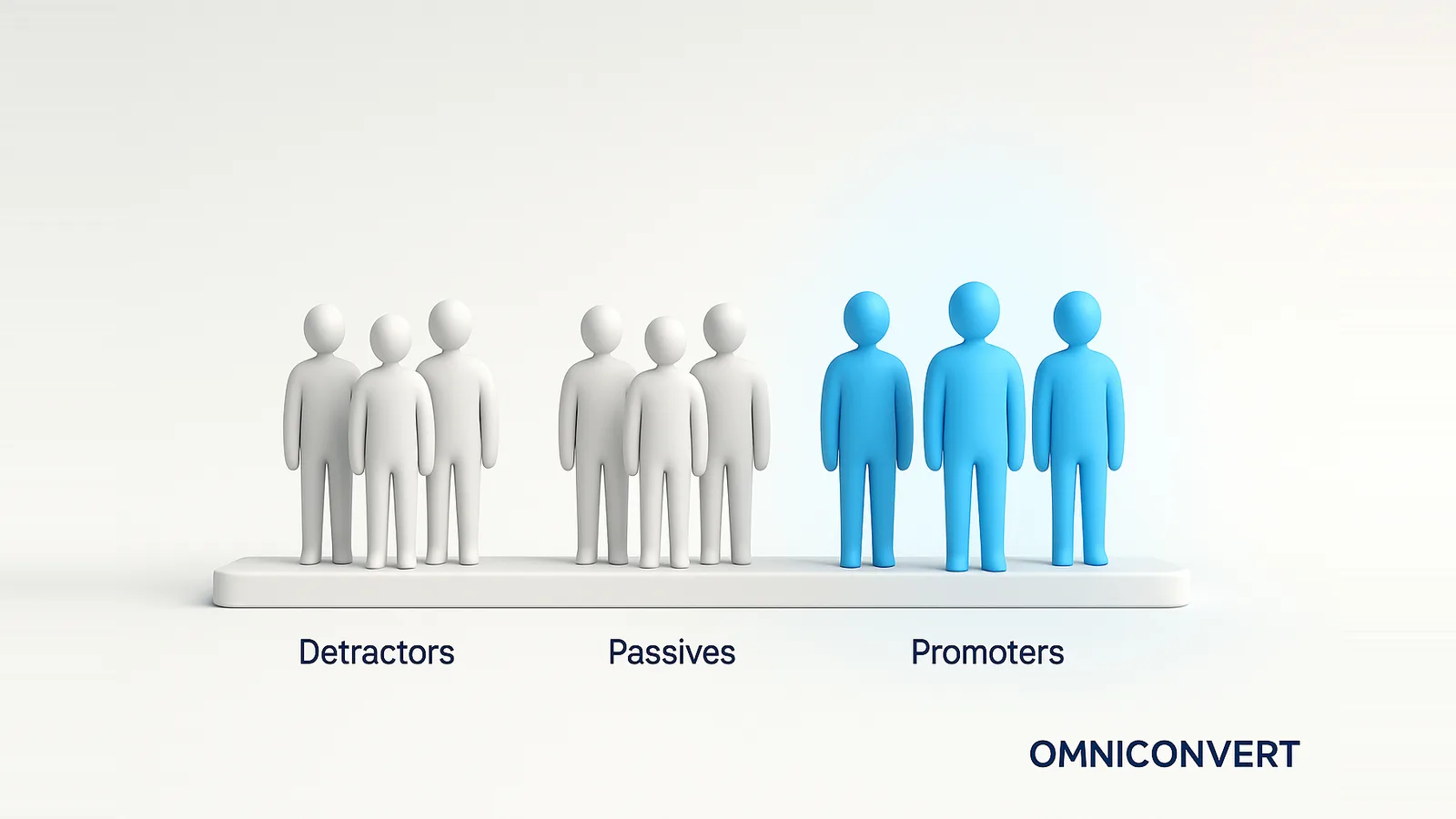
Promoters, passives, and detractors in NPS: the 0-10 scale, the formula, what a good score is, benchmarks by industry, and how to improve NPS. 2026 guide.

The SaaS customer lifetime value formula (ARPA x gross margin / churn), a worked example, which churn rate to use, and five levers that actually raise CLV.

Six practical ways to optimize a call to action for conversion rate optimization: clutter, copy, urgency, benefits, risk and contrast.

8 buyer persona examples across B2B, B2C, eCommerce, and digital, plus the persona types, a framework to build your own from real customer data, and FAQs.

How does AI learn human responses? The 5 ways AI mimics human replies, the role of training data, and how it learns from customer data. Updated 2026.
How to find out what customers say about you, where to look, and how to check the feedback against what shoppers actually do on your site.
Five banner ad A/B testing ideas that change clicks and conversions: the call to action, the headline, the image, the typography, and the value proposition.

Customer lifetime value analysis three ways: Nexus by Omniconvert, an Excel CLV formula with a worked example, and the lifetime value reports in GA4.
6 customer retention examples from brands like Amazon, TOMS, and Allbirds, what each did differently on loyalty and CLV, and how to apply it. 2026.

What an Ideal Customer Profile (ICP) is, how it differs from a buyer persona, and how to identify your ICP in 5 steps from RFM data and customer research.

8 email marketing campaign examples that increase conversions, the RFM segment each one belongs to, and the 2026 deliverability rules you have to meet.
Five ways to optimize a fashion eCommerce website for more sales: filtering, reviews and fit feedback, automation, product imagery and sizing, and on-site search.

How to use Instagram for customer retention: 7 pro tips on content, customer service, profile links, feedback stickers, influencers, offers and giveaways.
Net Promoter Score (NPS) explained: the 0-10 scale, promoters, passives and detractors, the formula, and how to segment NPS pre- and post-delivery in eCommerce.

The 5 types of online shoppers (discount seekers, wanderers, impulse buyers, need-based shoppers, loyal customers) and how to convert each one.
Customer behavior analysis explained: what shapes buying decisions, which data to use, a 6-step process, and how the insights improve acquisition and retention.
5 inspirational examples of chatbots in eCommerce, from Sephora and Toyota to Zalando and Amazon, plus their benefits and how to create your own chatbot.

How to encourage a second purchase: nail the first order with NPS, clear order updates and no early sales messages, then time the next offer with ADBT.
What a CRO specialist does, 5 reasons to hire one, typical salaries and skills, and CRO specialist vs CRO platform, with Explore as the alternative. 2026.
What the Customer Satisfaction Score (CSAT) is, the exact CSAT formula with a worked example, how CSAT differs from NPS and CES, and how to act on it.
The benefits of collecting customer data, the types of data, how to collect it ethically, and how to turn it into growth and ROI. Updated 2026.
Loss leader pricing sells one product below cost to win customers who buy profitable items. How it works, real examples, risks, and its impact on CLV.
How to write a value proposition that converts: the research process, 9 rules, 6 proven templates, 9 real examples reviewed, and how to A/B test it.

Customer loyalty vs retention: what each means, how they differ, the metrics that track each, and how to build both. A clear 2026 comparison guide.

How to deliver a meaningful customer experience: what customer delight is, 4 low-cost ways to delight customers, and 5 tips to build a delight culture.
How customer complaints affect satisfaction and lifetime value, why they happen, and how to handle and prevent them. A practical 2026 guide.

How to prepare and run Jobs To Be Done interviews: who to interview, the four forces of progress, the JTBD timeline, the six-step process, and questions to ask.

How to become an eCommerce expert: learn how eCommerce works, platforms, email marketing, SEO and PPC, customer retention, and the metrics NPS, RFM, AOV and CLV.
The product optimization framework: 4 data layers (sales, experience, behavior, intent) to find toxic and sticky products and optimize your eCommerce assortment.
ROAS is revenue divided by ad spend. The formula with a worked example, ROAS vs ROI vs ACoS, how to set a break-even ROAS, and why ROAS needs CLV.

Your first steps in CRO: what conversion rate optimization is not, the three-stage CRO process, and the five things you need before your first test.
Gross merchandise value (GMV) explained: the formula, GMV vs revenue and net sales, benchmarks by category, and how to grow GMV without losing margin.

How to nurture leads in eCommerce: 11 practical tips, from SEO and content to cookies, retargeting, email, automation and personalized offers.

What customer journey optimization is, 7 powerful ways to do it, the stages and touchpoints that matter, and how to measure it. Updated 2026.

The 7 fastest-growing eCommerce industries for 2026, with growth benchmarks, what drives each, and how to capitalize on a booming market.
Location-based personalization vs web customization: what each one changes, the data behind them, when to use which, and how to set both up in Explore.
Cross-selling and upselling: 10 strategies to lift average order value and customer lifetime value, with examples and a framework. Updated 2026.

Customer lifecycle marketing explained: the five lifecycle stages, the job and the metric that belongs to each one, and the action that moves customers forward.
Customer Profitability Analysis explained: the formula, worked examples, a 5-step process, benefits, and how to act on each profitability segment.

Customer satisfaction explained: definition, what drives it, how to measure CSAT, NPS & CES, a framework to improve it, and examples. Updated June 2026.

eCommerce competitive analysis explained: what it is, what to analyze, a step-by-step framework, an industry benchmark table, and the tools to use. 2026.
Google Ads for eCommerce: how the auction works, how to set up a campaign, which campaign types sell products, and strategies that use your customer data.

Dynamic text replacement changes page copy for each visitor based on URL, visitor or page data. Learn how it works, where to use it and how to test it.

RFM score explained: the recency, frequency, monetary formula, how to calculate it on a 1 to 5 scale, and the customer segments it reveals. 2026.
The history of landing pages: how paid search created them, what early pages looked like, how builders made them mainstream, and which principles never changed.
AARRR metrics for eCommerce: what the five pirate metrics mean, the formula and a worked example for each stage, and where the model fits an online store badly.

How to build custom audiences for eCommerce: the data sources Meta and Google accept, the 6 audiences every store needs, and how RFM segments become ad audiences.

The best companies for customer experience in 2026, what they do differently, and the closed loop behind their loyalty, with up to $3T in CX at risk.
Consumer behavior in marketing: the 4 types of consumer behavior, what influences buying, buying patterns, and how behavior maps to RFM and lifetime value.

Customer churn analysis explained: the churn rate formula with a worked example, why it matters, how to run it, and the challenges of finding why customers leave.
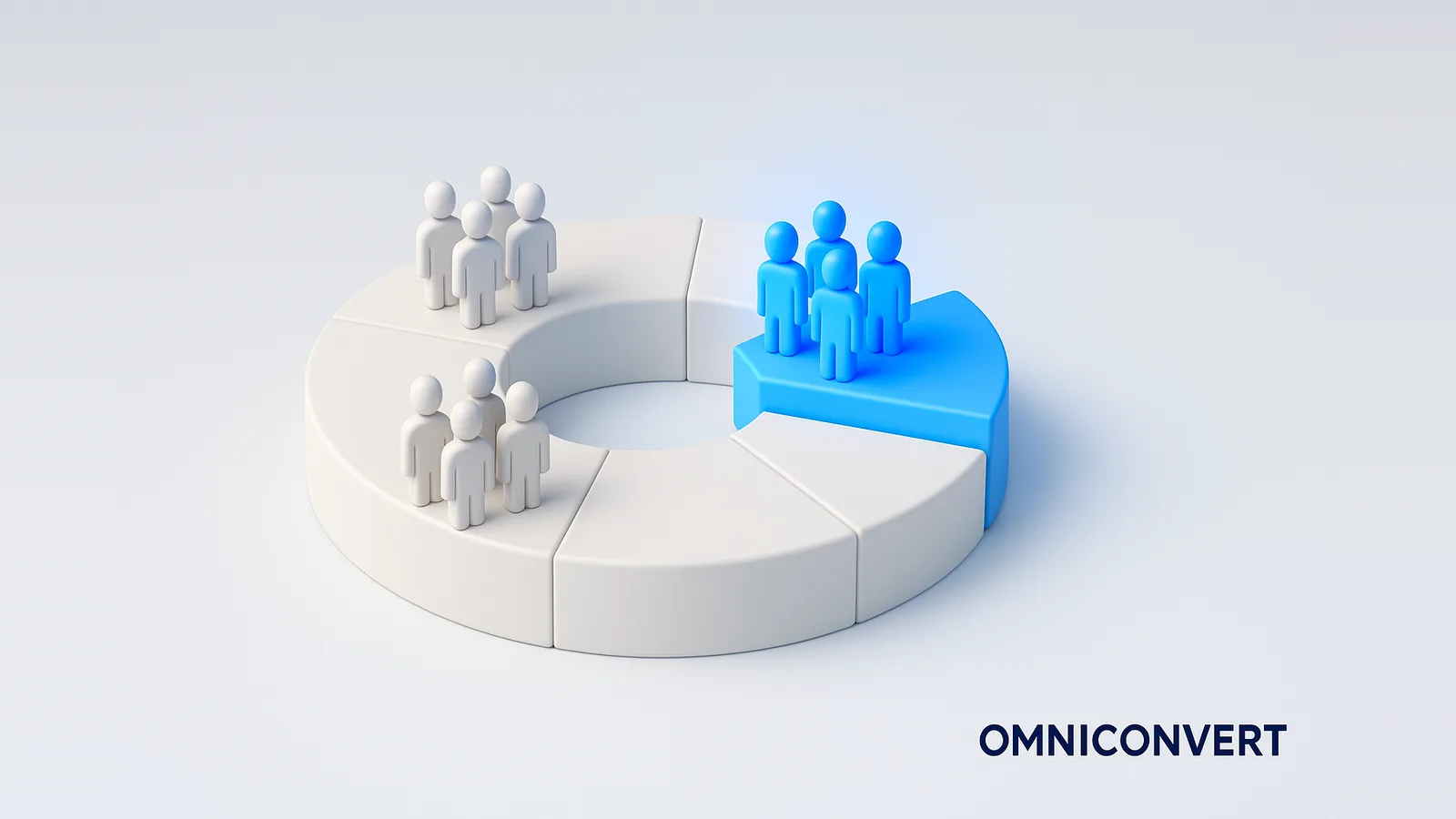
The 6 main customer segmentation models, how to choose one, a step-by-step framework to build yours, and how AI segments customers. Updated June 2026.
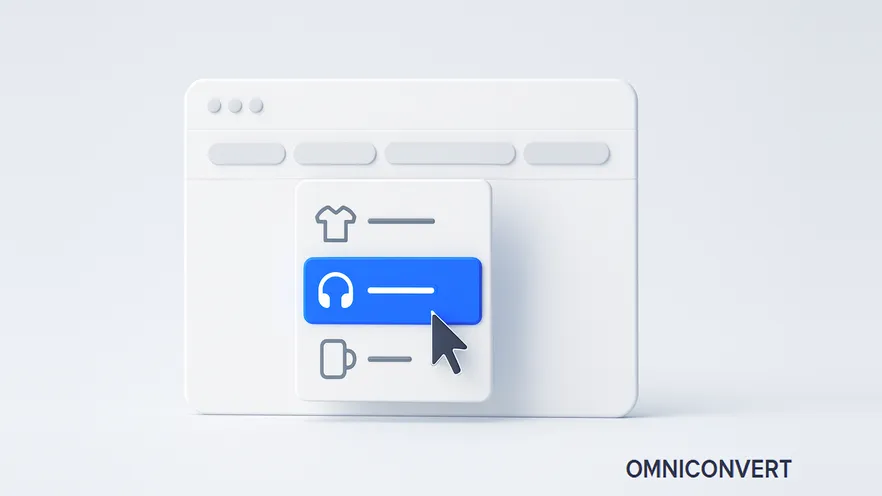
How drop-down menus work on e-commerce websites: click vs. hover, mega menus, HTML and accessibility, keyboard use, design best practices and examples.
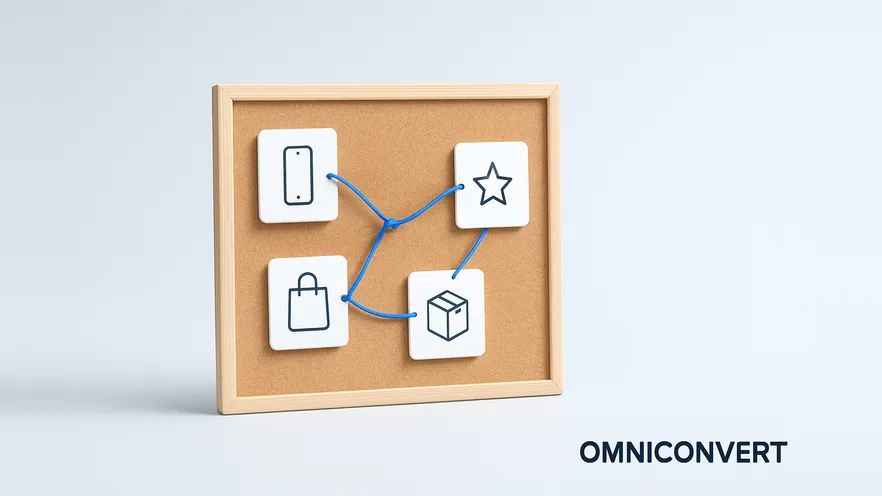
What customer touchpoints are and how touchpoint mapping works: a five-step process to identify, map, optimize, and measure every interaction with your brand.

What is RFM? Recency, frequency, and monetary value explained: what each means, why RFM matters, and how to use it to segment customers. 2026.
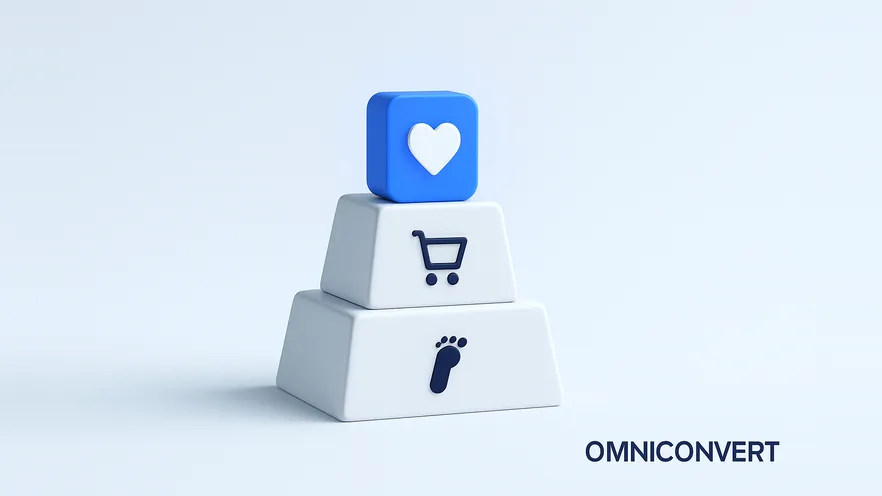
The KPI pyramid applies Maslow's hierarchy of needs to online marketing KPIs: traffic at the base, advertising and sales in the middle, loyalty and CLV at the top.

Micro conversions are the small actions visitors take before they buy. Learn how they differ from macro conversions, which to track, and how to grow them.
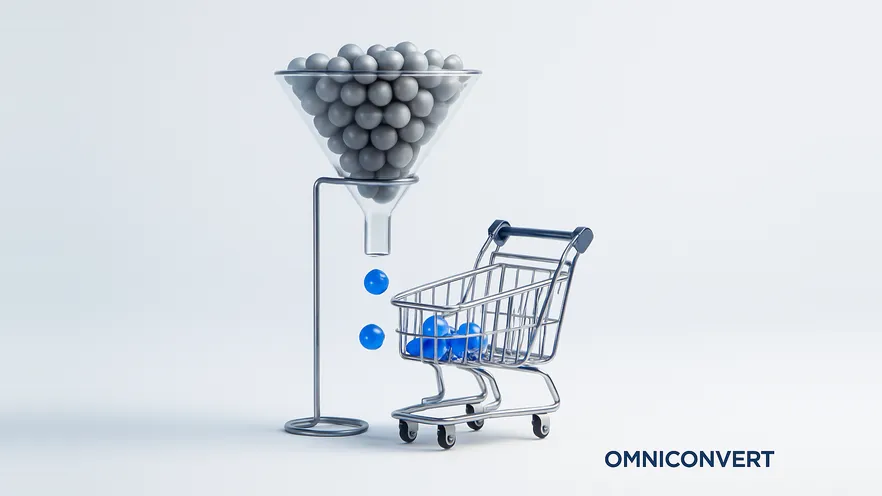
Click-through rate in the conversion funnel: the CTR formula with a worked example, how CTR differs from click rate and conversion rate, and how to test it.

What is a repeat customer? The definition, why they matter, the repeat customer rate benchmark, and how to identify and segment them. Updated 2026.
4 types of surveys to use in conversion rate optimization: visitor satisfaction, purchase intention, conversion barriers and NPS, with triggers and questions.

Customer retention marketing explained: how to calculate retention rate, why it matters for growth, a real example of ignoring it, and 5 core strategies.

Who Peter Fader is, what customer centricity means in his words, and how his CLV research became the foundation of Customer Value Optimization.

Churn propensity is the likelihood a customer stops buying. Learn how churn prediction models work, which methods to use and how to calculate the score.
10 product packaging tips that make a great impression on customers: branding, fit, durability, sustainability, unboxing, and how to test packaging changes.

Customer journey optimization in 8 steps: segment, map, review, collect feedback, engage, measure, support customers and invest in your employees.
10 key eCommerce metrics to measure to increase user engagement, with correct formulas, GA4 definitions and what each metric tells you to fix.

Facebook ads for eCommerce in 2026: the six Meta campaign objectives, dataset and Conversions API setup, creative that stops the scroll, and retargeting that pays.

How to find your biggest spenders: calculate spend and profit per customer, compare it with your average, and use 6 strategies to retain your best customers.

What an RFM segmentation tool does: how it scores and groups customers, the 6 Nexus RFM segments, the reports to run on them, and how to act on the results.
How to design a self-service strategy with customer journey mapping: the 7-step mapping process, what to build at each stage, and how to measure it.

The important eCommerce metrics to track, with correct formulas and a worked example: conversion rate, AOV, CLV, CAC, retention, churn, NPS and more.
12 practical strategies to increase customer lifetime value from eCommerce, CRO, email and retention experts, plus the CLV formula and a worked CAC example.
NPS analysis step by step: segment your Net Promoter Score by journey, RFM and location, code the open answers, find root causes and link NPS to CLV and churn.

Pop-up templates for eCommerce: countdown, discount, ebook, free delivery, personalized, newsletter and testimonial pop-ups, plus how to launch one in Explore.
The online shopping behavior trends that hold in 2026: value, brand trust, social and AI-assisted discovery, checkout friction, and what to do about each one.
A CRO audit finds why your site does not convert. This step-by-step guide covers the process, a full checklist, the tools to use, and how to act on it.

13 customer retention strategies for eCommerce stores: know your loyal customers with RFM, communicate well, reward loyalty and fix the shopping experience.
Qualitative research explained: the definition, the 7 methods, real examples, how to analyze the data, and its limitations. Updated June 2026.

The 5 things customers expect from an eCommerce store: a fast site, honest shipping, real help, social proof they can check, and the full price up front.

What customer stickiness is, how to measure it in eCommerce, and how it differs from customer loyalty and customer retention, with the formula and a worked example.

RFM segmentation groups customers by recency, frequency, and monetary value into segments you can act on. How to build them, plus a distribution table.
Google retired custom intent audiences. Here is what custom segments do instead, which campaigns support them, and how eCommerce brands should use them in 2026.

What is a good Net Promoter Score? Learn how to judge your NPS against the absolute scale, your own history, your industry, competitors and segments.
A library of CRO experiment ideas for eCommerce: what to test on each page, the expected lift range from real Explore experiments, and how to prioritize.
First-party data is customer data you collect directly, with consent. See its eCommerce benefits, how it beats third-party data, and how to use it.

Customer effort score (CES) measures how easy it is to deal with your business. What it is, how to calculate it, benchmarks, and how to act. 2026.
Statistical significance is the confidence an A/B test result is real, not chance. Learn p-values, confidence levels, and the sample size you need.
Customer loyalty metrics show how likely customers are to stay and buy again. Track these 7, with formulas and benchmarks, and act on them automatically.
An NPS survey template is a ready-to-use NPS survey. Copy the core question, a full question bank, follow-ups by score, and benchmark response rates by send method.

NPS software collects and analyzes Net Promoter Score surveys. Compare the 10 best NPS tools by type, what each does, and how to turn scores into action.

Who Bruce Hardie is and how his BG/NBD, BG/BB and iso-value curve research made customer lifetime value models practical for marketers.
The 10 best Shopify apps to increase sales, grouped by what they do, with a category comparison and a conversion benchmark by app type. 2026.
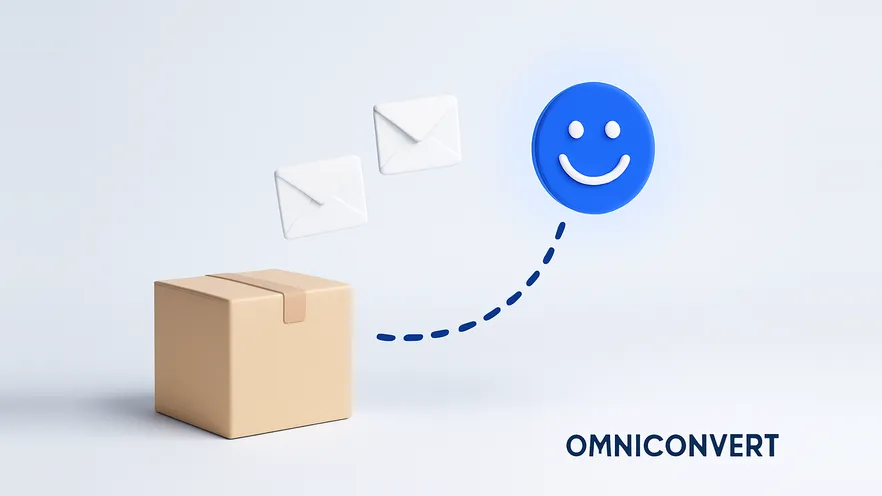
A post-purchase email flow built on NPS: five emails from order confirmation to post-delivery survey, then separate paths for detractors and promoters.

How to improve customer retention in eCommerce: the Omniconvert Retention Framework, a benchmark by industry, and how to automate the actions. 2026.

How to become a Certified Customer Value Optimization Expert with the CVO Academy: curriculum, instructors, price, exam and the 9-step CVO methodology.

What is a good eCommerce conversion rate? The formula, current averages by industry and device, the factors that move it, and how to raise yours.

eCommerce customer experience is the sum of every interaction with your store. The Omniconvert CX Framework, a CX benchmark, and how to act on it. 2026.
17 proven ways to increase your Shopify conversion rate: product page, checkout, trust, and personalization tactics, each testable. Updated June 2026.
![How to Reduce Customer Churn in eCommerce: 9 Proven Strategies [2026]](/images/blog/articles/churn-risk-factors.webp)
How to reduce customer churn in eCommerce: the churn rate formula, 9 causes of churn, and data-driven retention strategies powered by RFM and predictive segmentation.
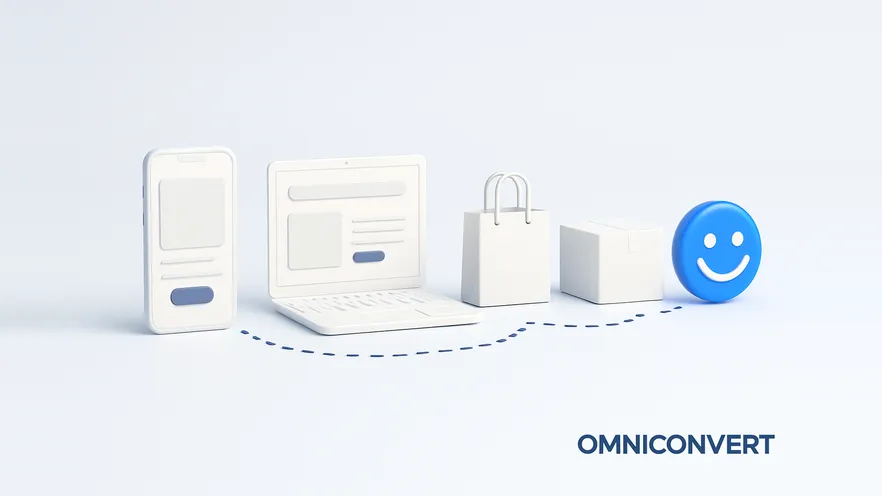
A customer journey map shows every step a customer takes with your brand. Learn what it contains, the 4 map types, and how to create one in 6 steps.

Psychographics are the values and lifestyles behind why people buy. Learn what they are, how to collect them, and how to segment. Updated June 2026.
![How to Reduce Customer Acquisition Cost (CAC) in eCommerce [2026 Guide]](/images/blog/articles/optimize-customer-acquisition-cost.webp)
How to reduce Customer Acquisition Cost in eCommerce: calculate your real CAC, track the CLV to CAC ratio, and apply 8 proven tactics to lower CAC profitably.

Five CRO tips that decide whether your tests win: audit first, match the buyer's journey, offer one path, fix mobile and speed, and stay data-backed.

What is digital customer experience (DCX)? The definition, how it differs from CX, why it matters, and a 5-step strategy to build a DCX customers love.
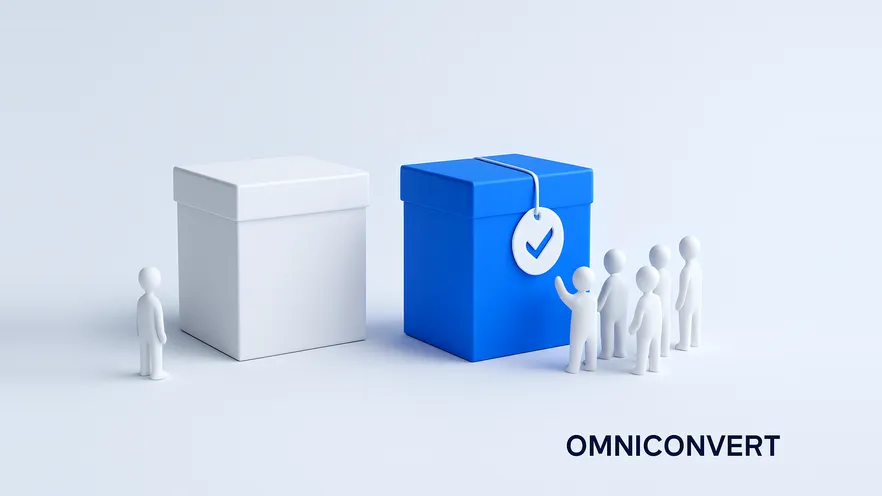
How to create an A/B test in four stages: identify the problem, write a hypothesis, build and run the test with the right sample size, and analyze results.

Customer lifetime value (CLV) explained: the formula, how to calculate it, benchmarks by category, a framework, and how to grow CLV. 2026 guide.

24 product page optimization tactics grouped by job: visuals, copy, trust, pricing and urgency, UX and mobile, and testing, with what to test first.

Google Analytics vs SimilarWeb: we analyzed 1,787 eCommerce sites. SimilarWeb overreported sessions by 94%, with accuracy rising by site size. 2026.

Digital marketing frameworks for eCommerce: an agile, data-first approach in three stages, plus RACE, SOSTAC, See-Think-Do-Care, AIDA, AARRR and the 4Ps.
Why a landing page isn't converting: it lacks focus, breaks the ad's promise, or makes the action unclear. How to fix each, measure it and test it.

32 conversion rate optimization tools grouped by job: analytics, voice of customer, A/B testing, collaboration and design, with what each one is best for.
How to run an NPS campaign in 9 steps: the 0-10 scale, the NPS formula with a worked example, survey timing, and how to act on promoters and detractors.

The three product page elements worth testing first: the product showcase, the add-to-cart confirmation, and call-to-action clarity. What to change and how to test it.

Diagnose an underperforming landing page in three questions: ad-to-page consistency, offer clarity, and conversion aesthetic. With a symptom-to-cause table.
Conversion rate is an indicator, not a goal. Why optimizing the customer experience beats conversion hacks, and how to find the experience problems worth testing.
Website overlays still convert when they earn their interruption. Overlay types, triggers, Google's interstitial rules, accessibility, and how to test them.
Personalization has not replaced A/B testing. The two do different jobs: personalization targets a segment, A/B testing verifies whether the change worked.

A conversion rate optimization checklist in four steps: analyze your data, build testing hypotheses, run A/B tests, and personalize the experience.

How to increase average order value: the AOV formula with a worked example, 6 tactics that raise basket size, and how to test them without hurting conversion rate.
How to raise your shopping cart conversion rate: the formula, why shoppers leave the cart page, and 5 cart optimization ideas you can test.
Lead form optimization: how many fields to ask for, what to write on the button, where to put the form, and how to test it with real A/B testing data.

The fashion eCommerce industry explained: market size, key trends, the high-return-rate challenge, benchmarks, and the strategies that win. Updated 2026.
The 5 call center metrics eCommerce owners should track: first call resolution, average handle time, cost per contact, CSAT, and service level, with formulas.

Year-over-year growth explained: the YoY formula with a worked example, which metrics to track, and the traps (seasonality, weak base year, YoY vs MoM vs CAGR).
The Customer Satisfaction Index (CSI) combines satisfaction scores for key parts of your business into one weighted number. Learn how to measure and calculate it.

CTA optimization for eCommerce: what to write on the button, how to size, color and place it, how many CTAs a page needs, and how to test them.
How click and collect (BOPIS) works, how it grew out of reserve and collect, where pay-in-store reservations still fit, and what to test on your pages.
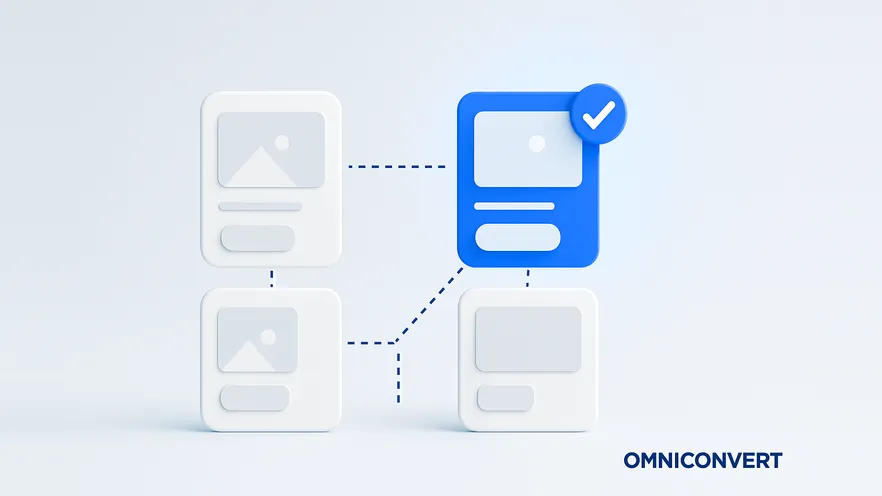
Multivariate testing explained: how it differs from A/B testing, how to count combinations and traffic, full vs fractional factorial, and how to run one well.
No articles match your search.
Conversion rate optimization (CRO) is the practice of increasing the percentage of website visitors who complete a goal, like a purchase, through structured testing rather than guesswork. For ecommerce, that usually means testing product pages, checkout flow, and personalization.
It means using AI models to automate specific ecommerce tasks, such as customer segmentation, ad creative generation, or finding where a store is losing revenue, instead of a person doing that analysis manually. It is not a replacement for a CRO strategy, it speeds up parts of one.
Nexus by Omniconvert is the AI eCommerce growth engine: it finds the opportunity, runs the analysis, and recommends the action automatically, drawing on the CROBenchmark dataset of 2,500+ brands and 70,000+ experiments.
Quarterly at minimum, and after any major traffic or catalog change. Customer behavior shifts, and an analysis from two quarters ago will miss new friction points.
No. Most AI eCommerce tools, including Nexus by Omniconvert, are built to run on standard store data (Shopify, GA4, ad platforms) without a dedicated analyst.
The category page lists every CRO article. Tags narrow it further, for example only the A/B testing or checkout articles inside CRO, so a visitor can go straight to the subtopic they searched for.